


Content marketing shapes the way businesses connect with people by offering stories, answers, and insights instead of direct pitches. More than half of global decision-makers plan to increase their content marketing budgets in 2024, pushing this strategy to the front of modern marketing discussions. Yet the real surprise is that content marketing is not only about attracting eyeballs or stacking up clicks. Its true power lies in building trust, long-term relationships, and a reputation that keeps your audience coming back for real solutions they cannot find anywhere else.
Quick Summary
| Takeaway | Explanation |
|---|---|
| Content marketing focuses on providing value. | Unlike traditional advertising, content marketing prioritizes delivering helpful information to build trust with the audience. |
| Engagement requires understanding audience needs. | Successful content strategies hinge on creating content that addresses specific pain points of the target audience. |
| Measure success with comprehensive metrics. | Effective evaluation involves tracking audience engagement, brand perception, and long-term customer loyalty rather than just views. |
| Build long-term relationships over immediate sales. | Content marketing emphasizes nurturing audience connections through valuable interactions before attempting to sell. |
| Leverage technology for enhanced content distribution. | Utilizing digital platforms and analytics tools can help maximize reach and engagement across various channels. |
Defining Content Marketing: What It Is and Its Purpose
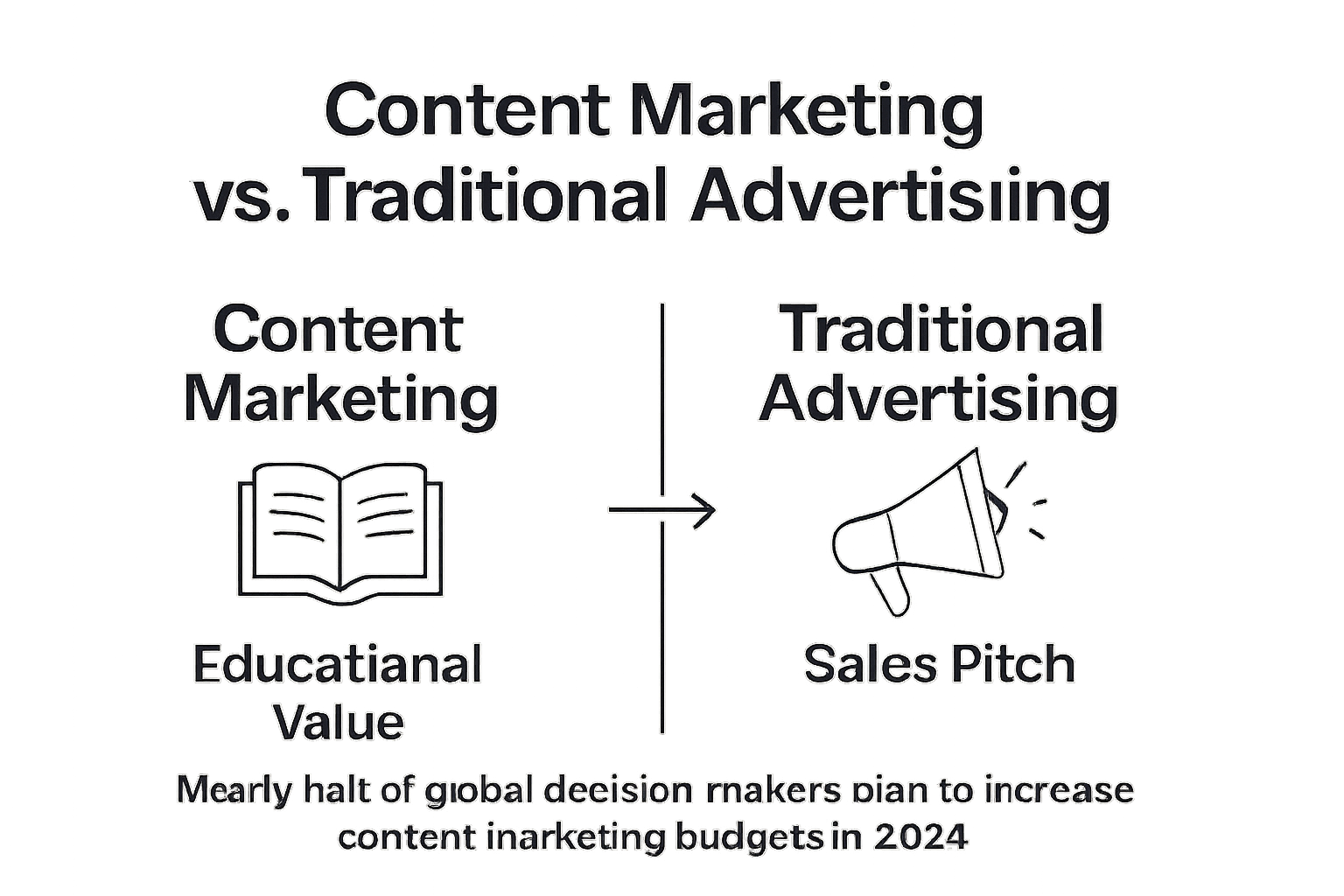
Content marketing represents a strategic approach to creating and distributing valuable, relevant, and consistent content designed to attract and retain a clearly defined audience. Unlike traditional advertising that directly promotes products, content marketing focuses on building trust, establishing expertise, and solving audience problems through informative and engaging materials.
The Core Philosophy of Content Marketing
At its fundamental level, content marketing operates on a simple yet powerful principle: provide genuine value to your audience before asking for anything in return. Learn more about our strategic approach to content marketing reveals that successful content marketing isn’t about selling immediately, but about nurturing relationships through knowledge sharing.
The essential characteristics of effective content marketing include:
- Solving actual problems your target audience experiences
- Creating content that addresses specific audience needs
- Establishing your brand as a trustworthy information source
How Content Marketing Differs from Traditional Advertising
Traditional advertising interrupts consumers with direct sales messages, whereas content marketing invites engagement through helpful, relevant information. According to research published on ResearchGate, this approach helps brands develop deeper connections by positioning themselves as problem solvers rather than mere product sellers.
Content marketing transforms how businesses communicate by prioritizing:
- Educational content over promotional messaging
- Long-term relationship building
- Audience value before company profits
By consistently delivering high-quality, informative content that genuinely helps your target audience, businesses can create meaningful connections that naturally lead to increased trust, engagement, and ultimately, customer loyalty.
To clarify the key differences between content marketing and traditional advertising, the following table compares their core approaches and outcomes.
| Approach | Content Marketing | Traditional Advertising |
|---|---|---|
| Primary Focus | Providing value and building trust | Direct product sales |
| Communication Style | Educational and informative | Promotional and interruptive |
| Relationship with Audience | Long-term engagement and loyalty | Short-term attention and quick sales |
| Value Proposition | Focus on solving audience problems | Focus on product features and benefits |
| Success Measurement | Audience trust, loyalty, engagement | Immediate sales and campaign reach |
The Importance of Content Marketing in Today’s Business Landscape
In an increasingly digital world, content marketing has emerged as a critical strategy for businesses seeking meaningful connections with their target audiences. Companies are no longer competing solely on product features, but on their ability to communicate value, demonstrate expertise, and build trust through strategic content development.
Driving Business Growth Through Strategic Communication
Explore the key benefits of content marketing for your business reveals that effective content strategies go beyond traditional marketing approaches. According to marketing research from the American Marketing Association, nearly half of global decision-makers plan to increase content marketing budgets in 2024, signaling its growing strategic importance.
Content marketing delivers significant advantages for businesses:
- Establishes brand authority and thought leadership
- Generates organic traffic without high advertising costs
- Builds long-term audience relationships
Transforming Customer Engagement Strategies
Modern consumers demand more than product pitches. They seek genuine connections, educational resources, and brands that understand their challenges. Content marketing allows businesses to position themselves as problem solvers rather than mere vendors.
The most successful content marketing approaches focus on:
- Understanding audience pain points
- Creating relevant, high-quality information
- Consistently delivering value across multiple channels
By prioritizing audience needs and creating meaningful content, businesses can develop a powerful communication strategy that attracts, engages, and retains customers more effectively than traditional advertising methods. Content marketing represents a fundamental shift from interruption-based marketing to a collaborative, value-driven approach that respects and empowers the audience.
How Content Marketing Functions: Key Elements and Strategies
Content marketing operates as a sophisticated ecosystem of strategic communication, requiring carefully coordinated elements that transform raw information into compelling audience experiences. Unlike traditional marketing approaches, content marketing demands a nuanced understanding of audience needs, technological platforms, and storytelling techniques.
Strategic Content Development Framework
Discover our comprehensive content marketing strategies for 2025 highlights the multifaceted nature of effective content development. According to research published in Emerald Insight, successful content marketing integrates multiple strategic components that work synergistically.
The core elements of a robust content marketing strategy include:
- Detailed audience persona development
- Comprehensive content mapping across customer journey stages
- Consistent brand voice and messaging alignment
Technological Infrastructure and Content Distribution
Effective content marketing transcends simple content creation. Modern strategies leverage sophisticated digital platforms, analytics tools, and distribution channels to ensure maximum reach and engagement. The process involves selecting appropriate content types, understanding platform algorithms, and creating adaptable, shareable materials.
Key technological considerations for content marketing include:
- Multi-channel content distribution capabilities
- Advanced analytics for performance tracking
- Dynamic content personalization technologies
By integrating strategic planning, audience insights, and technological capabilities, businesses can develop content marketing approaches that not only communicate information but also build meaningful connections with their target audiences. The most successful content marketing strategies view each piece of content as an opportunity to provide genuine value, solve audience challenges, and establish long-term trust and credibility.
The following table outlines the core components of an effective content marketing strategy, organizing essential areas of focus for successful campaign implementation.
| Component | Description |
|---|---|
| Audience Persona Development | Building detailed profiles of ideal customers |
| Content Mapping | Aligning content with different stages of the customer journey |
| Consistent Brand Voice | Maintaining messaging that reflects brand values |
| Multi-Channel Distribution | Sharing content across multiple digital channels |
| Analytics and Measurement | Using tools to track and evaluate content performance |
| Content Personalization | Customizing content to address specific audience segments |
Core Concepts of Content Marketing: From Audience to Engagement
Content marketing represents a sophisticated approach to audience connection that goes beyond traditional marketing paradigms. At its core, this strategy transforms communication from transactional interactions to meaningful conversations that prioritize genuine value and audience understanding.
Audience-Centric Content Architecture
Explore creative content marketing examples that demonstrate audience engagement reveals the intricate relationship between understanding audience needs and developing compelling content strategies. According to academic research on content marketing frameworks, successful content development hinges on deep audience comprehension.
The fundamental pillars of audience-focused content strategy include:
- Comprehensive audience persona development
- Mapping content to specific audience pain points
- Creating tailored narratives that resonate with target segments
Engagement Mechanics and Value Proposition
Engagement in content marketing transcends simple consumption. It involves creating interactive, meaningful experiences that encourage audience participation, learning, and emotional connection. Successful content marketing transforms passive readers into active participants who feel genuinely understood and valued.
Key engagement mechanics encompass:
- Interactive content formats
- Personalized storytelling approaches
- Consistent value delivery across multiple touchpoints
By understanding audience psychology, leveraging strategic communication techniques, and prioritizing genuine value creation, businesses can develop content marketing approaches that not only communicate information but also build lasting, meaningful connections with their target audiences.

Measuring Success in Content Marketing: Metrics That Matter
Measuring content marketing effectiveness requires a sophisticated approach that goes beyond superficial engagement metrics. Successful businesses understand that meaningful measurement involves tracking complex interactions that demonstrate genuine audience connection and business value.
Strategic Performance Evaluation Framework
Learn how to boost your digital marketing ROI emphasizes the importance of comprehensive metric analysis. According to research published in academic marketing journals, effective content marketing measurement involves multiple interconnected performance indicators.
Key performance metrics that provide meaningful insights include:
- Audience engagement rate
- Conversion trajectory
- Long-term brand perception shifts
- Customer lifetime value correlation
Advanced Measurement Techniques
Modern content marketing metrics transcend traditional quantitative measurements. They incorporate nuanced indicators that reveal deeper audience relationships, tracking how content influences purchasing decisions, brand perception, and long-term customer loyalty.
Comprehensive measurement strategies focus on:
- Qualitative audience feedback analysis
- Behavioral tracking across multiple platforms
- Content attribution modeling
By developing a holistic approach to content performance evaluation, businesses can transform raw data into actionable strategic insights. The most sophisticated content marketing strategies view measurement not as a reporting exercise, but as a continuous learning process that informs future communication approaches and drives strategic refinement.
Transform Content Marketing Knowledge into Real Business Growth
If you finished this introduction to content marketing and feel overwhelmed about where to start or how to create meaningful engagement that delivers measurable results, you are not alone. Many businesses struggle to turn educational insights into real strategies that drive visibility, trust, and long-term revenue. When you understand the importance of value-driven storytelling and audience-focused content, the next question is how to implement a solution that is both creative and competitive. If you want more inspiration, visit our Stories Archives to see real examples of how exceptional content can change a brand’s journey.
Unlock your own content marketing success story today. Let the experts at Web Spider Solutions turn your strategy into action with proven techniques and tactical support tailored for your unique brand. Reach out to us now to move from content learning to incredible business results and secure your place in a crowded digital marketplace.
Frequently Asked Questions
What is content marketing?
Content marketing is a strategic approach to creating and distributing valuable content that aims to attract and retain a defined audience by solving their problems and building trust.
How does content marketing differ from traditional advertising?
Unlike traditional advertising that focuses on direct sales pitches, content marketing invites engagement by providing helpful information, emphasizing relationship building over immediate sales.
Why is content marketing important for businesses today?
Content marketing is essential in the digital age as it helps brands communicate value, establish authority, and build trust with their audience, leading to long-term customer relationships.
What are the key components of an effective content marketing strategy?
An effective content marketing strategy comprises detailed audience persona development, content mapping across customer journey stages, maintaining a consistent brand voice, and leveraging advanced digital platforms for distribution.



 Top-rated