






TL;DR:
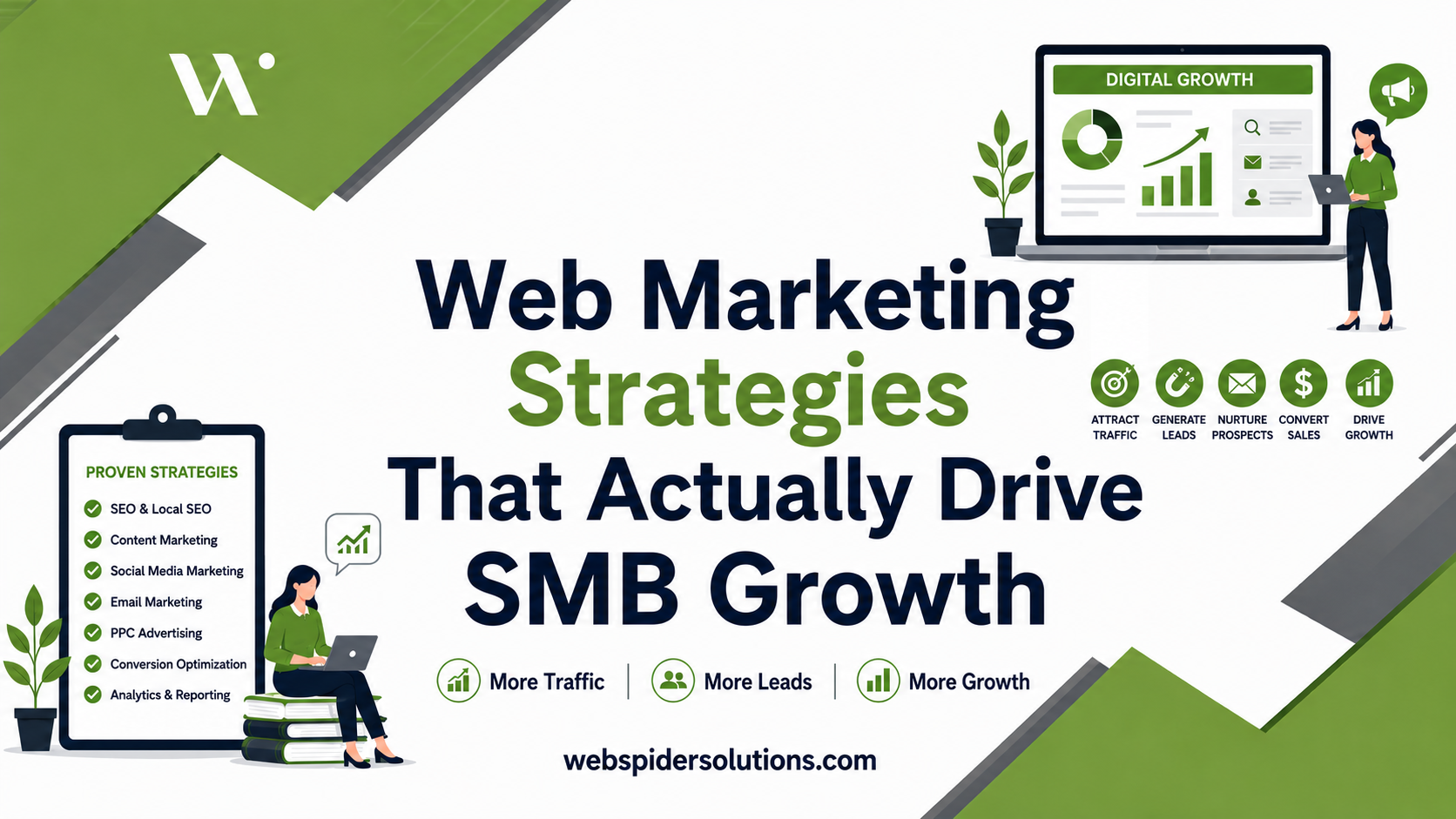
- Effective web marketing strategies focus on 2-3 primary channels that align with clear, measurable SMART goals to drive revenue.
- SMBs succeed by mastering selected channels, tracking relevant KPIs, and continuously optimizing through testing and data analysis.
Web marketing strategies are deliberate, channel-focused plans that align your digital marketing efforts with specific business objectives to drive measurable online visibility, engagement, and revenue. The term is often used interchangeably with “digital marketing strategy,” which is the recognized industry standard. Both describe the same structured approach: selecting the right channels, setting clear goals, and measuring outcomes that connect to growth. For small and medium-sized businesses, the difference between a strategy and a collection of tactics is the difference between compounding returns and wasted budget. Tools like Google Analytics 4, Mailchimp, and Search Console are only useful when they serve a defined plan.
What are SMART goals in web marketing and why do they matter?
A SMART goal framework anchors every web marketing campaign to a single, measurable primary outcome. SMART stands for Specific, Measurable, Achievable, Relevant, and Time-bound. Without this structure, marketing efforts scatter across too many objectives and produce results that are hard to evaluate or repeat.
The most common mistake SMBs make is treating secondary goals as equals to primary ones. Your primary goal might be reducing customer acquisition cost (CAC) by 20% in six months. A secondary goal, like improving email open rates, should support that primary outcome, not compete with it for budget or attention. When secondary goals start pulling resources away from the primary objective, the strategy loses its focus.
SMART goals also define which KPIs you track. A goal tied to lead quality improvement points you toward metrics like lead-to-close rate and cost per qualified lead, not total traffic or social followers. This distinction matters because vanity metrics feel productive while revenue-connected KPIs reveal whether your digital marketing and strategy is actually working.
Pro Tip: Set one primary SMART goal per quarter. Write it on a whiteboard and make every channel decision against it. If a new tactic doesn’t serve that goal, defer it to the next planning cycle.
Common KPIs worth tracking by goal type:
- Visibility goals: organic impressions, branded search volume, AI share of voice
- Engagement goals: time on page, email click-through rate, return visitor rate
- Revenue goals: CAC payback period, trial-to-paid conversion rate, pipeline influenced by channel
How to select the right digital marketing channels for your business
Concentrating on 2 to 3 primary channels produces better results than spreading budget across six platforms with mediocre execution on each. This is one of the most counterintuitive truths in online marketing strategy: doing less, better, outperforms doing everything, poorly.

The right channel mix depends on three factors: where your audience spends time, what stage your business is at, and what internal resources you can realistically sustain. A B2B software company with a three-person marketing team should not be running TikTok campaigns, managing a podcast, and publishing daily LinkedIn posts simultaneously. Picking two channels and mastering them first builds the foundation for expansion later.
Channel types fall into three categories, each with different strategic implications.
| Channel type | Examples | Best for |
|---|---|---|
| Owned media | SEO, email, blog content | Long-term compounding returns, retention |
| Paid media | Google Ads, Meta Ads, PPC | Fast visibility, retargeting, testing offers |
| Earned media | PR, reviews, social shares | Trust building, brand authority |
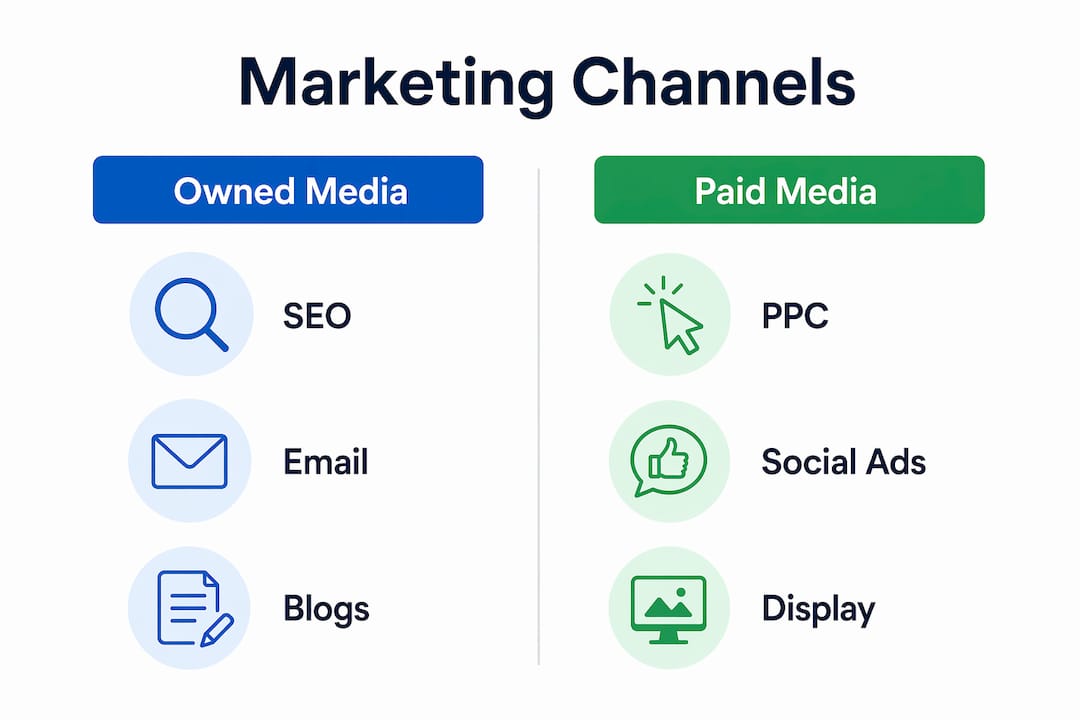
For most SMBs, the most effective starting point is one owned channel and one paid channel. SEO paired with targeted PPC covers both long-term visibility and immediate traffic. Email marketing delivers $36 to $42 returned per $1 spent on average, making it the highest-ROI retention channel available to businesses at any stage. That number means email is not optional for SMBs focused on revenue efficiency.
Pro Tip: Before committing to a channel, audit your team’s actual capacity to produce content for it consistently. A blog updated twice a year hurts your SEO more than no blog at all.
Audience research tools like SparkToro and Google Trends reveal where your specific customers are active, which removes the guesswork from channel selection for SMBs. Competitive analysis through tools like Semrush or Ahrefs shows which channels your competitors are winning on, and which ones they are neglecting.
Which performance metrics matter most in modern web marketing strategies?
Tracking assisted conversions in Google Analytics 4 reveals the multi-touch pathways that last-click attribution misses entirely. A customer who found you through an organic blog post, returned via a retargeted ad, and converted after an email sequence represents three channels working together. Last-click attribution credits only the email. Multi-touch attribution tells the real story.
Performance measurement works best in tiers, organized by what each metric actually tells you:
- Tier 1 (Visibility): organic search impressions, branded search volume, local pack appearances, AI overview citations
- Tier 2 (Engagement): email open and click rates, average session duration, scroll depth, return visitor percentage
- Tier 3 (Revenue intent): CAC payback period, trial-to-paid conversion rate, pipeline influenced by marketing channel, revenue per email subscriber
The review cadence matters as much as the metrics themselves. Weekly reviews should cover brand search trends and paid campaign performance. Monthly reviews assess channel-level ROI and content performance. Quarterly reviews are for full channel audits and strategy adjustments. This structure prevents both over-reacting to short-term noise and ignoring slow-building problems.
One emerging metric that most SMBs are not yet tracking is LLM share of voice. AI platforms like ChatGPT increasingly determine brand visibility in zero-click search environments, where users get answers without clicking through to a website. Tracking how often your brand appears in AI-generated responses is becoming a meaningful visibility signal for 2026 and beyond.
How to continuously optimize your web marketing strategy
Smart marketers treat digital marketing strategies as living systems, continuously refined through testing and data analysis rather than set-and-forget plans. This distinction between strategy, plan, and campaign is one that most SMBs get wrong. A strategy defines your direction and goals. A plan maps out the specific activities and timeline. A campaign is a single execution within that plan. Confusing the three leads to wasted budget and fractured effort.
Continuous optimization follows a repeatable cycle:
- Establish a baseline. Before testing anything, document current performance across your chosen KPIs. You cannot measure improvement without a starting point.
- Run structured A/B tests. Test one variable at a time: a subject line, a landing page headline, a call-to-action button. Tools like Google Optimize, VWO, and Unbounce make this accessible for SMBs without developer resources.
- Analyze and act on data. After a statistically meaningful sample, apply the winning variant and document what you learned. Build a running log of test results.
- Prune underperforming channels. If a channel has received consistent investment for three months and shows no movement on Tier 3 metrics, reallocate that budget to a channel with stronger signals.
- Apply the 70-20-10 rule. The 70-20-10 budget allocation framework directs 70% of budget to proven channels, 20% to adjacent experiments with early positive signals, and 10% to entirely new channel bets. This prevents both stagnation and reckless experimentation.
Content strategy is where optimization compounds most visibly. Pillar-cluster content architecture with AI optimization outperforms high-volume, low-quality publishing. One authoritative pillar page supported by ten focused cluster articles earns better rankings and more AI citations than fifty thin posts on unrelated topics.
Pro Tip: Schedule a 90-minute strategy review every quarter. Bring your KPI dashboard, your test log, and your budget allocation. Treat it like a board meeting for your marketing function.
What channel mix fits different SMB business types?
The most effective digital marketing strategy is not universal. It is specific to your business model, stage, and customer behavior. The 3-3-3 rule offers a practical framework: focus on three core messages, three primary channels, and three key measurable outcomes. This constraint forces clarity and prevents the channel sprawl that kills most SMB marketing programs.
| Business type | Recommended channels | Primary KPIs |
|---|---|---|
| B2B SaaS | SEO, content marketing, email nurture | Trial-to-paid rate, CAC payback, pipeline influenced |
| E-commerce / DTC | Email, paid social, SEO | Revenue per subscriber, ROAS, repeat purchase rate |
| Local services | Local SEO, Google Business Profile, targeted paid search | Local pack rank, call volume, review velocity |
| Professional services | LinkedIn, SEO, email | Lead quality score, referral rate, proposal win rate |
Local SEO and Google Business Profile optimization are the highest-leverage tactics for service-oriented SMBs because they drive visibility with minimal ongoing investment. NAP consistency (name, address, phone number) across directories and a steady stream of genuine customer reviews directly impact local search rankings. A plumber in Austin who dominates the local pack for “emergency plumber Austin” does not need a national content strategy.
For B2B companies, aligning lead generation tactics with your channel mix determines whether you attract buyers or just traffic. SEO content targeting bottom-of-funnel keywords like “best CRM for construction companies” converts at a far higher rate than broad awareness content, because the search intent is already commercial.
Key takeaways
A focused, SMART-goal-driven web marketing strategy built on 2 to 3 mastered channels and measured with revenue-connected KPIs consistently outperforms broad, unfocused digital marketing efforts.
| Point | Details |
|---|---|
| SMART goals anchor strategy | Set one primary measurable goal per quarter and align every channel decision to it. |
| Channel focus beats channel volume | Mastering 2 to 3 channels produces better ROI than spreading budget across six platforms. |
| Revenue KPIs over vanity metrics | Track CAC payback, trial-to-paid rates, and pipeline influence instead of likes and pageviews. |
| 70-20-10 budget allocation | Put 70% on proven channels, 20% on experiments with signal, and 10% on new bets. |
| Business type determines channel mix | B2B SaaS, e-commerce, and local services each require a distinct channel and KPI combination. |
What I’ve learned from watching SMBs win and lose at digital marketing
After working with dozens of businesses across competitive digital markets, the pattern is consistent. The SMBs that grow are not the ones with the biggest budgets or the most creative campaigns. They are the ones that resist what I call “shiny object syndrome,” the compulsion to chase every new platform, format, or trend before mastering the channels already in front of them.
The hardest conversation to have with a business owner is telling them to stop doing something. Stopping a channel feels like giving up. But data tells a different story. When you pull budget from a channel that has produced zero pipeline influence in 90 days and redirect it to one that is already converting, the results are almost always immediate and measurable.
The businesses I have seen succeed fastest are the ones that treat their web marketing strategy as a system with feedback loops, not a campaign calendar. They test, document, adjust, and repeat. They know their CAC payback period the way a CFO knows gross margin. They track AI share of voice alongside organic rankings because they understand that search behavior is shifting.
The uncomfortable truth is that most SMBs do not need more marketing channels. They need more discipline with the ones they already have. Pick your three. Measure what matters. Iterate every quarter.
Ready to put your web marketing strategy into action?
Webspidersolutions works with SMBs and marketing teams to build focused, data-driven digital marketing programs that connect channel investment to real revenue outcomes. Whether you are starting from scratch or auditing an existing program, the right foundation makes every tactic more effective. Explore the SEO strategy guide built specifically for businesses ready to compete in organic search, or get up to speed on PPC advertising fundamentals to understand how paid campaigns fit into your broader channel mix. Both resources are built for practitioners who want clarity, not complexity.
FAQ
What is a web marketing strategy?
A web marketing strategy is a structured plan that aligns your digital marketing channels, goals, and KPIs to drive specific business outcomes like lead generation, sales, or brand visibility. It differs from a campaign in that it defines the overall direction rather than a single execution.
How many digital marketing channels should an SMB focus on?
Most SMBs perform best by concentrating on 2 to 3 primary channels rather than spreading budget across many platforms. A focused channel mix prevents resource dilution and allows for the consistent execution needed to build traction.
What metrics actually matter in digital marketing?
Revenue-connected KPIs like CAC payback period, trial-to-paid conversion rate, and pipeline influenced by channel matter far more than vanity metrics like followers or pageviews. Google Analytics 4 assisted conversions reveal the multi-touch pathways that single-channel attribution misses.
How often should I review my digital marketing strategy?
Weekly reviews should cover paid campaign performance and brand search trends. Monthly reviews assess channel-level ROI. Quarterly reviews are for full strategy audits, budget reallocation, and goal-setting for the next period.
What is the 70-20-10 rule in marketing budget allocation?
The 70-20-10 rule directs 70% of your marketing budget to proven channels, 20% to adjacent experiments showing early positive signals, and 10% to entirely new channel bets. This structure balances stability with the experimentation needed for long-term growth.