






TL;DR:
- Digital marketing encompasses multiple online channels working together to attract and convert customers.
- Focus, measurement, and patience are key to successful and sustainable digital marketing results.
- SMBs should prioritize a few channels, build expertise, and avoid chasing trends without strategic focus.
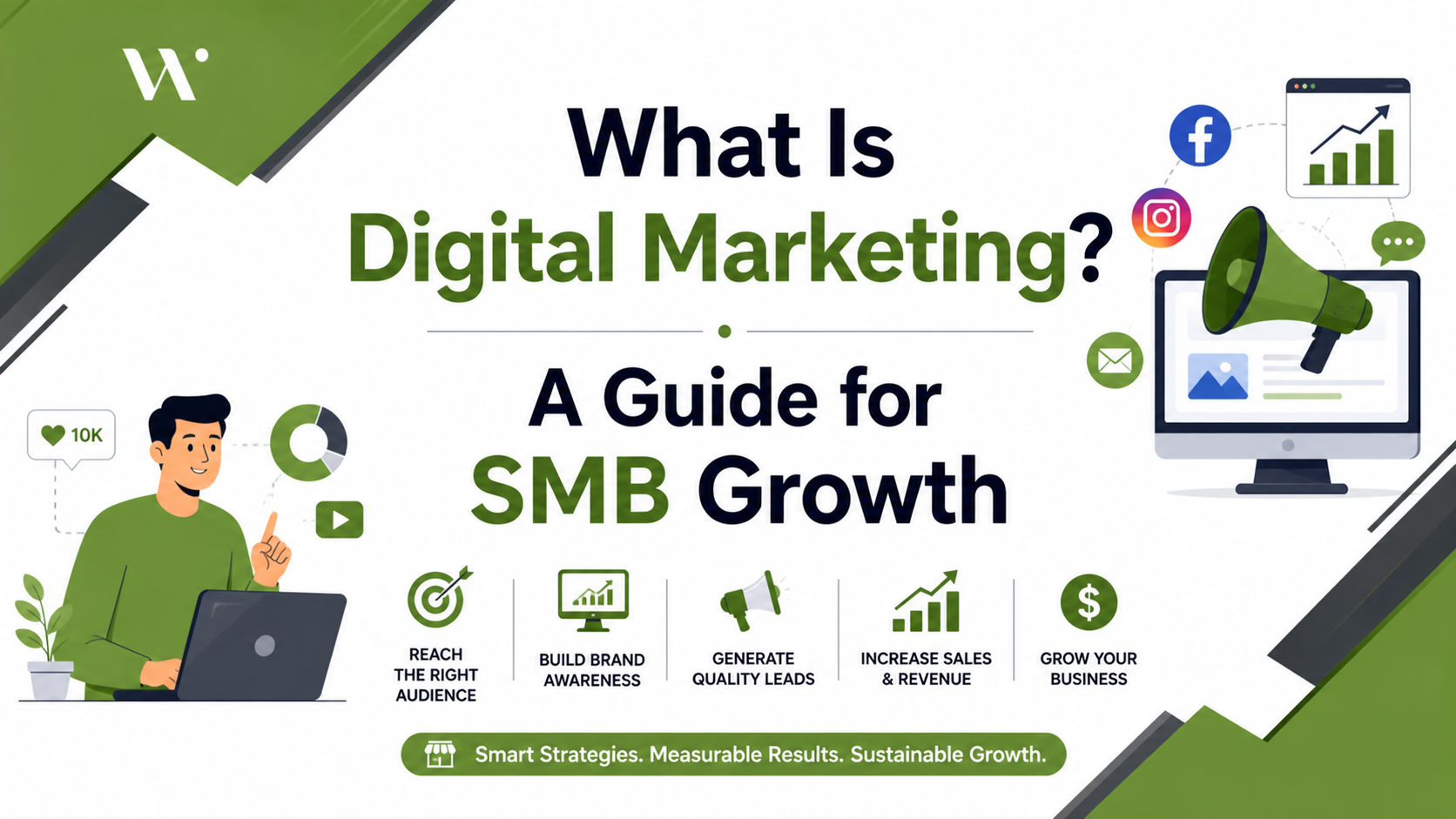
Most business owners think digital marketing means posting on social media a few times a week. That’s like thinking cooking is just turning on the stove. The real picture is far broader, and far more powerful. Digital marketing means using digital channels to connect with target audiences online, covering paid, owned, and earned channels such as search, social media, email, websites, and more. This guide walks you through what digital marketing actually covers, how a strategy works in practice, and the specific steps your business can take to start generating real, measurable growth online.
Table of Contents
- What is digital marketing?
- Core components of digital marketing
- How does a digital marketing strategy work?
- Digital marketing in action: practical steps for SMBs
- What most SMBs miss about digital marketing
- Expert help to unlock digital growth
- Frequently asked questions
Key Takeaways
| Point | Details |
|---|---|
| Multi-channel strategy | Digital marketing uses a mix of channels—search, social, email, and websites—to reach your audience online. |
| Iterative process | Great results come from measuring outcomes and continuously improving your approach. |
| Actionable steps | Define goals, select key channels, track performance, and optimize like top-performing SMBs. |
| Start simple, scale | You don’t need a big budget—begin with focused efforts and build as you grow. |
What is digital marketing?
Digital marketing is every online action your business takes to attract, engage, and convert potential customers. It’s not a single tool or tactic. It’s an entire ecosystem of channels working together to build your visibility and drive revenue.
Here’s what that ecosystem actually includes for most businesses:
- Search engines (Google, Bing): Getting found when people search for what you sell
- Social media platforms (Facebook, LinkedIn, Instagram): Building relationships and reaching targeted audiences
- Email: Nurturing leads and keeping existing customers engaged
- Your website: The hub where everything else drives traffic
- Content: Blog posts, videos, guides, and resources that attract and educate buyers
- Paid advertising: Google Ads, social ads, display ads, and remarketing campaigns
As Google defines it, digital marketing spans paid, owned, and earned channels. Paid means you spend money to reach an audience. Owned means channels you control, like your website and email list. Earned means visibility you gain through quality content and reputation, such as organic search rankings or word-of-mouth shares.
“Many SMBs mistakenly treat digital marketing as a single lever. In reality, it’s an integrated system. Pull just one lever and you get limited results. Pull them together strategically, and the effects compound.”
One of the biggest misconceptions we see is that business owners separate “real marketing” from “digital stuff.” But the importance for small businesses of getting this right cannot be overstated. Your customers are spending hours online every day. Your digital presence determines whether they find you or find your competitor.
Core components of digital marketing
Once you know what digital marketing is, it’s essential to understand its main building blocks. Each component serves a specific role in attracting and converting customers. And while you don’t need to master all of them at once, understanding how they fit together helps you make smarter decisions about where to focus first.
Digital marketing includes paid advertising, social media, SEO, and email as core channels. Here’s how each one works in practice:
| Channel | Type | Primary Business Purpose |
|---|---|---|
| SEO (search engine optimization) | Owned/Earned | Drive free, long-term organic traffic |
| SEM/PPC (paid search) | Paid | Capture high-intent buyers immediately |
| Social media marketing | Owned/Earned/Paid | Build brand awareness and community |
| Email marketing | Owned | Nurture leads and retain customers |
| Content marketing | Owned/Earned | Educate, attract, and build authority |
| Web design and UX | Owned | Convert visitors into leads or buyers |
Search (SEO and SEM): SEO is the practice of improving your website so it ranks higher in organic search results. SEM (search engine marketing) is paid advertising on search platforms. Both target people who are actively searching for solutions, which makes them some of the highest-converting channels for SMBs.
Social media: Platforms like LinkedIn work especially well for B2B businesses. Facebook and Instagram offer precise audience targeting for consumer-facing brands. Learning social media marketing strategies specific to your industry can dramatically shorten your learning curve.

Email: Despite being one of the oldest digital channels, email consistently delivers strong returns. It’s your most direct line to people who have already shown interest in your business.
Content marketing: Blog posts, guides, videos, and case studies build trust and draw organic traffic. Content is what fuels your SEO and gives your social media posts something worth sharing.
Web design and UX: Your website isn’t just an online brochure. It’s where conversions happen. Poor load speed, confusing navigation, or a weak call to action can kill the results from every other channel.
The magic of integrated digital marketing is how these channels reinforce each other. A blog post attracts organic search traffic. A visitor signs up for your email list. You retarget them with paid ads. You close the sale. That loop is what separates businesses that grow consistently from those that get random results.
Pro Tip: Don’t try to dominate every channel at once. Pick two or three based on where your customers already spend time, and get those working well before expanding.
How does a digital marketing strategy work?
With the core components in mind, let’s look at how a real digital marketing strategy comes together for your business. Strategy is where most SMBs fall short. They pick tactics before defining goals, skip the audience research, and jump straight to posting content or running ads without a plan. The result? Wasted budget and inconsistent results.
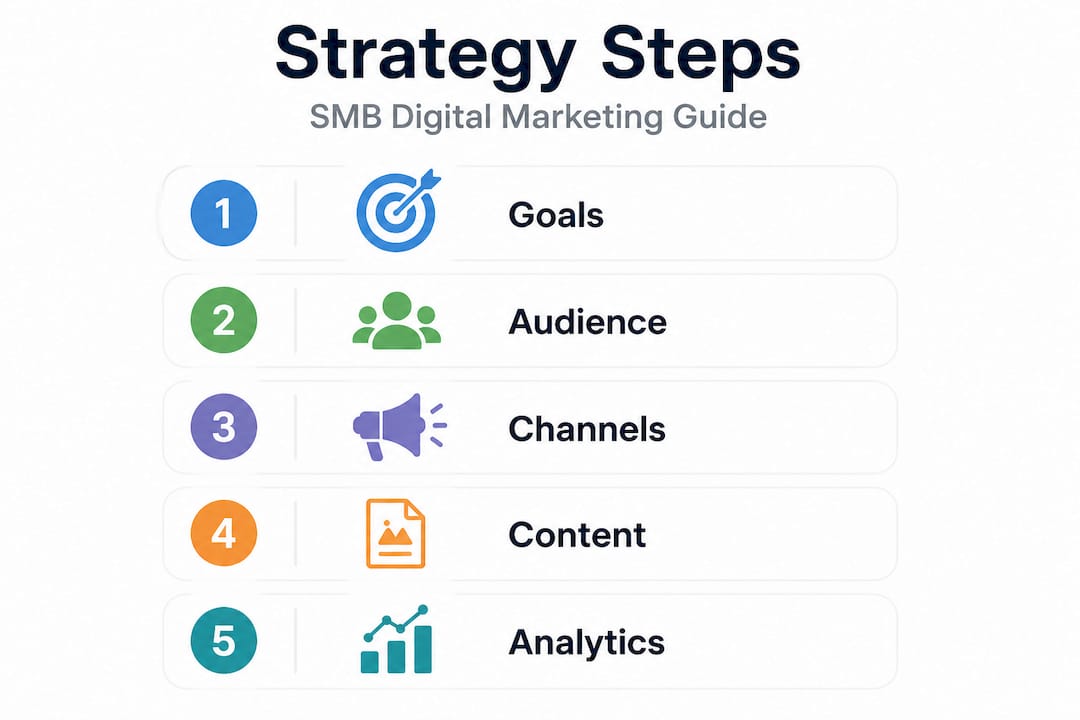
A digital marketing strategy follows a planning loop from planning to execution to measurement to iteration. Here’s what that looks like in practice:
- Set clear goals. Use SMART goals: Specific, Measurable, Achievable, Relevant, and Time-bound. “Get more website traffic” is not a goal. “Increase organic website sessions by 30% in six months” is.
- Define your audience. Who are your ideal customers? What problems do they have? Where do they search for solutions? Build a simple customer profile that guides every decision.
- Choose your channels. Based on your audience and goals, decide which two or three channels will drive the most value. A B2B company targeting procurement managers will prioritize LinkedIn and email over TikTok.
- Create and execute campaigns. Publish content, launch ads, send emails, and optimize your website. Execution is where strategy meets reality.
- Track results with analytics. Use tools like Google Analytics 4, Search Console, and platform-specific dashboards to monitor what’s working. Understanding analytics for digital marketing is non-negotiable if you want to grow.
- Iterate based on data. Review your numbers regularly. Kill what isn’t working, scale what is, and test new ideas systematically.
| Strategy stage | Key action | Common mistake to avoid |
|---|---|---|
| Planning | Define specific goals and audience | Setting vague or unrealistic targets |
| Channel selection | Match channels to audience behavior | Spreading budget too thin |
| Execution | Launch campaigns and publish content | Doing everything at once, poorly |
| Measurement | Track KPIs weekly | Ignoring data until month-end |
| Iteration | Optimize based on actual performance | Making changes without testing |
Pro Tip: Review your analytics every week, not just monthly. Spotting a problem after four weeks of lost spend is far more painful than catching it after seven days.
For SMBs building this process for the first time, a step-by-step strategy guide can help you avoid the most common planning mistakes. If you already have a strategy but aren’t seeing results, effective strategy planning resources can help you diagnose where the gaps are.
Digital marketing in action: practical steps for SMBs
To make this strategy real, here’s how you can put digital marketing to work in your business right now. The planning phase is important, but action is what builds momentum. Here are the specific steps to launch or improve your digital marketing with a limited budget and realistic timeline.
- Define your primary business objective. Are you trying to generate leads, drive e-commerce sales, grow your email list, or increase brand awareness? Your objective determines everything else. Define your goals and pick channels before you spend a single dollar on ads or content.
- Audit what you already have. Before adding new channels, evaluate your current website, social profiles, and any existing content. Fix obvious problems first. A broken contact form or a five-second page load time will undermine even the best campaign.
- Pick your focus channels. For most SMBs, the highest-priority channels are a functional, fast website, basic SEO to capture search demand, and either email or social media depending on your audience. Start there. You can explore what’s working in successful strategy steps to help make this decision with confidence.
- Create a 90-day content and campaign plan. Map out what you’ll publish, where, and when. Consistency matters more than volume. Three high-quality blog posts per month beat thirty rushed social media posts every time.
- Set up measurement before you launch. Install Google Analytics 4 and Google Search Console on your website. Set up conversion tracking for form submissions, phone calls, or purchases. If you can’t measure it, you can’t improve it.
- Review, learn, and adjust every month. After 30 days, review your data. What drove the most traffic? Which content got the most engagement? Which ads converted? Shift resources toward what’s working. This is the single most powerful habit you can build.
Pro Tip: If budget is tight, organic channels like SEO and email marketing deliver the best long-term return on investment. Paid ads can deliver faster results, but they stop the moment you stop spending.
A common mistake SMBs make is treating digital marketing as a one-time project rather than an ongoing practice. Another is copying what competitors are doing without understanding why those tactics work for them and whether they’ll work for your specific audience and goals. If you’re in a B2B environment, exploring B2B strategies for SMEs can help you identify approaches that match your sales cycle and buyer behavior.
What most SMBs miss about digital marketing
Here’s a hard truth based on real-world SMB marketing experience. Most small and medium-sized businesses don’t fail at digital marketing because they’re doing the wrong things. They fail because they’re doing too many things without finishing any of them properly.
The pattern looks like this: a business tries Facebook ads for a month, gets impatient, then pivots to blogging, then experiments with influencers, then runs a Google Ads campaign without proper conversion tracking. Six months pass. Budget is gone. Nothing shows meaningful results. The business owner concludes “digital marketing doesn’t work.”
The real problem was never the channels. It was the absence of disciplined focus.
Every successful digital marketing effort we’ve seen at the SMB level shares one trait: the business picked one or two channels, built real competency in them, measured relentlessly, and stayed the course long enough to see compounding results. SEO, for example, typically takes three to six months to show meaningful traffic gains. Email marketing requires list building before it becomes powerful. Neither works if you abandon them after four weeks.
There’s also a dangerous tendency to chase trends. Short-form video is popular right now, so every business thinks it needs a TikTok presence. But if your customers are 45-year-old procurement managers buying industrial equipment, TikTok is not where your budget should go. The challenges in digital marketing aren’t usually about the technology. They’re about discipline, focus, and patience.
The businesses that grow consistently are not the ones with the flashiest tactics. They’re the ones that set clear goals, measure honestly, and iterate without ego. They’re willing to admit when something isn’t working and pivot to what the data suggests. That mindset is rarer than any specific marketing skill, and it’s worth more than any trending platform.
Expert help to unlock digital growth
If you’re ready to accelerate your digital marketing results with less guesswork, here’s how we can help. At Web Spider Solutions, we work with SMBs that are serious about sustainable online growth. Whether you need a detailed SEO strategy guide to build your organic presence from the ground up, hands-on social media management that keeps your brand visible and engaging, or full-scale SEO campaigns for growth that target your highest-value keywords, our team brings strategy and execution together in one place. Stop guessing and start growing with the right experts in your corner.
Frequently asked questions
What are the most important digital marketing channels for SMBs?
Search engines, social media, email marketing, and a business website are the top channels for most SMBs, as these four channels consistently drive the highest return across industries.
How can I measure digital marketing success?
Set clear goals and track them using analytics tools like Google Analytics 4, then adjust strategies based on your results. Performance monitoring and iteration are fundamental steps in any effective digital marketing approach.
Is digital marketing expensive for small businesses?
SMBs can start with modest budgets by focusing on a few proven channels and scaling as they see results. The smartest approach is to define goals and pick channels before spending, so every dollar works toward a measurable outcome.
Do I need to hire an agency to succeed with digital marketing?
You can start in-house and supplement with agency support as your needs or ambitions grow. Many businesses handle basic SEO and email independently, then bring in expert support when they’re ready to scale paid advertising or more technical strategies.