





What does an SEO company actually do?
An SEO company is a professional service provider that helps businesses rank higher in search engine results and attract more organic traffic, without paying for every click. SEO stands for search engine optimization, and the practice covers everything from the words on your web pages to the technical structure of your site to the links pointing at it from other websites. A good agency pulls all of that together into a coordinated strategy rather than treating each piece in isolation.
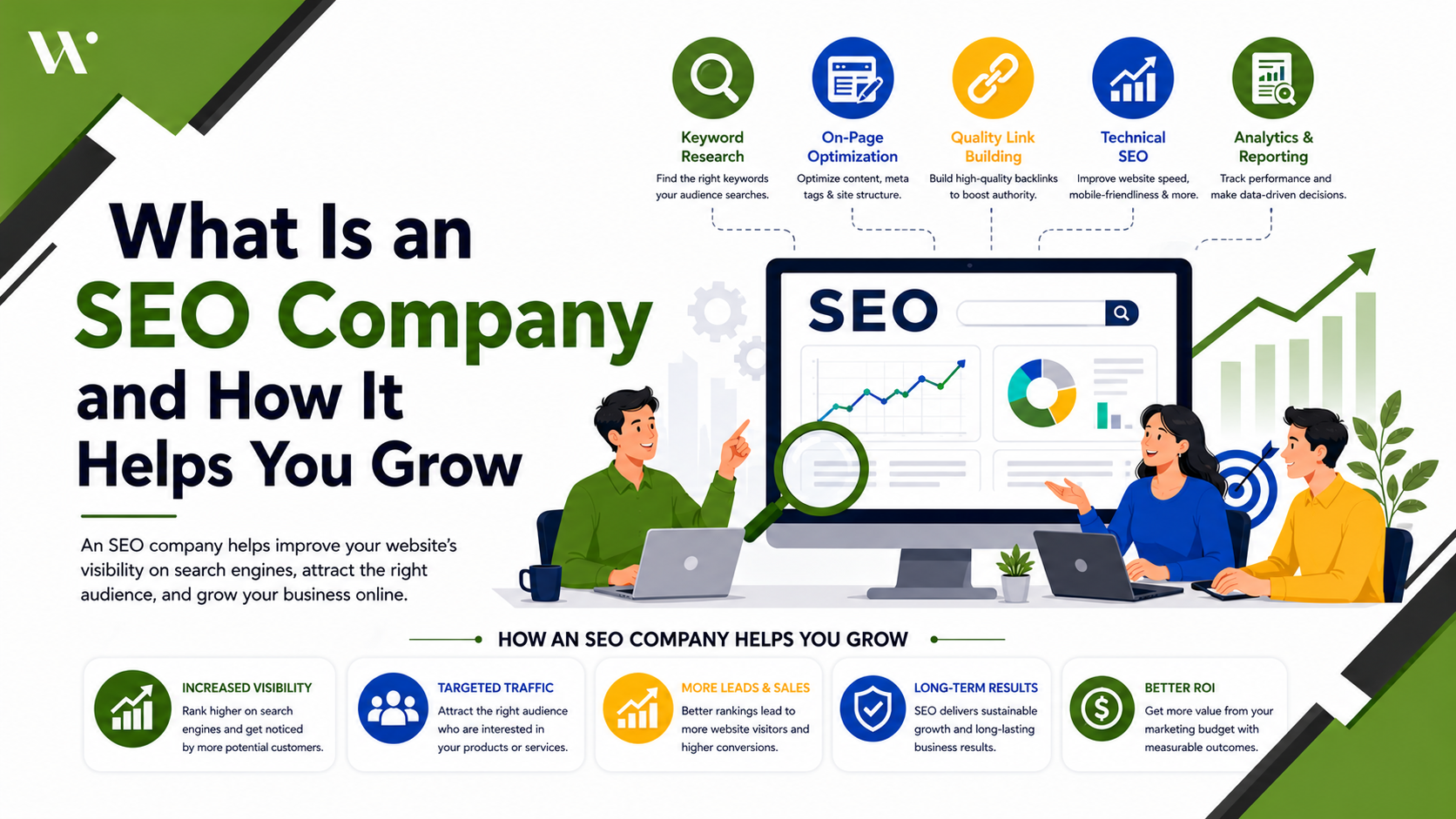
The core goal is straightforward: make your site more visible to people who are already searching for what you sell. Organic search drives the majority of website traffic, which means ranking well on Google is often the single highest-leverage thing a business can do for its online presence. SEO companies pursue that goal through four main activity categories:
- On-page SEO: Optimizing content, headings, meta tags, and internal links on individual pages
- Off-page SEO: Building backlinks and authority signals from other reputable websites
- Technical SEO: Fixing site architecture, crawlability, page speed, and mobile compatibility
- Local SEO: Targeting geographic searches for businesses with a physical location or service area
Most agencies deploy multidisciplinary teams that include developers, content strategists, and data analysts. That breadth is what separates a full-service SEO company from a freelancer who handles one piece of the puzzle. The combined effect of all four activity categories, executed consistently, is what moves the needle on rankings, traffic, and ultimately revenue.
Services you can expect from an SEO agency
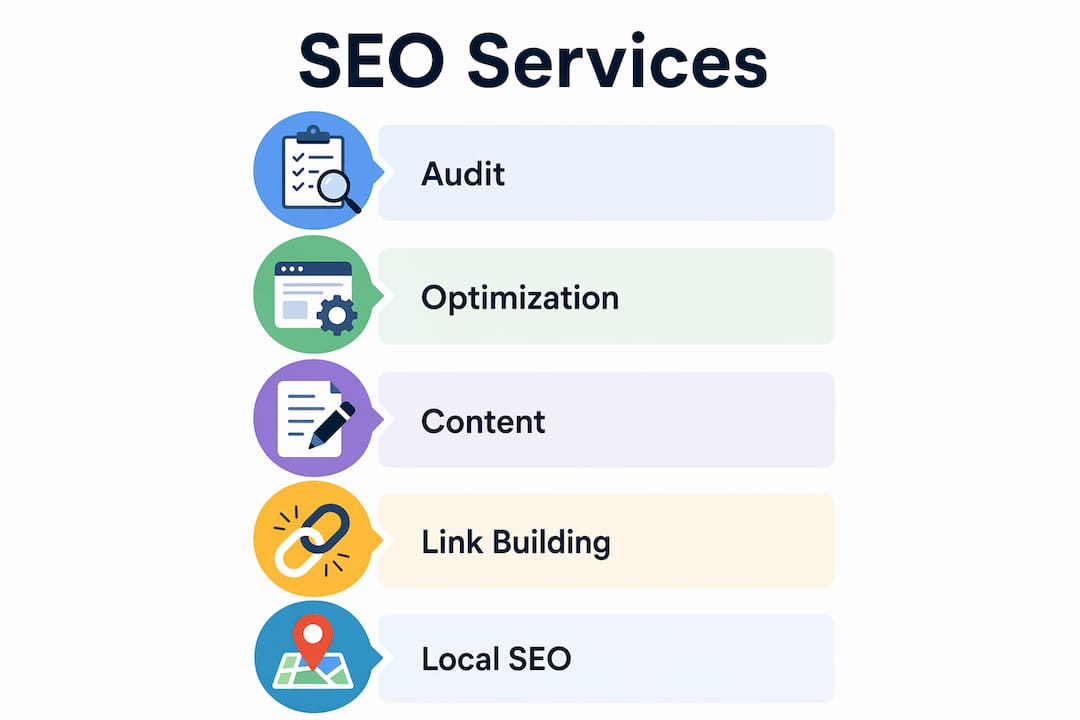
SEO marketing covers a wider range of activities than most business owners expect when they first hire an agency. Here is what a full-service provider typically delivers:
- Keyword research: Identifying the search queries your potential customers actually use, then mapping those terms to specific pages on your site
- Content optimization: Rewriting or improving existing pages so they match user search intent and satisfy Google’s quality signals
- Meta tag and title optimization: Crafting the page titles and descriptions that appear in search results to improve click-through rates
- Backlink acquisition: Outreach to authoritative websites to earn links that signal credibility to search engines
- Technical audits: Diagnosing crawl errors, broken links, duplicate content, slow load times, and indexing problems
- Site speed and mobile optimization: Ensuring pages load fast and display correctly on every device, per Google’s technical guidelines
- Local SEO: Managing Google Business Profile listings, local citations, and location-specific content for businesses targeting a geographic area
- Content creation: Writing new blog posts, landing pages, or resource guides that target valuable search queries
- Competitor analysis: Tracking what rival sites rank for and identifying gaps your site can fill
- Monthly reporting: Delivering clear data on rankings, traffic, conversions, and the work completed
The scope varies by agency and budget, but the best firms treat all of these as connected rather than separate line items. A page that ranks well needs good content, clean technical structure, and credible links pointing at it. Pull any one of those away and the others underperform.

Why businesses hire SEO companies in the first place
The honest answer is that SEO connects businesses with customers at the exact moment those customers are searching for a solution. That timing is hard to replicate with any other channel. A paid ad disappears the moment you stop funding it; a well-ranked page keeps delivering traffic for months or years.
Here are the most common reasons businesses bring in an SEO firm:
- Organic traffic growth: Ranking on page one for relevant queries sends a steady stream of visitors who are already interested in what you offer
- Lead generation: Qualified search traffic converts at higher rates than most paid channels because the visitor arrived with intent
- Brand credibility: Appearing at the top of search results signals authority. Most users trust organic results more than ads
- Competing with larger companies: SEO helps smaller sites compete with bigger ones by targeting specific, high-intent queries that large brands often overlook
- Long-term marketing efficiency: Unlike pay-per-click advertising, the value of SEO compounds over time rather than resetting to zero when the budget runs out
- Audience targeting: Keyword strategy lets you reach specific customer segments based on what they are searching for, not just demographic guesses
For small and medium businesses especially, SEO often delivers better return on investment than broad advertising because every dollar goes toward reaching people who are actively looking for your product or service.

How an SEO company works from day one to results
The workflow at a reputable agency follows a predictable sequence, even if the specific tactics shift based on your industry and goals.
- Initial audit: The agency analyzes your current site for technical issues, content gaps, backlink profile, and existing rankings. This baseline shapes everything that follows.
- Competitor research: Your top-ranking competitors get analyzed for the keywords they own, the content they publish, and the links they have earned.
- Keyword strategy: The team identifies which search queries to target first based on search volume, competition level, and relevance to your business goals.
- Technical fixes: Before creating new content, the agency addresses crawl errors, site speed problems, duplicate pages, and any structural issues that would limit how well Google can index your site.
- Content optimization and creation: Existing pages get revised to better match target queries. New pages or blog posts get written to capture additional search demand.
- Link building: The agency reaches out to relevant websites, publications, and directories to earn backlinks that raise your domain authority.
- Monitoring and analysis: Rankings, traffic, and conversion data get tracked weekly or monthly. The team watches for algorithm updates that might require a strategy adjustment.
- Reporting: You receive regular reports showing what changed, why, and what comes next.
Pro Tip: Ask your agency to show you the audit findings before any work begins. A firm that cannot explain what is broken on your site and why fixing it matters has not done the diagnostic work that justifies the rest of the engagement.
One thing worth setting expectations on: noticeable SEO results typically take 6–12 months regardless of agency quality. That timeline reflects how search engines evaluate and re-rank sites, not a lack of effort. Agencies that promise page-one rankings in 30 days are either misleading you or planning tactics that will hurt you later.
Benefits of hiring an SEO company vs. doing it yourself
Handling SEO in-house is possible, but the gap between what a dedicated agency delivers and what a generalist marketing employee can manage tends to widen quickly as competition increases.
- Expert team depth: SEO agencies provide access to developers, content strategists, and analysts working together. That combination is expensive to replicate with internal hires.
- Time savings: SEO requires ongoing attention. Keyword monitoring, content updates, link outreach, and technical maintenance add up to dozens of hours per month. An agency absorbs that workload.
- Faster problem diagnosis: An experienced team has seen the same technical issues across hundreds of sites and can identify root causes that an in-house generalist might spend weeks chasing.
- Algorithm awareness: Google updates its ranking systems frequently. Agencies track these changes professionally and adjust strategies before rankings drop.
- Improved rankings and traffic: Consistent, well-executed SEO improves rankings and drives qualified traffic that leads to measurable increases in leads and sales.
- Scalability: As your business grows, an agency can expand the scope of work without the lag time of recruiting and training new staff.
The clearest argument for hiring out is specialization. SEO has become technical enough that doing it well requires people who spend their entire working day on it.
What does it cost to hire an SEO company?
Pricing varies widely, and the range reflects genuine differences in service scope, team quality, and market competitiveness. SEO companies tailor packages based on client budget and goals, so there is no single standard rate.
The three most common pricing structures are:
- Monthly retainer: A fixed monthly fee covering an agreed scope of ongoing work. This is the most common model for sustained SEO campaigns.
- Project-based pricing: A one-time fee for a defined deliverable, such as a full technical audit or a site migration. Useful when you need a specific problem solved rather than ongoing management.
- Hourly consulting: Less common for full campaigns, but used for audits, training, or advisory work where the scope is narrow.
| Pricing model | Typical use case | Approximate cost range |
|---|---|---|
| Monthly retainer | Ongoing SEO management | — |
| Project-based | One-time audit or migration | — |
| Hourly consulting | Advisory or training sessions | — |
Note: Ranges reflect general market rates for U.S.-based engagements. Actual costs depend on agency size, service scope, and industry competition.
Several factors push costs up or down. A highly competitive industry like legal services or insurance requires more aggressive link building and content production than a niche B2B market. National campaigns cost more than local ones. Agencies with proven track records charge more than newer firms. Most reputable agencies ask for a minimum commitment of three to six months, which aligns with the reality that SEO results take time to materialize.
One thing to watch: unusually low pricing often signals either very limited scope or tactics that violate Google’s guidelines. Both outcomes cost you more in the long run.
How to choose the right SEO company for your business
The SEO industry has no formal licensing or certification requirement, which means the quality gap between providers is enormous. Here is how to filter for the ones worth hiring:
- Review case studies and results: Ask for examples of clients in your industry or with similar goals. Look for specific metrics: rankings gained, traffic increases, conversion improvements.
- Check client testimonials: Third-party review platforms give you unfiltered feedback on what working with the agency actually looks like day to day.
- Assess team capabilities: A strong agency can explain their technical, content, and link-building processes clearly. If the answer to “how do you build links?” is vague, that is a warning sign.
- Confirm reporting practices: You should receive regular reports showing rankings, traffic, and the specific work completed. Agencies that resist transparency on deliverables are worth avoiding.
- Align on goals and timeline: A good agency sets realistic expectations. If someone promises guaranteed rankings or overnight results, walk away.
- Understand contract terms: Know what you are committing to. Most agencies require a three to six month minimum engagement. Understand what happens if you want to exit early.
- Watch for black-hat tactics: Tactics like buying links in bulk, keyword stuffing, or cloaking content can produce short-term gains followed by Google penalties that are painful to recover from.
Pro Tip: Before signing, ask the agency to walk you through a sample audit of your site. How they diagnose your current situation tells you more about their capabilities than any sales pitch.
The best SEO partnerships tend to be long-term ones. An agency that understands your business, your customers, and your competitive environment gets better at serving you over time. Switching agencies frequently resets that institutional knowledge and often delays results. For local SEO needs, proximity and market familiarity matter too.
The three core types of SEO work explained
Understanding the three primary categories helps you evaluate what an agency is actually doing for you and whether the work matches your goals.
On-page SEO
On-page SEO covers everything you control directly on your own website. The three primary categories of SEO start here because it is the foundation everything else builds on.
- Keyword placement in page titles, headings, and body content
- Meta descriptions that accurately describe the page and encourage clicks
- Internal linking structure that helps search engines understand site hierarchy
- Content quality: depth, accuracy, and relevance to the query
- Image alt text and file naming for image search visibility
- URL structure: clean, descriptive URLs that reflect page content
Off-page SEO
Off-page SEO is about what other websites say about yours. Backlinks from authoritative, relevant sites remain one of the strongest ranking signals Google uses.
- Earning links from industry publications, news sites, and directories
- Digital PR campaigns that generate coverage and citations
- Guest posting on relevant sites to build authority and referral traffic
- Brand mentions and unlinked citations that contribute to authority signals
- Disavowing toxic or spammy links that could harm rankings
Technical SEO
Technical SEO ensures that search engine crawlers can find, read, and index your pages without obstacles. Even excellent content ranks poorly if the technical foundation is broken.
- Site speed optimization: compressing images, reducing server response time, enabling caching
- Mobile compatibility: ensuring the site works correctly on phones and tablets
- Structured data markup: helping search engines understand page content and display rich results
- XML sitemaps and robots.txt configuration
- Fixing crawl errors, redirect chains, and duplicate content issues
- HTTPS security and Core Web Vitals compliance
Local SEO
For businesses serving a specific city or region, local SEO adds a fourth layer. This includes optimizing your Google Business Profile, building local citations in directories like Yelp and the Better Business Bureau, and creating location-specific content that targets geographic search queries. The variety of SEO specialisms reflects how different business models require different approaches, and local SEO is one of the clearest examples of that.
Webspidersolutions can handle your SEO from audit to growth
Most businesses waste months on SEO because they start with tactics before they have a strategy. Webspidersolutions takes the opposite approach: every engagement starts with a thorough audit of your current rankings, technical health, and competitive gaps, so the work that follows is grounded in what your site actually needs.
The team at Webspidersolutions covers the full range of SEO work, from on-page content optimization and technical fixes to link building and long-term content strategy. That means you are not stitching together multiple vendors or managing a freelancer for each piece. If you want to see what a structured approach looks like before committing, the 14-step SEO strategy guide is a good place to start. For businesses ready to move faster, Webspidersolutions offers a free SEO audit to identify the highest-priority opportunities on your site right now.
Key Takeaways
An SEO company improves your search rankings and organic traffic by combining on-page optimization, technical fixes, link building, and content strategy into a coordinated, long-term program.
| Point | Details |
|---|---|
| Core function | An SEO company optimizes your site across content, technical structure, and backlinks to rank higher in search results. |
| Timeline to results | Noticeable improvements typically take 6–12 months; agencies promising faster guarantees are a red flag. |
| Pricing models | Monthly retainers, project fees, and hourly consulting are the three standard structures; costs vary by scope and industry. |
| Choosing an agency | Prioritize case studies, transparent reporting, and realistic timelines over low prices or guaranteed rankings. |
| Webspidersolutions | Offers full-service SEO from technical audit through content and link building, with a free initial audit available. |