






TL;DR:
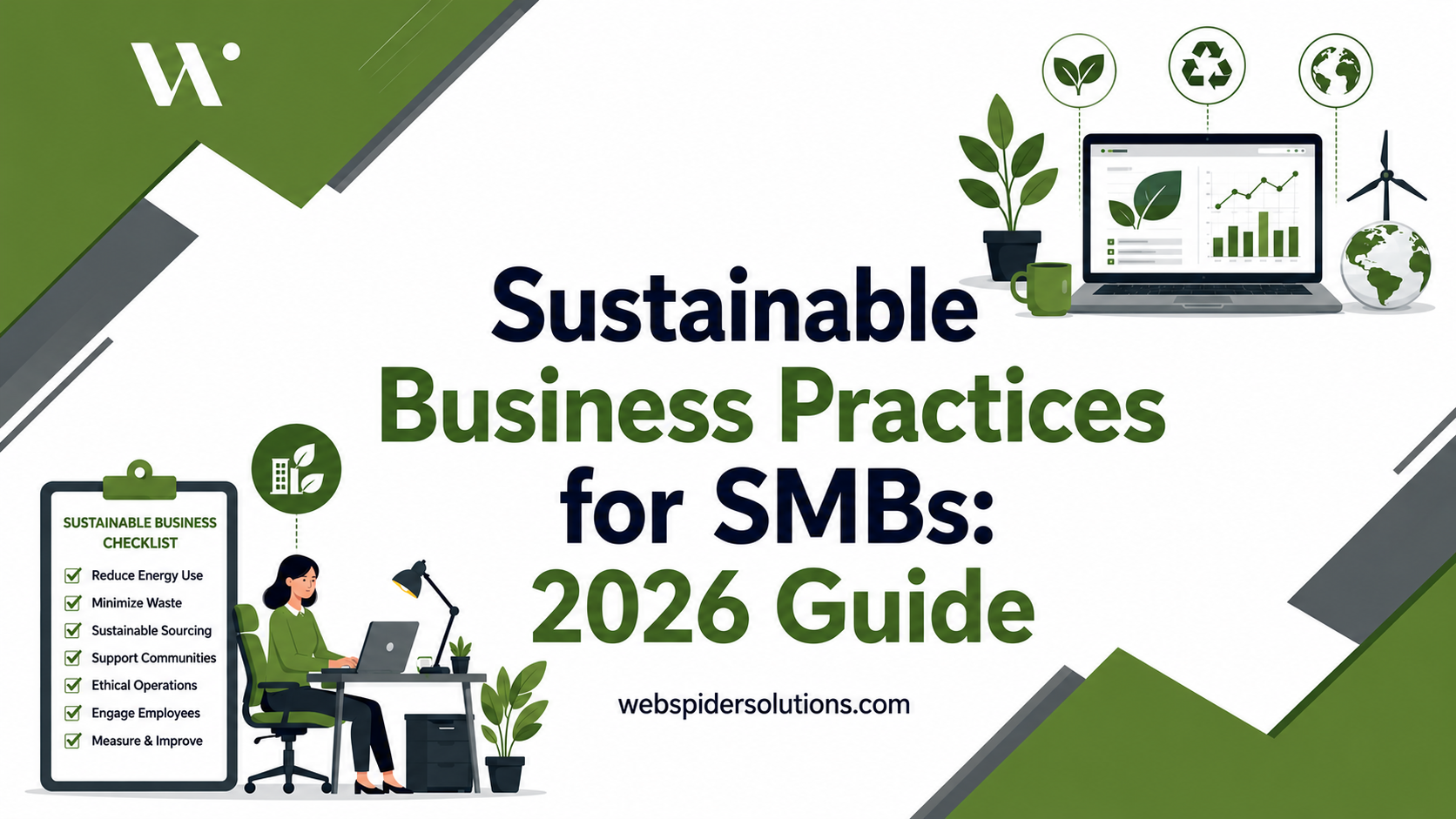
- Sustainable practices embed environmental, social, and governance principles into daily business operations for long-term value. SMBs can begin with simple, measurable actions like carbon accounting, energy efficiency, and waste reduction without large budgets. Authentic ESG implementation enhances brand reputation, stakeholder trust, and operational efficiency through transparency and supply chain collaboration.
Sustainable business practices are defined as the integration of environmental, social, and governance (ESG) principles into a company’s daily operations to create long-term value. The industry standard term for this framework is ESG, and it covers everything from energy use and waste handling to labor practices, community impact, and governance structures. For small to medium-sized business owners, adopting these practices is no longer optional. Research confirms that neglecting ESG raises operational costs and reduces competitiveness over time. The good news is that you do not need a large budget or a dedicated sustainability team to start.
1. Which sustainable business practices deliver the greatest impact for SMBs?
The highest-impact green business practices for SMBs combine environmental action with social responsibility and governance. Starting with carbon footprint accounting, workforce practices, and waste reduction gives you a foundation that satisfies both regulators and supply chain partners.
Carbon footprint accounting
Start with a cradle-to-gate boundary for your product carbon footprint. This means measuring emissions from raw material sourcing through to your facility’s gate, not the full product lifecycle. That narrower scope is manageable for most SMBs and gives you credible data to share with customers and suppliers.
Energy efficiency and renewable sourcing
Switch to LED lighting, install smart thermostats, and audit your HVAC systems. Then source electricity from renewable providers or install solar panels if your lease allows. These two steps together typically produce the fastest return on investment among all eco-friendly business strategies.

Waste reduction and circular economy
Design products for disassembly, run product take-back programs, and build reverse logistics into your operations. Circular economy initiatives moderately improve green supply chain performance. They work best when combined with energy and governance improvements rather than used in isolation.
Social responsibility and ethical operations
- Pay living wages and publish your pay equity data
- Source from suppliers with verified labor standards
- Engage your local community through volunteering or partnerships
- Track workforce diversity metrics and report them annually
Governance and ESG data transparency
Assign a named owner for sustainability decisions, even if that person holds another role. Publish your ESG metrics in a simple annual report. Governance commitment is what separates companies that sustain progress from those that stall after the first initiative.
Pro Tip: Start your ESG reporting with three metrics you can measure today: total energy consumption in kilowatt-hours, total waste sent to landfill in pounds, and employee turnover rate. These three numbers give you a credible baseline without expensive software.
2. How can SMBs start and scale sustainability without large budgets?
The most common mistake SMBs make is waiting until they have perfect data before acting. SMBs benefit by defining measurable boundaries and starting with operational emissions data they can access reliably. Imperfect data acted on today beats a perfect report delivered two years from now.
A practical four-step process works well for most SMBs:
- Define your scope. Choose one product line or one facility as your starting point. Use a cradle-to-gate boundary for carbon and operational boundaries for waste and energy.
- Collect data with simple tools. Spreadsheets work for early-stage tracking. Carbon accounting software priced under $5,000 per year, such as tools listed on the SME Climate Hub platform, handles more complex needs. Use industry average datasets to fill gaps where direct measurements are unavailable.
- Follow the ISO 14001 Plan-Do-Check-Act cycle. ISO 14001 implementation takes 1–6 months for small to medium organizations. The cycle covers environmental context definition, operational controls, monitoring, internal audit, and management review. You do not need full certification to benefit from the structure.
- Build traceability into your records. Keep invoices, meter readings, and supplier records organized so you can answer audit questions quickly. Traceability of underlying data sources is critical for effective ESG reporting and audit readiness.
Most SMBs are pushed into ESG work through supply chain requests from larger customers rather than direct regulation. That means your first ESG report does not need to be comprehensive. It needs to answer the specific questions your biggest customer is asking.
Pro Tip: Ask your top three customers what ESG data they need from suppliers before you build your reporting system. Their requirements define your minimum viable sustainability program.
3. What role do corporate sustainability initiatives play in brand reputation?
Effective ESG practices improve firm value, brand reputation, and stakeholder trust over time. This is not a soft benefit. Companies that publish credible ESG data attract better employees, retain more customers, and access lower-cost financing as lenders increasingly price ESG risk.
Sustainability-linked loyalty programs are a growing tool for SMBs. The key rule is alignment. Customer-facing sustainability branding must match authentic operational practices. Promising carbon-neutral delivery while running diesel-only logistics creates the exact consumer skepticism that destroys brand trust.
“Effective ESG disclosure enhances stakeholder engagement and brand image, but requires authentic execution and credible data management.” — Springer Nature, 2026
Practical steps that build brand reputation through ethical business operations include:
- Publish an annual sustainability summary on your website, even if it is one page
- Display third-party certifications such as B Corp, Fair Trade, or ISO 14001 where earned
- Share supplier audit results with customers who request them
- Run CSR campaigns tied to measurable community outcomes, not just donations
For SMBs looking to connect ESG initiatives to brand image, the most credible approach is showing the numbers behind the claims. Customers and B2B buyers have become skilled at identifying vague sustainability language. Specificity builds trust.
Social media amplifies sustainability credibility when the content is specific and consistent. A guide on social media’s role in branding confirms that ESG messaging performs best when tied to verifiable actions rather than aspirational statements.
4. How do sustainable supply chains boost operational efficiency?
Sustainable supply chain management reduces two types of risk simultaneously: resource volatility and reputational exposure. When you diversify suppliers, reduce material waste, and build circular logistics, you also reduce your dependence on single-source inputs that can fail during disruptions.
| Practice | Operational benefit | Sustainability benefit |
|---|---|---|
| Reverse logistics | Recovers product value, cuts disposal costs | Reduces landfill waste |
| Product take-back programs | Builds repeat customer contact | Extends material lifecycle |
| Design for disassembly | Simplifies end-of-life handling | Enables component reuse |
| Supplier ESG audits | Reduces supply chain disruption risk | Verifies ethical sourcing |
| Energy monitoring at facilities | Cuts utility costs | Lowers Scope 1 and 2 emissions |
Circular economy practices combined with other green supply chain strategies create meaningful operational and environmental benefits. Circular actions alone produce moderate results. The compounding effect comes from pairing them with energy reduction, governance controls, and supplier collaboration.
Supplier collaboration is the most underused tool in SMB sustainability. Sharing your carbon reduction targets with key suppliers creates joint accountability. Some suppliers will co-invest in efficiency improvements when they understand the shared business case.
Pro Tip: Add one ESG question to every supplier onboarding form: “What is your current approach to measuring carbon emissions?” The answers reveal which suppliers are ahead of the curve and which ones need support.
5. How should sustainability be embedded into daily operations?
Sustainability must be a guiding influence across all organizational work, not a reporting exercise or a side project. This means sustainability criteria appear in purchasing decisions, hiring criteria, product design reviews, and financial planning. When it only lives in a CSR report, it has no operational effect.
The governance structure does not need to be complex. Assign sustainability ownership to a senior manager, set quarterly review meetings, and tie at least one performance metric for each department to a sustainability outcome. That structure alone moves sustainability from aspiration to accountability.
Embedding ethical business operations into daily decisions also reduces long-term costs. Companies that track energy, waste, and supplier performance consistently find inefficiencies they did not know existed. The data itself drives improvement without requiring a separate sustainability initiative.
Key takeaways
Sustainable business practices deliver the greatest long-term value when ESG principles are embedded into daily operations, supply chain decisions, and brand communication rather than treated as a standalone reporting exercise.
| Point | Details |
|---|---|
| Start with manageable scope | Use cradle-to-gate carbon boundaries and operational data you already have. |
| Follow ISO 14001 structure | The Plan-Do-Check-Act cycle takes 1–6 months and builds audit-ready records. |
| Align brand and operations | Sustainability loyalty programs fail when customer promises outpace operational reality. |
| Combine circular strategies | Circular economy initiatives work best paired with energy reduction and governance controls. |
| Assign named ownership | Sustainability without a designated owner stalls after the first initiative. |
The mindset shift most SMBs miss
Working with SMBs on sustainability, the pattern I see most often is this: a business owner reads about ESG, gets excited, launches a recycling program and a “green” page on their website, and then wonders why nothing changes six months later. The problem is not effort. The problem is that sustainability was treated as a project with a start and end date rather than a lens applied to every decision.
The SMBs that make real progress do something different. They pick two or three metrics they can measure without new software, assign one person to own those numbers, and review them in the same meeting where they review revenue. That is it. No elaborate framework, no expensive consultant. Just accountability built into the existing rhythm of the business.
The brand benefits follow naturally from that discipline. When your sustainability numbers are real and improving, you can talk about them with confidence. Customers and B2B buyers notice the difference between a company that says “we care about the environment” and one that says “our energy use per unit dropped 12% last year.” Specificity is the competitive advantage most SMBs leave on the table.
For high-impact CSR ideas that connect operational sustainability to community outcomes, the best starting point is always the metrics you already track. Build outward from there.
How Webspidersolutions helps you communicate your sustainability story online
Your sustainability work deserves visibility. Webspidersolutions helps SMBs translate genuine ESG progress into search-optimized content that reaches the customers and B2B buyers who are actively looking for environmentally responsible partners. A well-structured SEO campaign puts your sustainability credentials in front of the right audience at the right moment. Pair that with a clear SEO strategy built around the specific search terms your buyers use, and your sustainability investment generates brand visibility alongside operational value. Webspidersolutions also supports integrated digital marketing that connects your sustainability messaging across channels for consistent, credible brand impact.
FAQ
What are sustainable business practices?
Sustainable business practices are the integration of environmental, social, and governance (ESG) principles into daily operations, covering energy use, waste handling, labor standards, community impact, and governance structures.
How do SMBs start ESG reporting without large budgets?
Start with spreadsheets and operational data you already have, such as utility bills and waste disposal records. Use industry average datasets to fill gaps and build accuracy over time.
Does sustainability actually improve financial performance?
Research confirms that effective ESG practices improve firm value and financial performance over time, while neglecting them raises operational costs and reduces competitiveness.
What is the ISO 14001 standard and do SMBs need it?
ISO 14001 is an environmental management system standard that uses a Plan-Do-Check-Act cycle. SMBs do not need full certification to benefit from the structure, and implementation typically takes 1–6 months.
How does sustainability affect customer loyalty?
Sustainability-linked loyalty works best when rewards connect to verifiable sustainable behaviors that match your actual operations. Misaligned promises create consumer skepticism and damage brand trust.