






TL;DR:
- Building a strong company culture requires deliberate leadership, specific behavioral values, and ongoing measurement. Leaders influence culture through daily actions, not just written statements or programs.
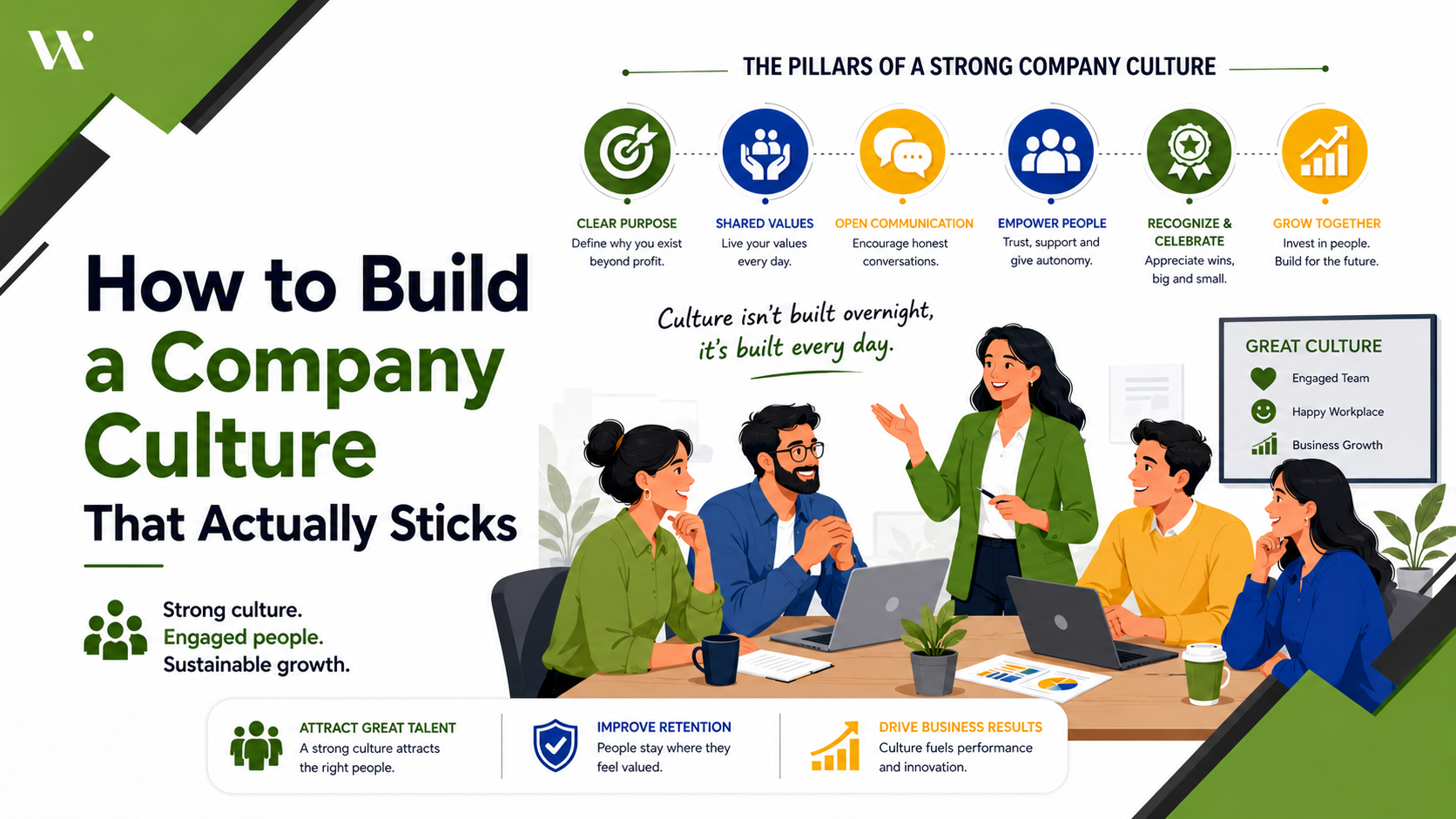
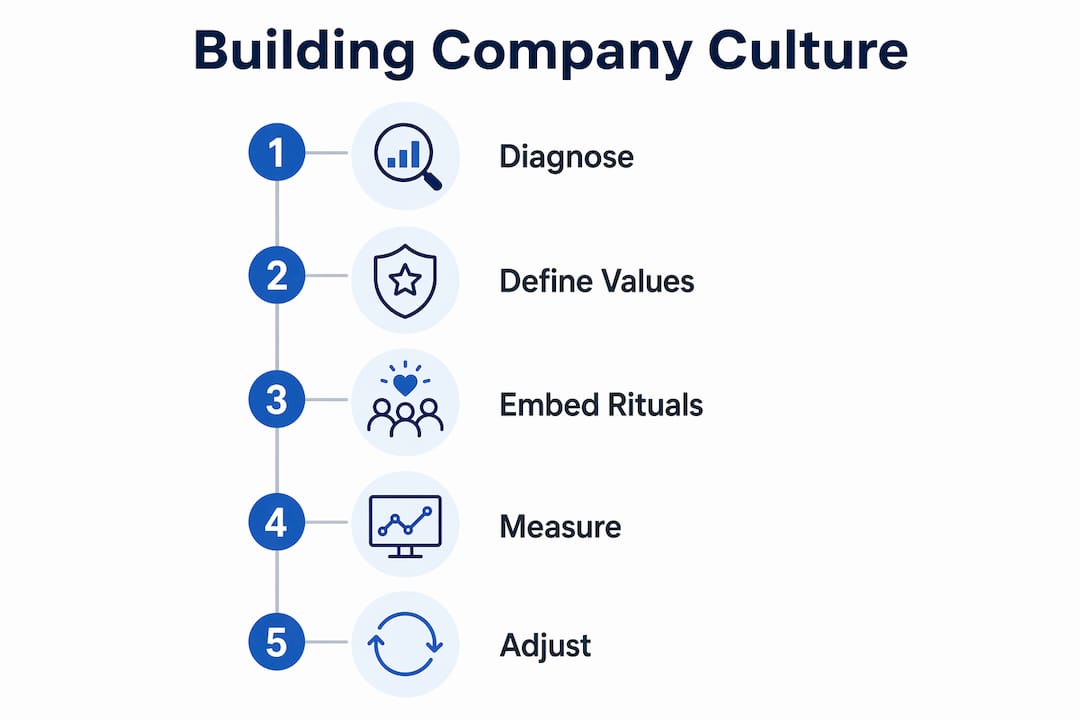
Company culture is defined as the shared values, behavioral norms, and unwritten rules that shape how your team works, decides, and treats each other every day. Most small and medium-sized business owners know culture matters, but far fewer know how to build a company culture that holds up under pressure. The standard advice, post your values on the wall and host a team lunch, produces decoration, not direction. What actually works is a deliberate process: diagnose what you have, define values as behavioral guides, model them through leadership, and measure what changes. This article gives you that process, step by step.
How to diagnose your current company culture
Honest diagnosis is the starting point for building a strong workplace culture. Most owners skip this step and jump straight to writing values. That produces a gap between what you say and what you actually do, and employees notice that gap immediately.
The most revealing cultural data does not come from annual surveys. Watch who gets promoted and why. Notice how leadership behaves when a project fails or a client complains. Observe whether people speak up in meetings or wait to see what the boss thinks first. These patterns tell you the real culture, not the aspirational one.
Early signs of poor psychological safety are easy to miss. Google’s Project Aristotle identified psychological safety as the single biggest factor in high-performing teams. That means if your team stays quiet during retrospectives, avoids raising problems, or blames others when things go wrong, your culture has a safety problem before it has a values problem.
Practical tools for gathering honest feedback include:
- Pulse surveys: Short, weekly or biweekly check-ins with three to five questions. Keep them anonymous.
- 360 feedback: Structured input from peers, direct reports, and managers on specific behaviors.
- Stay interviews: One-on-one conversations with current employees asking what keeps them and what would make them leave.
- Exit interviews: Treat these as data, not formalities. Patterns in exit feedback reveal cultural failures leadership often cannot see.
Pro Tip: Ask your newest employees what surprised them about the culture in their first 30 days. New hires see what long-tenured staff have stopped noticing.
What makes core values actually work?
Vague values are worse than no values. Words like “integrity,” “excellence,” and “innovation” appear on thousands of company walls and mean nothing without behavioral context. Core values framed as specific, observable behaviors function as real-time decision filters. They reduce the need for constant management oversight because people know what good looks like.

Companies should limit themselves to 4–6 core values to maintain focus. More than six and employees cannot remember them. Fewer than four and you risk missing a critical behavioral dimension. The goal is a short list your team can recite and apply without checking a handbook.
Founders should draft the initial values and then stress-test them with the team. This prevents two failure modes: values that are purely top-down and feel imposed, and values designed by committee that become so generic they say nothing. The founder sets the direction; the team pressure-tests it for authenticity.
| Ineffective value | Effective behavioral equivalent |
|---|---|
| “We value integrity.” | “We tell clients bad news early, even when it is uncomfortable.” |
| “We are innovative.” | “We test one new idea per quarter and share what we learned, win or lose.” |
| “We respect each other.” | “We give direct feedback privately before raising concerns in a group.” |
| “We are customer-focused.” | “We respond to client questions within four business hours.” |
Pro Tip: Run a “values stress test” by presenting your team with a real past decision and asking which value guided it. If nobody can answer, the value is not working.
How do leaders transmit culture every day?
Employees learn culture primarily through leadership behaviors observed day to day, not through mission statements or onboarding decks. This is the most underestimated fact in culture-building. Your team watches how you handle a missed deadline, a difficult client, or a disagreement in a meeting. Those moments define culture more than any document.
“Culture is not what you say your values are. It is what you tolerate, reward, and repeat. Leaders who want a different culture must first change their own visible behavior, because the team is always watching and calibrating.”
Specific leadership behaviors that transmit culture include:
- Public recognition tied to values: When you call out a specific behavior by name, “Sarah handled that client complaint exactly the way we talk about transparency,” you make the value real and repeatable.
- Consistent handling of mistakes: If you blame publicly when things go wrong, psychological safety collapses. If you treat mistakes as learning events, people bring problems to you earlier.
- Clear decision rights and feedback norms: When people know who decides what and how feedback flows, execution speeds up and cultural friction drops.
- Daily rituals: Five-minute informal check-ins, sometimes called “Fast Fives,” are a low-cost way to build psychological safety and open communication across teams.
The brand loyalty you build internally with your team mirrors the loyalty you build externally with customers. Both require consistent, values-driven behavior over time.
What rituals make culture visible and alive?
Culture lives in moments, not manuals. The meeting that starts with a values check-in, the Slack channel where wins get celebrated, the onboarding week where a new hire shadows three different team members. These rituals are where values either prove themselves or get exposed as fiction.
Onboarding is the highest-leverage cultural moment you have. Structured onboarding spanning two weeks to one month gives new hires enough time to absorb norms, ask questions, and feel genuinely integrated. Rushed onboarding produces early turnover and cultural confusion.
Here are four rituals worth building into your team’s weekly rhythm:
- Values check-in at team meetings: Start each weekly meeting with one person sharing a moment from the past week that reflected a company value. This takes three minutes and keeps values in active memory.
- Behavioral recognition programs: Recognition tied to specific behaviors, not just results, reinforces what good looks like. A peer-nominated “values in action” shoutout costs nothing and signals what the company actually rewards.
- Retrospectives with psychological safety norms: End each project with a structured review that separates what happened from who is to blame. Use a fixed format so people know the rules before they speak.
- Open-door office hours: Schedule 30 minutes weekly where any team member can raise a concern, idea, or question directly with leadership. The consistency of showing up matters more than what gets discussed.
| Ritual | Frequency | Time required | Primary cultural benefit |
|---|---|---|---|
| Values check-in | Weekly | 3–5 minutes | Keeps values in active use |
| Behavioral recognition | Weekly | 5 minutes | Reinforces desired behaviors |
| Project retrospective | Per project | 30–60 minutes | Builds psychological safety |
| Leadership office hours | Weekly | 30 minutes | Signals openness and trust |
How do you measure whether your culture is working?
Culture measurement is not optional. Without data, you are guessing. Key culture metrics include psychological safety pulse surveys, retention analysis by team segment, and feedback quality. Each metric tells a different part of the story.
Retention by segment is particularly revealing. If your top performers leave at a higher rate than average performers, your culture likely rewards the wrong behaviors or fails to recognize the right ones. If a specific team or department shows consistently higher turnover, the problem is usually a local leadership issue, not a company-wide one.
Signs that your culture measurement needs attention:
- Survey scores are high but turnover is also high. This signals that employees do not feel safe giving honest survey answers.
- Leadership and employee perceptions diverge sharply. Leaders rate culture significantly higher than employees. This gap is a warning sign, not a data error.
- Values are cited in documents but never in decisions. If nobody references values when making a hard call, the values are decorative.
- Recognition programs reward results but ignore behavior. Misaligned recognition can actively negate stated culture by signaling that outcomes matter more than how you achieve them.
Revisit your values and rituals at least once a year. Culture that worked for a 10-person team often needs adjustment at 30 or 50 people. Scaling without cultural recalibration is one of the most common SMB growth mistakes.
Key Takeaways
Building a strong company culture requires deliberate leadership, behaviorally specific values, and consistent measurement over time.
| Point | Details |
|---|---|
| Diagnose before you design | Observe promotions, mistakes, and leadership behavior to find the real culture before writing values. |
| Limit core values to 4–6 | More than six values dilute focus; fewer than four miss critical behavioral dimensions. |
| Write values as behaviors | Specific, observable behavioral statements work as daily decision filters; vague nouns do not. |
| Leaders define culture by action | Employees calibrate culture through what leaders tolerate, reward, and repeat, not what they say. |
| Measure retention by segment | High turnover in specific teams or among top performers signals a local leadership or recognition problem. |
Why most SMBs get culture wrong (and what to fix first)
Working with small and medium-sized businesses over the years, I have seen one pattern repeat itself more than any other. Founders invest real energy in writing values, then hand them off to HR and assume the work is done. Six months later, they are frustrated that nothing changed. The values are on the website. The culture is exactly the same.
The uncomfortable truth is that culture is built locally in daily interactions, not in documents. The founder who says “we value transparency” but delivers feedback only in annual reviews has not built a transparent culture. They have built a culture of annual surprises.
The fix is not more programs. It is leadership consistency. Psychological safety directly drives productivity and retention, and psychological safety is built one interaction at a time. The leader who handles a mistake with curiosity instead of blame builds more culture in five minutes than a values workshop builds in a day.
My honest advice to any SMB owner: pick two leadership behaviors you will commit to changing in the next 90 days. Make them specific and observable. Tell your team what you are working on. That act of transparency alone will do more for your culture than any offsite or values refresh.
— webspider
How Webspidersolutions supports your business growth strategy
A strong internal culture and a strong external presence reinforce each other. When your team is aligned on values and working with clarity, your marketing, content, and client communication all become more consistent. Webspidersolutions works with SMBs to build the digital presence that matches the internal strength you are creating. From SEO strategy planning to content marketing and paid campaigns, the team at Webspidersolutions helps you translate organizational clarity into measurable online growth. If your business is ready to align its internal culture with a stronger external brand, Webspidersolutions offers the digital marketing expertise to make that connection real.
FAQ
What is company culture, exactly?
Company culture is the set of shared values, behavioral norms, and unwritten rules that shape how a team works and makes decisions. It is defined by what leadership tolerates, rewards, and repeats, not by what is written in a handbook.
How many core values should a company have?
Four to six core values is the recommended range. More than six and employees cannot remember or apply them consistently.
How long does onboarding take to build cultural alignment?
Effective onboarding spans two weeks to one month or longer, giving new hires enough time to absorb norms and feel genuinely integrated into the team.
What is the fastest way to improve company culture?
Change two specific leadership behaviors and tell your team what you are working on. Psychological safety builds through consistent, observable leader actions, not programs or policy updates.
How do you know if your culture is actually working?
Track retention by team segment, run short psychological safety pulse surveys, and watch whether employees cite values when making real decisions. A gap between leadership and employee perceptions is the clearest warning sign.