






TL;DR:
- Effective content ideas for small businesses include long-form pillar articles, short educational videos, and authentic customer stories that build trust. AI accelerates content creation and personalization, giving lean teams a competitive edge without sacrificing human insight. Consistent, human-centered content remains vital as it differentiates brands amid AI-generated noise and algorithmic rewards.
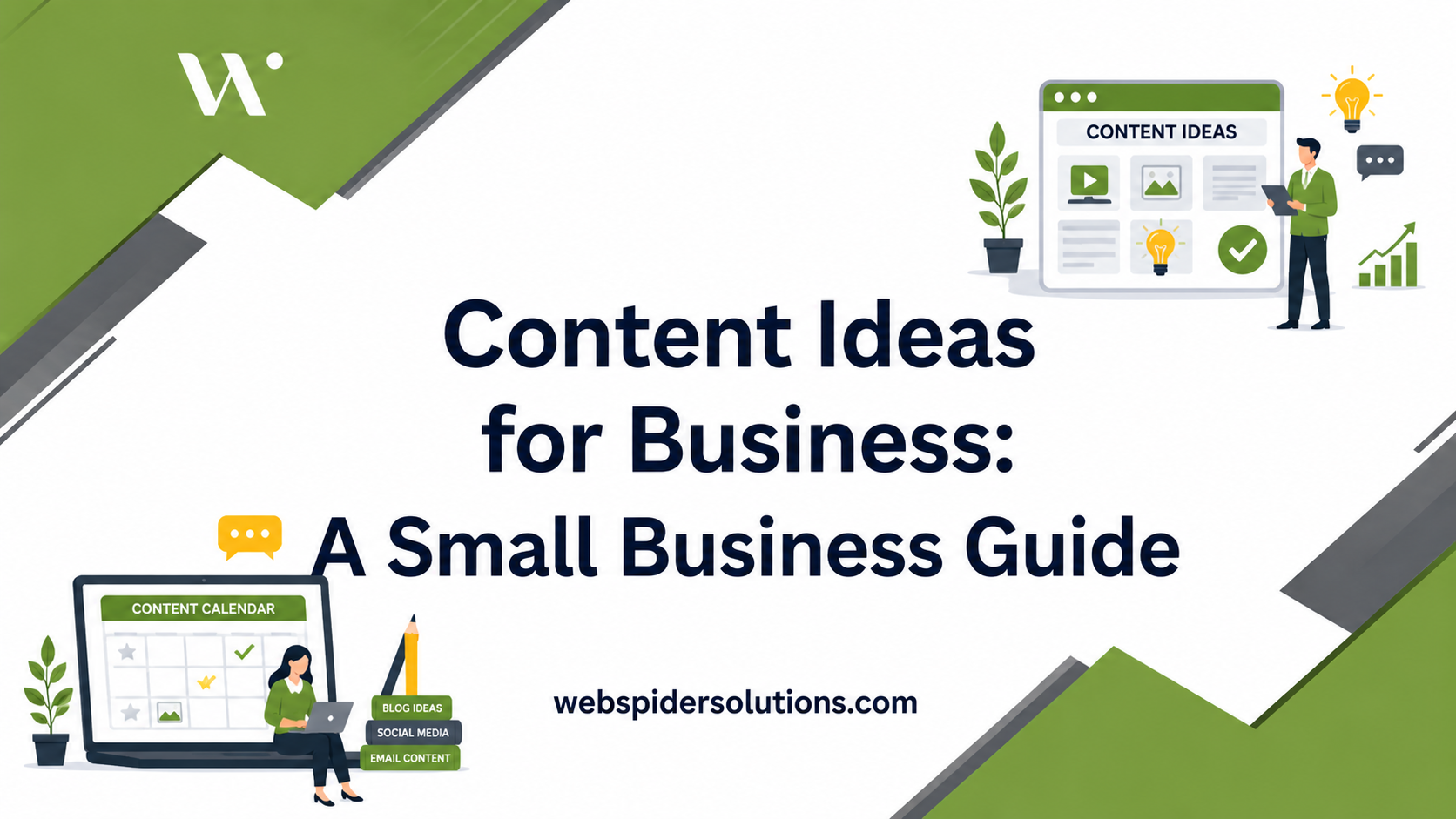
Running a business and producing content that actually moves the needle are two very different challenges. Finding the right content ideas for business growth is where most small and medium-sized owners get stuck, not because they lack creativity, but because the options are endless and the stakes feel high. AI tools are reshaping how content gets made, digital trends are shifting faster than ever, and the fear of wasting time on the wrong formats is real. This guide gives you a clear framework and a vetted list of ideas so you can make confident, strategic decisions today.
Table of Contents
- How to evaluate content ideas for your business
- Top content ideas every small business should consider
- How AI is transforming content ideas for business in 2026
- Repurposing and distribution strategies that maximize your content’s impact
- Comparing content formats: which ones deliver the best results?
- The overlooked power of consistent, authentic content in the AI era
- Explore advanced SEO and AI content services to boost your business
- Frequently asked questions
Key Takeaways
| Point | Details |
|---|---|
| Define clear goals | Set measurable business objectives for your content to ensure it drives real results. |
| Focus on content pillars | Choose 3-5 core topics that align with your brand and audience needs. |
| Leverage AI wisely | Use AI tools to scale content creation but maintain authentic human oversight. |
| Repurpose content smartly | Adapt content into multiple formats to maximize reach and efficiency. |
| Consistency matters | Publish regularly to build audience loyalty and improve search rankings. |
How to evaluate content ideas for your business
Before you write a single word or film a second of video, you need a way to judge whether a content idea is worth your time. Most businesses skip this step and wonder why their content never gains traction.
Start by tying each content idea to a specific, measurable business goal. “Get more followers” is not a goal. “Generate 20 qualified email subscribers per month from organic blog traffic” is. Every idea you consider should have a clear line back to a metric your business actually cares about. Companies with documented content strategies see 33% higher ROI in 2026, largely because they stop producing content for its own sake.
Next, know your audience persona in detail. A marketing manager at a 15-person SaaS company has completely different content needs than a retail shop owner with three employees. Your content ideas should reflect that difference in language, depth, and channel preference.
A practical evaluation checklist:
- Does this idea address a real question or pain point my audience has?
- Can I produce it consistently with my current team and budget?
- Does it align with my chosen content pillars strategy (your 3 to 5 core topic areas)?
- Is there keyword demand behind it, or am I writing for an empty room?
- Does it fit at least one stage of the buyer journey: awareness, consideration, or decision?
Here is a simple prioritization method. Score each idea on three criteria: audience relevance (1 to 10), production effort (1 to 10, where 10 means easiest), and business impact (1 to 10). Add the scores. Ideas above 24 go into your calendar first. This removes the gut-feel guesswork that kills most content marketing strategies before they start.
Steps to build your content evaluation framework:
- Define your top three business objectives for the next 90 days
- List your two to three core audience personas with their specific questions and frustrations
- Choose 3 to 5 content pillars that connect your expertise to what those personas search for
- Run keyword research to validate search intent and realistic volume for each pillar
- Apply the scoring method above to every idea before it enters your calendar
Top content ideas every small business should consider
With criteria in hand, let’s explore specific content ideas that small businesses can use to grow and engage their audience.
The best creative content ideas for small businesses are not necessarily the flashiest. They are the ones your audience actually needs and that you can sustain. Here are the formats that consistently deliver.
1. Long-form pillar blog posts
These are 1,500 to 2,000-plus word articles that go deep on a topic central to your business. A plumbing company writing a definitive guide to water heater maintenance owns that search term for years. The SEO value compounds. The content also becomes the source material for everything else you produce.
2. Short-form educational videos
Sixty-second to three-minute videos explaining a concept, showing a process, or answering a common question perform exceptionally well on social platforms. You don’t need a studio. A phone, decent lighting, and a clear point are enough. Social media content suggestions for small businesses include 64 post categories, ranging from brand story and behind-the-scenes to customer proof and seasonal content, all designed to sell without being pushy.
3. Customer stories and testimonials
This is not just a review. A properly constructed customer story follows a before-and-after structure: what problem the customer had, why they chose you, and what changed for them. These posts build trust faster than any brand-written copy ever could and directly support your lead generation strategies.

4. Behind-the-scenes content
People buy from people they trust. Showing your process, your team, your mistakes, and your wins removes the corporate distance between you and your audience. A behind-the-scenes video of how you pack orders or prep for a client meeting often outperforms polished product content.
5. Offers and product spotlights
These are deliberate, conversion-focused pieces. A spotlight post on a single product or service, with a limited-time offer, serves the decision-stage buyer who already trusts you but needs a reason to act now.
Pro Tip: Content marketing trends in 2026 point toward one-piece-to-many workflows. Write one pillar post, then extract five social captions, one email, and one short video script from it. You’ve created six assets from one effort.
What to watch for with each format:
- Pillar posts take time upfront but pay off for 12 to 36 months in search traffic
- Short videos require a clear hook in the first three seconds or viewers scroll past
- Customer stories need your client’s real voice, not a polished rewrite
- Behind-the-scenes content loses impact when it’s too produced or scripted
- Product spotlights work only when your audience is already warm, not cold
How AI is transforming content ideas for business in 2026
Beyond classic content ideas, AI is reshaping what is possible in content marketing for small businesses.
AI is not a replacement for your expertise. It is a production accelerator. The businesses winning right now are the ones using AI content tools to handle the repeatable parts of content creation while keeping human judgment at the center of strategy and voice.
The numbers make the case clearly. According to HubSpot’s research, 86.4% of marketers use AI tools primarily for content and media creation, enabling small businesses to produce personalized content 48.57% more effectively. That is not a marginal efficiency gain. That is a structural advantage for lean teams.
AI narrows the gap between a five-person marketing team and a fifty-person one. But it does not eliminate the need for a human who actually understands the customer.
Practical ways small businesses can use AI for content:
- Draft generation: Use AI to produce first drafts of blog posts, email sequences, and social captions, then edit for brand voice
- Topic research: AI tools can surface question-based content gaps your competitors are missing
- Repurposing assistance: Feed a long article into an AI tool and ask it to produce five social post variations
- SEO brief building: AI can generate keyword-rich outlines so your writers know exactly what to cover
- Personalization at scale: Segment your email list and use AI to tailor content for each persona without writing each version manually
The one risk worth taking seriously is the impact of AI on SEO. Google’s quality signals now weigh experience, expertise, authority, and trust (known as E-E-A-T) heavily. Generic AI output without genuine insight signals thin content, which can actively damage your rankings. Always layer in original opinions, real examples, and firsthand knowledge before publishing anything AI-drafted.
Repurposing and distribution strategies that maximize your content’s impact
Next, let’s examine how you can make your content work harder through repurposing and smart distribution.
One well-researched piece of content should never live in a single format. Repurposing content into multiple formats is exactly how lean teams compete with much larger competitors. It is not about cutting corners. It is about extracting the full value of every idea you develop.
| Original format | Repurposed outputs | Primary channel |
|---|---|---|
| Long-form blog post | Email newsletter, 3 social captions, short video script | SEO, email, LinkedIn |
| Customer success story | Quote graphic, testimonial video, case study PDF | Social, sales |
| Podcast episode | Blog post, audiogram clip, Twitter thread | SEO, social |
| Webinar | YouTube video, blog recap, email series | SEO, email, social |
| Product FAQ page | Short-form video, chatbot script, infographic | Social, website |
The content repurposing workflow works best when you build it into your content calendar from the start, not as an afterthought. The moment you publish a pillar post, schedule the repurposed versions for the following two to three weeks.
Distribution tips that increase reach without extra production:
- Publish blog content first, then wait 48 to 72 hours before posting social versions to avoid content cannibalization
- Tailor the format per platform: LinkedIn favors text-heavy posts, Instagram favors visuals, YouTube rewards depth
- Use a rolling 90-day content calendar to see gaps and prevent repetition
- Measure which repurposed format drives the most traffic back to your core offer and do more of that
- Revisit top-performing content every six months to update data and re-promote it
Pro Tip: Your distribution strategies matter as much as the content itself. A great post with zero distribution is a wasted asset. Treat distribution as a planned step, not an optional add-on.
Comparing content formats: which ones deliver the best results?
To finalize our exploration, let’s compare key content formats to see which ones might best suit your business needs.
B2B content marketing generates 3x more leads than outbound marketing at 62% lower cost as of 2026. But not all formats are equal for all businesses. Here is how the main ones stack up.
| Format | Best for | Strengths | Weaknesses | Avg. time to see ROI |
|---|---|---|---|---|
| Long-form blog post | SEO, authority | Compounds over time, repurposes well | High upfront effort | 3 to 6 months |
| Short-form video | Social engagement | High reach, low barrier to entry | Short shelf life | 2 to 4 weeks |
| Customer story | Trust, conversions | Persuasive, authentic | Requires client cooperation | Immediate |
| Email newsletter | Lead nurture | Direct channel, high intent | Requires list building first | 1 to 3 months |
| Infographic | Data, sharing | Highly shareable, visual clarity | Low direct SEO value | 1 to 2 months |
Choosing the right format comes down to three questions:
- What stage of the buyer journey are you targeting? Awareness needs educational blog posts and videos. Decision needs testimonials and case studies.
- What does your team realistically have the capacity to produce and maintain?
- Which channels does your audience actually use? Check your own B2B marketing examples for data before assuming.
The mistake most small business owners make is trying to be everywhere at once. Pick two formats, do them well for 90 days, measure, then expand. Consistent execution in two channels beats irregular presence in six. Use these insights alongside lead generation tips to match your content format to your actual conversion goals.
The overlooked power of consistent, authentic content in the AI era
Here is the tension no one talks about clearly enough. AI makes it easier than ever to publish content at volume. That is both the opportunity and the threat for small businesses.
When everyone uses the same AI tools to generate the same type of content, the differentiator becomes the one thing AI cannot replicate: your experience, your opinions, and your genuine relationship with your customers. The data backs this up. A striking 62.7% of marketers now believe we need more unique, human-centered content to compete with AI-generated noise.
Consistency matters even more than most business owners realize. Algorithms across every platform, whether Google, LinkedIn, or Instagram, reward accounts that publish reliably. A company that publishes one well-crafted post per week for 52 weeks builds compounding visibility that a competitor who bursts with 20 posts then goes quiet for two months never will.
The small business advantage here is real. You can take a position. A corporate brand with 40 legal approvals before anything goes live cannot publish a sharp, timely opinion piece the same week a market shift happens. You can. That speed and authenticity is your edge, and the best marketing trends 2026 data confirms it is becoming more valuable, not less, as AI proliferates.
Use AI to handle the repetitive and the mechanical. Use your own voice, your customer relationships, and your real-world knowledge to produce the 20% of content that actually builds loyalty. That combination is what separates businesses that grow through content from the ones that just produce it.
Explore advanced SEO and AI content services to boost your business
If this guide surfaced ideas you’re ready to act on but don’t have the bandwidth to execute alone, that’s exactly where professional support pays off. A well-built SEO strategy guide gives your content a technical foundation that organic effort alone rarely builds quickly. Understanding AI and SEO services helps you combine smart content production with the ranking signals that actually move traffic. And purpose-built SEO campaigns ensure your best content reaches the audience that’s already searching for exactly what you offer. Web Spider Solutions works with small and medium-sized businesses to turn content plans into measurable growth, without the overhead of an in-house team.
Frequently asked questions
What are the most effective content ideas for small businesses?
Long-form pillar content, short-form educational videos, customer stories, and behind-the-scenes posts are proven to boost visibility and engagement, and small businesses can repurpose each format across email, social, and blogs for maximum reach.
How can AI tools improve content marketing for small businesses?
AI helps create personalized content more efficiently, and 86.4% of marketers now use it for content creation, producing tailored messages 48.57% more effectively while freeing up time for higher-value strategy work.
Why is repurposing content important for small teams?
Repurposing extends the reach and lifespan of each piece by adapting it to different formats and platforms, and lean teams use this approach to match the output of much larger marketing departments without additional budget.
How do documented content strategies affect ROI?
Companies with documented content strategies see 33% higher ROI in 2026 by concentrating their effort on defined pillars and refining their approach with real performance data rather than guessing.