






Many B2B marketers still scatter their SEO efforts across disconnected blog posts, hoping individual keywords will drive traffic. This outdated approach leaves organic growth on the table. Websites with clear topic cluster architecture see 34% more organic traffic growth than those stuck with traditional blog structures. Pillar pages and topic clusters offer a strategic framework that transforms how search engines perceive your expertise. This guide explains what pillar pages and topic clusters are, why they matter for SMBs in 2026, and how to implement them to generate measurable SEO results and qualified leads.
Table of Contents
- Understanding Pillar Pages And Topic Clusters: What They Are And Why They Matter
- The SEO Benefits Of Pillar Page And Topic Cluster Strategies Backed By Data
- How To Select And Build Effective Pillar Topics And Clusters For B2B Small To Medium Businesses
- Content Creation And Maintenance Tips For Successful Pillar Pages And Clusters
- Elevate Your SEO With Web Spider Solutions’ Pillar Page And Content Strategies
- Frequently Asked Questions
Key takeaways
| Point | Details |
|---|---|
| Pillar pages act as comprehensive hubs | They link to detailed subtopics, forming strategic topic clusters that demonstrate expertise |
| Topic clusters drive 34% more organic traffic | Structured content architecture outperforms scattered blog approaches significantly |
| Pillar strategies generate 7x more leads | Organized topical authority converts better than isolated keyword targeting |
| Google rewards semantic topical coverage | Search algorithms favor sites that comprehensively cover entire subject areas |
Understanding pillar pages and topic clusters: what they are and why they matter
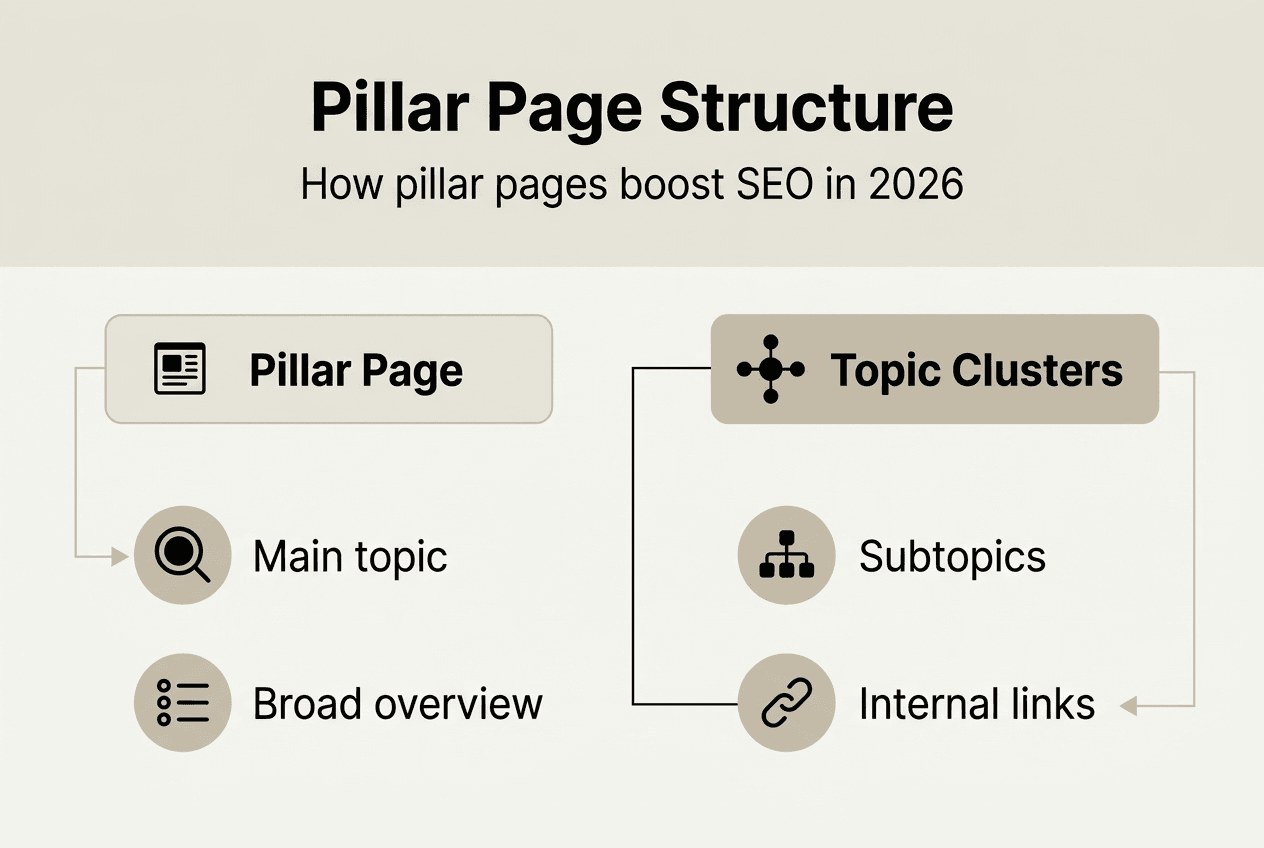
Pillar pages serve as comprehensive main resources covering broad topics in depth. Topic clusters are related subpages that explore specific subtopics, all linking back to the pillar. Together, they create a semantic web of content that signals expertise to search engines.
Modern SEO has evolved beyond isolated keyword targeting to focus on semantic, entity-based topical coverage that demonstrates comprehensive expertise across entire subject areas. Google’s algorithms now prioritize websites that prove authority through interconnected content rather than individual keyword-stuffed pages. This shift rewards businesses that organize knowledge systematically.
For B2B SMBs, this structure offers multiple advantages. First, it creates clarity in your content strategy by organizing information around core business topics. Second, it improves SEO performance by showing search engines you cover subjects thoroughly. Third, it builds a knowledge base that prospects can navigate intuitively, improving user experience and time on site.
Think of pillar pages as textbooks and cluster content as individual chapters. The pillar provides the overview and framework, while clusters dive into specifics. When properly linked, this architecture tells Google you’re not just writing about random topics but building genuine expertise.
Semantic topic clusters work because they mirror how people actually search and learn. Someone researching content marketing might start with broad questions, then explore specific tactics like email campaigns or social media strategies. Your pillar page answers the broad questions, and cluster pages address the specifics. This natural flow keeps visitors engaged and signals relevance to search algorithms.
The benefits extend beyond rankings. A well-structured content marketing workflow guide becomes easier to maintain when organized as clusters. You can update individual pieces without overhauling everything, and new content fits naturally into existing frameworks. For SMBs with limited resources, this efficiency matters enormously.
“Pillar pages transform scattered content into strategic assets that compound in value over time, creating sustainable competitive advantages in organic search.”
Key elements that make pillar pages effective:
- Comprehensive coverage of a broad topic without overwhelming detail
- Clear internal linking structure connecting to relevant cluster content
- Strategic keyword targeting that captures search intent at different stages
- Regular updates that keep information current and maintain rankings
The SEO benefits of pillar page and topic cluster strategies backed by data
The performance data supporting pillar page strategies is compelling. Businesses implementing pillar content strategy generate 7x more leads than those relying on scattered content approaches. This dramatic difference stems from how organized content builds authority and trust with both search engines and human visitors.

Traffic growth represents just one metric where pillar strategies excel. Websites implementing proper pillar page structure see more backlinks and longer average session duration compared to traditional content approaches. These engagement signals tell Google your content satisfies user intent, triggering higher rankings and more visibility.
The mechanics behind these results are straightforward. When you publish a comprehensive pillar page with supporting cluster content, you create multiple entry points for organic traffic. Each cluster page can rank for specific long-tail keywords, while the pillar targets broader, higher-volume terms. This multiplier effect generates more indexed pages and ranking opportunities than isolated posts ever could.
Consider the lead generation impact. Visitors who land on cluster content and navigate to your pillar page demonstrate higher intent and engagement. They’re actively exploring your expertise, not just skimming a single article. This deeper interaction translates to better conversion rates and more qualified leads for B2B businesses seeking to generate leads online.
Backlink acquisition improves because comprehensive pillar pages become reference resources. Other websites link to authoritative guides more readily than narrow blog posts. Each backlink strengthens your domain authority, lifting rankings across your entire cluster. This compounding effect accelerates SEO gains over time.
| Metric | Traditional Blog | Pillar + Clusters |
|---|---|---|
| Organic traffic growth | 15-20% annually | 34%+ annually |
| Lead generation | Baseline | 7x higher |
| Average session duration | 2-3 minutes | 5-7 minutes |
| Backlinks per page | Low | Significantly higher |
Pro Tip: Track not just traffic but engagement metrics like pages per session and time on site. Pillar strategies excel at keeping visitors exploring your content, which signals quality to search algorithms and improves conversion potential.
The strategic advantage grows stronger as your cluster expands. Each new piece of cluster content reinforces the pillar’s authority, creating a virtuous cycle. Traditional keyword-focused strategies lack this compounding effect because individual posts compete rather than collaborate. For SMBs competing against larger competitors, this structural advantage levels the playing field by demonstrating focused expertise in specific domains.
How to select and build effective pillar topics and clusters for B2B small to medium businesses
Effective pillar topic selection forms the foundation of successful content marketing and SEO strategies. Start by identifying core topics directly aligned with your products, services, and customer pain points. These should be broad enough to support multiple subtopics but focused enough to demonstrate clear expertise.
Follow this strategic process:
- Audit your existing content to identify themes where you already have depth and authority
- Research audience questions using tools like Answer the Public, search console data, and customer support inquiries
- Analyze competitor pillar pages to find gaps and opportunities for differentiation
- Validate search volume and intent to ensure topics drive qualified traffic
- Map potential cluster topics to confirm you can create 8-12 supporting pieces per pillar
Your digital marketing strategy should guide pillar selection. Choose topics where you can credibly claim expertise and where your target audience actively seeks information. For a B2B SaaS company, pillars might include product categories, use cases, or industry-specific solutions. For a marketing agency, pillars could cover service areas like SEO, content marketing, or paid advertising.
Mapping topic clusters requires understanding semantic relationships between concepts. Use keyword research tools to identify related terms and questions that branch from your pillar topic. Each cluster piece should address a specific subtopic thoroughly while linking back to the pillar for broader context.
Technical considerations for cluster-friendly internal linking:
- Use descriptive anchor text that includes target keywords naturally
- Link from cluster pages to the pillar and between related cluster pieces
- Ensure the pillar page links to all cluster content in a logical structure
- Maintain a shallow site architecture where cluster pages are 2-3 clicks from the homepage
Pro Tip: Start with one pillar and 5-8 cluster pieces rather than attempting multiple pillars simultaneously. This focused approach lets you refine your process and see results faster than spreading resources thin across many incomplete clusters.
Common pitfalls to avoid include choosing pillar topics too broad or too narrow. A topic like “marketing” is too vast to cover comprehensively, while “email subject lines for Tuesday sends” is too specific to support a cluster. The sweet spot balances breadth with focused expertise. Look at successful pillar content strategy for SaaS growth examples to calibrate your scope appropriately.
Validate your pillar topics by asking:
- Does this topic align with business goals and revenue generation?
- Can we create 8-15 quality cluster pieces that add genuine value?
- Will this pillar attract our ideal customer profile?
- Do we have unique insights or expertise to differentiate our content?
Content creation and maintenance tips for successful pillar pages and clusters
Creating effective pillar pages requires balancing comprehensive coverage with readability. The most successful pillar pages solve multiple related problems within a single, well-structured resource that users actually want to bookmark and share. Aim for 3000-5000 words that thoroughly address the broad topic without drowning readers in unnecessary detail.
Organize pillar content using clear hierarchical headings that let visitors scan and jump to relevant sections. Include a table of contents at the top for easy navigation. Break complex concepts into digestible chunks using short paragraphs, bullet lists, and visual elements. The goal is comprehensive yet accessible.
Cluster content should dive deeper into specific subtopics the pillar introduces. While pillar pages provide overview and framework, cluster pieces offer actionable details, case studies, and step-by-step guidance. This division prevents pillar pages from becoming overwhelming while ensuring cluster content adds genuine value beyond surface-level discussion.
Best practices for internal linking within clusters:
- Link from the pillar page to all cluster content in a dedicated section
- Include contextual links from cluster pages back to the pillar
- Cross-link between related cluster pieces where relevant
- Use varied, natural anchor text that describes the linked content accurately
Regular updating maintains pillar page relevance and rankings. Schedule quarterly reviews to refresh statistics, update outdated information, and add new insights. Search algorithms favor fresh, current content, and users trust resources that reflect the latest developments. For cluster pages, update as industry changes warrant or when new data becomes available.
Maintaining pillar pages requires more effort than individual blog posts, but the returns justify the investment. A well-maintained pillar continues generating traffic and leads for years, while typical blog posts peak quickly and fade. Think of pillars as long-term assets that appreciate with proper care.
| Aspect | Traditional Blog Post | Pillar Page |
|---|---|---|
| Initial creation time | 4-6 hours | 20-30 hours |
| Update frequency | Rarely | Quarterly |
| Lifespan | 6-12 months | 2-5+ years |
| Traffic potential | Declining curve | Sustained growth |
The key to sustainable pillar strategies is treating them as living resources rather than one-time publications. Build processes for monitoring performance, gathering user feedback, and identifying update opportunities. Tools like Google Search Console reveal which queries drive traffic, helping you optimize content to match actual search intent.
For SMBs with limited resources, prioritize quality over quantity. One exceptional pillar with thorough cluster coverage outperforms five mediocre attempts. Focus your create engaging content drives results efforts on topics where you have genuine expertise and audience demand. You can always expand to additional pillars as resources and results justify the investment.
Elevate your SEO with Web Spider Solutions’ pillar page and content strategies
Implementing pillar pages and topic clusters requires strategic planning, content expertise, and ongoing optimization. Web Spider Solutions helps B2B SMBs design and execute pillar-driven SEO strategies that generate measurable traffic and lead growth. Our team identifies high-impact pillar topics aligned with your business goals, maps comprehensive cluster content, and creates resources that demonstrate genuine expertise.
Our SEO strategy guide 2025 provides additional frameworks for preparing your digital presence. We specialize in pillar content strategy for SaaS growth, helping technology companies build authority and capture qualified leads through structured content. Whether you need comprehensive content marketing services or strategic guidance to optimize existing efforts, we partner with you to achieve sustainable SEO results that drive business growth.
Frequently asked questions
What is the difference between a pillar page and cluster content?
A pillar page covers a broad topic comprehensively, serving as the main hub for that subject area. Cluster content consists of individual pages exploring specific subtopics in depth, all linking back to the pillar. The pillar provides the framework and overview, while clusters deliver detailed, actionable information on narrower aspects. Together, they create a semantic web that demonstrates topical authority to search engines.
How long does it take to see SEO results from pillar pages and topic clusters?
Typical SEO improvements appear between six and twelve months after implementing pillar strategies. Websites using strategic pillar topic selection see an average 55% increase in organic traffic within six months, though results vary based on competition, content quality, and domain authority. Patience and ongoing optimization are vital. Early gains often come from cluster pages ranking for long-tail keywords, while pillar pages build authority more gradually. Consistent publishing and updates accelerate results.
Can small businesses with limited resources effectively implement pillar page strategies?
Absolutely. Small businesses can succeed by focusing on one or two high-impact pillar topics rather than attempting comprehensive coverage across many areas. Start with a single pillar and 5-8 quality cluster pieces, then expand as resources permit. Smaller, well-executed content sets outperform scattered efforts with no strategic focus. Prioritize topics where you have genuine expertise and clear audience demand. Scale gradually based on performance data and available capacity.
What tools can help plan and manage pillar pages and topic clusters?
SEO platforms like SEMrush and Ahrefs offer keyword research and content gap analysis features that identify pillar opportunities and cluster topics. Tools like HubSpot include topic cluster planning and tracking capabilities. Content calendars help schedule cluster creation and pillar updates systematically. Regular linking audits using Screaming Frog or similar tools ensure your internal link structure supports cluster architecture effectively. Google Search Console reveals which queries drive traffic, informing content optimization decisions.