







TL;DR:
- Effective time management combines prioritization, planning, and focused execution to ensure high-value work is done first. Techniques like the Pomodoro Technique, time blocking, and task batching help maintain focus, reduce fatigue, and improve productivity by aligning tasks with energy levels and cognitive styles. Professionals should start with a few methods, practice consistently, and adapt strategies to their individual workflows for sustained success.
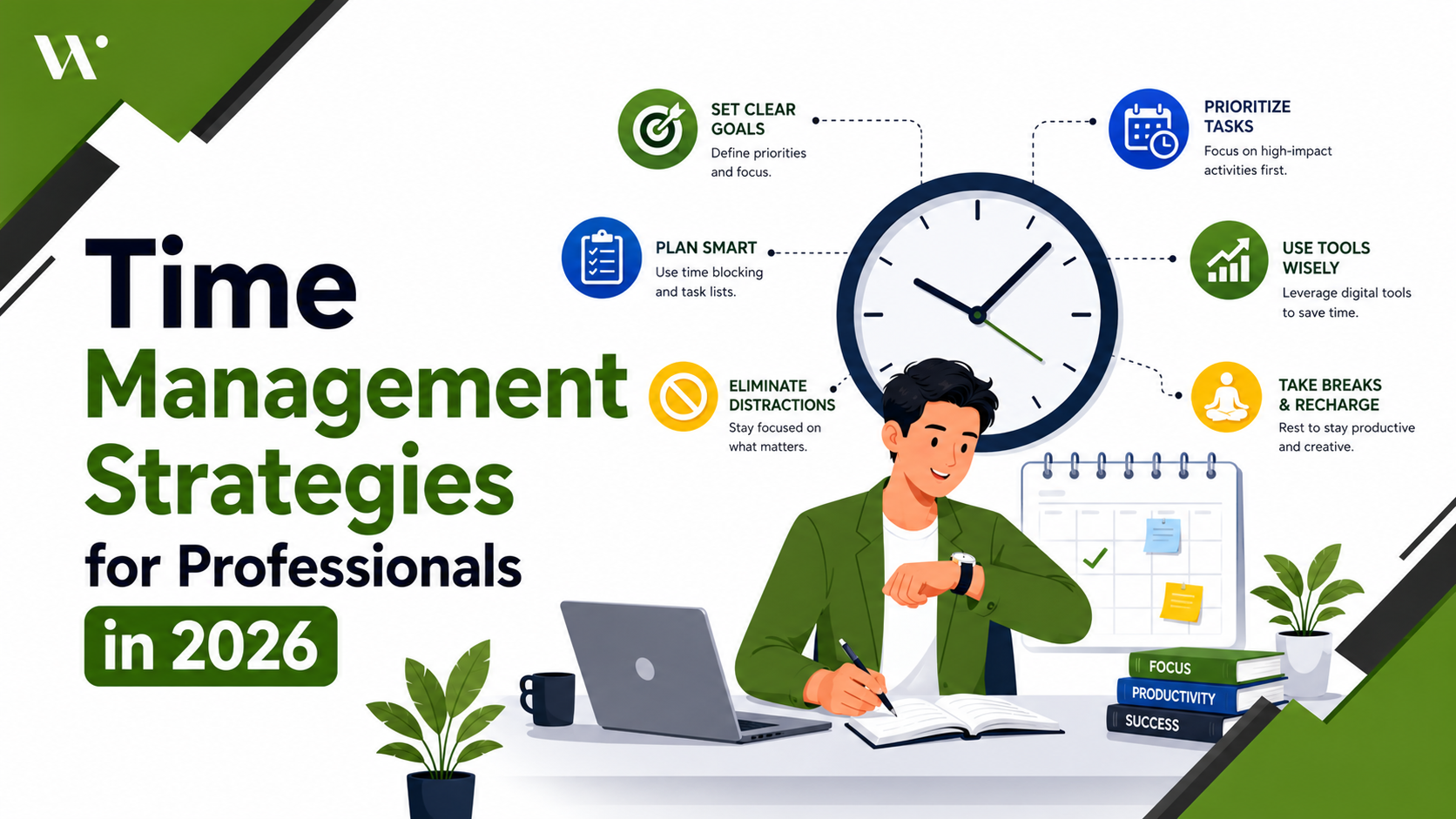
Time management strategies are structured methods that help professionals and entrepreneurs direct their attention, energy, and hours toward work that actually matters. The best systems combine three elements: prioritization, planning, and focused execution. Methods like the Pomodoro Technique, the Eisenhower Matrix, and the ABC prioritization framework each address a different failure point in how people work. Effective time management is not about cramming more tasks into a day. It is about making deliberate choices so that your most important work gets done first, and rest gets protected too.
What is the core framework for effective time management?
Every proven time management system rests on three pillars: prioritization, planning, and execution. Skip any one of them and the system breaks down. A professional who plans without prioritizing fills their calendar with low-value tasks. One who prioritizes without executing loses hours to distraction.

Prioritization answers the question: what deserves your attention today? Without a clear answer, you default to whatever feels urgent, which is rarely what moves the needle. Planning assigns time and resources to those priorities before the day begins. Execution is where most people struggle. It requires protecting focused work time from interruptions, meetings, and the pull of low-effort tasks.
Two frameworks anchor the prioritization pillar:
- ABC method: Tasks split into three levels: A (critical, must do today), B (important but can wait), and C (nice to do but not urgent). You work through A tasks before touching B or C.
- Eisenhower Matrix: Sorts tasks by urgency and importance into four quadrants. Do urgent and important tasks now. Schedule important but not urgent tasks. Delegate urgent but unimportant tasks. Eliminate the rest.
Pro Tip: Before you open your inbox each morning, write your three A-level tasks on paper. Commit to finishing at least two before checking messages.
1. Pomodoro Technique: focused sprints that prevent burnout
The Pomodoro Technique uses 25-minute work intervals separated by short breaks to maintain concentration and prevent mental fatigue. After four intervals, you take a longer break of 15–30 minutes. The structure forces you to work with a timer, which creates urgency and reduces the tendency to drift.
This method works especially well for knowledge workers who face long, unstructured workdays. Writers, analysts, and developers report that the fixed intervals make large projects feel manageable. The break periods are not optional. They are the mechanism that sustains focus across the full day without burning out your concentration.
The main limitation is rigidity. If your work requires deep, uninterrupted flow states longer than 25 minutes, you may need to extend intervals to 50 or 90 minutes. The principle stays the same: work in defined blocks, then rest deliberately.
Pro Tip: Use a physical timer instead of a phone app. The act of winding a timer creates a small psychological commitment that a phone notification does not.
2. Time blocking: owning your calendar before others do
Time blocking assigns specific calendar slots to specific tasks or task categories. You treat each block like a meeting you cannot cancel. A typical day might include a 9:00–11:00 AM block for deep work, an 11:00 AM–12:00 PM block for email and messages, and an afternoon block for calls and collaboration.
The power of time blocking is that it makes your priorities visible. When your calendar is full of intentional blocks, reactive requests have no room to land. Time blocking reduces context switching, which is the mental cost of jumping between unrelated tasks. That cost is higher than most professionals realize. Every switch takes several minutes of cognitive recovery before you reach full focus again.
Entrepreneurs find time blocking particularly useful because their days lack external structure. Without a boss setting the agenda, the calendar becomes the boss. Block your highest-value work during your peak energy hours, typically mid-morning for most people.
3. Task batching: grouping similar work to cut mental load
Task batching groups similar tasks together into a single work session. Instead of answering one email, then making a call, then writing a report, then answering another email, you handle all emails in one block and all calls in another. Batching groups similar tasks to reduce the mental overhead of switching between different types of thinking.
The cognitive science behind batching is straightforward. Each type of task uses a different mental mode. Writing requires creative, generative thinking. Email requires reactive, responsive thinking. Switching between modes repeatedly drains mental energy faster than staying in one mode for a sustained period.
A practical batching schedule for a marketing professional might look like this: creative writing in the morning, client communication from noon to 1:00 PM, and administrative tasks at the end of the day. The result is more output with less fatigue.
4. ABC prioritization: making daily task decisions faster
The ABC method categorizes tasks into three levels: A for critical work that must happen today, B for important work that can wait a day or two, and C for tasks that are optional or can be delegated. The method removes the daily decision fatigue of figuring out where to start.
Most professionals assign too many tasks to the A category. A realistic A list contains one to three items. If everything is critical, nothing is. The discipline of the ABC method is forcing yourself to be honest about what actually has consequences if it does not get done today.
Pair the ABC method with a written task list each evening for the next day. Categorize every item before you leave your desk. When you sit down the next morning, your priorities are already set. You spend zero mental energy deciding where to start.
5. Eisenhower Matrix: separating urgency from importance
The Eisenhower Matrix is the most widely taught prioritization framework in professional development. It sorts every task into one of four quadrants based on two questions: Is it urgent? Is it important? The matrix determines whether to do, schedule, delegate, or eliminate each task.
The insight that makes this framework valuable is the distinction between urgent and important. Urgent tasks demand immediate attention but often serve someone else’s priorities. Important tasks drive your long-term goals but rarely feel pressing. Most professionals spend too much time in the urgent-but-not-important quadrant, reacting to other people’s needs instead of advancing their own work.
The quadrant to protect most carefully is “important but not urgent.” This is where strategy, skill development, relationship building, and creative work live. Scheduling dedicated time for this quadrant each week is the single most effective habit for long-term professional growth.
6. Pareto Principle: finding the 20% that drives 80% of results
The Pareto Principle states that roughly 20% of your tasks produce 80% of your results. Applied to time management, this means identifying the small number of activities that generate the most value and protecting time for them above all else.
For an entrepreneur, the 20% might be sales conversations, product development, and key client relationships. For a marketing professional, it might be content creation, campaign analysis, and strategic planning workflows. Everything else, including administrative work, low-value meetings, and routine tasks, belongs in the 80% that gets minimized, batched, or delegated.
Applying the Pareto Principle requires honest self-assessment. Track your activities for one week and note which ones directly produced revenue, client wins, or measurable progress. The pattern that emerges will likely surprise you. Most professionals discover that their highest-value work occupies far less time than it should.
7. Building buffer time: the habit most professionals skip
Scheduling 5–10 minute buffer zones between tasks reduces stress and acknowledges real cognitive limits. Back-to-back scheduling feels productive but creates a compounding deficit. When one task runs long, every subsequent task starts late, and the mental pressure of running behind degrades performance across the whole day.
Buffer time also serves as a reset period. A few minutes between a difficult call and a creative writing session lets your brain shift modes properly. Without that reset, the emotional residue of the previous task bleeds into the next one.
The professionals who protect buffer time consistently report lower end-of-day stress and better quality of work in afternoon hours. Build buffers into your calendar as fixed blocks, not as gaps you hope will appear.
8. Daily planning and end-of-day review
A daily planning ritual takes 10–15 minutes and sets the direction for everything that follows. The most effective format is simple: review your priorities, check your calendar, and write your top three tasks for the day. This ritual replaces reactive morning behavior, where you open your inbox and let other people set your agenda.
The end-of-day review is equally important and far less practiced. Spend five minutes noting what you completed, what moved to tomorrow, and whether your time matched your priorities. This review creates the data you need to improve your system over time. Without it, you repeat the same inefficiencies week after week.
Pair your content calendar planning with this daily ritual if you manage marketing or editorial work. The combination of a structured content schedule and a daily review keeps projects on track without requiring constant mental effort to remember what comes next.
Pro Tip: End your workday by writing tomorrow’s top three tasks before you close your laptop. The next morning starts with clarity instead of confusion.
9. Evaluating what works: rating your strategies
Professionals can rate each time management technique on a 1 to 10 scale to compare utility and decide whether to keep or discard it. This turns strategy selection from a guessing game into a feedback loop. A technique that scores a 4 after two weeks of honest use should be replaced or modified, not defended out of habit.
The rating process works best when you evaluate a technique after at least two weeks of consistent practice. First-week results are unreliable because any new habit feels awkward before it becomes automatic. Give each method a fair trial, then score it on two criteria: Did it reduce stress? Did it increase output on high-priority work?
Building a menu of techniques allows you to switch approaches when one loses effectiveness. Workloads change, cognitive demands shift, and a method that worked during a low-volume quarter may not serve you during a product launch. Flexibility is not inconsistency. It is good system design.
10. Mindset: time management as a brain function, not a willpower contest
Time management is fundamentally an executive brain function, not a character trait. Systems should be adapted to your cognitive style, not forced against it. A person who thinks in visual patterns will manage time better with a color-coded calendar than with a plain text list. A person who works in bursts of energy needs a different structure than someone who sustains steady focus across long periods.
Effective time management is not about squeezing more tasks into the day. It is about intentional prioritization that creates space for rest, recovery, and the work that actually matters.
This reframe matters because most productivity advice treats time management as a discipline problem. The real problem is usually a design problem. The system does not fit the person. Adapting your approach to your cognitive strengths produces better results than forcing yourself to follow a system built for someone else’s brain.
Pro Tip: Track your energy levels alongside your tasks for one week. Note when you feel sharp, when you feel foggy, and what you were doing at each point. Schedule your A tasks during your peak energy window.
Key takeaways
The most effective time management strategies combine prioritization frameworks, focused execution methods, and daily review habits into a system built around your cognitive style, not someone else’s template.
| Point | Details |
|---|---|
| Prioritize before you plan | Use the ABC method or Eisenhower Matrix to rank tasks before assigning time to them. |
| Protect focused work blocks | Time blocking and the Pomodoro Technique prevent reactive work from crowding out high-value tasks. |
| Batch similar tasks | Grouping like tasks reduces context switching and preserves mental energy across the day. |
| Build in buffer time | Schedule 5–10 minute gaps between tasks to reduce stress and allow cognitive reset. |
| Evaluate and adapt | Rate each technique after two weeks and replace low-scoring methods with better-fit alternatives. |
What actually works: a note on building your own system
Most time management advice assumes one system fits everyone. After working with professionals across marketing, operations, and entrepreneurship, I have found that assumption is the single biggest reason people abandon good techniques after two weeks.
The Pomodoro Technique is genuinely excellent for writing and analytical work. It is a poor fit for roles that require long, uninterrupted client calls or collaborative sessions. Time blocking works brilliantly for entrepreneurs who control their calendars. It frustrates professionals in reactive roles where meetings land without notice. The technique is not the problem. The mismatch is.
My honest recommendation: start with one or two techniques and practice them consistently for at least three weeks before adding anything else. Most professionals fail not because the methods are wrong but because they try to overhaul everything at once and abandon the whole system when it feels overwhelming. Small, consistent changes compound faster than ambitious overhauls that collapse under their own weight.
Pay attention to your energy rhythms. Schedule your most demanding work when your brain is sharpest, and protect that window like a non-negotiable appointment. Rest is not a reward for finishing your task list. It is a requirement for doing the task list well. The professionals I have seen sustain high performance over years are not the ones who work the most hours. They are the ones who protect their recovery as carefully as their output.
— webspider
How Webspidersolutions supports your productivity and planning goals
Professionals who apply solid time management principles to their marketing work see measurable gains in output and campaign quality. Webspidersolutions builds resources that help you plan and execute with the same discipline this article describes. The SEO strategy guide walks through a structured 14-step planning process that mirrors the prioritization and execution framework covered here. For professionals running B2B campaigns, the digital campaign management guide provides a workflow built for focused, high-output execution. Good time management and good marketing strategy share the same foundation: clear priorities, structured planning, and consistent follow-through.
FAQ
What are the most effective time management strategies for professionals?
The Pomodoro Technique, time blocking, and the Eisenhower Matrix are the three most validated methods for professional productivity. Each targets a different failure point: focus, scheduling, and prioritization respectively.
How do I choose the right time management technique for my work style?
Rate each technique on a 1 to 10 scale after two weeks of consistent use, evaluating whether it reduced stress and increased output on priority tasks. Replace low-scoring methods with alternatives that better fit your cognitive style and workload.
What is the ABC method in time management?
The ABC method categorizes daily tasks into three levels: A for critical tasks that must be done today, B for important tasks that can wait, and C for optional or delegatable tasks. Working through A tasks first prevents low-priority work from consuming your best hours.
How does time blocking improve productivity?
Time blocking assigns specific calendar slots to specific tasks, which eliminates the decision fatigue of figuring out what to work on next. It also reduces context switching, preserving mental energy for high-priority work throughout the day.
How many time management techniques should I use at once?
Start with one or two techniques and practice them consistently before adding more. Professionals who try to implement too many changes simultaneously tend to abandon the entire system when it becomes difficult to maintain.