






TL;DR:
- Strategic content repurposing allows marketing teams to maximize existing assets, build a scalable and consistent presence, and save time across channels.
- By designing a modular system before publishing, teams can transform one asset into multiple content formats, boosting visibility and audience engagement.
Most marketing teams are stuck in a brutal cycle: plan content, create content, publish content, repeat. You pour hours into a single blog post or webinar, it gets a brief moment in the spotlight, and then it disappears into the archive. For small to medium-sized businesses competing in crowded digital spaces, producing fresh, platform-specific content every single week is simply not sustainable. The answer is not to create more. It is to extract more value from what you already have. Strategic content repurposing is how growth-focused marketers multiply their visibility, reach new audiences, and stay consistent across channels without burning out their teams.
Table of Contents
- What makes effective content repurposing in 2026?
- Essential content repurposing ideas (with actionable examples)
- AI-assisted content remixing: Scale your output without the burnout
- Content refresh and SEO: When and how to revive top-performing assets
- Choosing the right repurposing idea for your content: A quick comparison
- Our perspective: Why most content repurposing fails (and how to fix it)
- Accelerate your digital marketing success with expert support
- Frequently asked questions
Key Takeaways
| Point | Details |
|---|---|
| Strategy over recycling | Effective repurposing starts with a content strategy and structured assets, not mere reposting. |
| Pillar assets multiply value | Start with large, evergreen content and systematically break it into formats for every channel. |
| AI and process matter | Automation tools and planned workflows enable more output without sacrificing quality. |
| Refresh to stay visible | Regularly audit and update content to boost SEO and maintain engagement in evolving digital spaces. |
| Choose tactics wisely | Select repurposing ideas based on content type, team resources, and your desired marketing results. |
What makes effective content repurposing in 2026?
With the challenge of content volume in mind, let’s lay down what separates strategic repurposing from shallow recycling.
There is a major difference between copy-pasting a LinkedIn post from your last blog article and building a structured system that turns a single asset into ten pieces of targeted content. The first is lazy recycling. The second is a growth engine. Content repurposing should be designed as an omnichannel workflow rooted in strategy and structured content, not as copy-paste recycling. That distinction matters enormously when you are trying to maintain brand voice and audience trust across platforms.
Structured repurposing delivers three core benefits that ad hoc approaches simply cannot match:
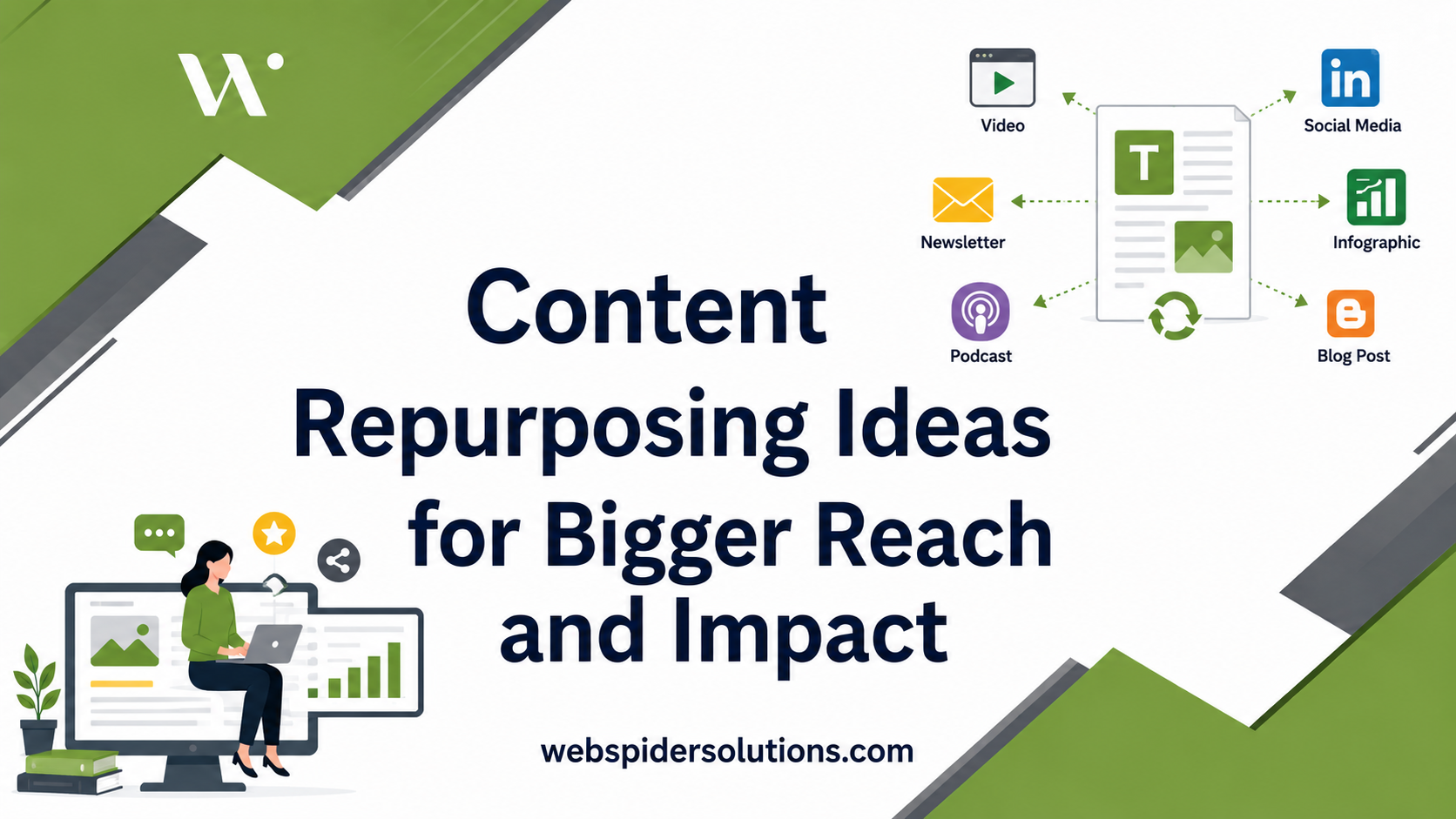
- Scalability: A single webinar can generate blog posts, email sequences, social quote cards, short-form video clips, and a podcast episode. That is one production effort yielding weeks of content.
- Consistency: When you plan repurposing from the moment you create original content, your messaging stays tight and your brand voice stays coherent across every channel.
- Time savings: Teams with a repeatable content marketing workflow spend less time on creative ideation and more time on distribution and optimization.
The hidden cost of siloed workflows is real. When your social team, blog editor, and email marketer are all working independently, you end up with contradictory messages and wasted effort. Structured repurposing bridges those silos by treating every piece of content as a modular system of reusable components.
“The teams winning at content in 2026 are not the ones producing the most. They are the ones who designed their content to be reusable before they ever hit publish.”
Pro Tip: Build a component library where you store key stats, pull quotes, original visuals, and core messages from every major asset. When it is time to repurpose, you already have the building blocks ready.
Essential content repurposing ideas (with actionable examples)
Once you are thinking strategically, it is time to explore specific, hands-on repurposing moves you can deploy.

A scalable multi-channel mindset treats a pillar asset like a webinar, benchmark report, case study, or expert-led video as the starting point and systematically deconstructs it into components designed for specific channels and go-to-market motions. This is not a new idea, but most teams still underuse it.
Here is a practical sequence you can follow:
- Start with a pillar asset. Record a 45-minute webinar on a topic your audience cares about. This becomes your content foundation. It has depth, detail, and your authentic voice.
- Pull a long-form blog article. Transcribe the webinar and restructure it as an educational post with headings, examples, and internal links. This feeds your SEO strategy immediately.
- Clip short video moments. Identify two or three standout insights from the recording and turn them into 60-second clips for LinkedIn, Instagram Reels, or YouTube Shorts.
- Create an infographic. Take the core statistics or step-by-step process from your case study and visualize them. Infographics earn significantly more shares than plain text posts on visual platforms.
- Write an email series. Break the main points of your report or guide into a three-part nurture sequence. Each email delivers one key insight, with a link back to the full asset.
- Design social quote tiles. Pull three to five strong statements from the content and turn them into branded image cards. These are easy to produce, easy to schedule, and consistently drive engagement.
Content Marketing Institute emphasizes an operations and process view: repurposing requires forward-looking and backward-looking planning, combined with data, using example flows like webinar or interview transforming into podcast snippets, video clips, and blog posts. The point is that the plan comes before the publish button.
Channel-specific thinking matters here. What works on LinkedIn does not work on Instagram. A long-form thought leadership article on LinkedIn performs best with a strong hook and structured sections. On Instagram, your audience wants a visual, a fast stat, and a clear call to action. Explore creative content marketing examples to see how brands adapt the same core message for entirely different audiences.
Pro Tip: Pull your analytics before you start repurposing. Look at which blog posts, emails, or social updates earned the most engagement and leads. Those are your highest-priority assets to repurpose first. Audience data removes the guesswork.
AI-assisted content remixing: Scale your output without the burnout
While hands-on tactics are essential, the next level is leveraging tools that multiply your output without multiplying your workload.
HubSpot’s Content Remix provides both a basic approach to turning one asset into many formats and an AI-assisted workflow that repurposes existing text, pages, images, audio, and video into additional content formats using reusable templates. This kind of tooling is reshaping how content teams operate in 2026, especially for small and medium-sized businesses with lean crews.
Here is what AI-assisted remixing can do for your workflow right now:
- Auto-generate short-form captions from long-form blog posts, matched to platform character limits and tone guidelines.
- Convert audio transcripts into social snippets, pull quotes, and summary paragraphs in minutes rather than hours.
- Suggest visual content angles based on the main themes in your written content, so you can brief your designer faster.
- Build email subject line variations from a single piece of pillar content, making A/B testing effortless.
- Reformat technical how-to guides for different reading levels or audience segments without losing the core message.
The stat worth knowing: 44% of marketers cite content repurposing as a top operational challenge. AI tools are directly addressing that pain point by removing the repetitive manual editing that slows teams down.
That said, AI is a tool, not a replacement for strategy. When you auto-generate captions or reformatted content, it still needs a human review pass for brand voice, accuracy, and relevance. Developers and technical teams who need to share specific formatted content, like code snippets with syntax highlighting, know that raw output always needs a polish step before it is production-ready. The same rule applies to AI-generated marketing content.
Keep up with AI content marketing trends and stay current with 2025 content marketing strategies to make sure your toolkit evolves with the industry.
Pro Tip: Use AI to auto-generate visuals and captions for different platforms, but run a brand fit check before publishing. AI does not know your audience as well as you do.
Content refresh and SEO: When and how to revive top-performing assets
With your content pipeline growing, maintaining relevance is the next challenge. Here is how to continually extract value through smart updating.
Not all repurposing means creating something new. Sometimes the highest-ROI move is improving what you already have. Refreshing and republishing content should go beyond changing dates. The real work involves reviving top pages, pulling competitor update ideas, and then redistributing and measuring results. This approach is critical for SEO and AI search visibility in 2026.
Here is a practical refresh process:
- Audit your top 20 pages. Use your analytics platform to identify posts with strong organic traffic but declining click-through rates or rankings. These are your refresh targets.
- Run a competitive gap analysis. Look at what your top competitors are covering that your article misses. Add those angles, examples, and data points to strengthen your content.
- Update statistics and examples. Outdated figures undermine credibility. Replace old stats with current data and swap out time-sensitive references.
- Add new visuals and media. A refreshed article with an embedded video or an updated infographic performs better in search results and keeps readers on page longer.
- Re-distribute. Once updated, treat the piece like new content. Share it across your social channels, add it to your next email newsletter, and build internal links from newer posts back to it.
Here is a quick reference for deciding whether to refresh or leave content alone:
| Signal | Refresh needed | Leave as-is |
|---|---|---|
| Organic traffic declining over 3 months | Yes | No |
| Stats or examples over 18 months old | Yes | No |
| Keywords still relevant but ranking dropped | Yes | No |
| Content evergreen and traffic stable | No | Yes |
| Topic no longer relevant to audience | No, retire it | Yes |
Pair your refresh strategy with strong SEO content writing practices and an understanding of the SEO success strategies that agencies use to maintain long-term visibility.
Pro Tip: Track your performance metrics immediately after each refresh, including organic impressions, average position, and on-page conversions. This data tells you which types of updates move the needle most so you can prioritize accordingly.
Choosing the right repurposing idea for your content: A quick comparison
To decide which repurposing path works best, see how your options stack up side by side.
CMI survey data confirms that repurposing is a top challenge for roughly 44% of marketers, and that high performers rely on multiple formats including case studies and long-form articles. The right format for you depends on your available assets, team size, and target channel.
| Tactic | Best for | Effort level | Expected impact |
|---|---|---|---|
| Social quote cards | Thought leadership, brand awareness | Low | Medium |
| Podcast clips | Webinars, interviews | Low to medium | High on audio platforms |
| Infographics | Data reports, how-to guides | Medium | High on visual channels |
| Long-form blog articles | Webinars, research, case studies | Medium to high | High for SEO |
| Email nurture series | Any pillar asset | Medium | High for conversions |
| Short video recuts | Live recordings, demos | Medium to high | Very high on social |
Review your content marketing platform comparison to identify tools that fit your budget and scale.
When selecting which tactic to run first, apply these three criteria:
- Scalability: Can you repeat this tactic month after month without significant additional investment? If yes, prioritize it.
- Branding consistency: Does this format allow you to maintain visual and messaging standards? Formats that require heavy customization per platform are harder to scale.
- Measurable ROI: Can you directly attribute leads, traffic, or revenue to this content format? If you cannot measure it, you cannot improve it.
Our perspective: Why most content repurposing fails (and how to fix it)
Understanding your options is half the battle. Here is what most marketers still get wrong, and how you can sidestep their mistakes.
After working with dozens of SMBs on content strategy, the pattern is consistent. Teams know repurposing is smart. They intend to do it. But they wait until after a piece is published to think about repurposing, and by then the asset was not designed with reuse in mind. A webinar recorded without clear chapter breaks is harder to clip. A blog post written without a central data point produces weaker infographic material. A case study buried in PDF format cannot easily become a LinkedIn carousel.
The fix is to build repurposing into the creation process, not treat it as an afterthought. Before you record, write, or design anything, ask: how will this be broken down? Map the core messages in advance. Write modular sections that can stand alone. Design visuals at multiple resolutions. This mindset change is what separates teams that produce twenty assets from one from teams that produce one and call it done.
The second failure point is measurement. Most teams repurpose content and then never revisit whether it worked. Without a feedback loop, you keep producing formats that your audience ignores and abandoning ones that actually drive leads. Dedicate time monthly to audit which formats are generating results. Retire the formats that are not working and double down on the ones that are. Build repurposing into your workflow from the start rather than bolting it on at the end.
The teams that win at content repurposing in 2026 are not the most creative. They are the most systematic.
Accelerate your digital marketing success with expert support
Ready to transform your content into a business engine? Here is how you can get expert assistance to grow even faster.
Building a repurposing system that consistently drives traffic, engagement, and leads takes more than good intentions. It takes the right processes, the right tools, and people who understand how all the pieces fit together. At Webspider Solutions, we help SMBs design content strategies that are built for reuse from day one. From content audits to full digital marketing audit services, we identify where your existing assets are underperforming and create a clear plan to extract more ROI from them. Whether you need guidance on digital marketing skills for your team or a full managed campaign, we are here to help you scale smarter. Get in touch for a free consultation and start turning your best content into your biggest growth driver.
Frequently asked questions
What is the difference between content repurposing and reposting?
Repurposing adapts content into new formats or for different platforms to add genuine audience value, while reposting simply repeats the exact same asset. Effective repurposing is an omnichannel strategy rooted in structured content planning, not copy-paste recycling.
How do you decide which content to repurpose first?
Start with evergreen pillar content or your highest-performing existing assets that can be broken into smaller pieces. Treating a pillar asset like a webinar or benchmark report as the starting point lets you systematically create components for specific channels and audience segments.
How does content repurposing help with SEO in 2026?
Updating and reformatting high-value pages helps your site rank more consistently and appear in AI-generated answer boxes. A content refresh should go beyond updating dates and include new insights, competitive gaps, and redistribution to maximize visibility.
Can small businesses benefit from AI content remixing?
Yes, absolutely. AI-assisted tools like Content Remix can convert a single asset into multiple formats using reusable templates, saving significant time even for teams of two or three people.
How do you measure the effectiveness of content repurposing?
Monitor organic traffic, search rankings, engagement rates, and lead generation metrics for each format and channel after deployment. Refreshing and redistributing content followed by rigorous measurement is the standard process for high-performing content teams.