






TL;DR:
- Most B2B seasonal success depends on aligning campaigns with buyer cycles rather than consumer holidays. Key strategies involve targeting procurement windows, planning content 60 to 90 days ahead, and coordinating cross-department efforts. Accurate mapping of fiscal calendars and periodic performance reviews are essential to capture seasonal opportunities effectively.
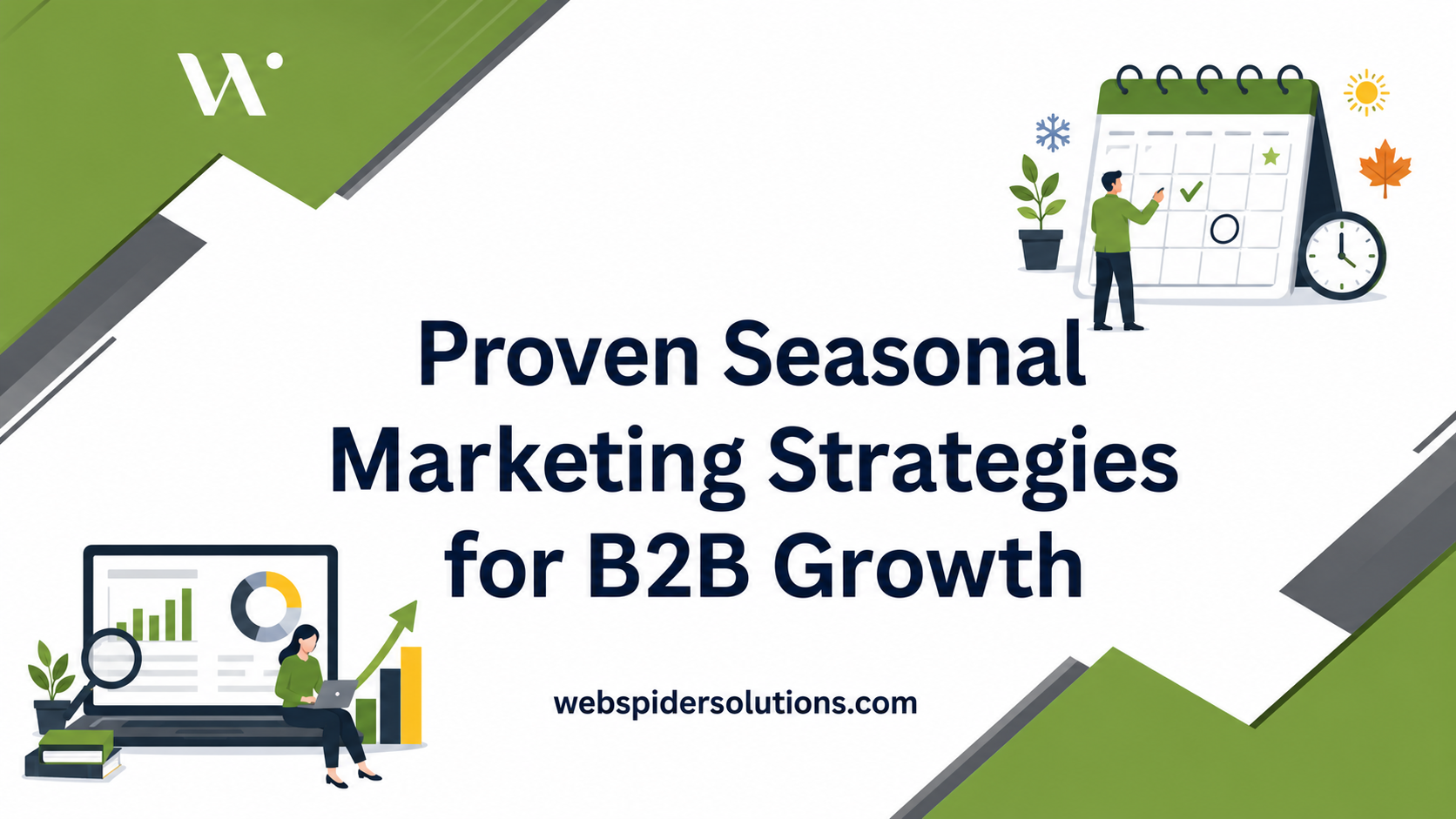
Most B2B marketing managers know that timing matters, but the real challenge is knowing which timing actually drives results. With so many seasonal moments competing for your attention, from consumer holidays to fiscal year-end budget flushes, it is easy to waste resources chasing the wrong windows. The truth is that B2B seasonal success depends on buyer cycles, not just consumer holidays. This guide breaks down evidence-backed criteria and concrete strategies to help you stop guessing and start capturing the seasonal moments that genuinely move the needle for your business.
Table of Contents
- Defining true B2B seasonality: Criteria for success
- Top evidence-backed seasonal marketing strategies for B2B
- How to leverage SEO for seasonal visibility
- Comparison: Seasonal strategies by level of impact
- Our perspective: Why most B2B campaigns miss seasonal impact
- Get expert help to maximize your B2B seasonal marketing
- Frequently asked questions
Key Takeaways
| Point | Details |
|---|---|
| B2B timing is unique | Effective seasonal marketing means planning around fiscal and decision cycles, not just holidays. |
| Lead with cross-team strategy | Coordinate between marketing, sales, and product for maximum campaign impact and flexibility. |
| SEO has its own seasonality | Monitor year-over-year trends to distinguish actual performance from expected seasonal shifts. |
| Review and adapt | Regularly check performance and adapt your strategy for each season to avoid wasted budget. |
| Proactive planning wins | Launching campaigns well before peak windows drives better results and reduces last-minute stress. |
Defining true B2B seasonality: Criteria for success
Most marketing teams default to the same seasonal calendar their consumer-facing counterparts use. Black Friday promotions, end-of-year holiday campaigns, back-to-school pushes. These moments rarely reflect how B2B buyers actually make decisions. Understanding B2B marketing’s growth power requires a very different lens on timing.
True B2B seasonality is shaped by three core forces: fiscal and budget cycles, procurement windows, and multi-stakeholder decision timelines. A software procurement team may lock in new vendor contracts in October to stay within the fiscal year budget. A manufacturing buyer might only evaluate new suppliers twice a year, in January and July. These are the windows you need to map, and they look nothing like a retail calendar.
Before you build any seasonal campaign, answer these key questions to identify your actual seasonal moments:
- When do your target accounts typically finalize their annual or quarterly budgets?
- At what point in the year do procurement teams actively evaluate new vendors or solutions?
- Are there industry-specific events, tradeshows, or compliance deadlines that influence decision-making?
- When do your current clients historically place renewal or upsell orders?
- What does your CRM data say about win rates by month or quarter?
The most reliable approach is to plan around buyer cycles and launch ahead of decision windows rather than reacting to consumer holidays. One critical and often overlooked window: the fiscal year-end budget flush. Many procurement teams are under pressure to spend remaining budgets before their fiscal year closes. If you are not in front of those buyers at that exact moment, a competitor will be.
“B2B seasonality is an inside job. It lives in your buyer’s budget calendar, not on a retail display shelf.”
Pro Tip: Pull together three years of closed-won and closed-lost data from your CRM. Look for patterns in the month deals were signed. Then map those against your clients’ known fiscal cycles. That overlap is your real seasonal window.
Top evidence-backed seasonal marketing strategies for B2B
Once you know when your buyers are active, you need a plan that hits each window with maximum force. Here are six strategies that actually produce results for B2B teams in competitive markets:
- Target budget flush periods with time-sensitive offers. When procurement teams are racing to spend remaining Q4 or Q2 budgets, urgency works in your favor. Create clearly scoped packages or bundles with defined timelines. Make it easy to say yes and even easier to process the purchase quickly. Short decision cycles favor the vendor who is already top of mind.
- Launch content 60 to 90 days before your peak window. Campaigns aligned with decision cycles should go live well before buyers start actively comparing vendors. SEO content, white papers, case studies, and email sequences all require lead time to build authority and warm up prospects. Starting too late is one of the most common and costly mistakes in B2B seasonal marketing.
- Run pre-peak SEO pushes to capture early research. Buyers in B2B almost always research online before contacting a vendor. Prioritizing search visibility during the six to ten weeks before a seasonal window ensures you are present when intent is growing but competition is still relatively low. Look at your lead generation strategies to understand which search terms align with your seasonal spikes.
- Align product launches or service expansions to fiscal readiness. Rolling out a new offering when buyers have budgets available dramatically increases adoption speed. Time your launches to land in the weeks just before budget cycles close, not after.
- Run proactive cross-department check-ins at every campaign phase. Successful B2B seasonal marketing means ignoring the social calendar and following fiscal timelines instead. But that shift requires sales, marketing, and product teams to operate from the same playbook. Weekly syncs during a campaign window help you catch misalignments before they cost you deals. Review what is working, adjust messaging, and keep the pipeline informed.
- Use retargeting campaigns to re-engage warm accounts during procurement windows. Decision makers who have visited your site but not converted are often in research mode. A well-timed retargeting push with a relevant case study or ROI-focused offer during a known procurement window can be the nudge that converts. Study real-world B2B marketing examples to see how leading companies structure these re-engagement flows.
Also coordinate marketing, sales, and product teams with clear quarterly performance reviews. Seasonal windows are short and unforgiving. If you do not build in checkpoints, you will only find out what went wrong after the moment has passed.
Pro Tip: Create a shared digital campaign calendar that maps every seasonal window, content deadline, and campaign launch date. Make it visible to marketing, sales, leadership, and even customer success. Siloed planning is the fastest way to miss your own windows.
How to leverage SEO for seasonal visibility
SEO is not just a background activity you leave running while campaigns go live. For B2B seasonal marketing, it is a precision instrument. Search demand shifts predictably with buyer seasonality, and if you understand those patterns, you can time your content launches, optimize your pages, and capture visibility right when intent is highest.
Here is a step-by-step approach to seasonal SEO for B2B:
- Establish year-over-year baselines. Before you can identify a seasonal surge or dip, you need historical data. Pull organic traffic, impressions, and click-through rates from the same time period over the past two or three years. This baseline tells you what is normal so you do not mistake a seasonal trough for a ranking problem.
- Monitor search trend signals early. Use Google Trends to validate whether a keyword is gaining seasonal momentum. If you see rising interest in your category three months before a known procurement window, that is your signal to publish and optimize now, not when interest peaks.
- Time content launches for maximum authority build-up. New content rarely ranks the week it goes live. Plan to publish cornerstone seasonal content at least eight to ten weeks ahead of your target window. This gives search engines time to index, crawl, and assign authority before buyers are actively searching.
- Audit for cannibalization risks. If you have multiple pages targeting similar seasonal keywords, they compete with each other rather than reinforcing your position. Consolidate or differentiate those pages well in advance of your campaign window.
Check out how content marketing trends are shaping B2B SEO approaches in 2026, including the growing role of intent-matching and topical authority in seasonal search results.
| SEO action | Ideal timing before peak | Expected impact |
|---|---|---|
| Publish cornerstone content | 8 to 10 weeks | High organic visibility at peak |
| Optimize existing pages | 4 to 6 weeks | Improved rankings for competitive terms |
| Build internal links | 3 to 4 weeks | Stronger page authority distribution |
| Run Google Trends analysis | 6 to 12 weeks | Validate keyword timing |
| Launch paid search support | 2 to 3 weeks | Immediate visibility while SEO builds |
Pro Tip: If your organic traffic drops during a known slow period, check Google Trends before panicking. A seasonal dip that matches your historical baseline is normal and expected. A drop that deviates from the pattern warrants deeper investigation.

Comparison: Seasonal strategies by level of impact
Not every strategy fits every situation. Your available lead time, team capacity, content library, and budget all influence which seasonal tactic will deliver the highest return. Here is a side-by-side view to help you prioritize:
| Strategy | Timing needed | Teams involved | Impact level | Best for |
|---|---|---|---|---|
| Budget flush offers | 2 to 4 weeks | Sales, Marketing | High, short-term | Companies with fast sales cycles |
| Pre-peak SEO push | 8 to 12 weeks | Marketing, Content | High, long-term | Companies with content resources |
| Retargeting campaigns | 2 to 4 weeks | Marketing, Paid Media | Medium to High | Warm pipeline accounts |
| Product launch timing | 12 to 16 weeks | All departments | Very High | Companies with new offerings |
| Cross-department syncs | Ongoing | All teams | Medium | Any seasonal campaign |
| Procurement-timed outreach | 4 to 6 weeks | Sales, Marketing | High | Key account management |
When deciding which to prioritize, consider the following signals:
- Short lead time available? Focus on budget flush offers and retargeting. These can be executed quickly and target buyers who are already close to a decision.
- Strong existing content library? Double down on pre-peak SEO and optimize your highest-performing pages for seasonal terms.
- New product or service launching? Align that launch to procurement windows and give yourself at least three to four months of planning runway.
- Multiple teams already aligned? Use that coordination advantage to run multi-channel campaigns that hit buyers across email, paid search, and organic simultaneously.
“Build performance review checkpoints into every seasonal campaign. Looking back after the window closes is useful, but reviewing mid-season is what actually saves campaigns.”
Performance reviews are critical because seasonal windows are short and the cost of inaction compounds fast. Build quarterly checkpoints into your planning calendar so you can adapt in real time, not just analyze in hindsight. Use insights from B2B digital campaign examples to benchmark your mid-season performance against proven approaches.
Our perspective: Why most B2B campaigns miss seasonal impact
Here is an uncomfortable truth most agencies won’t say out loud: most B2B seasonal campaigns fail not because the tactics are wrong, but because the timing logic is borrowed from the wrong industry.
Marketing teams see consumer brands crush it during the holiday season and instinctively reach for the same playbook. Countdown timers, gift-themed emails, year-end “deals.” That approach lands flat with procurement managers who are evaluating software platforms or industrial suppliers based on total cost of ownership, not sentiment.
The real problem runs deeper than tactic choice. It is a planning culture issue. Many B2B teams do not map their campaigns to buyer-side fiscal calendars at all. They plan reactively, launching campaigns when leadership asks for a “push” rather than when buyers are actually in the market. That disconnect is expensive and quietly persistent.
We see three signals that your seasonal marketing is off-track:
- Your campaign launch dates are driven by your internal calendar, not by your buyer’s procurement cycle.
- Sales and marketing are not aligned on which accounts are in active consideration mode at any given time.
- Your campaign performance reviews only happen after a season ends, not during it.
Two diagnostics to correct course quickly: First, interview your three most recent closed-won customers and ask them when they first started evaluating vendors and what triggered the search. That answer will tell you more about your actual seasonal window than any marketing calendar. Second, map your top five accounts’ fiscal years and mark when they typically enter budget planning mode. Then work backward from that date to set your campaign launch.
The winning mindset is to treat digital strategy for SMEs as a backward-planning exercise. Start with when buyers decide, and build every campaign element back from that fixed point. That single shift changes everything about how your seasonal marketing performs.
Get expert help to maximize your B2B seasonal marketing
Planning and executing seasonal B2B campaigns at the right moment, with the right message, across the right channels, takes both strategic depth and operational precision. At Web Spider Solutions, we specialize in helping B2B companies in competitive markets build and execute seasonal strategies that are grounded in buyer logic, backed by data, and timed to convert.
Whether you need a stronger SEO strategy ahead of your peak window, or you want experienced support managing B2B digital campaigns from planning through performance review, our team delivers the analytical rigor and creative execution that seasonal moments demand. The right partner accelerates every phase, from mapping your fiscal calendar to optimizing for search intent to measuring impact across channels.
Ready to stop missing your seasonal windows? Let’s build a smarter plan together.
Frequently asked questions
How do you determine the right seasonal window for B2B marketing?
Analyze past procurement cycles, budget periods, and industry decision timelines rather than following consumer holiday calendars. Buyer cycles and procurement windows are the most reliable indicators of when to launch.
What are the biggest mistakes in B2B seasonal marketing?
The top errors are copying B2C holiday timing and launching campaigns too late to build momentum. Effective B2B campaigns ignore social calendars entirely and follow fiscal timelines and budget cycles instead.
How should B2B marketers measure seasonal campaign performance?
Use year-over-year and pre/post season baselines to distinguish expected shifts from actual performance problems. Year-over-year baselines make seasonal dips and spikes predictable and reportable rather than alarming.
What role does SEO play in seasonal B2B marketing?
SEO reveals where and when search interest rises with buyer seasonality, helping you time content, optimize pages, and capture visibility before competitors do. SEO seasonality is about predictable search volume shifts that reward forward-planning content strategies.
Why is cross-team coordination important for seasonal campaigns?
Aligning marketing, sales, and product teams ensures everyone is targeting the same buyer window with consistent messaging and enables fast pivots when market signals change. Coordination and review checkpoints are essential because seasonal windows are time-sensitive and involve multiple stakeholders.