






TL;DR:
- Segmented campaigns can boost revenue by up to 760 percent. Most SMBs underutilize audience segmentation, missing out on significant engagement gains. Starting with 3 to 5 simple segments and continuously updating data leads to more effective marketing results.
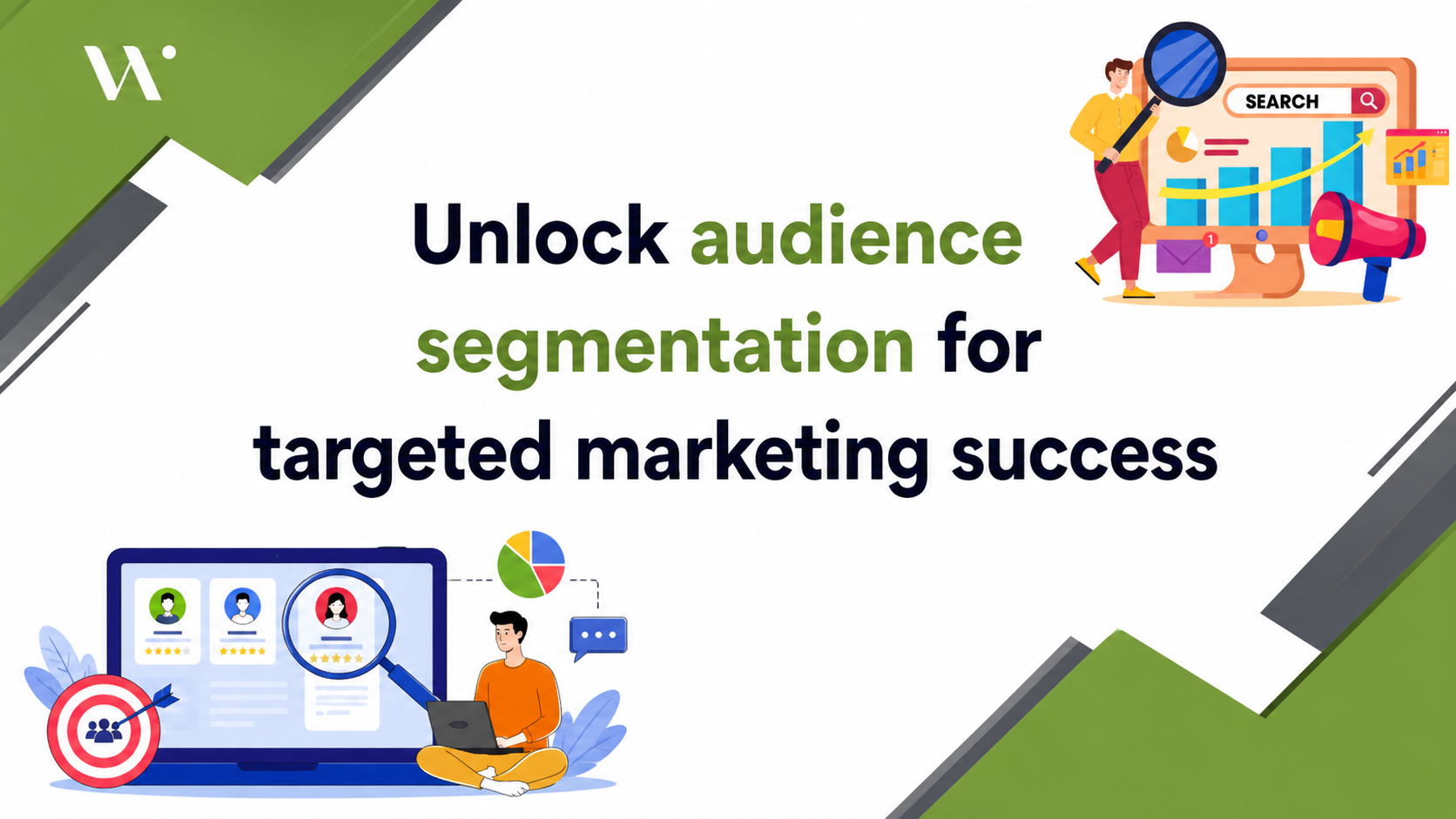
Segmented campaigns can boost revenue by up to 760%, yet most small and medium-sized businesses still send the same message to every person on their list. That gap between knowing segmentation matters and actually implementing it well is where most marketing budgets quietly bleed out. Audience segmentation is the practice of dividing your total audience into smaller, clearly defined groups based on shared characteristics, so you can send messages that genuinely resonate. This article walks you through what segmentation really means, what the data says about its impact, how to build your first segments, and what the next generation of segmentation looks like.
Table of Contents
- Understanding audience segmentation: Definitions and types
- The impact of segmentation: Real-world results and benchmarks
- How to create segments: Strategies and practical steps for SMBs
- Emerging trends and advanced techniques in audience segmentation
- Our take: What most SMBs get wrong about segmentation and what actually works
- Take your segmentation to the next level: Solutions for SMBs
- Frequently asked questions
Key Takeaways
| Point | Details |
|---|---|
| Segmentation delivers ROI | Data-driven segmentation supports huge gains in marketing performance and revenue. |
| Start simple, scale smart | SMBs should begin with a few segments, track results, and grow with advanced tools like AI. |
| Understand segmentation types | Choosing the right segmentation approach—demographics, behavioral, psychographics—leads to more targeted, successful strategies. |
| Avoid over-segmentation | Too many micro-segments can reduce profitability and complicate messaging. |
| Regularly update and refine | Segments should be checked and refined often to stay relevant and impactful. |
Understanding audience segmentation: Definitions and types
Audience segmentation sounds technical, but the core idea is simple. Instead of talking to everyone the same way, you divide your audience into groups and craft messages that speak directly to each group’s needs, behaviors, or circumstances. The result is communication that feels personal rather than generic.
A common point of confusion is the difference between audience segmentation and market segmentation. According to monday.com’s segmentation guide, audience segmentation focuses on well-defined groups of existing or prospective customers, while market segmentation looks at broader categories within an entire industry or market. Market segmentation is strategic and high-level. Audience segmentation is operational and tactical. Another key distinction: market segmentation tends to be static, meaning it changes slowly over time, while audience segmentation can be dynamic, updating as customer behavior and data evolve.
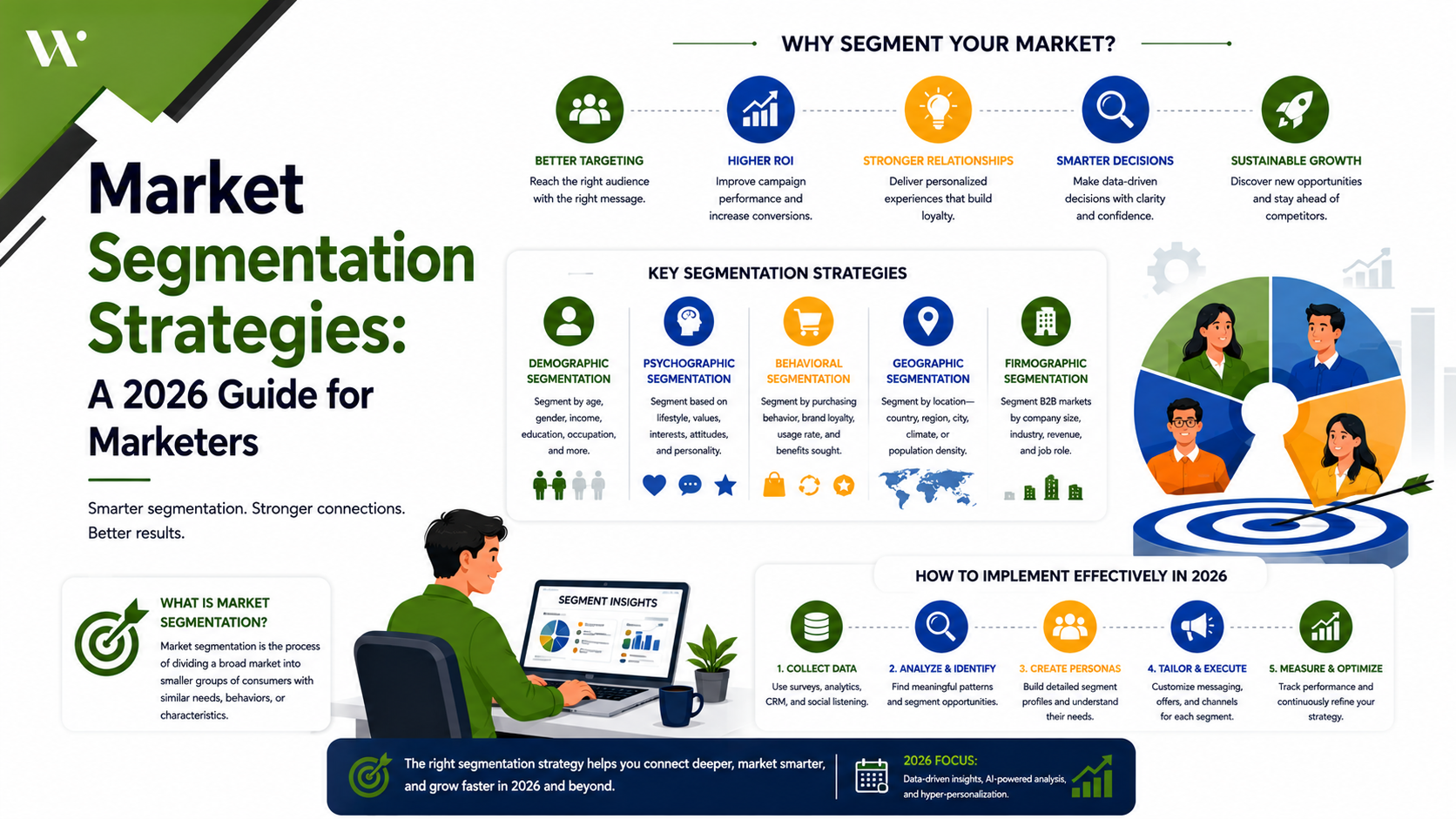
The main segmentation types every SMB should know:
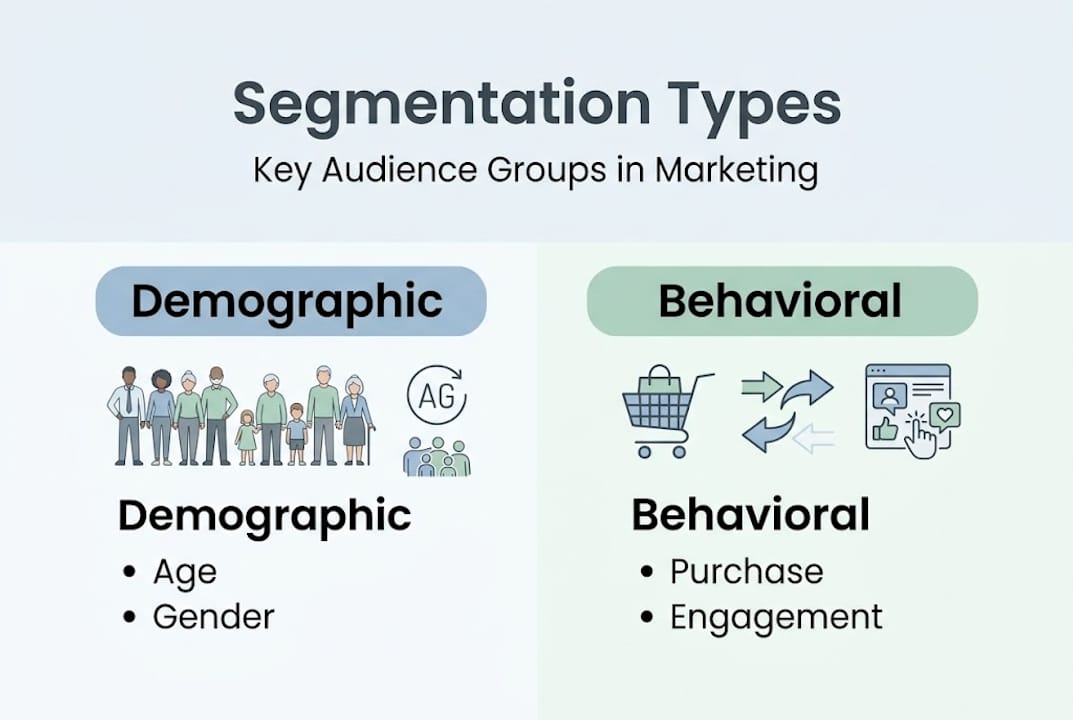
- Demographic segmentation: Age, gender, income, education level, job title. The most commonly used starting point.
- Geographic segmentation: Country, region, city, or even neighborhood. Useful for local businesses or those running location-specific campaigns.
- Psychographic segmentation: Values, lifestyles, interests, and personality traits. Harder to measure but very powerful for brand alignment.
- Behavioral segmentation: Purchase history, website activity, email engagement, and loyalty status. Often the most actionable for digital marketing.
- Firmographic segmentation: Company size, industry, revenue, and structure. Essential for B2B marketers.
- Technographic segmentation: The tools, platforms, and software your audience uses. Useful for SaaS and tech companies.
- Needs-based segmentation: Groups defined by a specific problem they are trying to solve.
- Value-based segmentation: Grouping customers by how much revenue or lifetime value they represent to your business.
- Lifecycle stage segmentation: Where the customer is in their relationship with you, whether they are a brand-new lead, an active buyer, or a lapsed customer.
The full list of segmentation types includes demographic, geographic, psychographic, behavioral, firmographic, technographic, needs-based, value-based, and lifecycle stage. Most SMBs start with demographic and behavioral, then layer in psychographic or firmographic data as they gather more information.
Audience segmentation vs. market segmentation at a glance:
| Feature | Audience segmentation | Market segmentation |
|---|---|---|
| Focus | Existing/prospective customers | Entire industry or market |
| Data type | Behavioral, psychographic, demographic | Demographic, economic, macro trends |
| Update frequency | Dynamic, updated regularly | Static, changes slowly |
| Goal | Personalized messaging | Strategic positioning |
| Best used for | Campaigns and content | Business planning and product development |
Using tools like AI in digital marketing is rapidly changing how businesses build and update these segment types, enabling real-time adjustments that were impossible just a few years ago.
The impact of segmentation: Real-world results and benchmarks
Numbers tell the clearest story here. The gap between businesses that segment their audiences and those that do not is not marginal. It is dramatic. Understanding these benchmarks helps you justify the investment to stakeholders and set realistic expectations for your campaigns.

What the data actually shows:
| Metric | Without segmentation | With segmentation |
|---|---|---|
| Email open rate | 16.8% | 31.2% |
| Click-through rate (CTR) | 1.1% | 4.4% |
| Email conversion rate | 0.8% | 3.1% |
| Revenue increase | Baseline | Up to 760% |
These figures come from a detailed ecommerce segmentation case study that tracked real campaign performance. One business in the study recorded a 42% revenue increase, with open rates climbing to 34.7% and conversion rates jumping from 0.8% to 3.1%. Another generated an additional $500,000 in revenue from segmented email campaigns alone.
“Segmentation does not just improve metrics. It fundamentally changes the relationship between a brand and its customers by making communication feel relevant instead of intrusive.”
Here is the step-by-step reason segmentation lifts email performance so dramatically:
- Relevance: When a message matches a person’s needs or behaviors, they are far more likely to open it.
- Timing: Behavioral segments let you send messages when a customer is most likely to act, such as after browsing a product page or reaching a loyalty milestone.
- Personalization: Using segment-specific language, offers, and subject lines removes the generic feel that kills engagement.
- Reduced unsubscribes: People are less likely to opt out when emails feel useful rather than spammy.
- Better deliverability: Higher engagement rates signal to email providers that your messages are wanted, improving inbox placement over time.
A business tracking email marketing best practices will recognize that segmentation is not just one tactic among many. It is the foundation that makes every other email tactic work better. Without it, even the best subject line copywriting or send-time optimization delivers limited results. The lift in CTR alone, from 1.1% to 4.4%, represents a fourfold increase in traffic driven directly from email, without spending a single extra dollar on advertising.
How to create segments: Strategies and practical steps for SMBs
Knowing that segmentation works is only half the battle. The other half is doing it without overcomplicating things. Here is a practical framework for SMBs that want to start segmenting effectively without needing a data science team.
Step-by-step audience segmentation process:
- Audit your existing data. Pull everything you have from your CRM, email platform, website analytics, and social media. Look for patterns in purchase behavior, engagement frequency, location, and job titles.
- Define your business goal. Are you trying to increase repeat purchases, reduce churn, generate more leads, or move inventory? Your goal determines which segmentation type is most relevant.
- Choose 3 to 5 initial segments. For most SMBs, starting with a small number of well-defined groups is far more effective than creating dozens of micro-segments.
- Name and describe each segment clearly. Give each group a descriptive label, such as “High-value repeat buyers” or “Cold leads from last quarter.” Everyone on your team should understand who belongs in each group.
- Build targeted content and offers for each segment. Resist the urge to reuse general content. Each segment needs messaging that speaks directly to their situation.
- Test, measure, and refine. Run your segmented campaigns for at least 30 days, then compare performance metrics across segments. Drop what is not working and double down on what is.
- Schedule regular data reviews. Set a quarterly calendar reminder to update your segments based on new data.
Common pitfalls to avoid:
- Over-segmentation. Research on segmentation edge cases shows that creating too many micro-segments leads to small, unprofitable groups that are expensive to maintain and difficult to message effectively.
- Segment overlap. When customers qualify for multiple segments, campaigns can collide, causing the same person to receive conflicting messages. Define clear rules for segment membership.
- Outdated static segments. A segment that made sense 18 months ago may not reflect your current audience. Stale segments produce stale results.
- Poor data quality. Segmentation is only as good as the data behind it. Incomplete or inaccurate records will create misleading groups.
- Ignoring disengaged contacts. Studies recommend building specific segments for disengaged or dismissive contacts and using tailored re-engagement messaging rather than treating them like active customers.
Pro Tip: If you have never segmented before, start with one behavioral segment and one demographic segment. Compare their campaign performance for 60 days. That comparison alone will show you where to invest next.
Building a solid segmentation foundation connects directly to broader strategy planning for growth. Your segments should mirror your business goals, not just your data capabilities. If you are working through your first segmentation strategy from scratch, the SMB digital marketing strategy guide offers a step-by-step framework that integrates segmentation into every marketing channel you use.
Emerging trends and advanced techniques in audience segmentation
Once you have your foundational segments running and producing results, the next step is understanding where segmentation is heading. The landscape is shifting fast, and the businesses that adopt these approaches early will have a significant competitive edge.
Key trends shaping segmentation in 2026:
- AI-driven, real-time dynamic segmentation. Instead of manually sorting contacts into fixed buckets, AI-driven segmentation uses machine learning to automatically reclassify customers as their behaviors change. A customer who was a cold lead last month might automatically move into an “active consideration” segment after visiting your pricing page twice.
- Natural language processing (NLP) for psychographics. NLP analyzes written reviews, social comments, and survey responses to surface psychographic patterns at scale, something that previously required manual research.
- Micro-segmentation. Rather than broad categories, micro-segments focus on very specific combinations of attributes, such as customers in a specific region who have purchased three or more times in the last 90 days and have not opened the last four emails. These narrow groups allow hyper-personalized outreach.
- Contextual segmentation. Grouping users based on the context of their current interaction, such as what device they are using, the time of day, or the page they are visiting, rather than relying solely on historical data.
- Segment prioritization based on value. Current market segmentation trends show a clear shift toward identifying and investing most heavily in high-value segments, rather than spreading budget equally across all groups.
Why these trends matter for SMBs specifically:
Large enterprises have used sophisticated segmentation for years. The difference now is that the tools enabling these approaches have become affordable and accessible to smaller businesses. Email platforms like Klaviyo, Mailchimp, and ActiveCampaign offer built-in behavioral segmentation. Google Analytics 4 supports audience segmentation for ad targeting. CRM tools like HubSpot let you create dynamic lists that update automatically.
The top digital marketing trends for 2026 consistently highlight AI-powered personalization as the most significant shift in how businesses approach targeting. For SMBs, this means the barrier to sophisticated segmentation is lower than ever before.
Pro Tip: Before investing in AI segmentation tools, make sure your data hygiene is solid. AI systems trained on messy, incomplete data will produce unreliable segments. Clean your list, standardize your data fields, and document your segment definitions before automating anything.
One practical approach for SMBs ready to scale is to run parallel campaigns: one set using your existing manual segments and another using an AI-generated behavioral segment. Compare the results over 90 days. The performance difference will guide your next investment decision clearly.
Our take: What most SMBs get wrong about segmentation and what actually works
Here is the uncomfortable reality we see repeatedly: most SMBs over-engineer their segmentation before they have enough data to justify it. They build 12 segments when they have 800 contacts. They create elaborate personas based on guesswork rather than actual customer behavior. Then they wonder why the results are inconsistent.
The businesses that get segmentation right start brutally simple. Two or three segments based on real purchase or engagement data, not imagined customer types. They measure obsessively, update their segments quarterly, and only add complexity when the data demands it.
The second mistake is treating segmentation as a one-time project. Audience segments decay. People change jobs, move cities, and shift their buying behavior. A segment that performs brilliantly in Q1 can become a liability by Q4 if nobody updates it. Building a calendar-driven review process is not optional. It is the difference between segmentation that compounds over time and segmentation that quietly erodes your results.
A strong digital marketing strategy treats segmentation as an ongoing operational process, not a one-time setup task. That mindset shift is what separates businesses that see compounding returns from those that plateau after the first campaign lift.
Take your segmentation to the next level: Solutions for SMBs
If this article has shown you the gap between where your segmentation is and where it could be, the next step is connecting the right tools and expertise to your strategy. At Web Spider Solutions, we help SMBs build data-driven segmentation frameworks that plug directly into every marketing channel, from AI in digital marketing workflows to social media management campaigns. Whether you want to build your first three segments or scale into dynamic AI-driven personalization, our team brings both the technical expertise and the strategic thinking to make it work. We also help businesses maximize returns through email marketing ROI optimization, turning your segmented lists into measurable revenue. Reach out for a free consultation and let us help you turn your audience data into growth.
Frequently asked questions
What is the difference between audience segmentation and market segmentation?
Audience segmentation focuses on specific groups within your existing or prospective customer base, while market segmentation analyzes broader industry categories for strategic positioning rather than campaign-level personalization.
How many segments should a small business start with?
Starting with 3 to 5 segments gives SMBs enough specificity to personalize messaging without spreading resources across too many unprofitable micro-groups, and it allows room to expand as data grows.
What data is most important for segmentation?
Demographic and behavioral data are the most accessible and impactful starting points, while advanced approaches may incorporate psychographic and firmographic data for deeper personalization.
Can segmentation improve marketing ROI?
Absolutely. Segmented campaigns have been shown to increase email revenue by 156% and total campaign revenue by up to 760%, with significant improvements in open rates and conversion rates.
Should SMBs use AI or manual segmentation?
Manual segmentation works well when starting out, but as your data and audience grow, AI-driven dynamic segmentation allows real-time reclassification and more precise targeting that manual methods cannot match at scale.