






Most startups struggle to stand out in oversaturated markets where first impressions can make or break early growth. Effective branding does more than create visual appeal—it becomes the heartbeat of your startup’s identity and values. With more than 80 percent of consumers admitting they trust brands they recognize, building a brand that truly connects is essential. This guide explains the strategies and elements that help American founders shape memorable, competitive brands right from the start.
Table of Contents
- Branding for Startups: Core Concepts Explained
- Different Types of Startup Branding Strategies
- Essential Elements of a Strong Startup Brand
- Case Studies: Branding Successes and Failures
- Risks of Weak Branding for New Businesses
- Building a Distinctive Brand: Step-by-Step Process
Key Takeaways
| Point | Details |
|---|---|
| Branding Essentiality | Branding goes beyond visuals; it encompasses core identity, values, and market positioning, which are vital for differentiation. |
| Strategic Branding Approach | Startups must invest in understanding their audience and developing a coherent brand story to build trust and loyalty. |
| Adaptable Brand Identity | Successful brands maintain flexibility in their identity to respond to market changes without losing core values. |
| Consequences of Weak Branding | Weak branding leads to reduced customer trust, limited recognition, and increased acquisition costs, jeopardizing a startup’s growth potential. |
Branding for Startups: Core Concepts Explained
Branding represents far more than just a logo or visual design for startups. It is a strategic framework that communicates a company’s core identity, values, and unique market positioning. Understanding the fundamental principles of branding helps entrepreneurs create a compelling narrative that differentiates them in competitive markets.
At its core, startup branding involves three critical components: brand identity, brand positioning, and brand communication. Brand identity encompasses the visual and verbal elements that represent your company, including logo, color palette, typography, and messaging tone. Brand positioning defines how your startup is perceived relative to competitors, highlighting your unique value proposition. Brand communication involves consistently expressing these elements across all customer touchpoints.
Successful startup branding requires a deliberate, strategic approach. This means deeply understanding your target audience, researching market dynamics, and crafting a brand story that resonates emotionally. Key steps include:
- Conducting comprehensive market research
- Defining your target customer persona
- Developing a clear and differentiated brand purpose
- Creating consistent visual and verbal brand guidelines
- Aligning brand messaging with your startup’s core values
Startups that invest time and resources into building a strong brand foundation set themselves up for long-term growth and customer loyalty. Your brand becomes a powerful asset that communicates trust, expertise, and potential, helping you attract investors, talent, and customers in an increasingly crowded marketplace.
Different Types of Startup Branding Strategies
Startups have several strategic branding approaches to differentiate themselves in competitive markets. Exploring various branding strategies reveals nuanced methods for establishing a unique market presence. These strategies range from personal branding to more complex collaborative approaches that can help emerging businesses build recognition and credibility.

Personal Branding emerges as a powerful strategy for startups, particularly in service-oriented or technology sectors. This approach centers the company’s identity around its founder or key leadership team, leveraging their expertise, vision, and personal story. Tech entrepreneurs and consultancy startups often use personal branding to build trust and showcase specialized knowledge.
Other critical startup branding strategies include:
- Digital Branding: Focusing on online platforms and digital presence
- Co-Branding: Partnering with complementary businesses to expand reach
- Ingredient Branding: Highlighting specific unique technologies or components
- Geographical Branding: Emphasizing local or regional identity
- Cause-Based Branding: Connecting the startup’s mission to social or environmental objectives
The most effective startup branding strategy depends on multiple factors including industry, target audience, and company culture. Comprehensive branding approaches require careful analysis of market dynamics, competitive landscape, and the startup’s unique value proposition. Successful startups often blend multiple strategies, creating a dynamic and adaptable brand identity that can evolve with their growth trajectory.
Essential Elements of a Strong Startup Brand
Building a robust brand requires startups to go beyond surface-level aesthetics and develop a comprehensive strategic framework. Fundamental branding principles emphasize creating a deep, meaningful connection with the target audience that transcends traditional marketing approaches. Successful startup brands understand that their identity is not just about visual design, but about crafting a compelling narrative that resonates with potential customers.
Core Brand Identity represents the foundational element of a strong startup brand. This includes developing a clear value proposition, defining the brand’s personality, and creating consistent visual and verbal communication strategies. Startups must articulate what makes them unique, addressing specific customer pain points while demonstrating their distinctive approach to solving market challenges.
Key elements of a powerful startup brand include:
- Authentic Storytelling: Communicating the startup’s origin, mission, and vision
- Visual Consistency: Developing a cohesive design language across all platforms
- Clear Value Proposition: Articulating unique benefits and competitive advantages
- Emotional Connection: Building genuine community engagement that goes beyond transactional relationships
- Adaptability: Creating a brand framework flexible enough to evolve with market changes
Ultimately, a strong startup brand is a dynamic ecosystem that combines strategic thinking, emotional intelligence, and consistent execution. Successful startups recognize that their brand is not a static asset but a living, breathing entity that requires continuous nurturing, refinement, and alignment with both customer expectations and organizational growth objectives.
Case Studies: Branding Successes and Failures
Startup branding represents a complex journey of strategic decision-making and adaptive thinking. Analyzing pivotal moments in software startup trajectories reveals critical insights into how branding decisions can dramatically impact a company’s success or failure. The most resilient startups demonstrate an ability to understand and rapidly respond to market feedback, continuously refining their brand narrative.
Branding Failure Case Study: Many startups falter by developing rigid brand identities that cannot adapt to changing market conditions. These organizations often become trapped by initial positioning, failing to recognize when their original messaging no longer resonates with target audiences. Cognitive mapping techniques highlight how successful startups maintain flexible brand frameworks that can pivot without losing core identity.
Key observations from successful and unsuccessful startup branding include:
- Consistency vs. Rigidity: Maintaining brand coherence while allowing strategic flexibility
- Authentic Storytelling: Developing genuine narratives that connect emotionally with customers
- Rapid Iteration: Quickly adjusting brand messaging based on market response
- Market Understanding: Deeply comprehending target audience needs and expectations
- Leadership Vision: Aligning brand strategy with founder’s long-term organizational objectives
Ultimately, startup branding is not about achieving perfection but about creating a dynamic, responsive identity that can evolve. The most successful brands view their identity as a living ecosystem, continuously learning, adapting, and growing in response to customer feedback, technological shifts, and emerging market opportunities.
Risks of Weak Branding for New Businesses
Consequences of inadequate branding strategies can devastate new businesses before they gain meaningful market traction. Weak branding creates a cascade of challenges that undermine a startup’s potential for growth, credibility, and long-term sustainability. These risks extend far beyond aesthetic considerations, fundamentally impacting how potential customers perceive and interact with a new business.
Market Differentiation Challenges emerge as a primary risk of ineffective branding. In crowded markets, startups without a clear, compelling brand identity blend into background noise, making it nearly impossible to attract customer attention. Comprehensive startup branding research reveals that businesses struggling with brand definition often experience significant obstacles in customer acquisition and market positioning.
Specific risks of weak branding include:
- Reduced Customer Trust: Inconsistent or unclear messaging undermines credibility
- Limited Market Recognition: Difficulty standing out among competitors
- Investor Skepticism: Weak brands struggle to attract potential funding
- Ineffective Communication: Inability to articulate unique value propositions
- Higher Customer Acquisition Costs: Increased marketing expenses to compensate for unclear brand messaging
Ultimately, branding is not a luxury but a critical strategic investment for new businesses. Startups must view their brand as a fundamental communication tool that connects emotional and rational elements, transforming abstract business concepts into tangible, relatable experiences that resonate with target audiences.
Building a Distinctive Brand: Step-by-Step Process
Developing a comprehensive startup branding strategy requires methodical planning and deep understanding of both market dynamics and organizational identity. Successful brand development is not a linear process but an iterative journey of discovery, refinement, and strategic positioning that transforms abstract business concepts into tangible, compelling narratives.
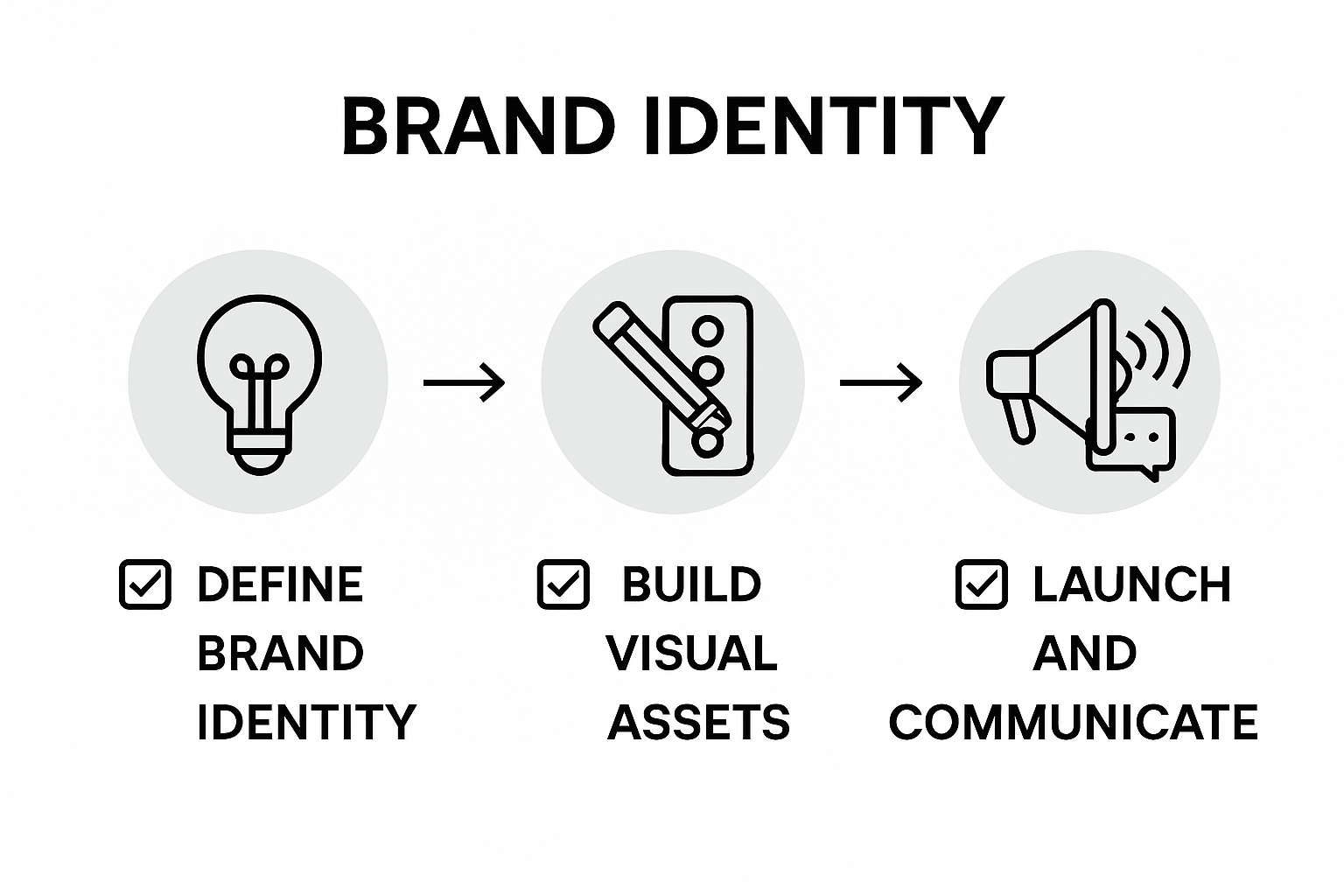
Brand Foundation Building represents the critical first phase of distinctive brand creation. This involves conducting thorough market research, defining target audience personas, and articulating the startup’s unique value proposition. Crafting a compelling brand story demands introspection about the company’s core mission, values, and the specific problems it aims to solve for customers.
Key steps in building a distinctive brand include:
- Market Research: Understanding industry landscape and customer needs
- Purpose Definition: Clearly articulating the startup’s fundamental mission
- Visual Identity Creation: Developing consistent design elements
- Messaging Framework: Establishing tone, voice, and communication strategy
- Audience Segmentation: Identifying and deeply understanding target customer groups
- Competitive Differentiation: Highlighting unique attributes that set the brand apart
Ultimately, brand building is an ongoing process of alignment between internal organizational values and external market perceptions. Successful startups view their brand as a living ecosystem that continuously adapts, learns, and resonates with evolving customer expectations, transforming initial strategic vision into a powerful, meaningful market presence.
Elevate Your Startup Brand to Drive Lasting Growth
Building a distinctive brand that truly connects with your audience is a challenge every startup faces. The article highlights key branding concepts like authentic storytelling and strategic positioning that help you stand out in a crowded market. If you struggle with inconsistent messaging or low market recognition, these are signs your startup needs a focused branding and digital marketing strategy to boost visibility and trust.
At Web Spider Solutions, we specialize in transforming startup brands into powerful market leaders with tailored solutions such as SEO, paid advertising, and content marketing. Explore success stories and insights in our Stories Archives to see how brands have grown by refining their identity and online presence. Ready to leave weak branding behind and accelerate your growth.
Don’t wait for opportunities to pass by. Contact us today at Web Spider Solutions for a free consultation and start building a brand that delivers measurable results and lasting impact.
Frequently Asked Questions
What is the significance of branding for startups?
Branding is crucial for startups as it communicates a company’s identity, values, and unique market positioning, helping them stand out in competitive environments.
How can effective branding drive growth for a startup?
Effective branding drives growth by building customer trust, enhancing recognition, and establishing credibility, which can attract investors, talent, and customers.
What are the key components of startup branding?
The key components of startup branding are brand identity, brand positioning, and brand communication, which work together to create a cohesive and compelling narrative.
How can startups ensure their branding resonates with their target audience?
Startups can ensure their branding resonates by conducting comprehensive market research, defining target customer personas, and crafting a brand story that emotionally connects with their audience.
Recommended