

Did you know that over 70 percent of executives say a strong personal brand boosts career opportunities and professional influence? The way an executive is perceived can shape business partnerships, inspire teams, and attract industry recognition. With the rise of digital channels, building a personal brand now demands strategy, self-awareness, and authenticity. Mastering this skill helps executives stand out, establish trust, and drive meaningful connections in an increasingly competitive world.
Key Takeaways
| Point | Details |
|---|---|
| Personal Branding Importance | Personal branding is a strategic narrative that reflects an executive’s unique value and professional identity, distinguishing them from traditional corporate branding. |
| Core Elements of Executive Brand | A powerful executive brand balances external image and internal identity, focusing on both perception and authenticity. |
| Strategies for Executive Presence | Developing executive presence involves self-reflection, clear value definition, and aligning communication style with leadership goals. |
| Avoid Branding Pitfalls | Misalignment of personal values with professional presentation can undermine credibility; maintaining consistency and authenticity is key to effective branding. |
Defining Personal Branding for Executives
A personal brand represents more than just a professional resume – it’s a strategic narrative that communicates an executive’s unique value proposition, core expertise, and professional identity. According to research from Berkeley, personal branding involves crafting a professional identity that reflects one’s character, expertise, and experiences, distinctly separating it from traditional corporate branding by emphasizing individual motivations and values.
For modern executives, personal branding transcends simple self-promotion. Building a Strong Online Brand: Proven Strategies for 2025 becomes critical in establishing professional credibility. The Public Relations Society of America highlights that personal branding is a deliberate process of shaping external perceptions around an individual’s unique combination of skills, character traits, and professional experiences.
Key elements of effective executive personal branding include:
- Authenticity in professional storytelling
- Consistent digital and offline presence
- Strategic visibility across professional networks
- Demonstrating thought leadership
- Aligning personal values with professional actions
Successful personal branding transforms an executive from being just another professional to becoming a recognized industry voice – someone who not only performs exceptionally but also inspires and influences others through a compelling personal narrative.

Core Elements of an Executive Brand
A powerful executive brand is fundamentally built on two interconnected dimensions: external image and internal identity. According to the Public Relations Society of America, these elements represent the delicate balance between how professionals are perceived and who they truly are at their core.
Here’s a comparison of the core elements shaping an executive brand:
| Element | External Image | Internal Identity |
|---|---|---|
| Focus | How others perceive the executive | The executive’s true self and values |
| Components | Presentation Communication style Visibility |
Personal values Beliefs Motivations |
| Role in Branding | Shapes professional reputation | Defines authenticity and purpose |
| Success Factor | Strategic visibility and communication | Alignment with personal values |
| The external image encompasses presentation, communication style, and professional visibility, while the internal identity reflects personal values, beliefs, and authentic professional motivations. |
Step-by-Step Guide to Building a Brand underscores the importance of strategic brand development. Research from the Operational Excellence Society reveals that effective personal branding for executives hinges on four critical pillars:
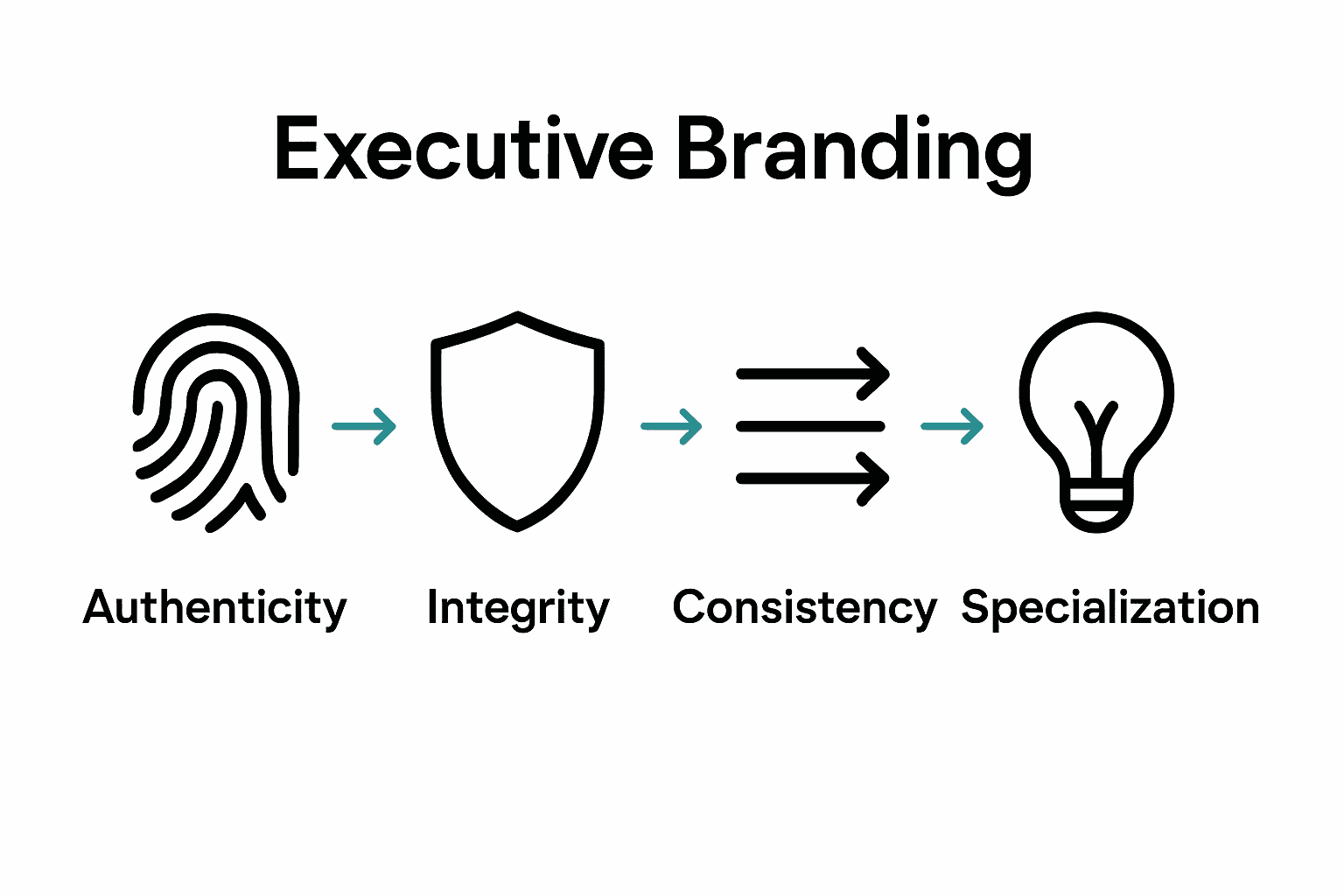
- Authenticity: Ensuring the brand genuinely reflects true personality
- Integrity: Maintaining high moral and ethical standards
- Consistency: Presenting a uniform professional narrative across platforms
- Specialization: Focusing on a unique area of expertise
Successful executives understand that their personal brand is not a static construct but a dynamic representation of their professional journey. By aligning their external communication with their internal values, they create a compelling narrative that resonates with colleagues, clients, and industry peers.
This strategic approach transforms personal branding from mere self-promotion into a powerful tool for professional influence and leadership recognition.
Strategies For Building Executive Presence
Executive presence is more than a professional skill – it’s a strategic approach to personal brand management that bridges self-perception and external perception. According to Harvard Business School research, developing a powerful executive presence requires intentionally understanding and strategically managing how others perceive your professional identity.
Key strategies for building a compelling executive presence include:
- Conducting honest self-reflection
- Defining clear personal and professional values
- Aligning communication style with leadership goals
- Developing consistent non-verbal communication
- Cultivating emotional intelligence
8 Effective Strategies to Elevate Your Personal Brand on LinkedIn provides additional insights into digital reputation management. Harvard Business experts emphasize that successful executives proactively shape their reputation by understanding the gap between their self-image and external perception, then methodically working to close that divide.
Ultimately, building executive presence is an ongoing process of personal development. It demands continuous learning, adaptability, and a commitment to authentic leadership that resonates across professional networks. By consistently demonstrating integrity, expertise, and strategic communication, executives can transform their personal brand into a powerful professional asset.
Leveraging Digital Channels and Social Media
Digital platforms have revolutionized how executives build and communicate their personal brand. According to Harvard Business School Online, social media and digital channels offer unprecedented opportunities to strategically define professional value, attract meaningful opportunities, and connect with industry leaders and peers.
Key strategies for effective digital personal branding include:
- Maintaining a consistent professional narrative across platforms
- Curating content that demonstrates thought leadership
- Engaging authentically with professional networks
- Showcasing expertise through multimedia content
- Building meaningful professional relationships
15 Benefits of Social Media Marketing: Unlocking Business Growth provides deeper insights into digital brand optimization. The most successful executives understand that digital presence is not about self-promotion, but about creating genuine value and establishing a compelling professional narrative that resonates with their target audience.
Navigating digital channels requires intentionality and strategic thinking. By thoughtfully selecting platforms, crafting authentic content, and consistently demonstrating professional expertise, executives can transform their digital footprint from mere online presence to a powerful personal branding tool that opens doors to unprecedented professional opportunities.
Common Mistakes and Pitfalls to Avoid
Personal branding can quickly unravel when executives fail to maintain strategic consistency and authenticity. According to the Public Relations Society of America, the most critical mistakes stem from misalignment between personal values and professional presentation, which can dramatically undermine an executive’s credibility and professional reputation.
Key personal branding pitfalls to avoid include:
- Presenting an inconsistent image across different platforms
- Oversharing personal details that compromise professional perception
- Neglecting to proactively manage your digital reputation
- Creating content without a clear strategic purpose
- Failing to align personal brand with organizational objectives
7 Branding Mistakes to Avoid for Business Success offers additional insights into reputation management. Harvard Executive Education emphasizes that passive personal branding is dangerous – when executives do not actively shape their narrative, they risk allowing others to define their professional identity, potentially leading to misrepresentation and missed opportunities.
Successful personal branding requires continuous self-awareness and strategic intent. By remaining vigilant about potential pitfalls, maintaining authenticity, and consistently aligning digital presence with professional goals, executives can build a robust and credible personal brand that opens doors and creates meaningful professional connections.
Elevate Your Executive Brand with Strategic Digital Solutions
Personal branding for executives is all about aligning your authentic values with how you are perceived professionally. The article highlights challenges like maintaining consistency, building executive presence, and leveraging digital platforms effectively. If you are struggling to bridge the gap between your internal identity and external image or want to stand out as an industry leader, expert guidance and tailored digital strategies are key.
At Web Spider Solutions, we specialize in elevating executive brands through proven digital marketing services. From enhancing your professional visibility with SEO and content marketing to managing your social media reputation and crafting a compelling online narrative, our solutions help you build a consistent and powerful presence. Explore our insights through Stories Archives to understand how we help professionals like you.
Ready to transform your personal brand into a strategic asset that resonates across networks and opens new opportunities? Visit Web Spider Solutions now and partner with us to develop a personal branding strategy that truly reflects your leadership and expertise.
Frequently Asked Questions
What is personal branding for executives?
Personal branding for executives is the strategic process of creating and managing a unique professional identity that highlights one’s value proposition, expertise, and core values, distinguishing them from traditional corporate branding.
Why is executive presence important in personal branding?
Executive presence is essential because it directly influences how others perceive an executive’s professional identity. It involves managing self-image and aligning it with external perceptions to enhance leadership credibility and visibility.
What are some key strategies for building a personal brand as an executive?
Key strategies include maintaining authenticity, demonstrating thought leadership, engaging with professional networks, and aligning your communication style with your values and goals.
How can executives leverage digital channels for personal branding?
Executives can leverage digital channels by maintaining a consistent professional narrative, curating relevant content, engaging authentically with their audience, and showcasing their expertise through diverse forms of multimedia content.

 Top-rated