





TL;DR:
- An SEO advertising agency offers comprehensive, coordinated strategies to improve search visibility and business growth.
- They follow a structured process focusing on discovery, strategy, execution, tracking, and transparent reporting.
- Emerging trends like Generative Engine Optimization emphasize optimizing content for AI citation and summarization.
Many business owners pump thousands of dollars into digital advertising every month and still can’t tell you whether it’s actually working. The line between what drives rankings, what drives clicks, and what drives revenue stays blurry. An SEO advertising agency cuts through that confusion by combining technical search expertise with integrated growth strategy, turning guesswork into measurable outcomes. This guide breaks down exactly what these agencies do, how they deliver results, how to pick the right one, and what the AI search revolution means for your business visibility in 2026 and beyond.
Table of Contents
- What is an SEO advertising agency and why does it matter?
- How SEO advertising agencies drive real results
- Choosing the best SEO advertising agency for your business
- New trends: Generative Engine Optimization and the AI search era
- The overlooked truth about choosing an SEO advertising agency
- Start elevating your business with the right SEO partner
- Frequently asked questions
Key Takeaways
| Point | Details |
|---|---|
| Agencies offer integrated strategies | SEO advertising agencies blend technical, content, and local tactics to boost visibility. |
| Agency selection matters | The right partner brings transparency, proven results, and aligns to business goals. |
| AI and GEO are reshaping SEO | Top agencies adapt strategies for AI-powered search and entity optimization. |
| DIY has limits | Some SEO basics are DIY-friendly, but sustainable growth needs agency-level expertise. |
| Human experience trumps automation | Genuine expertise signals in content are critical for authority and future-proof ranking. |
What is an SEO advertising agency and why does it matter?
An SEO advertising agency is a specialized firm that manages and executes strategies to improve your business’s visibility in organic search results. Unlike a solo consultant who might handle one slice of your search presence, a full-service agency brings a team with distinct skills: technical specialists, content strategists, link-building experts, and data analysts, all working under one coordinated plan.
This matters because search engine optimization is no longer a single tactic. It’s a layered discipline that requires multiple moving parts to work in sync. SEO agencies for SMBs employ methodologies including technical SEO covering crawlability, Core Web Vitals, and schema markup, on-page optimization aligning title tags, headers, and content intent, local SEO through Google Business Profile management and citation building, off-page work like backlinks and digital PR, and content strategies built around pillar-cluster models and buyer intent pages.
Compare that with hiring one freelancer. A freelancer might excel at content but have no bandwidth for technical audits. An in-house team might know your brand well but struggle to stay current with algorithm changes or have the resources to scale link acquisition. An agency solves the scope problem by giving you a full bench.
Here’s what a well-rounded SEO advertising agency typically offers:
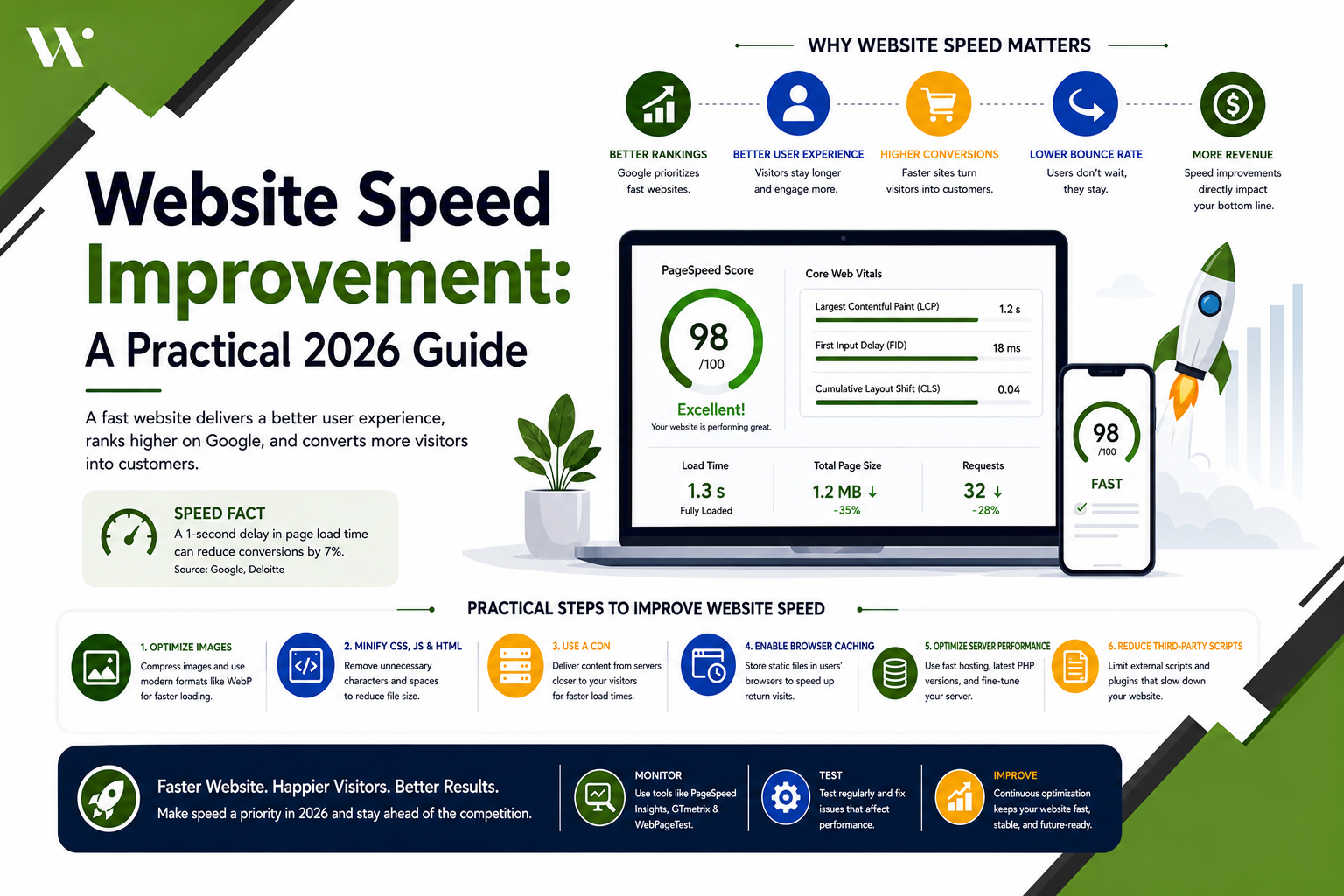
- Technical SEO: Site speed optimization, crawl error resolution, Core Web Vitals improvements, and structured data implementation
- On-page optimization: Keyword mapping, title tag rewrites, header structure, and content alignment to search intent
- Local SEO: Google Business Profile optimization, local citations, review management, and geo-targeted content
- Off-page SEO: Strategic backlink acquisition, digital PR outreach, and brand mention building
- Content strategy: Topic cluster development, long-form buyer intent pages, and content refreshes for aging pages
- Reporting and analytics: Monthly dashboards, rank tracking, traffic attribution, and conversion reporting
“Most agencies use a blend of technical, on-page, off-page, and content tactics to boost search visibility. The difference between good and great lies in how those tactics are connected to your specific business goals.”
If you’re considering SEO for small businesses, working with an agency that understands your competitive landscape can save you months of trial and error.
How SEO advertising agencies drive real results
Knowing what agencies offer is useful. Seeing how they actually produce growth is what changes the decision. Agencies don’t just run tasks, they follow a deliberate process built around your business objectives.
Here’s the typical workflow a reputable SEO advertising agency follows:
- Discovery and audit: The agency conducts a full technical audit of your site, analyzes your top competitors, identifies keyword gaps, and assesses your current backlink profile. This baseline shapes everything that follows.
- Strategy development: Based on audit findings, they build a custom roadmap covering which pages to optimize first, what content to create, which technical issues to fix, and which links to pursue. Timelines and priority rankings are established here.
- Execution: The team begins implementing changes across technical, on-page, and content fronts simultaneously. Link outreach runs in parallel. Local signals are strengthened if you serve specific geographic markets.
- Tracking and iteration: Results are monitored weekly. Rankings, organic sessions, click-through rates, and conversion data feed back into the strategy. What’s working gets scaled. What isn’t gets adjusted.
- Reporting: You receive clear monthly reports that connect SEO activities to actual business outcomes, not just keyword positions. Revenue-linked reporting helps you understand the real return on your investment.
Pro Tip: You can handle your Google Business Profile setup and basic technical fixes yourself if budget is tight. But agencies excel at scale, particularly in content production, link acquisition, and handling the kind of algorithmic volatility that trips up most in-house teams.
Consider a local plumbing business that hired an agency after years of relying solely on word-of-mouth. Within six months of consistent local SEO execution, including review generation campaigns, citation cleanup, and geo-targeted service pages, the business moved from page three to the top three Google Map Pack positions for its primary service areas. Calls increased by over 60 percent. That kind of result doesn’t happen from occasional blog posts. It comes from coordinated, sustained execution.

A strong agency also draws a clear line between vanity metrics and real business outcomes. Ranking for a keyword nobody searches is meaningless. Traffic that never converts is expensive. The agencies worth working with tie their reporting directly to SEO campaigns for business growth, measuring leads generated, cost per lead, and return on organic investment.
Choosing the best SEO advertising agency for your business
With dozens of agencies pitching their services, picking the right one requires a structured approach. The wrong choice can cost you budget, time, and ranking positions that take months to recover.
Here’s a practical comparison of your main options:
| Option | Strengths | Limitations |
|---|---|---|
| DIY | Low cost, full control | Limited scale, steep learning curve |
| Freelancer | Flexible, often lower cost | Narrow skill set, availability issues |
| In-house team | Brand knowledge, close collaboration | High overhead, hard to keep current |
| SEO agency | Full-service, scalable, accountable | Higher investment, requires clear scope |
For most SMBs in competitive sectors, the agency model wins on scalability and accountability, as long as you choose well. Agencies selected via Clutch reviews with verified case studies and transparent reporting practices tend to deliver the most consistent value.
Here are five non-negotiable criteria when evaluating agencies:
- Reputation and reviews: Look for verified client reviews on platforms like Clutch or Google. Pattern recognition across multiple clients tells you more than a single testimonial.
- Transparency in process: The agency should explain what they’re doing and why without hiding behind jargon. If they can’t explain their strategy clearly, that’s a warning sign.
- Business fit: The agency should have experience in your sector or with businesses at a similar stage of growth. General experience is less valuable than relevant experience.
- Reporting standards: Ask to see a sample report. Does it show organic traffic trends, ranking movements, and conversion data? Or just a list of tasks completed?
- Real case studies: Request case studies with specific results, not generic percentage improvements. Numbers tied to real client scenarios give you something to evaluate.
Common mistakes businesses make during the selection process include chasing the lowest monthly retainer, ignoring what’s excluded from the scope, and not checking references. An agency offering guaranteed first-page rankings in 30 days is selling you something that doesn’t exist. SEO results take time, and any agency claiming otherwise is not being straight with you.
Before signing a contract, run through a solid website auditing checklist on your own site. This gives you baseline knowledge before your first agency meeting, which makes you a better client and helps you evaluate whether the agency’s initial audit is actually thorough.
Review their SEO strategy approach as well. An agency worth hiring should be able to walk you through the strategic pillars they’d prioritize for a business like yours before any contract is signed.
New trends: Generative Engine Optimization and the AI search era
The search landscape is shifting faster than most business owners realize. Google’s AI Overviews, ChatGPT search, Perplexity, and similar tools are changing how users find and consume information. Classic SEO still matters, but a new discipline is emerging alongside it: Generative Engine Optimization, or GEO.
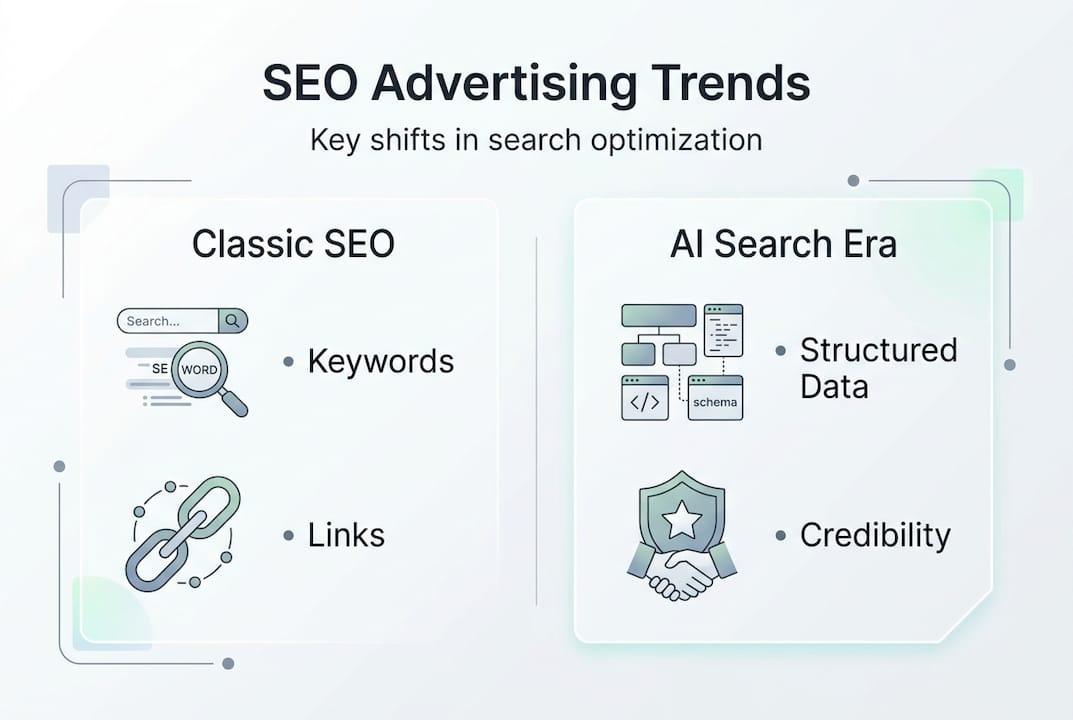
GEO refers to the practice of optimizing your content to be discovered, summarized, and cited by AI-powered search engines. Traditional SEO focused on ranking in the ten blue links. GEO focuses on getting your content referenced inside AI-generated answers. GEO for AI search centers on entity-based optimization, structured data for AI readability, and content designed specifically for summarization and citation by generative tools.
Here’s how GEO and classic SEO compare:
| Factor | Classic SEO | Generative Engine Optimization |
|---|---|---|
| Primary goal | Rank in organic results | Appear in AI-generated answers |
| Key signals | Backlinks, keywords, page speed | Entities, structured data, authority |
| Content format | Keyword-optimized pages | Summarizable, citation-worthy content |
| Success metric | Ranking position and traffic | AI citation frequency and visibility |
| E-E-A-T importance | High | Critical |
E-E-A-T stands for Experience, Expertise, Authority, and Trust. It’s especially critical in YMYL (Your Money, Your Life) categories like health, finance, legal, and any sector where bad advice causes real harm. AI content without human expertise signals risks penalties, because Google and AI engines prioritize credible citations, firsthand experience, and verifiable authority over volume alone.
Pro Tip: Don’t publish purely AI-generated content and expect rankings or citations to follow. AI tools are useful for drafting, but your content needs real human expertise, original data, and named authors with credentials to perform in both classic and AI-driven search environments. Read our GEO optimization guide to understand how to position your content for this new landscape.
Forward-thinking agencies are already building GEO into their service offerings. That means creating FAQ schema and HowTo schema at scale, structuring content for extractability, prioritizing authoritative external citations, and building brand entity strength across the web. If the agency you’re evaluating hasn’t mentioned GEO or AI search adaptation in their strategy conversations, treat that as a gap worth questioning.
The overlooked truth about choosing an SEO advertising agency
Most articles tell you to check reviews, look at case studies, and avoid shady promises. That’s all true. But there’s a dimension most guides miss entirely, and it’s the one that separates mediocre agency relationships from genuinely transformative ones.
The real question isn’t “how fast will I rank?” It’s “how will this agency adapt when everything changes?”
Google has released multiple major algorithm updates every year for over a decade. The emergence of AI search is not a small shift. It’s a fundamental restructuring of how content reaches people. Agencies that treat SEO as a fixed set of tasks will become obsolete. The agencies worth partnering with treat their own practice as a living discipline that gets updated constantly.
We’ve seen this pattern clearly in our own work. Businesses that focused purely on short-term ranking gains without building genuine content authority got hit hardest by core updates. The ones that invested in real content quality, legitimate link relationships, and technical hygiene held their ground even when competitors scrambled. You can see this dynamic in our SEO case study insights, where the most durable results came from clients who leaned into collaboration rather than just delegating.
Ask your prospective agency how they communicate when results dip. A confident, honest agency explains what happened and adjusts strategy. An agency that deflects or goes quiet when rankings slip is one you’ll eventually regret hiring. The best relationships we’ve built over the years started with honest conversations about timelines, expectations, and what success actually looks like at 12 months, not 12 weeks.
Education matters too. If your agency isn’t helping you understand what’s happening and why, you become entirely dependent on them, which is a fragile position. The best agencies build your internal knowledge while executing on your behalf, so you can ask smarter questions, evaluate results critically, and make better decisions together.
Start elevating your business with the right SEO partner
Knowing the landscape is half the battle. The other half is finding a team that can execute with precision, adapt to change, and show you exactly what your investment is producing.
At Web Spider Solutions, our SEO campaigns and growth programs are built specifically for businesses in competitive sectors that need more than keyword rankings. We track organic traffic, lead quality, conversion rates, and revenue attribution so every report ties back to what matters most to you. Our proven SEO success stories show what sustained, strategic execution looks like in practice. Whether you’re starting from scratch or scaling an existing SEO program, our specialists are ready to audit your current position and build a roadmap tailored to your market. Request a free SEO audit and start a conversation with a team that keeps pace with where search is heading.
Frequently asked questions
What services should a top SEO advertising agency provide?
A top agency delivers technical SEO, content strategy, local SEO, off-page link building, and regular performance reporting, all connected to your actual business goals rather than standalone activities.
How is Generative Engine Optimization (GEO) changing SEO advertising?
GEO optimizes content for AI-powered search by improving structured data, entity signals, and credible citations. GEO for AI search means your content needs to be summarizable and authoritative enough to be referenced inside AI-generated answers.
Why is human experience still vital when using AI-generated content?
Content built entirely by AI lacks the firsthand experience and credibility signals that search engines now require. AI content without human expertise risks penalties, particularly in high-stakes sectors like health, legal, and finance.
Can I do basic SEO myself, or do I need an agency?
DIY works for setting up your Google Business Profile and fixing basic technical errors. However, agencies excel in scale, particularly when it comes to link acquisition, content production, and navigating complex algorithm changes that require a full team response.
What makes for a transparent SEO agency?
A transparent agency shares regular, plain-language reports that show progress and problems equally. They communicate openly when something isn’t working and adjust strategy proactively rather than waiting for you to ask.