






Many digital marketers still believe meta keywords boost SEO rankings, wasting time on an obsolete tactic. Meta tags do matter for website performance, but only specific types influence how search engines index your pages and how users interact with your results. This guide reveals which meta tags actually impact your SEO, how to optimize them properly, and which outdated practices to avoid in 2026.
Table of Contents
- Introduction To Meta Tags
- Key Types Of Meta Tags And Their SEO Roles
- Common Misconceptions About Meta Tags
- How Meta Tags Influence SEO Metrics And User Behavior
- Practical Guide: Optimizing Meta Tags For Your Website
- Case Studies And Real-World Applications
- Boost Your SEO With Expert Meta Tag Optimization
- FAQ
Key takeaways
| Point | Details |
|---|---|
| Title tags drive rankings | Optimized title tags strongly influence search rankings and click-through rates up to 35%. |
| Meta descriptions boost engagement | Well-crafted descriptions increase user clicks but don’t directly affect ranking algorithms. |
| Robots tags control indexing | These tags manage which pages search engines index and follow, preventing duplicate content issues. |
| Skip meta keywords entirely | The meta keywords tag has been obsolete since 2009 and offers zero SEO value. |
| Proper optimization increases traffic | Strategic meta tag improvements correlate with measurable organic traffic growth. |
Introduction to meta tags
Meta tags are HTML elements placed in a webpage’s head section that provide critical information to search engines and browsers. Their primary function is communicating page content, structure, and indexing preferences to crawlers that determine your search visibility. While meta tags once dominated SEO strategy, their role has evolved significantly as search engine algorithms have advanced beyond simple metadata reading.
Today’s meta tags serve two essential purposes. First, they guide how search engines process and display your pages in results. Second, they shape user experience by controlling mobile rendering, character encoding, and snippet appearance. Understanding which meta tags matter helps you focus optimization efforts where they actually improve rankings and traffic.
The evolution reflects broader SEO changes. Early search engines relied heavily on meta tags because page content analysis was primitive. Now, sophisticated algorithms evaluate hundreds of ranking factors, making most meta tags supporting players rather than stars. However, specific tags remain powerful tools for controlling your search presence and maximizing click-through performance.
Key meta tag functions include:
- Defining how search results display your page title and description
- Instructing search engines which pages to index or ignore
- Ensuring proper mobile display and character rendering
- Providing social media platforms with sharing information
Key types of meta tags and their SEO roles
Five core meta tags dominate SEO strategy in 2026, each serving distinct functions that impact your website’s search performance and user experience. Understanding their specific roles helps you prioritize optimization efforts and avoid wasting time on irrelevant tags.
The title tag stands as the most critical meta element for rankings. This HTML tag appears in browser tabs, search results, and social shares, directly influencing both algorithmic ranking and user click decisions. Search engines weight title tag content heavily when determining page relevance, while compelling titles can boost click-through rates by 20% or more compared to generic alternatives.

Meta descriptions shape how users perceive your page in search results but don’t directly affect ranking algorithms. These snippet previews give you 150 to 160 characters to convince searchers your content answers their query. Well-crafted descriptions emphasizing benefits and including clear calls to action significantly improve engagement metrics that indirectly support rankings.
The robots meta tag controls indexing and crawling behavior, making it essential for SEO health. This tag tells search engines whether to index a page, follow its links, or apply special handling. Proper robots tag usage prevents duplicate content penalties, manages crawl budget efficiently, and ensures search engines focus on your most valuable pages.
| Meta Tag Type | Primary SEO Function | Direct Ranking Impact | User Impact |
|---|---|---|---|
| Title Tag | Defines page topic and relevance | High | Drives clicks in results |
| Meta Description | Summarizes page content for snippets | None | Influences click-through rate |
| Robots Tag | Controls indexing and link following | Medium | None |
| Viewport Tag | Ensures mobile responsive display | Low | Critical for mobile UX |
| Charset Tag | Specifies character encoding | None | Prevents display errors |
The viewport meta tag has become essential for mobile SEO as search engines prioritize mobile-first indexing. This tag tells browsers how to scale and display your page on different screen sizes. While it doesn’t directly influence rankings, poor mobile experience from missing viewport tags damages user engagement signals that do affect search position.
Charset meta tags specify character encoding, typically UTF-8, ensuring browsers display text correctly across languages and special characters. Incorrect encoding creates display errors that hurt user experience and can prevent search engines from properly reading content. While seemingly technical, this tag indirectly supports SEO by ensuring content accessibility.
Pro Tip: Always place your title tag and meta description near the top of your HTML head section. Search engines give more weight to elements appearing earlier in the code, and this positioning ensures they’re read even if technical errors occur further down.
Common misconceptions about meta tags
Several persistent myths about meta tags lead marketers to waste resources on ineffective tactics while neglecting strategies that actually improve performance. Clearing up these misunderstandings prevents common SEO mistakes that damage rankings and traffic.
The biggest misconception involves meta keywords tags. Many marketers still add keyword lists to this tag, believing it helps rankings. Google stopped using meta keywords for ranking purposes in 2009, and no major search engine considers them today. Time spent populating this tag delivers zero SEO value and distracts from productive optimization work.
Keyword stuffing in meta descriptions represents another damaging practice. Some marketers cram descriptions with keyword variations, thinking it boosts relevance signals. This approach backfires by creating unnatural, spammy-looking snippets that reduce click-through rates and erode user trust. Search engines ignore keyword density in descriptions, making stuffing purely harmful.
A subtler myth suggests meta tags directly control rankings like traditional on-page factors. In reality, title tags influence rankings while most other meta tags affect user behavior and technical crawling. Meta descriptions, viewport tags, and robots tags shape engagement metrics and indexing efficiency, which indirectly impact search position through improved user signals and crawl optimization.
Some businesses ignore meta descriptions entirely, assuming they don’t matter since they don’t affect rankings. This overlooks their powerful influence on click-through rates, which directly determines how much traffic you extract from existing rankings. Missing or poor descriptions waste existing search visibility by failing to convert impressions into clicks.
Common meta tag myths to avoid:
- Meta keywords help rankings (obsolete since 2009)
- More keywords in descriptions improve relevance (reduces CTR instead)
- Meta tags alone determine rankings (they’re one factor among hundreds)
- Descriptions don’t matter without ranking impact (they drive crucial CTR)
- Duplicate meta tags across pages is acceptable (creates missed optimization opportunities)
How meta tags influence SEO metrics and user behavior
Properly optimized meta tags create measurable improvements in click-through rates, organic traffic, and search rankings through both direct algorithmic signals and indirect user behavior effects. Understanding these mechanisms helps you prioritize meta tag optimization within broader SEO strategy.
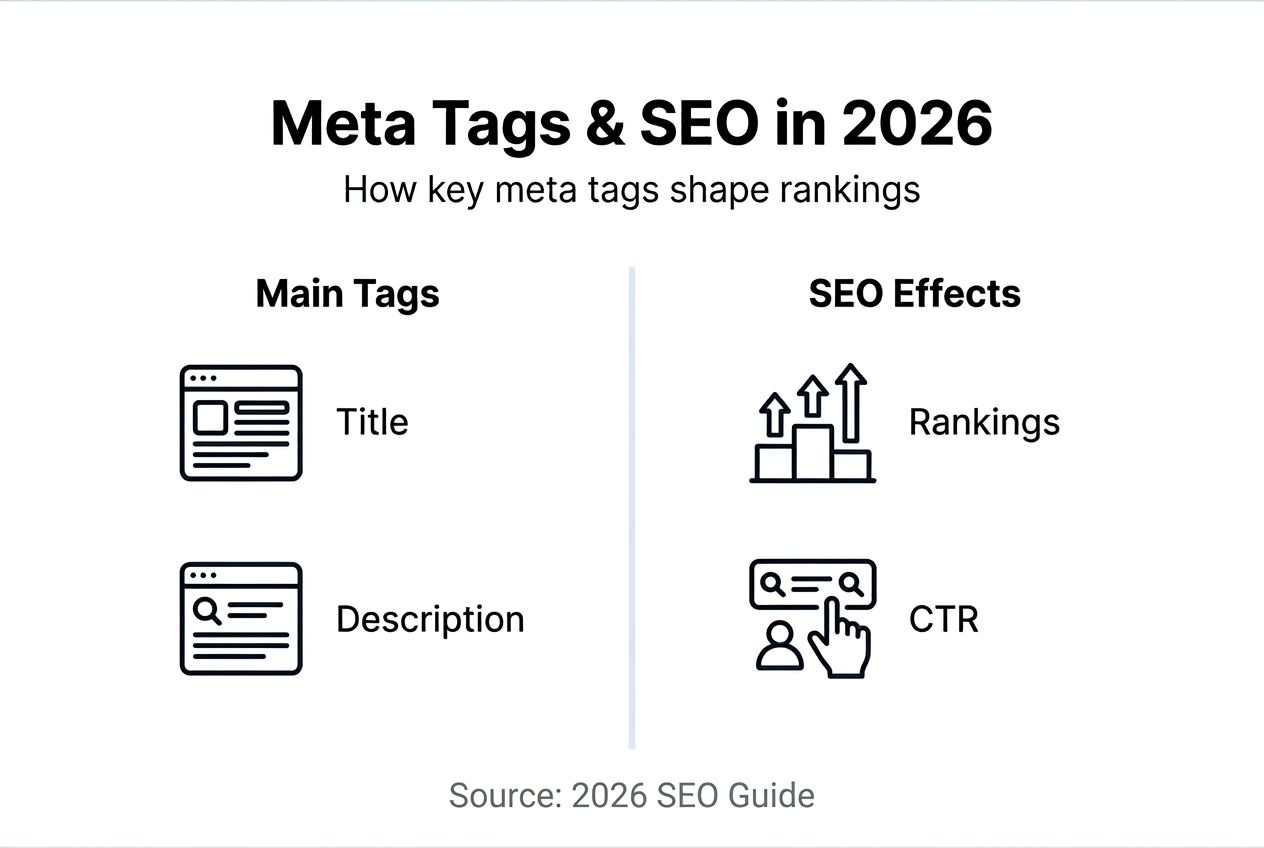
Optimizing your meta tags can increase click-through rate by up to 35%, directly impacting organic traffic volume even when rankings remain stable. When you improve how your listing appears in search results through compelling titles and descriptions, more searchers click through to your site. This traffic increase happens immediately as updated snippets appear in results.
CTR improvements from meta tag optimization vary significantly by industry and search intent, but consistently show positive impact across sectors. Commercial queries typically see larger CTR gains from optimization because users actively compare options and respond strongly to benefit-focused messaging. Informational queries show smaller but still meaningful improvements when descriptions clearly preview content value.
| Industry Sector | Average CTR Increase | Typical Timeline | Primary Driver |
|---|---|---|---|
| E-commerce | 30-40% | 2-4 weeks | Benefit-focused titles |
| Professional Services | 20-30% | 3-6 weeks | Trust signals in descriptions |
| SaaS/Technology | 25-35% | 2-5 weeks | Clear value propositions |
| Local Business | 15-25% | 1-3 weeks | Location and service clarity |
Meta tag improvements correlate with ranking gains through engagement signal feedback loops. When more users click your results and engage with content, search engines interpret this as relevance confirmation. Over time, sustained CTR improvements above expected levels for a given position often contribute to ranking increases as algorithms reward pages that satisfy user intent.
Effective meta tag optimization works like storefront design. You might have the best products inside, but if your window display doesn’t attract passersby, they’ll never discover what you offer. Meta tags are your search result storefront.
Robots meta tag usage enhances crawl efficiency by directing search engine resources toward valuable pages while blocking low-value or duplicate content. This technical optimization improves overall SEO health by ensuring crawl budget focuses on pages that drive business results. Sites with proper robots tag implementation often see faster indexing of new content and better representation of priority pages in search results.
Practical guide: optimizing meta tags for your website
Implementing effective meta tag optimization requires systematic auditing, strategic crafting, and ongoing maintenance. Follow this step-by-step process to maximize the SEO and user engagement benefits from your meta tags.
- Audit existing meta tags across your website. Use SEO tools or manual inspection to identify pages with missing, duplicate, or poorly optimized tags. A comprehensive website audit reveals optimization gaps and prioritizes pages by traffic potential.
- Optimize title tags with strategic keyword placement. Place your primary keyword near the beginning of titles while maintaining natural readability. Keep titles between 50 and 60 characters to avoid truncation in search results. Include compelling modifiers like numbers, years, or benefit phrases that increase click appeal.
- Craft unique meta descriptions for high-value pages. Write descriptions between 150 and 160 characters that summarize page value and include clear calls to action. Focus on benefits rather than features, and use active voice to create urgency. Every important page deserves a custom description tailored to its specific content and target keywords.
- Implement robots meta tags to control indexing. Add noindex tags to thin content pages, duplicate versions, or administrative sections that shouldn’t appear in search results. Use nofollow directives carefully to manage link equity flow and prevent search engines from following low-value links.
- Configure viewport tags for mobile optimization. Ensure every page includes the standard viewport meta tag: “`. This guarantees proper mobile display and supports mobile-first indexing requirements.
- Avoid keyword stuffing in all meta tags. Write naturally for human readers rather than attempting to game algorithms. Search engines easily detect and discount unnatural keyword repetition, while users respond negatively to spammy-looking snippets.
Pro Tip: Test different meta description variations using search console data to identify which messaging drives highest click-through rates. Small wording changes can produce significant CTR differences, so treat descriptions as ongoing optimization opportunities rather than set-it-and-forget-it elements.
Meta tag optimization best practices:
- Prioritize unique tags for every indexed page
- Update tags when page content or focus keywords change
- Monitor CTR metrics to identify underperforming snippets
- Use schema markup alongside meta tags for enhanced results
- Leverage CMS plugins or tools to streamline tag management at scale
- Review competitor snippets to identify differentiation opportunities
- Keep descriptions actionable with clear next steps for users
Case studies and real-world applications
Real business examples demonstrate how strategic meta tag optimization translates theory into measurable traffic and revenue gains. These cases illustrate both successful approaches and costly mistakes to avoid.
A regional accounting firm saw 40% organic traffic increase within eight weeks after optimizing title tags and meta descriptions across their service pages. Previous tags used generic phrases like “Tax Services” while optimized versions specified benefits and included location modifiers like “Small Business Tax Preparation in Denver.” The improved clarity helped pages rank for more specific queries while dramatically increasing click-through rates from existing rankings.
An e-commerce retailer combined meta tag optimization with structured data implementation, enhancing how product pages appeared in search results. Adding review stars, pricing, and availability information to snippets through schema markup, alongside compelling meta descriptions emphasizing unique selling points, increased category page CTR by 32%. This improvement generated significant revenue growth without requiring additional marketing spend.
Common meta tag mistakes that damaged performance before correction:
- Duplicate title tags across 60% of site pages, causing search engines to rewrite snippets poorly
- Missing meta descriptions on key landing pages, resulting in search engines pulling random page text
- Keyword-stuffed descriptions that looked spammy and reduced user trust
- Inconsistent mobile viewport tags creating display issues that increased bounce rates
Lessons from successful meta tag optimization include prioritizing unique tags for all important pages, consistently auditing metadata quality, and treating descriptions as conversion copywriting rather than SEO boilerplate. The most successful implementations combine technical correctness with user-focused messaging that clearly communicates page value and differentiates from competitor listings.
Boost your SEO with expert meta tag optimization
Meta tags represent just one component of comprehensive SEO strategy, but their optimization delivers quick wins that improve traffic while supporting long-term ranking growth. Professional SEO services audit your current meta tag implementation, identify high-impact optimization opportunities, and implement best practices across your entire site.
Our proven SEO campaigns combine meta tag optimization with technical improvements, content strategy, and link building to maximize organic visibility. We’ve helped businesses across industries achieve measurable traffic and revenue growth through data-driven optimization. Explore our complete SEO strategy guide for 2026 to discover additional tactics that amplify your search performance.
FAQ
What are meta tags?
Meta tags are HTML code snippets placed in a webpage’s head section that provide information about the page to search engines and browsers. They include elements like title tags, meta descriptions, and robots directives that influence how pages appear in search results and how search engines process them.
Which meta tags are most important for SEO?
Title tags, meta descriptions, and robots tags matter most for SEO performance. Title tags directly influence rankings and click-through rates, while meta descriptions impact user engagement. Robots tags control indexing behavior and crawl efficiency. The viewport tag also supports mobile SEO through proper responsive display.
Are meta keywords still useful for SEO?
Meta keywords provide zero SEO benefit and have been obsolete since Google stopped using them in 2009. No major search engine considers meta keywords for ranking purposes. Time spent populating this tag would be better invested in optimizing title tags and meta descriptions.
How do meta tags impact click-through rates?
Optimized meta titles and descriptions make search listings more appealing to users, increasing click-through rates by up to 35% compared to generic or missing tags. Higher CTR translates directly to more organic traffic from existing rankings and often contributes to improved rankings over time through positive engagement signals.