








Over 80 percent of small and mid-sized businesses struggle to connect website strategy to measurable revenue growth. Staying competitive in SaaS and healthcare demands more than guesswork. By mastering the art of setting powerful website goals and objectives, digital marketing managers can drive real results—like higher visibility and increased client conversions. Discover the proven steps for transforming your website from a passive asset into a strategic engine for sustained online success.
Table of Contents
- Defining Website Goals And Objectives
- Types Of Goals For Agency Websites
- Aligning Goals With Business Strategy
- Measuring Progress And Key Metrics
- Common Pitfalls And Mistakes To Avoid
Key Takeaways
| Point | Details |
|---|---|
| Define Clear Goals and Objectives | Establish overarching website goals and specific, actionable objectives to guide digital marketing efforts. |
| Implement SMART Criteria | Ensure that objectives are Specific, Measurable, Achievable, Realistic, and Time-phased for effective goal setting. |
| Align with Business Strategy | Integrate website goals with broader business objectives to enhance organizational competitiveness and strategic alignment. |
| Monitor Key Metrics | Regularly track performance metrics to transform data into actionable insights for continuous improvement and growth. |
Defining Website Goals and Objectives
In the dynamic world of digital marketing, setting clear website goals and objectives provides the strategic roadmap for achieving measurable online success. Understanding how to define these critical elements can transform your digital presence from passive to powerfully purposeful.
Website goals represent the broad, overarching outcomes an organization wants to achieve, while objectives serve as specific, actionable steps that provide a structured pathway toward those goals. According to research from the SD Foundation, goals should address fundamental organizational problems, and objectives must answer the critical 5 Ws: why, what, when, where, and who.
Effective website goals typically align with broader business strategies and can include various outcomes such as:
- Increasing online lead generation
- Improving customer engagement
- Boosting brand awareness
- Driving sales conversions
- Establishing thought leadership
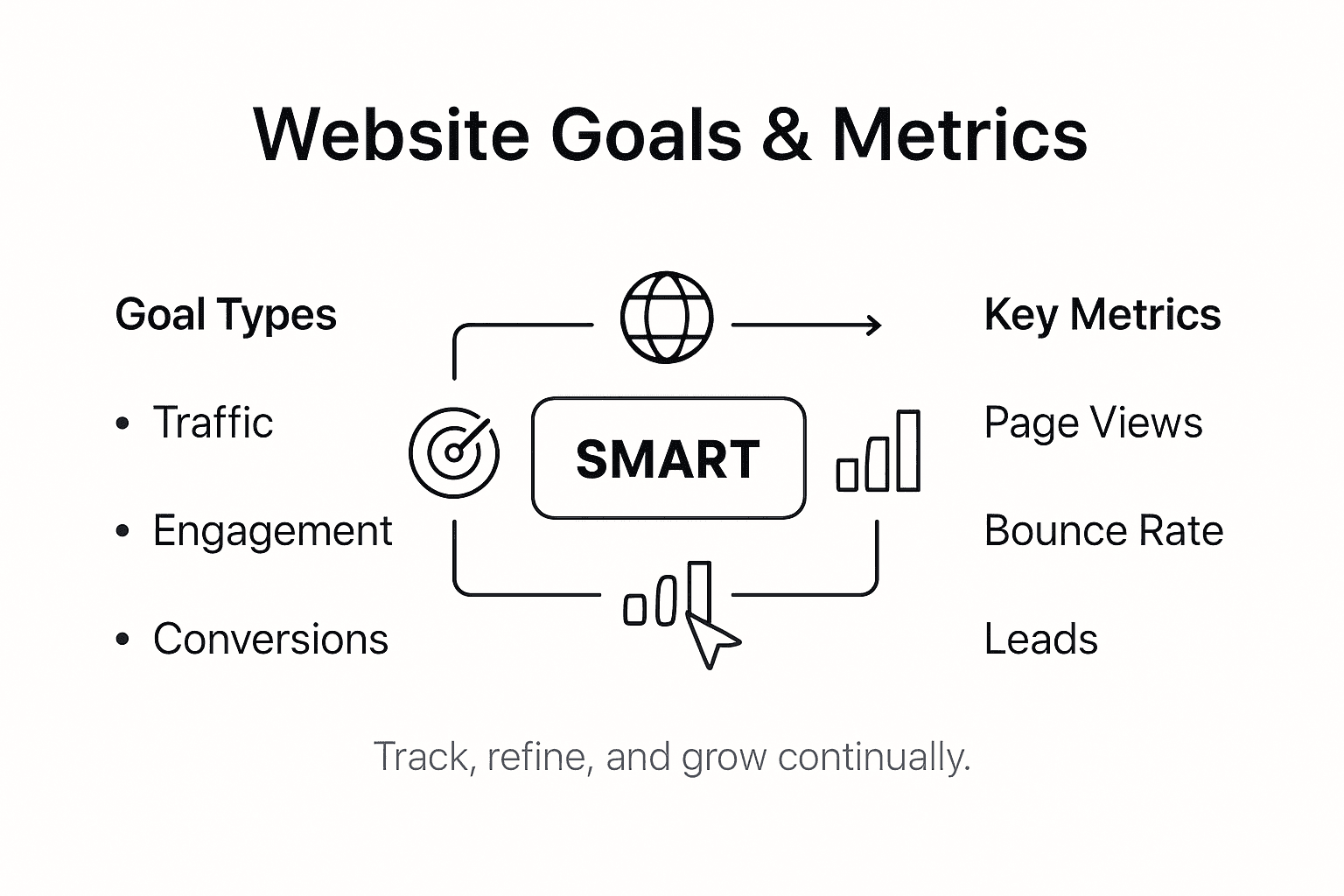
The key is to develop objectives that are SMART – Specific, Measurable, Achievable, Realistic, and Time-phased. This means transforming broad aspirations into concrete, trackable targets. For instance, instead of a vague goal like “increase website traffic,” a SMART objective might be “Grow organic website traffic by 25% within six months through targeted SEO strategies.”
As organizational experts suggest, goals act like an umbrella with objectives serving as supporting spokes – without those precise, measurable objectives, the overarching goal cannot effectively function or be realized.
Pro tip: Conduct a quarterly review of your website goals and objectives to ensure they remain aligned with your evolving business strategy and market conditions.
Types of Goals for Agency Websites
Agency websites serve multiple strategic purposes, each requiring distinct goals that align with broader business objectives. Effective goal setting requires a balanced approach that prioritizes key outcomes without overwhelming organizational resources.
The primary types of goals for agency websites typically fall into several critical categories:
- Lead Generation Goals: Attracting potential clients through targeted content and compelling conversion pathways
- Brand Positioning Goals: Establishing thought leadership and demonstrating unique value propositions
- Engagement Goals: Creating interactive experiences that encourage deeper user interactions
- Conversion Goals: Transforming website visitors into qualified leads or direct clients
- Performance Goals: Tracking technical website metrics like speed, accessibility, and user experience
When developing these goals, digital marketing professionals should leverage the SMART criteria – a framework that ensures objectives are Specific, Measurable, Assignable, Realistic, and Time-related. The SMART approach provides a structured method for setting clear, actionable targets that can be systematically evaluated and refined.
For agency websites, this might translate to concrete objectives like “Increase qualified lead submissions by 30% within four months through targeted content marketing and optimized conversion funnels” or “Improve website engagement metrics by reducing bounce rate from 65% to 45% through enhanced user experience design.”

Pro tip: Conduct monthly performance audits to ensure your website goals remain relevant and aligned with changing market dynamics and client needs.
Here’s a summary comparing the impact of different goal categories for agency websites:
| Goal Category | Primary Focus | Typical Impact on Business | Key Stakeholders |
|---|---|---|---|
| Lead Generation | Attracting new clients | Grows client base | Sales, Marketing |
| Brand Positioning | Building reputation | Enhances market authority | Marketing, Leadership |
| Engagement | Increasing user interaction | Improves retention | Marketing, UX Teams |
| Conversion | Driving specific actions | Boosts revenue and ROI | Sales, Marketing |
| Performance | Optimizing technical factors | Improves user satisfaction | IT, Web Development |
Aligning Goals With Business Strategy
Successful digital strategies require a holistic approach that seamlessly integrates website objectives with overarching business goals. Strategic alignment involves connecting organizational objectives across multiple operational domains, ensuring that every digital effort contributes directly to broader business outcomes.
The alignment process involves several critical components:
- Comprehensive Goal Mapping: Identifying how website objectives support specific business targets
- Resource Allocation: Directing digital investments toward high-impact strategic initiatives
- Performance Tracking: Establishing metrics that reflect both digital performance and business growth
- Cross-Departmental Coordination: Ensuring marketing, sales, and technology teams work toward unified objectives
- Adaptive Strategy Development: Creating flexible frameworks that can respond to changing market conditions
Information systems goals must be precisely integrated with corporate objectives to enhance organizational competitiveness. This means transforming website metrics from isolated data points into strategic insights that directly influence business decision-making. For digital marketing agencies, this might involve demonstrating how website engagement translates into tangible revenue growth, client acquisition, or market positioning.
The key is developing a symbiotic relationship between digital platforms and core business strategies, where website performance becomes a direct reflection of organizational capabilities. By creating transparent, measurable connections between online activities and business goals, companies can unlock more strategic and impactful digital experiences.
Pro tip: Conduct quarterly strategic alignment workshops that bring together leadership from marketing, sales, and technology teams to review and recalibrate digital objectives.
Measuring Progress and Key Metrics
Tracking website performance requires a strategic approach to understanding how digital efforts translate into meaningful business outcomes. Comprehensive website metrics provide critical insights into visitor behavior, engagement, and overall effectiveness, enabling data-driven decision making that goes beyond surface-level analytics.
Key performance metrics digital marketing professionals should monitor include:
- Visitor Volume: Total number of unique visitors and page views
- Engagement Metrics:
- Average time spent on site
- Pages viewed per session
- Interaction rate with content
- Conversion Performance:
- Lead generation rates
- Conversion funnel completion
- Goal achievement percentage
- Traffic Quality:
- Source breakdown
- Organic vs paid traffic ratios
- Audience demographic insights
Successful measurement goes beyond raw numbers. Digital marketing teams must interpret these metrics contextually, understanding how each data point connects to broader business objectives. This means transforming statistical information into actionable strategic insights that drive continuous improvement and demonstrate tangible return on digital investments.
Advanced analytics enable businesses to move from reactive to predictive strategies, identifying emerging trends and potential optimization opportunities before they become significant challenges. By developing a holistic view of website performance, organizations can create more targeted, responsive digital experiences that directly support business growth.
Pro tip: Implement a monthly dashboard review process that synthesizes key metrics across marketing, sales, and website performance to maintain a comprehensive understanding of digital strategy effectiveness.
Compare key website metric types and what they reveal about site effectiveness:
| Metric Type | Reveals About Website | Typical Analytics Tools |
|---|---|---|
| Visitor Volume | Overall reach and awareness | Google Analytics |
| Engagement Metrics | Depth of user interaction | Hotjar, Google Analytics |
| Conversion Performance | Sales and lead effectiveness | HubSpot, GA Goals |
| Traffic Quality | Relevance of acquired visitors | SEMrush, GA, Ahrefs |
Common Pitfalls and Mistakes to Avoid
Common web analytics mistakes can significantly undermine digital strategy effectiveness, preventing organizations from gaining meaningful insights and driving meaningful growth. Understanding these potential traps is crucial for developing robust, actionable digital performance frameworks.
Key pitfalls digital marketing professionals must navigate include:
- Metric Myopia:
- Focusing on vanity metrics over meaningful performance indicators
- Tracking page views without understanding user engagement
- Ignoring context behind numerical data
- Resource Misallocation:
- Underfunding analytics and measurement infrastructure
- Relying on single analytics platforms
- Failing to invest in comprehensive data interpretation skills
- Goal Setting Errors:
- Establishing unrealistic or overly ambitious objectives
- Neglecting incremental progress
- Underestimating implementation challenges
- Ignoring potential organizational constraints
Successful digital strategies require a nuanced approach that goes beyond superficial number tracking. Digital marketing teams must develop sophisticated analytical capabilities that transform raw data into strategic insights, understanding not just what happened, but why it happened and how to leverage those insights for future optimization.
The most effective organizations treat analytics as a dynamic, iterative process. They continuously refine their measurement approaches, challenge existing assumptions, and remain adaptable to emerging trends and technological shifts in digital performance tracking.
Pro tip: Implement a quarterly analytics audit that critically examines your measurement methodologies, challenging underlying assumptions and identifying potential blind spots in your current tracking approach.
Transform Your Website Goals Into Real Digital Growth
If you find yourself struggling to set clear and measurable website goals that truly drive business results you are not alone. Many organizations miss the mark by focusing on vague objectives that lack strategic alignment or fail to address critical performance metrics outlined in the article such as SMART objectives and unified business strategies. This can lead to wasted resources, missed lead generation opportunities, and gaps between digital campaigns and tangible revenue growth.
At Web Spider Solutions we specialize in helping businesses overcome these exact challenges by designing tailored digital marketing strategies that align your website objectives with your broader business goals. Our services including SEO, targeted content marketing, and conversion optimization focus on increasing qualified leads, boosting user engagement, and enhancing overall brand positioning. Discover real-world success stories and insights in our Stories Archives to see how precise goal setting translates into measurable growth.
Ready to take control of your digital future and ensure your website is a powerhouse for acquiring clients and driving revenue Act now by visiting Web Spider Solutions to schedule a free consultation Let us help you turn your objectives into actionable strategies that deliver lasting impact.
Frequently Asked Questions
What are website goals and objectives?
Website goals are broad outcomes that an organization wants to achieve online, while objectives are specific, actionable steps that guide the path toward those goals. Together, they form a strategic roadmap for digital success.
How can I create SMART objectives for my website?
To create SMART objectives, ensure they are Specific, Measurable, Achievable, Realistic, and Time-phased. For example, instead of a general goal like “increase traffic,” a SMART objective could be “Grow organic traffic by 25% within six months using targeted SEO strategies.”
Why is it important to align website goals with business strategy?
Aligning website goals with business strategy ensures that every digital effort directly contributes to broader organizational outcomes. It creates a symbiotic relationship where website performance reflects and supports business capabilities effectively.
What are common pitfalls to avoid when setting website goals?
Common pitfalls include focusing on vanity metrics rather than meaningful performance indicators, establishing unrealistic goals, and failing to allocate sufficient resources to measurement and analytics. Avoiding these traps is essential for developing an effective digital strategy.