







Most american SaaS companies see over half their new customers arrive through organic search rather than paid ads. This matters because those users are already looking for answers or solutions, driving higher engagement and stronger leads. In fiercely competitive software markets across American and European regions, understanding what organic traffic really is—and why it outperforms other traffic sources—can make the difference between obscurity and consistent growth for your company.
Table of Contents
- What Is Organic Traffic And Why It Matters
- Types Of Organic Traffic Sources For SaaS Companies
- How Organic Traffic Works In Search Engines
- Organic Versus Paid Traffic: Core Differences
- Common Mistakes That Limit Organic Growth
Key Takeaways
| Point | Details |
|---|---|
| Importance of Organic Traffic | Organic traffic is essential as it reflects genuine user interest, leading to higher engagement and conversion potential for businesses. |
| Types of Organic Traffic Sources | SaaS companies benefit from various organic traffic sources including informational, navigational, comparison, and technical searches. |
| Organic vs Paid Traffic | Organic traffic builds trust and offers sustainable growth compared to paid traffic, which requires continuous investment but provides immediate visibility. |
| Common Growth Mistakes | Neglecting technical SEO, producing low-quality content, and poor link-building strategies hinder organic growth potential for SaaS companies. |
What Is Organic Traffic and Why It Matters
Organic traffic represents website visitors arriving through unpaid search engine results, reflecting users actively seeking specific information or solutions. Unlike paid advertising, these visitors discover your website naturally by searching relevant keywords on platforms like Google and Bing.
When users search for solutions through natural search rankings, they demonstrate authentic interest in your content, making organic traffic significantly more valuable than artificially generated visits. Organic traffic signals genuine user demand, content relevance, and potential customer engagement. Businesses can track these visits through web analytics, understanding precisely how users discover and interact with their digital presence.
The strategic importance of organic traffic cannot be overstated. Visitors arriving through unpaid search results typically demonstrate higher conversion potential because they are proactively searching for information matching their specific needs. These users are not randomly redirected but intentionally seeking solutions, which translates into more meaningful interactions and higher-quality leads for SaaS companies.
Organically generated traffic offers multiple strategic advantages for digital businesses:
- Builds long-term website authority
- Provides sustainable, cost-effective visitor acquisition
- Increases brand credibility and visibility
- Generates consistent website engagement
- Supports more effective marketing strategies
Pro tip: Invest consistently in high-quality, targeted content that directly addresses your audience’s specific search intentions to maximize organic traffic potential.
Types of Organic Traffic Sources for SaaS Companies
Organic traffic sources represent diverse digital pathways through which potential customers discover SaaS products and solutions. For SaaS companies, understanding these channels is critical for developing targeted marketing strategies that efficiently attract and engage high-intent users.
SaaS businesses typically encounter four primary organic traffic sources that drive meaningful user acquisition:
- Informational Searches: Users seeking solutions to specific business challenges or exploring industry insights
- Navigational Queries: Direct searches for brand or product names
- Comparison Searches: Evaluating different software solutions and alternatives
- Technical Searches: Detailed implementation and integration queries
Organic traffic originating from these specific search types generates high-conversion potential for subscription-based business models. Each source represents a unique opportunity to demonstrate expertise, address user pain points, and showcase product value. By creating targeted content that directly responds to these search intents, SaaS companies can effectively attract and convert potential customers through natural search channels.
The strategic distribution of organic traffic sources varies, but search engines typically dominate, accounting for approximately 50-60% of total website visits. Social media, referral links, and direct traffic complement these primary channels, creating a comprehensive digital ecosystem for user acquisition. Understanding and optimizing each traffic source allows SaaS companies to build sustainable, cost-effective growth strategies that leverage user intent and search behavior.
Pro tip: Develop comprehensive content strategies that systematically address different organic search intents, creating targeted resources for each stage of the user’s research and decision-making journey.
Here’s a concise summary comparing the main types of organic traffic sources for SaaS companies:
| Source Type | Typical Visitor Motivation | Optimal Content Examples | Impact on SaaS Growth |
|---|---|---|---|
| Informational Search | Solving industry challenges | In-depth guides, blogs | Establishes authority, attracts leads |
| Navigational Query | Finding a specific brand or product | Product pages, case studies | Reinforces brand presence |
| Comparison Search | Evaluating alternatives | Comparison charts, reviews | Increases conversions with targeted offers |
| Technical Search | Researching integrations or setup | Documentation, FAQs | Improves retention, reduces churn |
How Organic Traffic Works in Search Engines
Search engines function as complex algorithmic ecosystems that transform user queries into carefully ranked website recommendations. The intricate mechanisms of Search Engine Results Pages (SERPs) dramatically influence organic traffic generation and visibility, determining how websites connect with potential visitors through natural search processes.
The organic traffic mechanism involves several critical stages:
- Crawling: Search engine bots systematically explore web content
- Indexing: Relevant content gets cataloged and organized
- Ranking: Websites are evaluated and positioned based on multiple quality signals
- Serving: Most relevant results are presented to users
Modern search algorithms consider hundreds of ranking factors, including content relevance, website authority, user experience metrics, and contextual signals. These sophisticated systems analyze websites holistically, assessing not just keyword matches but comprehensive quality indicators that demonstrate expertise, trustworthiness, and user value. The goal is delivering the most pertinent, high-quality results for each unique search query.

Click-through rates (CTR) play a crucial role in organic search dynamics. Websites appearing in top search positions, especially those with rich snippets or enhanced search features, typically generate significantly higher organic traffic. This creates a competitive environment where strategic search engine optimization becomes essential for visibility, requiring continuous adaptation to evolving algorithmic preferences and user behavior patterns.
Pro tip: Develop a comprehensive SEO strategy that focuses on creating high-quality, user-centric content while simultaneously optimizing technical website elements to improve search engine discoverability.
Organic Versus Paid Traffic: Core Differences
Digital marketing strategies fundamentally differ in how they generate website visitors, with organic and paid traffic representing two distinct approaches to audience acquisition. Organic traffic offers sustainable growth through unpaid search results, while paid traffic provides immediate visibility through targeted advertising campaigns, each presenting unique advantages for businesses seeking online engagement.
Key differences between organic and paid traffic encompass several critical dimensions:
- Cost Structure
- Organic: Long-term investment with minimal ongoing expenses
- Paid: Continuous financial investment required for sustained visibility
- User Intent
- Organic: Higher user intent, actively searching for solutions
- Paid: Mixed intent, including casual browsers and targeted searchers
- Credibility
- Organic: Builds trust through authentic content and natural rankings
- Paid: Perceived as promotional, potentially less trustworthy
Organic traffic typically attracts users with more specific search intentions, resulting in higher engagement rates and lower bounce rates compared to paid traffic strategies. This makes organic approaches particularly valuable for SaaS companies seeking to establish long-term audience relationships and demonstrate genuine expertise in their market.
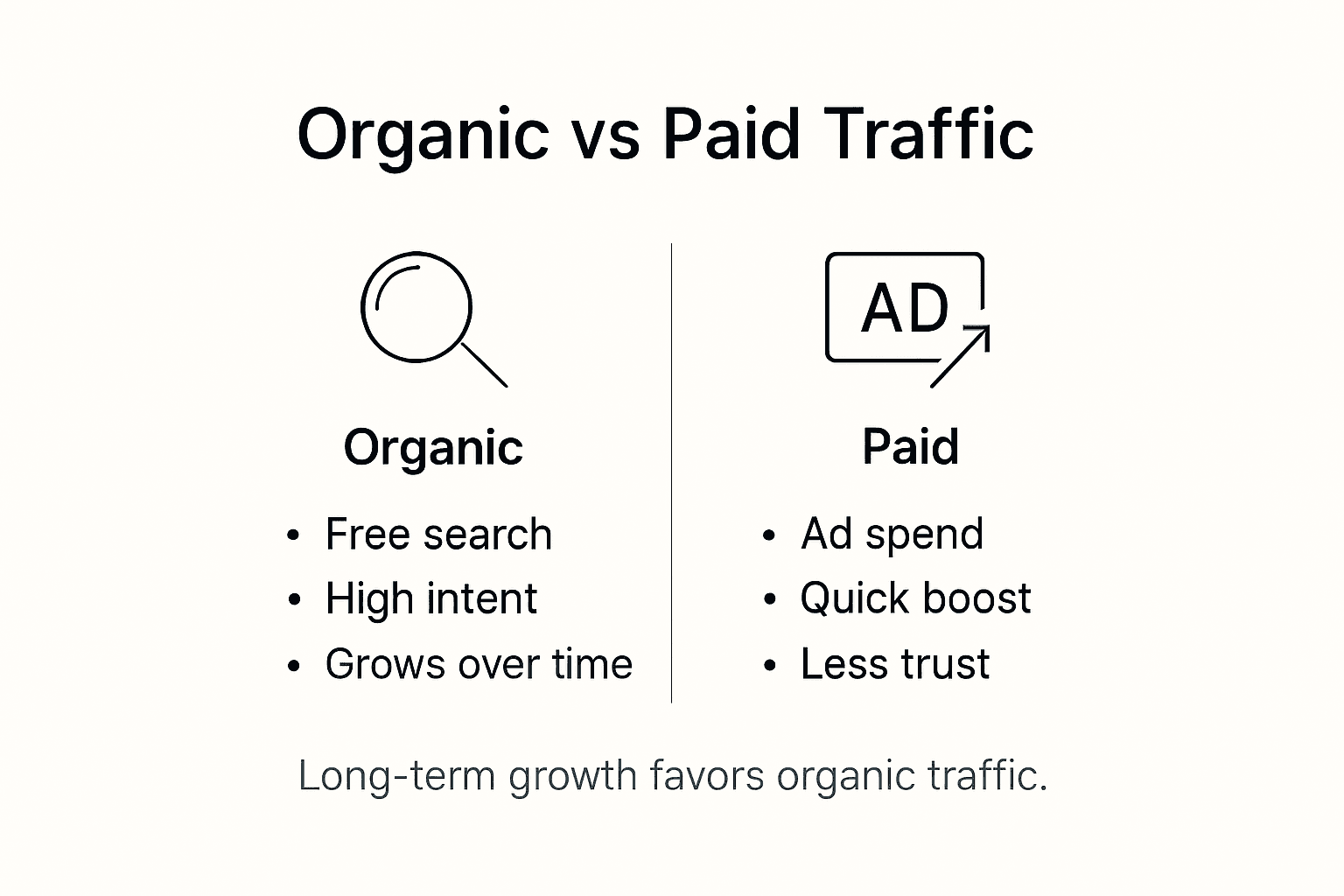
While paid traffic offers immediate visibility and precise targeting, organic traffic provides a more sustainable approach to digital marketing. Businesses achieve optimal results by implementing a balanced strategy that leverages both channels strategically, understanding their unique strengths and complementary roles in comprehensive digital marketing efforts.
Pro tip: Develop a hybrid traffic generation approach that allocates resources to both organic content development and targeted paid advertising, ensuring comprehensive market coverage and diverse audience engagement.
This table illustrates key distinctions between organic and paid website traffic:
| Aspect | Organic Traffic | Paid Traffic | Long-Term ROI |
|---|---|---|---|
| Cost Model | Content creation, SEO upkeep | Ongoing ad spend | Grows over time |
| Audience Trust | Perceived as more credible | May be viewed as intrusive | Sustained relationships |
| Result Timing | Slower but cumulative | Immediate, short-lived results | Lasting business value |
Common Mistakes That Limit Organic Growth
Organic growth strategies require precision and strategic execution, with even minor missteps potentially derailing a SaaS company’s digital visibility. SaaS businesses frequentlyg encounter critical mistakes that systematically undermine their organic traffic potential, creating significant barriers to sustainable digital marketing success.
The most prevalent organic growth limitations stem from several fundamental errors:
- Technical SEO Neglect
- Poor website architecture
- Inadequate site speed optimization
- Weak crawlability and indexing structures
- Content Quality Challenges
- Generic, non-differentiated content
- Lack of targeted buyer persona insights
- Minimal value proposition in written materials
- Link Building Deficiencies
- Weak domain authority development
- Absence of strategic backlink acquisition
- Limited external credibility signals
Most SaaS companies struggle with understanding that organic growth is a sophisticated, multifaceted process requiring continuous refinement. Technical elements like site performance, content relevance, and external credibility must work synergistically to create meaningful search engine visibility. Successful organic strategies demand holistic approaches that transcend simple keyword targeting, focusing instead on comprehensive user experience and genuine value delivery.
Understanding these potential pitfalls enables marketing teams to develop more robust, resilient organic growth frameworks. By proactively addressing technical limitations, creating differentiated content, and systematically building domain authority, SaaS businesses can transform potential obstacles into strategic opportunities for sustainable digital expansion.
Pro tip: Conduct quarterly comprehensive SEO audits that methodically evaluate technical performance, content relevance, and link ecosystem to identify and preemptively address potential organic growth constraints.
Unlock Sustainable SaaS Growth with Expert Organic Traffic Strategies
Is your SaaS company struggling to turn organic traffic into lasting business growth Organic traffic requires more than just keyword targeting It demands a strategic blend of technical SEO, targeted content, and authority building to capture high-intent users and convert them into loyal customers At Web Spider Solutions we understand that organic traffic is the foundation for sustainable digital success and we specialize in addressing common pitfalls such as weak site architecture and generic content
Explore our B2B Marketing Archives – Web Spider Solutions to discover tailored strategies that connect with your audience’s search intent and elevate your brand presence We combine deep insights with technical expertise to help you dominate search rankings and increase targeted leads Don’t let your organic traffic potential go untapped Get a free SEO audit today and take the first step to transform your SaaS growth journey with proven, long-term solutions Also check out our Stories Archives – Web Spider Solutions for real success stories and actionable tips to inspire your next move
Frequently Asked Questions
What is organic traffic in digital marketing?
Organic traffic refers to visitors arriving at a website through unpaid search engine results, reflecting users who actively seek specific information or solutions through search engines like Google and Bing.
Why is organic traffic important for SaaS companies?
Organic traffic is crucial for SaaS companies as it attracts high-intent users actively searching for solutions, resulting in higher conversion rates and establishing long-term brand credibility and authority in the market.
How can SaaS businesses increase their organic traffic?
SaaS businesses can increase organic traffic by creating high-quality, targeted content that addresses specific user search intents, optimizing their website for SEO, and effectively utilizing various organic traffic sources like informational searches and comparison searches.
What are common mistakes that limit organic traffic growth?
Common mistakes that limit organic traffic growth include neglecting technical SEO, producing low-quality content, and lacking a strategic approach to link building, all of which can hinder a website’s visibility and performance in search engines.