






Choosing the right influencer can make or break your brand’s credibility in markets crowded with noise and competition. For digital marketing managers at B2B companies, swapping traditional ads for authentic relationship-driven content is becoming a smart strategy. Backed by comprehensive research, influencer marketing is more than just hiring celebrities, with micro-influencers often delivering the real value through genuine engagement and message trust. This guide reveals how to avoid common pitfalls and build partnerships that lead to measurable brand growth.
Table of Contents
- Influencer Marketing Defined and Common Myths
- Types of Influencer Marketing and Roles
- How Influencer Marketing Works for Brands
- Compliance, Disclosure, and Legal Requirements
- Risks, Costs, and Common Mistakes in Campaigns
Key Takeaways
| Point | Details |
|---|---|
| Influencer Partnerships Matter | Focus on micro and nano-influencers for higher engagement and authentic connections. |
| Prioritize Authenticity | Select influencers who genuinely align with your brand values rather than just follower counts. |
| Compliance is Key | Ensure transparency and adherence to disclosure regulations to build trust and avoid legal risks. |
| Strategic Planning Essential | Develop clear campaign objectives and allocate budget for compliance and performance tracking. |
Influencer Marketing Defined and Common Myths
Influencer marketing is a strategic digital marketing approach that leverages individuals with significant social media followings to promote products, services, or brand messages. Unlike traditional advertising, this method relies on authentic, relationship-driven communication that resonates with targeted audiences. Comprehensive research on influencer marketing reveals it’s far more nuanced than simple celebrity endorsements.
Contrary to popular misconceptions, influencer marketing isn’t just about working with celebrities or individuals with massive follower counts. The most effective strategies involve partnering with micro-influencers who have smaller but highly engaged audiences. These content creators often demonstrate higher authenticity and deeper connections with their followers, which translates into more meaningful brand interactions.
Several critical myths persist about influencer marketing that can derail potential success:
- Myth 1: Influencer marketing is just paid advertising
- Myth 2: Only large brands can benefit from influencer partnerships
- Myth 3: Follower count is the most important metric
- Myth 4: Influencers will automatically drive significant sales
The reality is that successful influencer marketing requires careful strategy, alignment with brand values, and genuine partnerships. Strategic influencer selection involves understanding not just reach, but also audience demographics, engagement rates, and content authenticity.
Pro tip: When evaluating potential influencer partnerships, prioritize alignment with your brand’s core values and audience demographics over raw follower numbers.
Types of Influencer Marketing and Roles
Influencer marketing encompasses a diverse ecosystem of content creators with unique roles and specialized capabilities. Economic dynamics of social media influencers reveal multiple categories that brands can strategically leverage for marketing objectives.
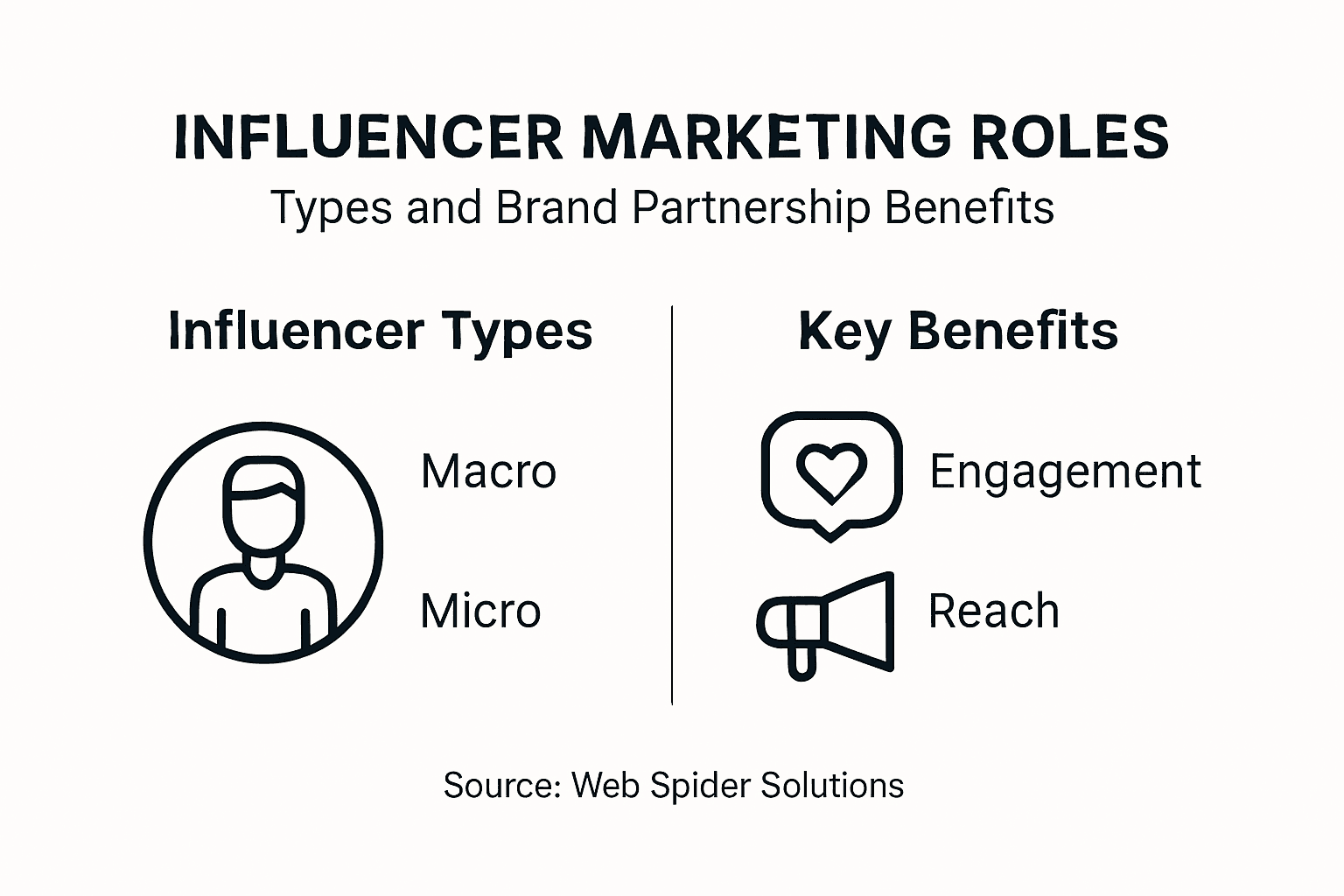
The primary types of influencers can be categorized based on their reach, expertise, and audience engagement:
- Macro-Influencers: 100,000 to 1 million followers
- Micro-Influencers: 10,000 to 100,000 followers
- Nano-Influencers: 1,000 to 10,000 followers
- Celebrity Influencers: Over 1 million followers
Each influencer type brings distinct advantages to marketing strategies. Macro-influencers offer broad reach, while micro-influencers provide higher engagement and niche targeting. Thought leaders and subject matter experts play particularly critical roles in delivering authentic, credible content that resonates with specific audience segments.
Here’s how different influencer types compare in key areas:
| Influencer Type | Typical Reach | Engagement Level | Best For |
|---|---|---|---|
| Celebrity | Over 1 million | Low to moderate | Mass awareness |
| Macro-Influencer | 100,000 – 1 million | Moderate | Broad campaigns |
| Micro-Influencer | 10,000 – 100,000 | High | Niche targeting |
| Nano-Influencer | 1,000 – 10,000 | Very high | Hyper-local engagement |
Influencer roles in digital marketing extend beyond simple product promotion. These content creators serve multiple strategic functions:
- Brand awareness generation
- Audience trust building
- Product demonstration
- Community engagement
- Direct sales conversion
Successful influencer marketing requires understanding these nuanced roles and matching the right influencer type to specific campaign objectives. The most effective partnerships create genuine connections that feel organic and authentic to the audience.
Pro tip: Prioritize influencer alignment with your brand values and audience demographics over follower count to maximize marketing effectiveness.
How Influencer Marketing Works for Brands
Psychological mechanisms of influencer marketing reveal a complex interaction between content creators, audiences, and brand messaging. Unlike traditional advertising, influencer marketing leverages personal connections and perceived authenticity to drive consumer engagement and purchasing decisions.
The core mechanics of influencer marketing involve several key strategic elements:
- Credibility Building: Influencers establish trust through consistent, genuine content
- Audience Targeting: Precise demographic matching between influencer and brand
- Content Collaboration: Co-creating narratives that feel organic and relatable
- Performance Tracking: Measuring engagement, reach, and conversion metrics
Psychological principles play a crucial role in making influencer marketing effective. Social proof and fear of missing out (FOMO) are powerful drivers that compel audiences to consider products or services recommended by trusted content creators. Consumer buying behavior research demonstrates that audiences are more likely to trust recommendations from perceived authentic sources compared to traditional advertising.

Successful brand partnerships require a nuanced approach that goes beyond simple product placement. Brands must carefully select influencers who authentically align with their values, ensuring that marketing messages feel genuine and resonate with the target audience. The most effective campaigns create narratives that seamlessly integrate products into the influencer’s existing content ecosystem.
Pro tip: Develop long-term relationships with influencers who genuinely connect with your brand values, rather than pursuing one-off transactional partnerships.
Compliance, Disclosure, and Legal Requirements
Influencer marketing disclosure guidelines have become increasingly complex, requiring brands and content creators to navigate intricate legal landscapes. The fundamental principle is transparency: every material connection between an influencer and a brand must be clearly communicated to the audience.
Key compliance requirements include:
- Explicit Disclosure: Clearly stating sponsored content
- Visibility: Making disclosures unmistakable and unavoidable
- Truthfulness: Ensuring all endorsements reflect genuine experiences
- Platform-Specific Rules: Following each social media platform’s unique guidelines
Intellectual property rights represent another critical aspect of influencer marketing legal frameworks. Navigating intellectual property challenges requires brands and influencers to establish clear agreements about content ownership, usage rights, and potential modifications.
The consequences of non-compliance can be severe, including potential legal action, financial penalties, and reputation damage. Brands and influencers must proactively develop comprehensive contracts that address disclosure requirements, copyright considerations, and mutual expectations. This approach not only mitigates legal risks but also builds trust with audiences who value transparency.
Below is a summary of legal and compliance considerations for influencer campaigns:
| Compliance Area | Importance | Potential Risk if Ignored |
|---|---|---|
| Disclosure Requirements | Builds audience trust | Fines, loss of credibility |
| Intellectual Property | Clarifies content ownership | Legal disputes |
| Platform Guidelines | Ensures rule adherence | Post removals, bans |
| Truthful Endorsements | Maintains brand integrity | Audience backlash |
Pro tip: Develop standardized disclosure templates and train all influencers on proper compliance protocols before launching any marketing campaign.
Risks, Costs, and Common Mistakes in Campaigns
Economic risks in influencer marketing reveal a complex landscape of potential pitfalls for brands attempting to leverage digital content creators. Successful campaigns require strategic planning and an understanding of potential financial and reputational challenges that can derail marketing efforts.
Common mistakes in influencer marketing campaigns include:
- Misaligned Partnerships: Choosing influencers without genuine brand connection
- Inadequate Performance Metrics: Failing to establish clear campaign objectives
- Overlooking Authenticity: Prioritizing follower count over genuine audience engagement
- Compliance Negligence: Ignoring legal disclosure requirements
- Budget Mismanagement: Inappropriate compensation or unrealistic spending expectations
Financial considerations extend beyond simple monetary investments. Opportunity costs can be substantial when campaigns fail to deliver expected results. Campaign compliance challenges demonstrate that improper execution can lead to significant legal and financial risks, including potential fines and reputation damage.
Brands must approach influencer marketing with a comprehensive strategy that balances creative content, audience targeting, and strict compliance protocols. This requires ongoing monitoring, clear communication, and a willingness to adapt campaign approaches based on real-time performance data and changing market dynamics.
Pro tip: Allocate at least 15-20% of your influencer marketing budget for comprehensive compliance review and performance tracking mechanisms.
Elevate Your Brand with Authentic Influencer Marketing Strategies
Navigating the complex landscape of influencer marketing requires more than just recognizing follower counts. This article highlights critical challenges such as choosing the right influencer type, ensuring genuine brand alignment, and maintaining compliance with disclosure laws. If you are aiming to cut through the noise and build trusted relationships with your audience, addressing these pain points with a strategic approach is essential.
At Web Spider Solutions, we understand the importance of crafting tailored influencer campaigns that prioritize authenticity and measurable results. Our expertise in B2B Marketing Archives – Web Spider Solutions and Paid Advertising Archives – Web Spider Solutions empowers your brand to connect with micro and macro-influencers who truly resonate with your target audience. Don’t settle for surface-level partnerships. Take the next step in maximizing your digital impact and ensure your influencer marketing delivers on trust and conversion.
Explore how our comprehensive digital marketing solutions can refine your influencer marketing strategy today. Visit us at Web Spider Solutions and request a consultation to transform your brand presence with authentic, compliant, and effective influencer campaigns.
Frequently Asked Questions
What is influencer marketing?
Influencer marketing is a strategic approach that leverages individuals with substantial social media followings to promote products, services, or brand messages through authentic, relationship-driven communication.
Why should brands consider working with micro-influencers?
Micro-influencers typically have smaller but highly engaged audiences, which often leads to higher authenticity and deeper connections with followers, resulting in more meaningful brand interactions compared to working with larger influencers.
What are common misconceptions about influencer marketing?
Common misconceptions include the belief that influencer marketing is just paid advertising, that only large brands can benefit, and that follower count is the most important metric for success.
How can brands measure the success of influencer marketing campaigns?
Brands can measure the success of their influencer marketing campaigns by tracking engagement, reach, and conversion metrics, alongside assessing the credibility, audience targeting, and authenticity of content created with the influencer.
Recommended