





Protecting customer data can feel like a constant battle when your website faces evolving cyber threats targeting software-as-a-service companies across the globe. For small to medium-sized organizations, one security breach puts trust, compliance, and long-term reputation at risk. This guide reveals affordable, practical ways to strengthen your defenses using industry standards like the OWASP Top Ten, helping you manage risks before they escalate.
Table of Contents
- Website Security Explained For SaaS Companies
- Common Website Vulnerabilities And Threats
- Essential Security Measures For Protection
- Affordable Security Solutions For Small Businesses
- Compliance, Legal Duties, And Data Protection
Key Takeaways
| Point | Details |
|---|---|
| Comprehensive Security Frameworks | SaaS companies need to implement multi-layered security strategies, including technical controls, employee training, and regular audits. |
| Common Vulnerabilities | Awareness of threats such as SQL Injection, Cross-Site Scripting, and unauthorized access is critical for developing effective security measures. |
| Proactive Monitoring | Continuous monitoring and vulnerability assessments are essential for early threat detection and risk mitigation. |
| Legal Compliance | Adhering to regulations like GDPR and HIPAA is crucial for safeguarding customer data and maintaining trust. |
Website Security Explained for SaaS Companies
Website security represents a critical defensive strategy for SaaS businesses protecting digital assets, customer data, and organizational reputation. Comprehensive security frameworks help companies systematically address potential vulnerabilities before they become serious threats.
Modern SaaS companies face complex security challenges that require strategic approaches across multiple domains. These challenges include managing decentralized application infrastructures, protecting sensitive customer information, and preventing unauthorized access. The primary security concerns typically fall into several key categories:
- Authentication vulnerabilities
- Data encryption weaknesses
- Access management risks
- Application-level security gaps
- Third-party integration threats
Understanding these potential security risks allows organizations to develop robust protective strategies. Cloud security principles emphasize continuous monitoring, comprehensive visibility, and proactive threat management as fundamental defense mechanisms.
Successful website security requires a multi-layered approach integrating technical controls, employee training, and consistent policy enforcement. Companies must implement strong password protocols, utilize multi-factor authentication, conduct regular security audits, and maintain up-to-date software patches.
Pro tip: Implement automated security scanning tools that continuously monitor your web applications for potential vulnerabilities and generate immediate threat alerts.
Common Website Vulnerabilities and Threats
Website vulnerabilities pose significant risks for SaaS businesses, potentially exposing sensitive data and compromising entire digital infrastructures. Web security considerations reveal multiple critical threat vectors that organizations must proactively address.
The most prevalent website vulnerabilities typically include:
- SQL Injection attacks
- Cross-Site Scripting (XSS)
- Unauthorized access attempts
- Data breach vulnerabilities
- Ransomware infiltration
- Phishing exploitation mechanisms
Authentication bypasses represent one of the most dangerous security risks. Hackers frequently exploit weak password protocols, inadequate session management, and misconfigured access controls to gain unauthorized system entry. Web browser security mechanisms play a crucial role in preventing these sophisticated intrusion attempts by implementing stringent origin policy protections.

Comprehensive website security demands a holistic approach that combines technical safeguards, continuous monitoring, and employee education. Organizations must implement robust input validation, utilize advanced encryption technologies, and maintain rigorous access management protocols to mitigate potential security breaches effectively.
Here’s how typical web threats differ in their tactics and business impacts:
| Threat Type | Main Attack Method | Potential Business Impact |
|---|---|---|
| SQL Injection | Malicious database queries | Data leakage and reputational damage |
| Cross-Site Scripting (XSS) | Malicious scripts in browser | User account theft and legal risk |
| Ransomware | File encryption and extortion | Service downtime and financial losses |
| Phishing | Deceptive emails or sites | Credential theft and compliance violations |
| Unauthorized Access | Credential attacks | Sensitive data exposure |
Pro tip: Conduct quarterly penetration testing to systematically identify and remediate potential security vulnerabilities before malicious actors can exploit them.
Essential Security Measures for Protection
SaaS businesses must implement comprehensive security strategies to protect their digital infrastructures from evolving cyber threats. Cybersecurity best practices provide a robust framework for developing resilient defense mechanisms against potential security breaches.
The most critical security measures for SaaS organizations include:
- Multi-factor authentication
- Regular software updates
- Comprehensive access controls
- Advanced encryption protocols
- Continuous vulnerability monitoring
- Incident response planning
Network segmentation plays a crucial role in minimizing potential damage from security incidents. By dividing network resources into smaller, isolated segments, organizations can limit the potential spread of cyber attacks and protect sensitive data more effectively. Critical security controls emphasize the importance of implementing strategic access management and continuous vulnerability assessment.
Effective security measures require a proactive and holistic approach that combines technological solutions with comprehensive employee training. Organizations must develop robust security policies, implement advanced monitoring tools, and create a culture of security awareness that empowers team members to recognize and respond to potential threats quickly.
Pro tip: Develop a comprehensive security awareness training program that educates employees about the latest cybersecurity threats and best practices for maintaining digital safety.
Compare essential security frameworks by their focus areas and unique benefits:
| Framework/Standard | Focus Area | Unique Benefit |
|---|---|---|
| OWASP Top Ten | Application risks | Industry-standard web threat guidance |
| NIST Cybersecurity | Controls/Policies | Structured approach for all company sizes |
| CIS Controls | Technical controls | Actionable steps for risk reduction |
| ISO 27001 | Information security management | Facilitates global compliance |
| PCI DSS | Payment data security | Safeguards cardholder information |
Affordable Security Solutions for Small Businesses
Small businesses face unique cybersecurity challenges that require cost-effective and practical protection strategies. Cybersecurity guidance for small businesses provides accessible solutions that can significantly enhance digital security without requiring extensive resources.
Key affordable security measures for small businesses include:
- Free open-source security tools
- Low-cost multi-factor authentication
- Cloud-based security platforms
- Automated backup solutions
- Basic encryption technologies
- Password management software
Small business cybersecurity does not have to be prohibitively expensive. By implementing strategic, foundational security practices, organizations can create robust defense mechanisms. Critical security controls emphasize prioritizing essential security hygiene that delivers maximum protection with minimal investment.
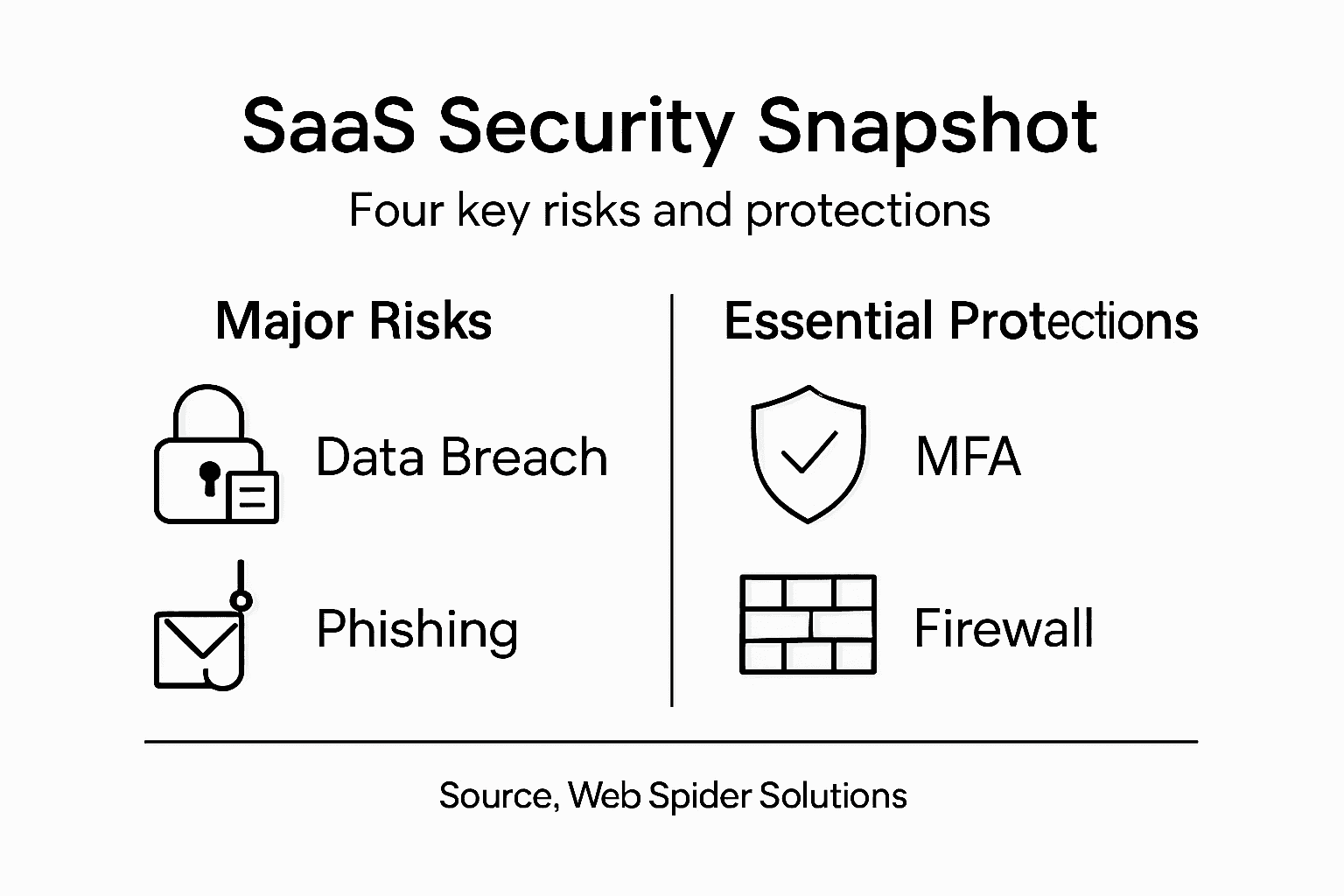
Building a strong security infrastructure requires a systematic approach that combines technological solutions with employee education. Small businesses should focus on implementing basic protective measures such as regular software updates, strong password policies, and periodic security assessments to minimize potential vulnerabilities and reduce overall cyber risk.
Pro tip: Invest in comprehensive employee cybersecurity training that costs less than potential breach damages and transforms your team into a human firewall.
Compliance, Legal Duties, and Data Protection
Navigating the complex landscape of legal responsibilities represents a critical challenge for SaaS businesses in the digital age. SaaS compliance best practices provide essential guidance for organizations seeking to protect their digital assets while meeting stringent regulatory requirements.
Key legal compliance areas for SaaS businesses include:
- General Data Protection Regulation (GDPR)
- California Consumer Privacy Act (CCPA)
- Health Insurance Portability and Accountability Act (HIPAA)
- Payment Card Industry Data Security Standard (PCI DSS)
- International data transfer regulations
- Industry-specific privacy requirements
Cybersecurity legal frameworks demand comprehensive approaches to data protection and privacy. Cybersecurity legal guidance emphasizes the critical importance of developing robust privacy policies, implementing strong data encryption methods, and establishing clear breach response protocols.
Effective compliance requires a proactive strategy that integrates legal requirements into every aspect of business operations. Organizations must develop comprehensive documentation, conduct regular privacy impact assessments, and create transparent mechanisms for managing customer data rights and consent.
Pro tip: Consult with a specialized cybersecurity legal expert annually to ensure your compliance strategy remains current with evolving regulatory landscapes.
Secure Your SaaS Business with Expert Digital Support
Protecting your SaaS company from website vulnerabilities is essential not only to safeguard sensitive data but also to maintain customer trust and business reputation. This article highlighted critical challenges like authentication vulnerabilities and ransomware threats that can disrupt your digital presence and cause financial losses. If you aim to strengthen your defenses and improve security without sacrificing growth, a strategic digital marketing partner can help you navigate these complex issues.
At Web Spider Solutions, we understand how vital continuous vulnerability management and robust access controls are to your success. Beyond offering services in SEO, PPC, and web development, we emphasize building secure, optimized websites that can withstand evolving threats. Our tailored strategies focus on enhancing user experience and boosting organic visibility while supporting your compliance and data protection goals. Explore our Stories Archives to learn how businesses like yours have strengthened their digital impact. Get insights and updates that keep your company one step ahead in security and market presence.
Ready to elevate your SaaS security while expanding your online footprint with proven marketing tactics Visit Web Spider Solutions today to schedule a free consultation and discover customized solutions that protect your assets and drive long-term growth. Don’t wait for a breach to disrupt your business Start your proactive digital security and marketing plan now and secure your future success. For more expert advice browse our Uncategorized Archives for additional resources.
Frequently Asked Questions
What are common website vulnerabilities for SaaS businesses?
Common vulnerabilities include SQL Injection attacks, Cross-Site Scripting (XSS), unauthorized access attempts, data breach vulnerabilities, ransomware infiltration, and phishing exploitation mechanisms.
How can SaaS companies enhance their website security?
SaaS companies can enhance security by implementing multi-factor authentication, conducting regular software updates, utilizing comprehensive access controls, and performing continuous vulnerability monitoring.
What measures should be included in a cybersecurity awareness training program?
A comprehensive cybersecurity awareness training program should cover topics like recognizing phishing attempts, strong password practices, safe internet usage, and understanding the importance of data protection and compliance.
How can small businesses implement effective cybersecurity on a budget?
Small businesses can implement effective cybersecurity by utilizing free open-source security tools, low-cost multi-factor authentication options, cloud-based security platforms, and basic encryption technologies.