






Research shows that nearly 90 percent of American buyers trust peer recommendations as much as personal referrals. That level of confidence can shape the entire buying process for small or medium-sized B2B companies. When digital marketing managers use authentic social proof, it signals credibility and reliability that speak directly to skeptical decision-makers. Discover the practical methods that help American businesses turn client feedback and endorsements into a steady stream of qualified leads.
Table of Contents
- Social Proof And Its Role In Marketing
- Powerful Types Of Social Proof Explained
- Implementing Social Proof In Campaigns
- Risks, Missteps, And Legal Boundaries
- Social Proof Versus Alternative Trust Signals
Key Takeaways
| Point | Details |
|---|---|
| Importance of Social Proof | Social proof builds credibility and can significantly influence consumer behavior, especially in uncertain environments. |
| Diverse Social Proof Types | Various forms of social proof, such as testimonials and case studies, cater to different audience concerns and enhance trust. |
| Systematic Implementation | A strategic approach to collecting and integrating social proof across multiple channels maximizes its effectiveness. |
| Legal Considerations | Ensure compliance with marketing regulations by verifying testimonial authenticity and maintaining transparency in disclosures. |
Social Proof and Its Role in Marketing
Social proof represents a powerful psychological phenomenon where people mimic the actions of others when making decisions, especially in uncertain environments. In marketing, this concept transforms how businesses build credibility and influence potential customers. Social validation occurs when individuals see evidence that others have already trusted, purchased, or endorsed a product or service.
Within digital marketing landscapes, social proof manifests through multiple channels like customer testimonials, reviews, case studies, and social media engagement. Emerging research demonstrates how social proof mechanisms help reduce consumer uncertainty by providing visible signals of trust and acceptance. When potential clients see that respected peers or industry leaders have successfully used a service, they become more likely to convert.
The effectiveness of social proof stems from fundamental human psychology. We are inherently social creatures who seek confirmation from our community before making significant decisions. In B2B marketing, this translates to showcasing successful client relationships, displaying industry awards, sharing detailed case studies, and highlighting impressive client testimonials. These strategies signal competence, reliability, and track record to potential customers who are evaluating complex purchasing decisions.
Pro tip: Collect and strategically display diverse social proof elements that specifically address your target audience’s primary concerns and demonstrate tangible business outcomes.
Powerful Types of Social Proof Explained
Marketing professionals understand that social proof comes in multiple strategic forms, each designed to address different audience concerns and decision-making contexts. Research from 194 B2B marketing experts reveals 11 distinct types of social proof that businesses can leverage to build trust and credibility in their industry.
The most impactful types of social proof include customer testimonials, which provide direct endorsements from satisfied clients. Case studies offer deeper insights by showcasing specific problem-solving scenarios and measurable outcomes. Expert endorsements carry significant weight, particularly in technical or specialized industries where professional credibility matters most. Media mentions and third-party reviews represent external validation that can dramatically enhance a company’s perceived reputation.

Other powerful social proof mechanisms include client logos, success metrics, industry awards, and peer recommendations. User-generated content like video testimonials or social media mentions can create authentic connections that traditional marketing materials cannot replicate. By strategically combining multiple social proof elements, businesses can create a comprehensive trust-building ecosystem that addresses potential clients’ inherent skepticism and uncertainty.
Pro tip: Develop a systematic approach to collecting and showcasing social proof by creating a dedicated content repository that tracks and highlights your most compelling client success stories and external validations.
Here’s a quick comparison of social proof types and their strategic effects:
| Social Proof Type | Typical Use Case | Business Impact |
|---|---|---|
| Customer Testimonials | Website product pages | Builds immediate trust, humanizes brand |
| Case Studies | B2B sales or presentations | Demonstrates problem-solving, showcases outcomes |
| Expert Endorsements | Technical or niche industries | Lends credibility, appeals to professionals |
| Media Mentions | Brand awareness campaigns | Increases reputation, signals external recognition |
| User-Generated Content | Social media and ads | Creates authenticity, drives engagement |
Implementing Social Proof in Campaigns
Successful implementation of social proof requires a strategic and systematic approach that goes beyond simply collecting testimonials. Comprehensive marketing growth strategies emphasize creating a structured framework for gathering and presenting verified reviews that resonate authentically with target audiences.
The process begins with systematic review collection, which involves developing multiple channels for gathering genuine client feedback. This might include direct email surveys, follow-up calls, dedicated feedback platforms, and automated review request systems. Businesses should focus on collecting detailed, specific testimonials that highlight concrete outcomes and measurable results rather than generic praise. Each testimonial should ideally include specific metrics, challenges overcome, and the tangible impact of the solution.
Multi-channel integration is crucial for maximizing social proof effectiveness. This means strategically placing testimonials, case studies, and client logos across different marketing touchpoints such as websites, email campaigns, social media platforms, sales decks, and advertising materials. The goal is to create a consistent narrative of trust and credibility that potential clients encounter at multiple stages of their decision-making journey. Visual elements like client logos, video testimonials, and quantifiable success metrics can significantly enhance the persuasive power of social proof.
Pro tip: Create a centralized repository of client success stories that can be easily accessed and dynamically updated, allowing your marketing team to quickly pull relevant social proof for different audience segments and marketing initiatives.
Risks, Missteps, and Legal Boundaries
Ethical marketing demands a careful approach to social proof that balances persuasive strategies with legal compliance. Contemporary legal frameworks emphasize the critical importance of maintaining transparency and avoiding misleading advertising practices, particularly in the realm of digital marketing and social proof generation.
Marketers must navigate several key legal risks when implementing social proof strategies. These include potential violations related to testimonial authenticity, disclosure requirements, and representation of client outcomes. Fabricated or manipulated testimonials can lead to significant legal consequences, including potential lawsuits, regulatory penalties, and severe damage to brand reputation. Startup marketing regulations specifically mandate clear influencer disclosures and truthful representations of business capabilities, with particular scrutiny on claims that might mislead vulnerable consumer groups.
To mitigate legal risks, businesses should implement rigorous verification processes for all social proof content. This involves obtaining explicit written consent from clients featured in testimonials, maintaining accurate documentation of client relationships, and ensuring that all claims are substantiated by verifiable evidence. Companies must also stay current with evolving advertising regulations across different jurisdictions, which can vary significantly in their requirements for marketing claims and social proof representations.
Pro tip: Develop a comprehensive compliance checklist for social proof content that includes verification of client permission, accuracy of claims, and clear disclosure of any material connections between your business and featured testimonial sources.
Social Proof Versus Alternative Trust Signals
Comprehensive marketing research reveals distinct differences between social proof and alternative trust signals, each playing a unique role in building consumer confidence. Social proof primarily operates through peer validation, leveraging endorsements and experiences from similar customers, while alternative trust signals focus on demonstrating institutional credibility and professional legitimacy.
Trust signals encompass a broader range of credibility indicators, including professional certifications, security badges, industry awards, and formal credentials. B2B marketing insights highlight how these alternative trust mechanisms complement social proof by addressing different aspects of buyer confidence. Where social proof provides emotional reassurance through peer experiences, trust signals offer rational validation through objective indicators of competence and reliability. Security badges demonstrate technical safety, professional certifications showcase expertise, and industry recognitions signal market leadership.
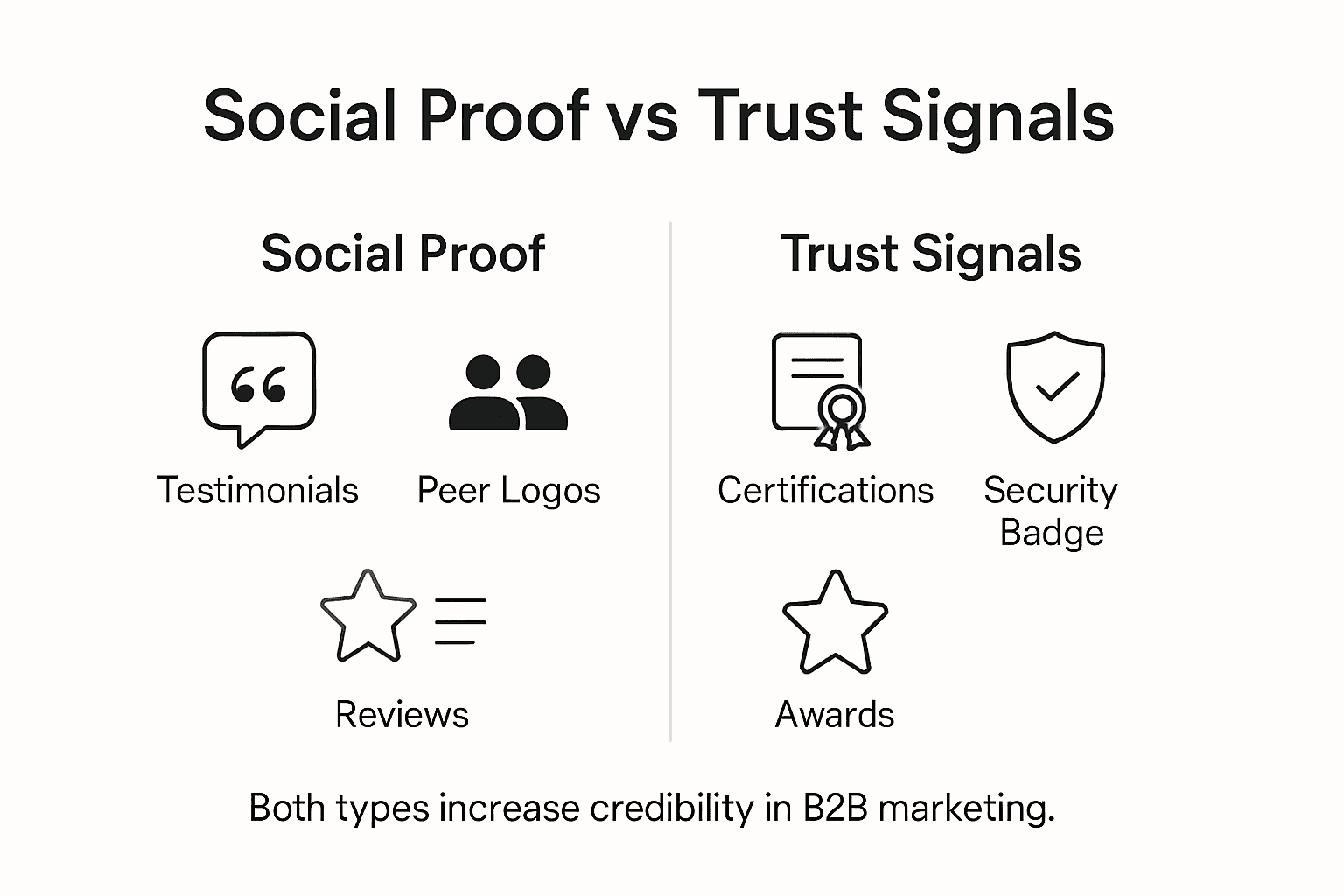
The most effective marketing strategies integrate both social proof and alternative trust signals. This holistic approach creates a comprehensive trust ecosystem that addresses both emotional and rational decision-making factors. By combining authentic client testimonials with professional credentials, businesses can create a multi-layered credibility narrative that speaks to different buyer personas and their specific trust requirements. The goal is to create a seamless narrative of reliability that resonates across multiple touchpoints and addresses varied customer concerns.
Below is a table outlining how social proof and alternative trust signals differ:
| Factor | Social Proof | Alternative Trust Signals |
|---|---|---|
| Source | Peer experiences | Credentials or institutions |
| Emotional Effect | Reassurance, relatability | Confidence through objectivity |
| Typical Examples | Testimonials, reviews | Certifications, security badges |
| Ideal Context | Early-stage consideration | Later-stage or risk-averse buyers |
Pro tip: Develop a strategic matrix that maps different trust signals and social proof elements to specific customer segments, ensuring your credibility approach is precisely targeted and most effective.
Elevate Your B2B Credibility with Proven Social Proof Strategies
Building trust through social proof is essential to overcoming skepticism and driving conversions in competitive B2B markets. If your business struggles with demonstrating authenticity and showcasing tangible client success, you are not alone. The article highlights key challenges including collecting verified testimonials, integrating diverse social proof types, and maintaining compliance while engaging prospects effectively. These pain points often lead to missed opportunities and slow growth.
At Web Spider Solutions, we specialize in crafting targeted digital marketing campaigns that leverage customer testimonials, case studies, and expert endorsements to boost your credibility and authority. Our expertise in B2B marketing ensures your social proof is strategically amplified across channels to reduce uncertainty and build lasting trust. Combine that with our tailored SEO and content marketing services and watch your online presence become a powerful conversion driver.
Ready to transform your social proof into a growth engine? Explore actionable insights in our B2B Marketing Archives and inspiring client success stories in the Stories Archives. Contact us today at Web Spider Solutions for a personalized consultation. Don’t wait to claim your competitive edge with proven social proof and next-level digital strategies.
Frequently Asked Questions
What is social proof in marketing?
Social proof in marketing refers to the psychological phenomenon where people trust and mimic the actions of others when making decisions, particularly in uncertain situations. It helps businesses build credibility by showcasing endorsements, testimonials, and customer experiences.
How can I implement social proof effectively in my marketing campaigns?
To implement social proof effectively, gather authentic testimonials, case studies, and endorsements from satisfied clients. Strategically display these elements across various marketing channels, such as your website, social media, and email campaigns, to create a consistent narrative of trust.
What are the different types of social proof?
Different types of social proof include customer testimonials, case studies, expert endorsements, media mentions, user-generated content, client logos, and success metrics. Each type serves a unique purpose in building credibility and trust with potential customers.
What are the legal considerations when using social proof in marketing?
When using social proof, it’s essential to ensure transparency and authenticity. Obtain explicit consent from clients featured in testimonials, avoid misleading claims, and stay updated on advertising regulations concerning testimonials and endorsements to avoid legal risks.
Recommended