






Over four out of five american adults use at least one social media platform, making digital marketing more influential than ever. For businesses, understanding the purpose and power of social media is no longer optional. It shapes how brands connect with real people, gather instant feedback, and stand out in crowded markets. This guide explains what social media marketing really means for modern american companies and how they can use these platforms for lasting impact.
Table of Contents
- Defining Social Media Marketing And Its Purpose
- Major Social Media Platforms And Strategies
- Key Benefits And Business Applications
- Common Risks And How To Avoid Them
- Maximizing Results: Best Practices For Success
Key Takeaways
| Point | Details |
|---|---|
| Social Media Marketing Strategy | Businesses should leverage social media platforms to engage with audiences effectively, focusing on authentic interactions and consistent branding. |
| Platform-Specific Approaches | Tailor content for each social media platform to cater to its unique audience and characteristics, enhancing engagement and effectiveness. |
| Measurable Outcomes | Utilize analytics to track performance and adapt strategies based on audience behavior and feedback for continuous improvement. |
| Risk Management | Implement robust guidelines and monitoring systems to protect brand reputation and navigate potential challenges in the digital space. |
Defining Social Media Marketing and Its Purpose
Social media marketing represents a strategic digital approach where businesses leverage online platforms to connect, engage, and grow their audience. By using social media platforms strategically, companies can transform how they communicate, promote products, and build meaningful customer relationships.
Social media marketing goes beyond simple advertising. It involves creating targeted content, managing interactive campaigns, and establishing a distinctive brand voice across digital channels. Modern businesses utilize platforms like Facebook, Instagram, LinkedIn, and Twitter to reach potential customers, share compelling narratives, and generate meaningful interactions that drive business growth.
At its core, social media marketing enables direct consumer engagement through multiple touchpoints. Businesses can now respond quickly to customer feedback, showcase their personality, and create community-driven experiences that traditional marketing channels could never achieve. The goal isn’t just visibility, but building genuine connections that translate into long-term customer loyalty and sustainable business expansion.
Key characteristics of effective social media marketing include:
- Consistent brand messaging
- Authentic audience interaction
- Data-driven strategic planning
- Multichannel content distribution
- Measurable performance metrics
Major Social Media Platforms and Strategies
Social media platforms have evolved into sophisticated marketing ecosystems, each offering unique opportunities for businesses to connect with their target audiences. Platform selection strategies require careful consideration of audience demographics, content type, and marketing objectives.
Key Social Media Platforms serve different marketing purposes. Facebook remains a versatile platform for broad audience engagement, while Instagram excels in visual storytelling and younger demographic targeting. LinkedIn provides robust B2B networking opportunities, TikTok captures short-form video content, and Twitter (X) enables rapid, real-time communication and brand messaging.
Effective social media strategies demand platform-specific approaches. Businesses must customize content to match each platform’s unique characteristics, understanding that what works on Instagram might not resonate on LinkedIn. Successful marketers adapt their messaging, visual style, and engagement techniques to align with platform-specific user expectations and behavioral patterns.
Marketing strategies across these platforms should focus on:
- Consistent brand voice
- Targeted content creation
- Regular audience engagement
- Performance tracking and analytics
- Responsive communication
Key Benefits and Business Applications
Social media marketing offers transformative benefits for businesses across industries. Content marketing strategies enable companies to leverage digital platforms for unprecedented audience engagement and brand growth.
Business applications of social media marketing extend far beyond traditional advertising. Companies can now build direct communication channels with consumers, gaining real-time feedback and insights that were previously impossible. This direct interaction allows businesses to understand customer preferences, track sentiment, and rapidly adapt their marketing approaches.
The strategic advantages of social media marketing include enhanced brand visibility, targeted audience reach, and cost-effective marketing solutions. Small businesses and large enterprises alike can create compelling narratives, showcase their unique value propositions, and build loyal communities around their brands. By leveraging platform-specific tools and analytics, organizations can precisely measure marketing performance and optimize their digital strategies.
Key benefits for businesses include:
- Increased brand awareness
- Direct customer interaction
- Detailed audience insights
- Rapid market feedback
- Cost-effective marketing channels
- Improved customer relationship management
- Flexible and adaptive communication strategies
Common Risks and How to Avoid Them
Social media marketing presents numerous potential pitfalls that businesses must strategically navigate to protect their brand reputation and digital presence. Content moderation strategies play a critical role in mitigating risks associated with online communication and brand representation.
Reputation management is paramount in social media marketing. Businesses face significant challenges including misinformation, negative feedback, and potential viral controversies. Online community dynamics can quickly transform a minor communication misstep into a substantial brand crisis, making proactive risk management essential for digital marketing success.
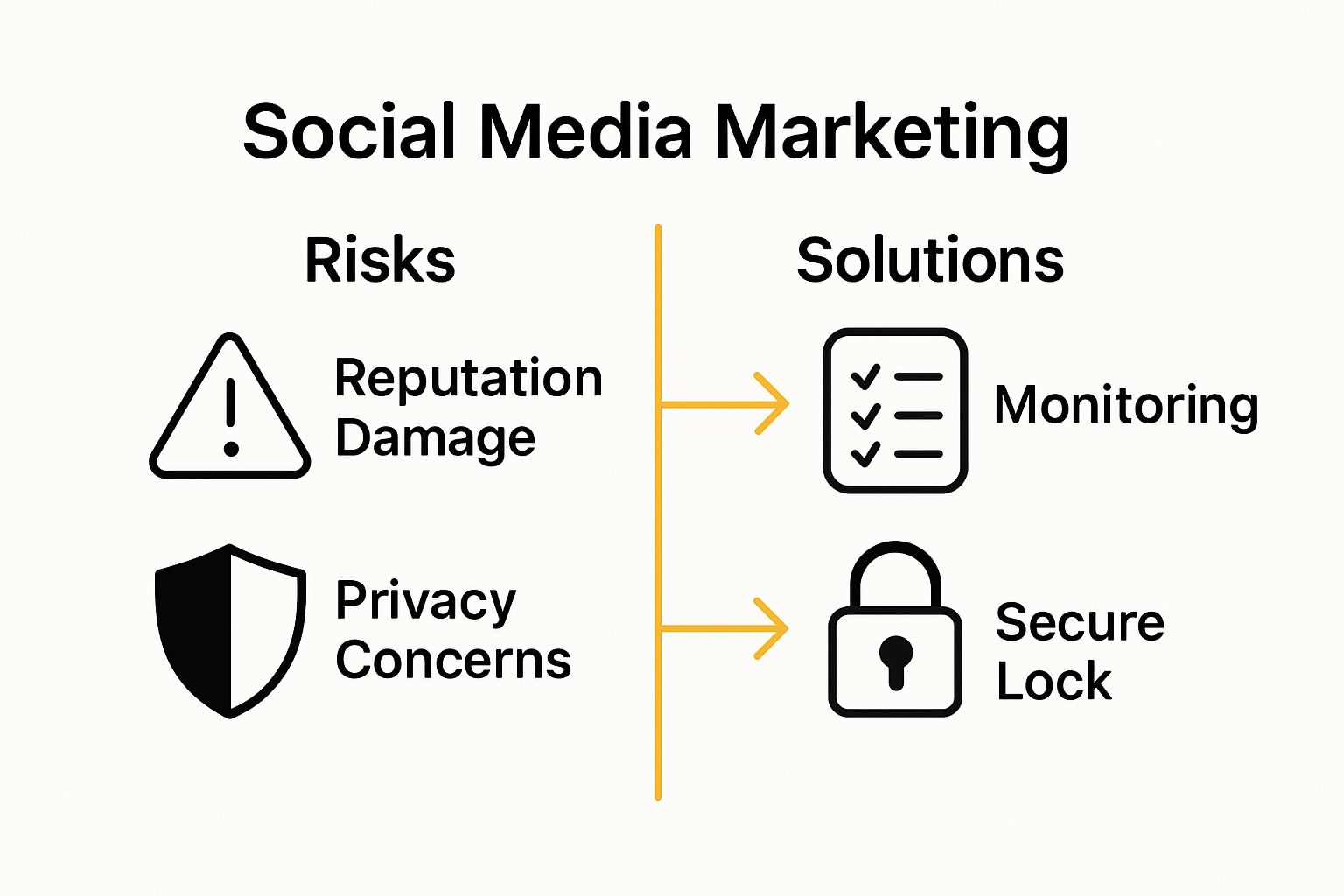
Comprehensive risk mitigation requires a multifaceted approach. Companies must develop robust social media guidelines, train employees on appropriate communication protocols, implement real-time monitoring systems, and create rapid response mechanisms for potential reputation threats. Establishing clear boundaries, maintaining authentic communication, and demonstrating transparency can help businesses effectively manage potential risks while maintaining a positive digital presence.
Key risks to anticipate and manage include:
- Misinformation spread
- Inappropriate content publication
- Brand reputation damage
- Negative viral interactions
- Data privacy breaches
- Inconsistent brand messaging
- Potential legal compliance issues
Maximizing Results: Best Practices for Success
Strategic social media marketing demands a comprehensive approach that goes beyond simple content posting. Cross-platform engagement strategies are crucial for businesses seeking to maximize their digital marketing effectiveness and create meaningful connections with their target audiences.
Successful social media marketing requires careful planning and adaptive techniques. Platform-specific content optimization ensures that businesses can tailor their messaging to match the unique characteristics and audience expectations of each social media channel. This means developing nuanced communication strategies that resonate differently on platforms like LinkedIn, Instagram, Twitter, and Facebook.
Companies must invest in continuous learning and data-driven approaches to social media marketing. This involves regularly analyzing performance metrics, understanding audience behaviors, and quickly adapting strategies based on real-time insights. Successful marketers view social media as a dynamic ecosystem that requires ongoing refinement, creative thinking, and a willingness to experiment with new communication techniques.
Key best practices for maximizing social media marketing results include:
- Develop a consistent brand voice
- Create platform-specific content
- Utilize data analytics for insights
- Engage authentically with audiences
- Implement rapid response mechanisms
- Maintain a flexible content strategy
- Continuously test and optimize approaches
Unlock Your Brand’s Potential with Expert Social Media Marketing Support
Struggling to create consistent brand messaging or engage authentically with your audience across multiple platforms can hold your business back from social media marketing success. The challenge of tailoring content for each channel while managing rapid customer feedback and reputation risks requires a strategic partner who understands these complexities. From building direct communication channels to leveraging data-driven insights, mastering these elements is crucial for long-term growth and brand loyalty.
At Web Spider Solutions, we specialize in transforming your social media strategies into powerful business assets. Whether you need comprehensive social media management, targeted paid advertising campaigns, or expert B2B marketing solutions, we provide customized approaches designed to maximize visibility and engagement. Discover how our proven track record in analytics-driven optimization can elevate your brand and protect your reputation.
Ready to stop guessing and start growing with social media? Explore success stories in our Stories Archives to see how brands like yours have flourished. Take the first step today by visiting Web Spider Solutions for a free consultation and learn how to turn social media challenges into your biggest opportunities.
Frequently Asked Questions
What is social media marketing?
Social media marketing is a strategic approach where businesses use online platforms to connect with audiences, promote products, and build customer relationships through targeted content and interactive campaigns.
How can businesses benefit from social media marketing?
Businesses can gain increased brand awareness, direct customer interaction, and detailed audience insights. It also provides a cost-effective way to communicate and adapt quickly to market feedback.
What are some key social media platforms used for marketing?
Key platforms include Facebook for broad engagement, Instagram for visual storytelling, LinkedIn for B2B networking, TikTok for short-form videos, and Twitter for real-time communication and brand messaging.
What risks should businesses consider in social media marketing?
Businesses should be aware of risks such as misinformation, negative feedback, brand reputation damage, and data privacy breaches. Implementing robust communication guidelines and real-time monitoring can help mitigate these risks.
Recommended