







Establishing trusted authority and driving qualified leads often feels elusive for digital marketing managers in competitive SaaS sectors. Building a robust pillar content strategy helps shift content from reactive blog posts to a structured network that signals deep expertise. By creating comprehensive central hubs linked to supporting guides, SaaS organizations can improve organic search visibility and provide actionable resources tailored to complex industry challenges.
Table of Contents
- Defining Pillar Content Strategy In SaaS
- Types Of Pillar Pages And Topic Clusters
- How Pillar Content Improves Organic Visibility
- Building And Structuring Effective Pillars
- Common Challenges And Mistakes To Avoid
Key Takeaways
| Point | Details |
|---|---|
| Pillar Content Enhances Authority | A robust pillar content strategy positions SaaS companies as thought leaders and attracts targeted audiences through comprehensive resources. |
| Content Structure is Crucial | Successful pillar pages require a well-planned hierarchical structure with internal linking to improve navigation and SEO. |
| Customer Needs Drive Topics | Understanding genuine audience needs is essential for selecting pillar topics that address specific challenges and provide value. |
| Regular Content Audits are Necessary | Conducting periodic reviews of pillar content ensures it remains relevant and aligned with evolving industry trends and audience requirements. |
Defining Pillar Content Strategy in SaaS
A pillar content strategy represents a comprehensive approach to content development specifically designed for Software as a Service (SaaS) organizations to establish digital authority and attract targeted audiences. This strategic method goes beyond traditional content marketing by creating interconnected, in-depth resources that comprehensively address customer challenges and industry topics.
In practice, pillar content strategy involves developing substantive, authoritative content pieces that serve as comprehensive guides on critical subjects within a specific domain. These foundational resources support content ecosystem by linking related smaller content pieces around a central theme, creating a structured knowledge network that provides immense value to potential customers. The primary goal is establishing thought leadership while systematically improving search engine visibility and demonstrating deep expertise.
For SaaS companies, pillar content typically addresses complex technical or strategic challenges faced by their target audience. These comprehensive guides might explore topics like implementation strategies, industry best practices, advanced feature utilization, or solving specific business problems. By creating interconnected content clusters that thoroughly examine a subject from multiple angles, SaaS organizations can position themselves as trusted advisors who understand nuanced customer needs.
Successful pillar content strategies require meticulous planning, deep industry knowledge, and a commitment to producing genuinely helpful resources. The content must balance technical depth with accessibility, ensuring that both novice and experienced professionals can extract meaningful insights. Effective pillar content goes beyond surface-level explanations, diving into practical applications, real-world scenarios, and actionable recommendations.
Pro tip: Create a content roadmap that identifies potential pillar topics by analyzing customer support tickets, sales conversations, and frequently asked questions to ensure your resources directly address genuine audience needs.
Types of Pillar Pages and Topic Clusters
Pillar pages and topic clusters represent strategic content frameworks that enable SaaS organizations to create comprehensive, interconnected digital resources. These content architectures are designed to provide deep, authoritative insights while improving search engine optimization (SEO) and establishing thought leadership across complex technical domains.
In the SaaS content ecosystem, three primary types of pillar pages emerge as critical strategies: comprehensive guide pillar pages, solution-oriented pillar pages, and product-focused pillar pages. Comprehensive guide pillar pages offer exhaustive overviews of broad industry topics, diving deep into complex subjects like cloud infrastructure, cybersecurity protocols, or digital transformation strategies. Content marketing strategies typically leverage these resources to demonstrate expertise and attract potential customers seeking in-depth understanding.

Solution-oriented pillar pages target specific business challenges, providing strategic frameworks and actionable methodologies for resolving complex technical or operational issues. These resources map customer pain points to comprehensive solutions, showcasing the SaaS organization’s problem-solving capabilities. Product-focused pillar pages, conversely, center on detailed explorations of specific software features, implementation strategies, and advanced utilization techniques. By creating interconnected content clusters around these pillar pages, SaaS companies can develop robust knowledge ecosystems that guide potential customers through their entire decision-making journey.
Successful pillar page development requires meticulous planning, deep subject matter expertise, and a nuanced understanding of target audience needs. Each pillar page must balance technical depth with accessibility, ensuring that content remains engaging for both technical specialists and business decision-makers. The most effective pillar pages integrate multimedia elements, practical case studies, and step-by-step implementation guides to provide comprehensive, actionable insights.
Here’s a comparison of the main types of pillar pages used in SaaS organizations:
| Pillar Type | Main Focus | Typical Content | Strategic Impact |
|---|---|---|---|
| Comprehensive Guide | Industry-wide topics | Detailed overviews, best practices | Establishes expertise, educates audience |
| Solution-Oriented | Business challenges | Frameworks, methodologies, case solutions | Solves pain points, builds trust |
| Product-Focused | Software features | Tips, advanced usage, implementation | Drives adoption, showcases capability |
Pro tip: Develop a systematic content mapping process that identifies potential pillar page topics by analyzing intersection points between customer challenges, organizational expertise, and strategic business objectives.
How Pillar Content Improves Organic Visibility
Pillar content serves as a powerful strategic approach for SaaS organizations to dramatically enhance their organic search visibility. By creating comprehensive, interconnected content resources, companies can systematically improve their search engine rankings and establish authoritative digital presence. Search engine optimization techniques play a critical role in transforming pillar content into a robust organic growth mechanism.
The primary mechanism behind improved organic visibility involves strategic content structuring and intelligent internal linking. Pillar pages act as central hubs that comprehensively cover core industry topics, with supporting cluster content providing deeper insights into specific subtopics. This architectural approach signals to search engines that the website contains deep, authoritative knowledge about particular domains. By creating dense, interlinked content networks, SaaS organizations can effectively demonstrate subject matter expertise, which search algorithms increasingly reward with higher rankings.
Keyword optimization represents another crucial element in pillar content’s organic visibility strategy. Unlike traditional keyword stuffing, modern pillar content integrates relevant search terms naturally within comprehensive, user-focused resources. This approach allows SaaS companies to target multiple related keywords while providing genuine value to potential customers. The content’s depth and comprehensiveness enable search engines to recognize the material as high-quality, trustworthy information, subsequently improving its likelihood of ranking prominently in search results.
Successful pillar content requires a nuanced understanding of audience search behaviors and information needs. By mapping content to specific user intent and creating resources that comprehensively address complex questions, SaaS organizations can develop organic visibility strategies that go beyond traditional SEO tactics. The most effective pillar content anticipates user questions, provides actionable insights, and creates a seamless navigation experience that keeps readers engaged and search engines impressed.
Pro tip: Conduct regular content audits to identify and refresh pillar page topics, ensuring your resources remain current with emerging industry trends and evolving search algorithms.
Building and Structuring Effective Pillars
Building effective pillar content requires a strategic approach that goes beyond traditional content creation. SaaS organizations must develop comprehensive resources that serve as authoritative knowledge centers, addressing complex industry topics with depth and precision. Comprehensive content structuring demands meticulous planning and a nuanced understanding of audience information needs.
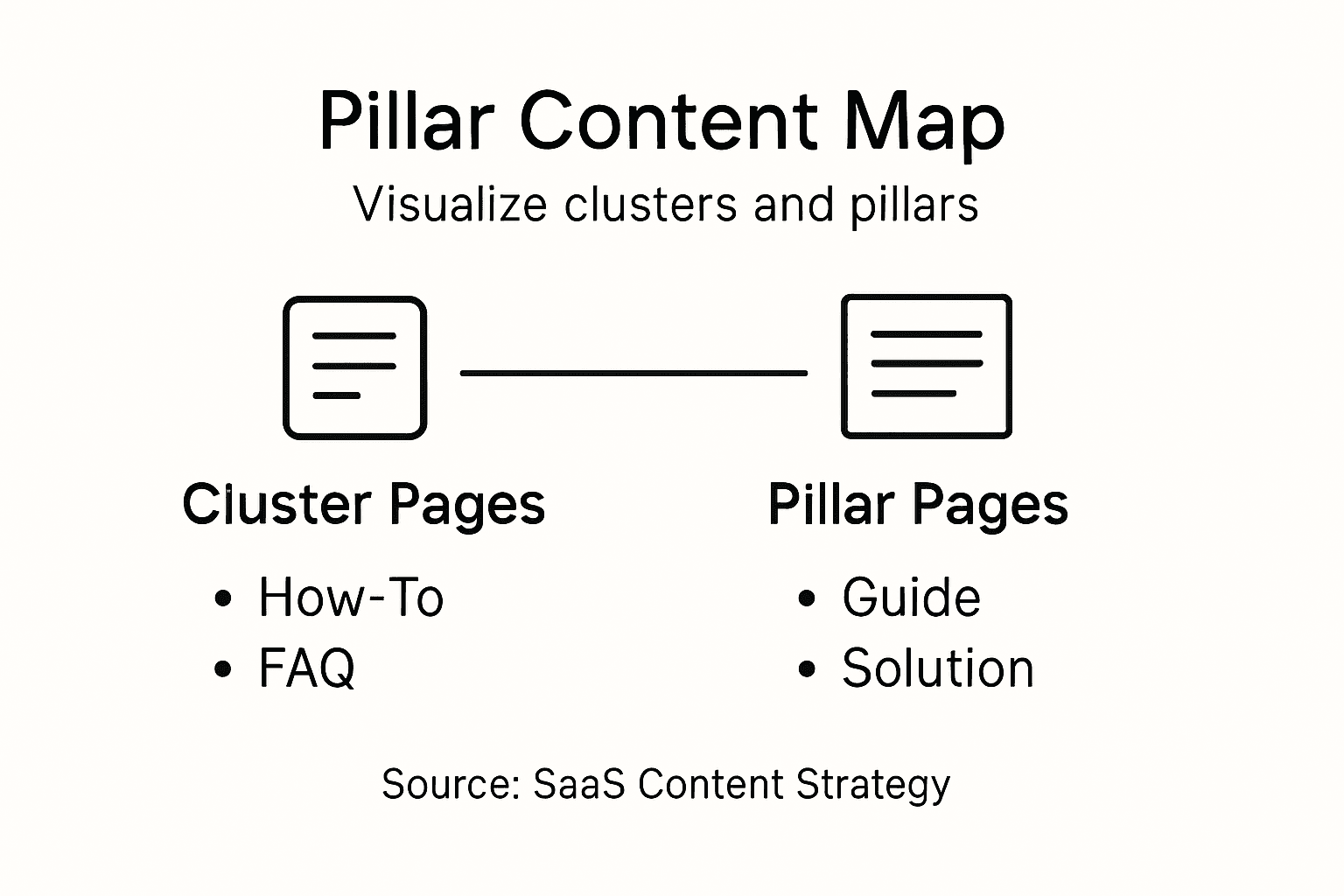
The architectural framework of successful pillar content involves creating a hierarchical content network with a central pillar page supported by interconnected cluster content. This structure typically includes a comprehensive main page that provides a broad overview of a core topic, surrounded by multiple supporting articles that dive deeper into specific subtopics. Each cluster article should link back to the main pillar page, creating a robust internal linking strategy that signals topical expertise to search engines and provides seamless navigation for readers.
Effective pillar content development requires careful topic selection and in-depth research. SaaS companies should identify core industry themes that align with their expertise, audience interests, and strategic business objectives. The most successful pillars address complex challenges, provide actionable insights, and demonstrate thought leadership. This involves conducting thorough keyword research, analyzing competitor content, and understanding the specific information gaps that exist within the target audience’s knowledge landscape.
Successful pillar content goes beyond mere information compilation. It requires a narrative approach that transforms technical information into engaging, accessible resources. Each pillar should present information with a clear logical progression, using various content formats like detailed explanations, case studies, visual diagrams, and practical examples. The goal is to create comprehensive resources that not only answer user questions but also anticipate and address potential follow-up inquiries, establishing the content as a definitive reference point within its specific domain.
This summary outlines key elements for effective pillar content structure:
| Element | Purpose | Benefit |
|---|---|---|
| Central Pillar Page | Hosts broad overview | Authority and knowledge hub |
| Cluster Content | Expands specific subtopics | Deep dives and supporting detail |
| Internal Linking | Connects related articles | Improves navigation and SEO |
| Topic Selection | Aligns with audience needs | Maximizes relevance and engagement |
Pro tip: Create a content mapping matrix that visually tracks relationships between pillar pages and cluster content, ensuring comprehensive coverage and strategic interlinking.
Common Challenges and Mistakes to Avoid
Pillar content strategies in SaaS marketing are complex endeavors fraught with potential pitfalls that can undermine their effectiveness. Understanding and proactively addressing these challenges is critical for organizations seeking to develop robust content ecosystems. Content strategy challenges require strategic awareness and systematic problem prevention.
One of the most prevalent mistakes involves creating pillar content without a clear, measurable objective. Many SaaS organizations generate extensive resources without defining specific goals such as lead generation, thought leadership, or customer education. This lack of strategic alignment results in unfocused content that fails to drive meaningful business outcomes. Effective pillar content must be purposefully designed with specific key performance indicators (KPIs) that align directly with broader marketing and sales objectives.
Another critical challenge emerges from inadequate audience understanding and content personalization. SaaS companies often create pillar content based on internal assumptions rather than genuine user needs and pain points. Successful strategies demand extensive audience research, including detailed customer interviews, comprehensive surveys, and in-depth analysis of support tickets and user feedback. Content must be meticulously crafted to address specific user challenges, providing actionable insights that demonstrate deep domain expertise and genuine value.
Technical execution represents another significant area of potential failure. Pillar content strategies frequently stumble due to poor internal linking structures, inconsistent content quality, and neglecting search engine optimization principles. SaaS marketers must develop sophisticated content architectures that create logical, intuitive connections between pillar pages and supporting cluster content. This requires ongoing content governance, regular performance audits, and a commitment to maintaining high-quality, updated resources that continue to serve audience information needs.
Pro tip: Implement a quarterly content performance review that systematically evaluates each pillar page’s engagement metrics, search rankings, and alignment with current audience requirements.
Elevate Your SaaS Growth with a Proven Pillar Content Strategy
Navigating the challenges of crafting a powerful pillar content strategy can feel overwhelming. You need to build authoritative, interconnected resources that boost organic visibility and truly engage your target audience. This article highlights the importance of strategic content structuring and meticulous internal linking to establish digital authority and solve specific business problems. At the same time, many SaaS businesses struggle with unclear goals and inconsistent execution that limit their growth potential.
You do not have to face these hurdles alone. Our team at Web Spider Solutions specializes in creating tailored content marketing approaches that align with your unique customer challenges and business objectives. Whether you want to improve your organic search rankings through an expertly mapped content ecosystem or need guidance integrating solution-focused and product-centered pillar pages, we have the expertise to drive real results. Explore our Stories Archives to see how we have helped other SaaS companies dominate their niches. Ready for a strategy that turns complex SaaS content into targeted leads and sustainable growth? Visit Paid Advertising Archives to learn how paid tactics complement your organic efforts. Take action now by contacting us today at Web Spider Solutions and unlock your SaaS business’s full digital potential.
Frequently Asked Questions
What is a pillar content strategy in SaaS?
A pillar content strategy in SaaS refers to an approach that creates comprehensive, authoritative resources on key topics relevant to the industry. This strategy establishes digital authority, enhances search engine visibility, and addresses customer challenges through interconnected content.
How do pillar pages improve SEO for SaaS companies?
Pillar pages enhance SEO by acting as central hubs that cover core industry topics. They incorporate internal linking to supporting cluster content, signal authority to search engines, and increase rankings by providing in-depth, valuable information that aligns with user search intent.
What types of pillar pages are most effective for SaaS?
The most effective types of pillar pages for SaaS include comprehensive guide pillar pages that cover broad topics, solution-oriented pillar pages that target specific business challenges, and product-focused pillar pages that delve into software features and advanced usage techniques.
What common mistakes should be avoided when creating pillar content?
Common mistakes include lacking clear objectives, inadequate understanding of the target audience, and poor technical execution such as ineffective internal linking and neglecting SEO best practices. It’s important to align content with specific goals and user needs to maximize effectiveness.