






Many B2B marketers view SEO and PPC as separate or even competing strategies, often choosing one over the other based on budget or timeline constraints. This siloed approach misses a critical opportunity: integrating these two channels creates a multiplier effect that drives sustained growth through smarter online visibility and increased revenue. When SEO’s long-term authority building combines with PPC’s immediate testing capabilities, digital marketing managers gain unprecedented control over their market presence. This article guides you through proven frameworks for merging SEO and PPC effectively, backed by data showing that integrated strategies improve traffic significantly.
Table of Contents
- Key takeaways
- Understanding the value of integrating SEO and PPC
- Key strategies for integrating SEO and PPC effectively
- Leveraging data and AI to maximize SEO and PPC synergy
- Measuring success and continuous optimization of integrated campaigns
- Explore web spider solutions for SEO and PPC success
- Frequently asked questions
Key Takeaways
| Point | Details |
|---|---|
| SEO PPC synergy | Integration blends long term SEO authority building with PPC testing to deliver faster wins and stronger visibility. |
| Unified goals mapping | Establish unified goals and a master keyword map organized by search intent to align teams and ownership. |
| Optimization loops | Schedule monthly optimization loops where teams share performance data, identify opportunities, and adjust strategies across channels. |
| Shared tracking attribution | Implement shared tracking and attribution to reveal how prospects interact with both channels along the buyer journey. |
| Coordinated content calendars | Develop coordinated content calendars that align PPC landing pages and SEO content to ensure consistent messaging. |
Understanding the value of integrating SEO and PPC
SEO focuses on earning organic search visibility through content optimization, technical improvements, and authority building. PPC delivers paid placement at the top of search results through platforms like Google Ads, offering immediate visibility in exchange for per-click costs. Most B2B marketers treat these as distinct budget line items with separate teams and goals.
PPC provides speed and control. You can launch campaigns within hours, target specific demographics, and adjust messaging in real time. However, it operates on a rental model: traffic stops when spending stops. SEO requires months to build momentum but creates sustainable assets that generate traffic without ongoing per-click costs. The SEO versus PPC debate often positions these as either-or choices.
Integration resolves this false dichotomy by combining quick wins with long-term growth. When you coordinate both channels strategically, PPC becomes a testing ground for SEO content while SEO provides the foundation that makes PPC more efficient. Research confirms that PPC and SEO integration blends both approaches effectively, allowing B2B companies to dominate search results pages with both paid and organic listings.
The concrete benefits for digital marketing managers include:
- Doubled search visibility by occupying multiple SERP positions simultaneously
- Reduced customer acquisition costs as PPC data informs higher-converting SEO content
- Faster validation of messaging and keyword strategies through PPC testing
- Improved brand credibility when prospects see both paid and organic presence
- Better budget allocation based on cross-channel performance data
- Enhanced competitive positioning in high-value search queries
Small to medium-sized B2B companies gain particular advantage from integration. Limited budgets demand efficiency, and coordinated strategies eliminate the waste of duplicated efforts or conflicting messages. When your PPC team discovers a high-converting keyword phrase, your SEO team can prioritize content around that topic. When SEO identifies ranking opportunities, PPC can provide immediate visibility while organic efforts build momentum.
Key strategies for integrating SEO and PPC effectively
Successful integration starts with shared objectives and intent-based keyword mapping rather than treating channels as independent silos. Digital marketing managers should implement these foundational steps:
- Establish unified goals that both teams work toward, such as total qualified leads or revenue from search rather than channel-specific metrics like organic traffic or cost per click alone.
- Create a master keyword map organized by search intent (informational, navigational, commercial, transactional) with clear ownership: SEO typically owns informational and navigational terms while PPC focuses on commercial and transactional queries.
- Schedule monthly optimization loops where teams share performance data, identify opportunities, and adjust strategies based on cross-channel insights.
- Implement shared tracking and attribution systems that reveal how prospects interact with both channels throughout their buyer journey.
- Develop coordinated content calendars that align PPC landing pages with SEO content themes, ensuring consistent messaging and smooth user experiences.
Pro Tip: Use PPC campaigns to test headlines, value propositions, and calls to action before investing SEO resources in content creation. A two-week PPC test can validate messaging that would take months to prove through organic search alone.
Cross-channel communication enhances campaign agility in ways that isolated teams cannot achieve. When your PPC manager notices rising costs on specific keywords, your SEO team can prioritize ranking for those terms to reduce paid spending. When SEO content starts ranking for unexpected but valuable queries, PPC can immediately capitalize with targeted ads.
This coordination extends beyond search to other channels. Your email marketing campaigns can reinforce messages tested through PPC, while influencer marketing partnerships can target the same audience segments identified through search data. The PPC best practices that drive immediate conversions inform the long-term content strategies that build organic authority.
Monthly optimization loops should follow a structured agenda: review performance metrics from both channels, identify top-performing and underperforming keywords, analyze competitor movements, share insights about audience behavior, and adjust strategies accordingly. These meetings transform integration from a theoretical concept into operational reality.

Leveraging data and AI to maximize SEO and PPC synergy
Recent meta-analysis research demonstrates that SEO delivers strong traffic impact with effect size d=1.049, confirming the statistical significance of organic search investments. This data supports integration by proving SEO’s value while showing how PPC can accelerate results during the ramp-up period.
| Factor | Traditional SEO Only | PPC Only | Integrated Approach |
|---|---|---|---|
| Time to results | 3-6 months | Immediate | Immediate + growing |
| Cost structure | Low ongoing | High ongoing | Balanced optimization |
| Sustainability | High | Low | High with reduced risk |
| Testing capability | Slow | Fast | Fast with long-term application |
| SERP coverage | Organic only | Paid only | Paid + organic dominance |
Artificial intelligence is reshaping search results pages in ways that make integration more critical. AI-powered SERPs reduce organic click-through rates by providing answers directly in search results, making it essential to occupy both paid and organic positions. When Google’s AI overviews answer questions without requiring clicks, having PPC ads above the overview and SEO content below creates multiple touchpoints.
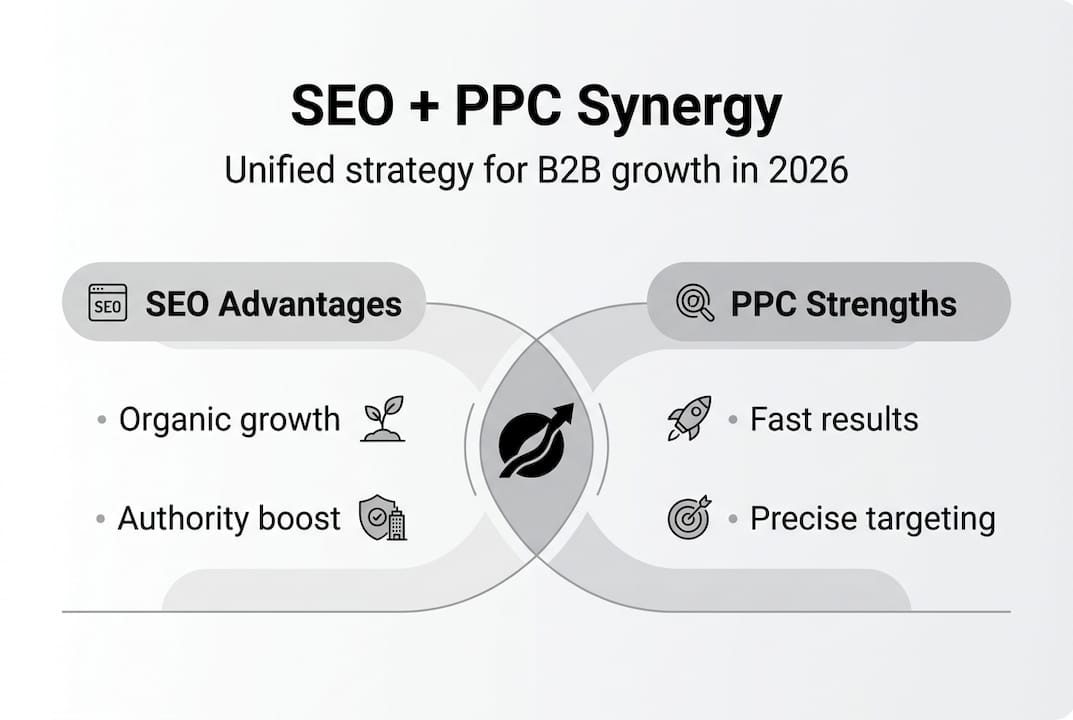
PPC becomes the testing laboratory for AI-era search strategies. You can experiment with different ways to present information, identify which formats generate engagement, and then apply those insights to SEO content. If a PPC ad highlighting a specific benefit drives conversions, that benefit should feature prominently in your organic content.
Pro Tip: Use AI-powered tools like Google’s Performance Max campaigns to test messaging variations at scale, then incorporate winning themes into your SEO content strategy and meta descriptions. This approach lets machines handle the testing while humans apply strategic insights.
The declining organic click-through rates that concern many marketers actually strengthen the case for integration. When fewer users click organic results, capturing the available clicks becomes more valuable. Simultaneously appearing in paid and organic listings increases your total share of clicks even as the overall click pool shrinks. Data shows that advertisers who rank organically for their paid keywords see 50% higher click-through rates on their ads compared to advertisers without organic presence.
Modern analytics platforms enable sophisticated integration by tracking user journeys across channels. You can identify prospects who clicked a PPC ad, returned through organic search, and converted after reading a blog post. This visibility reveals the true value of each channel and guides budget allocation based on actual contribution rather than last-click attribution.
Measuring success and continuous optimization of integrated campaigns
Effective measurement starts with selecting metrics that reflect combined channel performance rather than isolated achievements. Digital marketing managers should track:
- Total search traffic (paid plus organic) rather than separate channel totals
- Blended cost per lead that accounts for both PPC spending and SEO investment
- Search impression share across paid and organic results for target keywords
- Conversion rate improvements as messaging aligns across channels
- Customer acquisition cost trends as integration reduces waste
- Revenue attributed to search (both channels) rather than individual sources
Monthly optimization loops between teams create the feedback mechanism that drives continuous improvement. These structured reviews should examine performance data, identify opportunities, and adjust strategies based on cross-channel insights. When PPC discovers a high-converting audience segment, SEO can create content targeting that segment’s informational needs. When SEO content ranks for valuable queries, PPC can bid more aggressively on related commercial terms.
| Metric | Purpose | Review Frequency | Responsibility |
|---|---|---|---|
| Organic traffic growth | Measure SEO momentum | Weekly | SEO team |
| PPC conversion rate | Assess ad and landing page effectiveness | Daily | PPC team |
| Blended cost per acquisition | Evaluate overall efficiency | Monthly | Both teams |
| Keyword ranking changes | Track organic visibility progress | Weekly | SEO team |
| Search impression share | Monitor competitive positioning | Weekly | Both teams |
| Content engagement metrics | Understand user behavior patterns | Monthly | Both teams |
Aligning metrics with shared goals eliminates the territorial thinking that undermines integration. When both teams work toward total qualified leads from search rather than competing for credit, collaboration replaces competition. The PPC manager who helps SEO rank for expensive keywords deserves recognition for reducing overall costs, not criticism for lower PPC volume.
Data-driven decisions improve budget allocation by revealing which channel delivers better returns for specific objectives. Early-stage awareness content might perform better through SEO, while late-stage conversion terms might justify higher PPC spending. Integration lets you optimize the mix rather than splitting budgets arbitrarily.
Continuous optimization requires systematic testing of new approaches. Your digital campaign management process should include regular experiments: testing new keyword clusters, trying different ad formats, creating content for emerging topics, and adjusting bids based on organic ranking changes. Successful B2B digital campaigns demonstrate that incremental improvements compound over time when teams share learnings and coordinate efforts.
Explore web spider solutions for SEO and PPC success
Web Spider Solutions specializes in integrated digital marketing strategies that combine SEO and PPC for maximum B2B impact. Our team understands the technical requirements and strategic coordination needed to make both channels work together effectively. Whether you’re starting fresh or optimizing existing campaigns, we provide the expertise to prepare your SEO strategy and implement PPC best practices that drive measurable results. Our digital campaign management approach ensures continuous optimization and cross-channel coordination. Contact our team to discover how integrated search marketing can accelerate your B2B growth and improve online visibility.
Frequently asked questions
What is the main benefit of integrating SEO and PPC for B2B companies?
Integration blends PPC’s immediate visibility with SEO’s sustainable growth, creating a multiplier effect that improves overall online presence and lead generation. B2B companies gain the ability to test and validate strategies quickly through paid channels while building long-term organic authority that reduces customer acquisition costs over time.
How often should SEO and PPC teams coordinate for optimization?
Teams should meet monthly for structured optimization loops that review performance data, share insights, and adjust strategies based on cross-channel learnings. Monthly coordination improves campaign performance by ensuring both channels work toward unified goals rather than competing for budget or credit. Weekly data sharing through dashboards supplements these meetings with real-time visibility.
Can PPC data improve SEO performance?
PPC provides rapid testing of keywords, headlines, and value propositions that would take months to validate through organic search alone. High-converting PPC keywords indicate strong commercial intent and should inform SEO content priorities, while ad copy that drives clicks reveals messaging that resonates with your target audience. This data eliminates guesswork and focuses SEO efforts on proven opportunities.
How does integration affect overall marketing budget efficiency?
Integrated strategies reduce waste by identifying which channel delivers better returns for specific objectives and audience segments. PPC spending decreases as SEO rankings improve for expensive keywords, while organic content benefits from messaging validated through paid testing. Most B2B companies see 20-30% improvement in overall search marketing efficiency within six months of implementing coordinated strategies.
What tools help manage integrated SEO and PPC campaigns?
Platforms like Google Ads and Google Search Console provide foundational data for both channels, while tools like SEMrush or Ahrefs offer unified keyword research and competitive analysis. Marketing automation platforms enable cross-channel tracking and attribution, revealing how prospects interact with both paid and organic touchpoints throughout their buyer journey. The key is selecting tools that facilitate data sharing rather than creating additional silos.