







Most American digital marketing managers now recognize that over 60 percent of purchasing decisions are influenced by trusted online creators. For SaaS companies, influencer marketing means connecting with audiences who crave authenticity and expert guidance, not just promotional content. Understanding the fundamentals behind successful collaborations helps brands build stronger relationships with key segments while driving genuine engagement that supports lasting growth.
Table of Contents
- Understanding Influencer Marketing Fundamentals
- Key Types of Influencers and Partnerships
- Designing Effective Influencer Campaigns
- Legal Risks and Compliance Issues in 2026
- Measuring ROI and Common Campaign Pitfalls
Key Takeaways
| Point | Details |
|---|---|
| Influencer Selection | Choose influencers with industry expertise and authentic audience engagement over sheer follower count for better results. |
| Strategic Campaign Design | Align influencer capabilities with marketing objectives to create effective promotional campaigns that resonate with target audiences. |
| Performance Metrics | Utilize comprehensive metrics, including audience engagement and conversion attribution, to accurately assess ROI and campaign effectiveness. |
| Compliance Awareness | Stay informed about evolving legal regulations governing influencer marketing to ensure all content meets compliance requirements. |
Understanding Influencer Marketing Fundamentals
Influencer marketing represents a strategic approach where brands collaborate with digital personalities who have established credibility and audience trust within specific niches. These digital creators leverage their social media platforms to authentically promote products or services, connecting businesses directly with targeted consumer segments. Unlike traditional advertising, influencer marketing relies on genuine relationships and perceived authenticity between the content creator and their followers.
The core mechanism of influencer marketing revolves around strategic partnerships that transcend simple product placement. Successful campaigns involve crafting a winning influencer marketing strategy that aligns brand messaging with an influencer’s unique voice and audience expectations. Effective collaborations require careful selection of influencers whose demographic reach, engagement metrics, and personal brand authentically match the product or service being promoted.
For SaaS companies specifically, influencer marketing can dramatically accelerate brand awareness and credibility. Technology-focused influencers who understand complex software solutions can translate technical features into relatable narratives that resonate with potential customers. These digital advocates help bridge the communication gap between complex software capabilities and practical user benefits, making technical products more accessible and compelling.
Pro Tip: When selecting influencers for your SaaS brand, prioritize depth of industry knowledge over pure follower count, focusing on creators who can articulate technical value propositions with genuine expertise.
Key Types of Influencers and Partnerships
Influencer partnerships in the digital marketing ecosystem are diverse, ranging from micro-influencers to celebrity endorsements. Micro-influencers, typically with 1,000 to 100,000 followers, often deliver the most authentic and engaged audience for SaaS brands. These niche experts provide targeted reach, high engagement rates, and credible recommendations that resonate more deeply with specific professional communities.
The landscape of social media platforms significantly impacts influencer effectiveness. Comparing social media platforms reveals unique strengths for different influencer types. Professional network influencers like LinkedIn thought leaders excel at B2B SaaS marketing, while Instagram and YouTube creators work best for visually demonstrative software products. Each platform requires a nuanced approach tailored to its audience dynamics and content consumption patterns.
SaaS companies can strategically categorize influencer partnerships into several key types: industry experts, technical reviewers, brand ambassadors, and affiliate marketers. Industry experts provide deep credibility through detailed analysis, technical reviewers offer hands-on product insights, brand ambassadors create long-term narrative connections, and affiliate marketers drive direct conversions through performance-based relationships. These partnership models allow SaaS brands to create multi-layered marketing approaches that build trust and demonstrate product value across different audience segments.

Here is a comparison of key influencer types and their value for SaaS brands:
| Influencer Type | Typical Audience Size | Unique Advantage | Example Use Case |
|---|---|---|---|
| Micro-influencer | 1,000–100,000 followers | Deep niche trust and engagement | Launching new SaaS feature |
| Industry Expert | Varies | High technical credibility | Lead technical product webinars |
| Brand Ambassador | Any | Long-term brand storytelling | Ongoing SaaS product advocacy |
| Affiliate Marketer | Varies | Drives measurable conversions | Promoting signups with trackable links |
Pro Tip: Prioritize influencers who demonstrate genuine understanding of your SaaS product’s technical nuances over those with merely high follower counts.
Designing Effective Influencer Campaigns
Designing successful influencer campaigns for SaaS brands requires a strategic approach that goes beyond simple product promotion. Campaign design involves carefully mapping influencer capabilities to specific marketing objectives, ensuring alignment between the influencer’s audience, brand messaging, and desired outcomes. Effective campaigns demand rigorous preliminary research into an influencer’s demographic reach, engagement metrics, and content authenticity.
The framework for constructing impactful influencer partnerships begins with comprehensive digital campaign management principles. SaaS marketers must develop precise measurement protocols that track key performance indicators like audience reach, engagement rates, conversion attribution, and brand sentiment. These metrics provide critical insights into campaign effectiveness, allowing brands to optimize future collaborations and demonstrate tangible return on investment.
Multi-dimensional influencer campaigns typically incorporate several strategic elements: content co-creation, product demonstration, thought leadership integration, and performance-based compensation structures. Technical software influencers might create in-depth tutorial content, demonstrate product features through screen recordings, or host live webinars that showcase software capabilities. Each content format requires careful planning to maintain authenticity while communicating clear value propositions that resonate with target professional audiences.
Pro Tip: Develop comprehensive influencer briefing documents that clearly outline campaign goals, brand messaging guidelines, and specific content expectations to ensure aligned and effective collaborations.
Legal Risks and Compliance Issues in 2026
Influencer marketing in the SaaS industry faces increasingly complex legal challenges that demand sophisticated compliance strategies. Regulatory landscape continues to evolve, with emerging guidelines targeting digital advertising transparency, data privacy, and disclosure requirements. SaaS companies must navigate intricate legal frameworks that mandate clear communication about sponsored content, endorsement relationships, and potential conflicts of interest.
The rapid transformation of digital marketing regulations requires companies to stay ahead of emerging SaaS trends that impact legal compliance. Key areas of concern include accurate disclosure of sponsored content, protecting consumer data privacy, ensuring truthful product representations, and maintaining transparent influencer relationships. Brands must implement robust compliance mechanisms that track and document influencer interactions, verifying that all marketing communications meet stringent regulatory requirements.
Specific legal risks in influencer marketing encompass multiple dimensions: potential false advertising claims, intellectual property violations, data protection breaches, and contractual misrepresentations. SaaS companies must develop comprehensive legal frameworks that include detailed influencer contracts, clear performance expectations, content review processes, and explicit guidelines for representing product capabilities. These preventative measures help mitigate potential legal challenges while maintaining the authentic engagement that makes influencer marketing effective.
Pro Tip: Develop a standardized legal compliance checklist for influencer partnerships that includes mandatory disclosure requirements, content approval processes, and explicit performance expectations.
Measuring ROI and Common Campaign Pitfalls
Measuring the return on investment (ROI) for influencer marketing campaigns requires sophisticated analytics that go beyond surface-level metrics. Performance tracking demands a comprehensive approach that captures both quantitative and qualitative impact, considering factors like audience engagement, brand sentiment, and direct conversion rates. SaaS companies must develop nuanced measurement frameworks that accurately attribute revenue contributions from influencer collaborations.
Understanding the financial impact of influencer partnerships requires precise marketing ROI measurement strategies that track multiple conversion pathways. Key performance indicators should include unique tracking links, custom promotional codes, audience growth rates, engagement depth, and direct revenue generated through influencer channels. Advanced attribution models help SaaS brands differentiate between influencer-driven conversions and other marketing touchpoints.
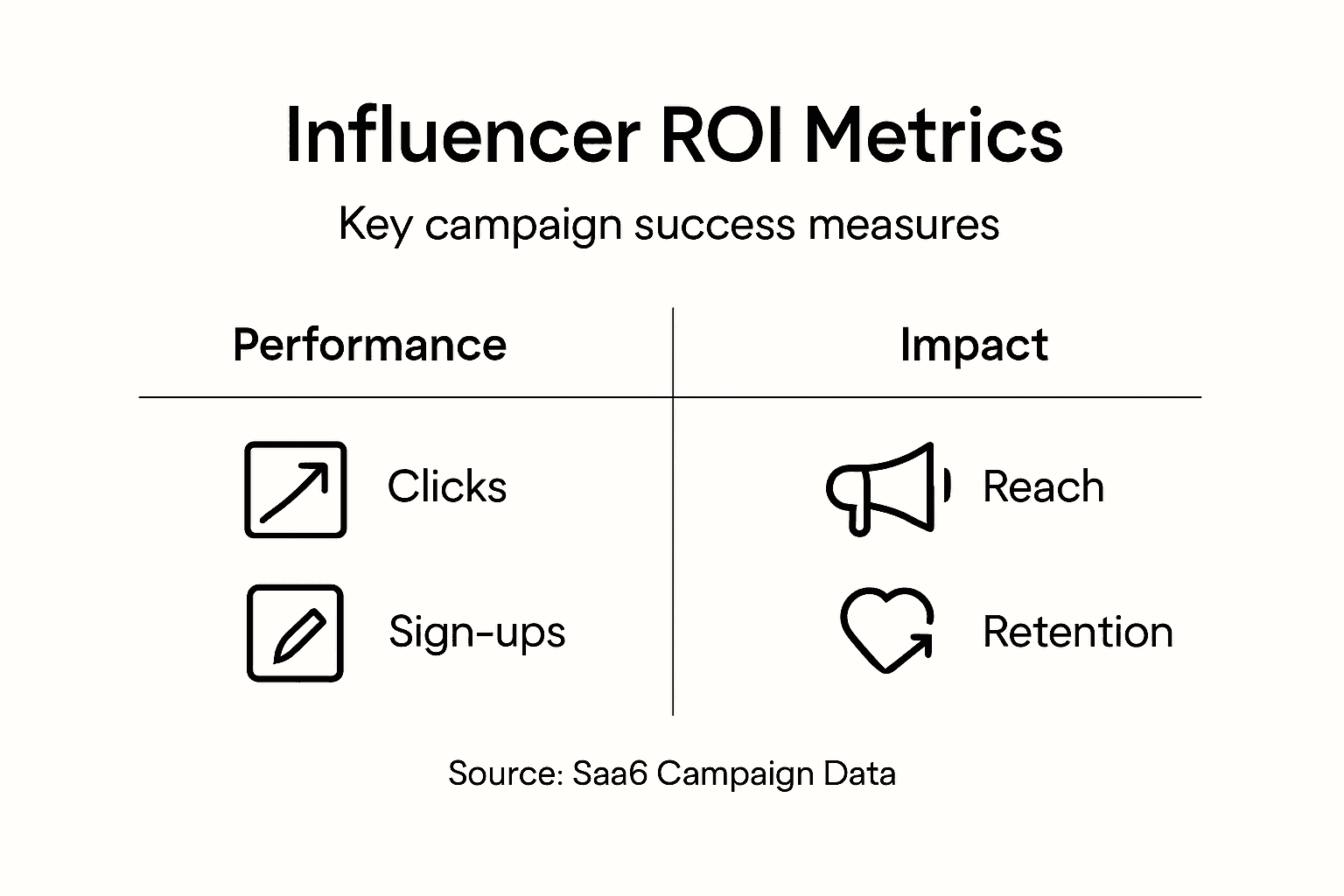
To help ensure effective influencer campaigns, consider these core performance metrics and their significance:
| Metric | What It Measures | Why It Matters |
|---|---|---|
| Audience Engagement | Likes, shares, comments | Reveals content relevance and resonance |
| Conversion Attribution | Signups or sales via influencer | Assesses direct impact on revenue |
| Brand Sentiment | Positive or negative mentions | Indicates reputation effect |
| Content Authenticity | Perceived influencer sincerity | Drives long-term audience trust |
Common campaign pitfalls often emerge from misaligned expectations, inadequate performance tracking, and unclear collaboration parameters. Frequent mistakes include selecting influencers based solely on follower count, failing to establish clear content guidelines, neglecting audience demographic alignment, and overlooking long-term brand reputation implications. Successful SaaS influencer marketing requires strategic partner selection, comprehensive performance monitoring, and flexible campaign design that can adapt to real-time insights.
Pro Tip: Implement multi-touch attribution tracking that captures the entire customer journey, not just direct conversions, to understand the true value of influencer marketing efforts.
Elevate Your SaaS Brand with Strategic Influencer Marketing and Targeted Digital Solutions
Navigating the complex world of influencer marketing requires more than just connecting with popular creators. This article highlights the importance of aligning influencer expertise with your SaaS product’s technical value while carefully tracking performance and compliance. Brands face challenges like selecting genuine partners and measuring ROI beyond basic impressions. At Web Spider Solutions, we understand these hurdles and offer tailored strategies designed to amplify your SaaS brand’s impact through integrated digital campaigns and precise B2B marketing tactics.
Unlock the power of influencer marketing combined with our comprehensive services including SEO, paid advertising, and content marketing to attract targeted leads and boost conversions. Explore expert insights and success stories in our B2B Marketing Archives and discover advanced campaign management techniques in our Paid Advertising Archives. Don’t wait for competitors to capture your audience. Partner with Web Spider Solutions now to start building authentic connections that drive measurable growth and long-term brand authority.
Frequently Asked Questions
What is influencer marketing and how does it work for SaaS brands?
Influencer marketing involves brands collaborating with digital creators who have established credibility and audience trust in specific niches. For SaaS brands, it allows authentic promotion of software products through influencers who can make complex technical features relatable to potential customers.
How can SaaS companies measure the success of their influencer marketing campaigns?
SaaS companies can measure success through key performance indicators such as audience engagement, conversion rates attributed to influencers, brand sentiment, and overall revenue generated through influencer efforts. Advanced analytics and tracking links are crucial for accurate assessment.
What are the key types of influencers that SaaS brands should consider?
SaaS brands can consider various types of influencers, including micro-influencers for their engaged niche audiences, industry experts for credibility, brand ambassadors for ongoing storytelling, and affiliate marketers who focus on driving measurable conversions.
What common pitfalls should SaaS brands avoid in influencer marketing?
Common pitfalls include choosing influencers based solely on follower count without considering audience relevance, failing to establish clear content guidelines, neglecting performance monitoring, and not aligning influencer partnerships with long-term brand goals.
Recommended