






TL;DR:
- A structured B2B workflow aligns content, channels, and ownership across each funnel stage.
- Automation and segmentation enhance lead nurturing, scoring, and faster sales handoff.
- Loop marketing and continuous optimization are essential for SMBs to adapt and grow efficiently.
Most B2B marketing managers at small to medium-sized companies have felt it: you’re running LinkedIn ads, publishing blog posts, sending emails, and still watching leads slip through the cracks. The problem isn’t effort. It’s fragmentation. Without a structured digital marketing workflow, your budget gets scattered across tactics that never quite connect. The buyer journey funnel moves through distinct stages: awareness, consideration, decision, and advocacy. Each stage demands a specific approach. This article gives you a practical, evidence-backed roadmap to build a workflow that actually moves prospects forward and turns marketing spend into measurable pipeline.
Table of Contents
- Map your digital marketing workflow: stages, tools, and essentials
- Preparation: Segment, automate, and personalize your approach
- Execute your workflow: Step-by-step process for lead generation
- Verification and optimization: Measuring performance and maximizing ROI
- Why ‘loop marketing’ and adaptivity trump linear funnels for SMBs
- Take your B2B workflow to the next level with proven solutions
- Frequently asked questions
Key Takeaways
| Point | Details |
|---|---|
| Stage-by-stage workflow | Break your marketing into awareness, consideration, decision, and advocacy for clear pipeline movement. |
| Channel and tech stack priorities | For SMBs, focus on LinkedIn, SEO, content, and automation tools for highest ROI and lead capture. |
| Automation and AI edge | Leverage automation for lead scoring and nurture, then use AI for personalization and routing. |
| Measure what matters | Track pipeline velocity and conversion rates instead of vanity metrics to optimize workflow success. |
| Adopt loop marketing | Continuous, adaptive workflow cycles outperform rigid funnels for SMBs in competitive markets. |
Map your digital marketing workflow: stages, tools, and essentials
Every strong B2B workflow starts with clarity on what happens at each stage and who owns it. Think of your workflow as a production line. Each station has a job. Drop the ball at one station and the whole line slows down.
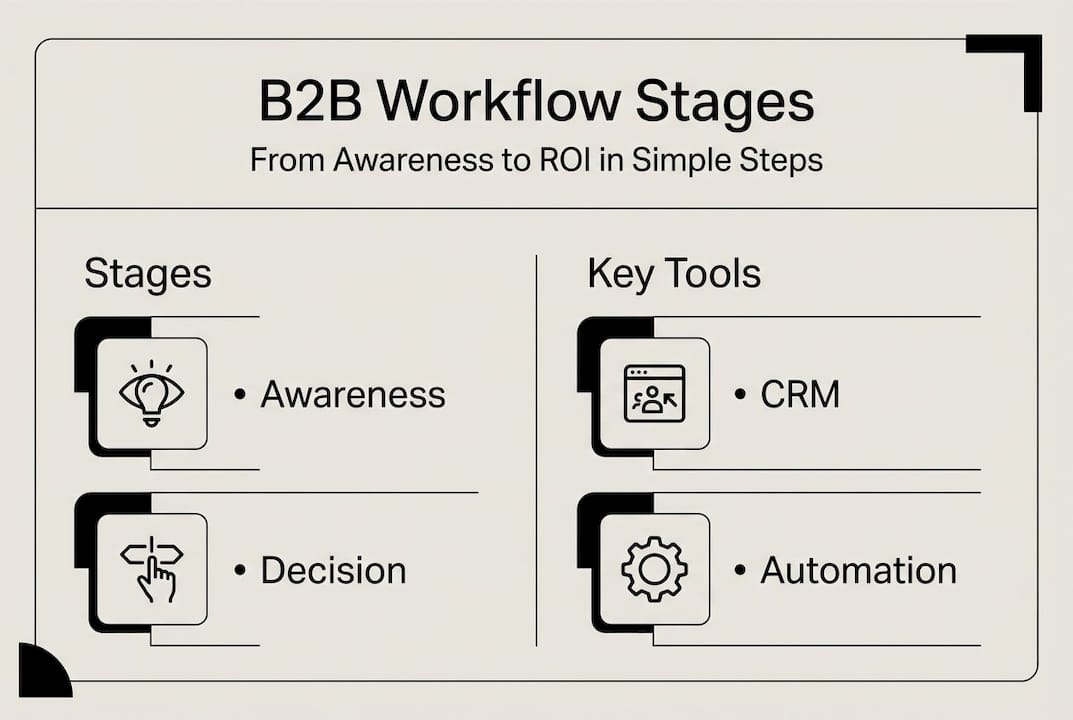
Here’s how the four core stages break down:
- Awareness (TOFU, top of funnel): Content marketing, SEO, LinkedIn posts, paid ads. Goal: get in front of the right people.
- Consideration (MOFU, middle of funnel): Email nurturing, webinars, case studies. Goal: build trust and demonstrate fit.
- Decision (BOFU, bottom of funnel): Demos, free trials, sales calls. Goal: convert qualified leads.
- Advocacy: Referral programs, reviews, case study creation. Goal: turn customers into growth engines.
Budget allocation matters here. A proven framework splits spend at 40/35/25% across TOFU/MOFU/BOFU stages. Most SMBs over-invest in bottom-funnel and wonder why pipeline dries up. Feed the top, and the bottom takes care of itself.
| Workflow stage | Primary channels | Key tools |
|---|---|---|
| Awareness (TOFU) | LinkedIn, SEO, blog content | Google Analytics, LinkedIn Campaign Manager |
| Consideration (MOFU) | Email, webinars, retargeting | HubSpot, Mailchimp, Zoom |
| Decision (BOFU) | Sales outreach, demos | CRM (Salesforce, HubSpot CRM) |
| Advocacy | Reviews, referrals | G2, Trustpilot, referral software |
For digital marketing for B2B to work at scale, your tech stack needs to cover CRM, marketing automation, and visitor identification. Visitor ID tools tell you which companies are browsing your site even before they fill out a form.

Channel priorities for SMBs are clear. LinkedIn and content generate 3x more leads than outbound methods at a lower cost. That’s not a reason to ignore paid ads entirely, but it tells you where to anchor your organic efforts.
Pro Tip: Map each workflow stage to a specific team role. Who creates the content? Who qualifies leads? Who closes? Ambiguity here kills execution speed.
For a broader view of how these pieces fit, the B2B digital marketing overview and B2B marketing strategies for SMEs are worth reviewing before you build your first workflow map.
Preparation: Segment, automate, and personalize your approach
Knowing your stages is one thing. Building the infrastructure to execute them at scale is another. This is where preparation separates high-performing teams from busy ones.
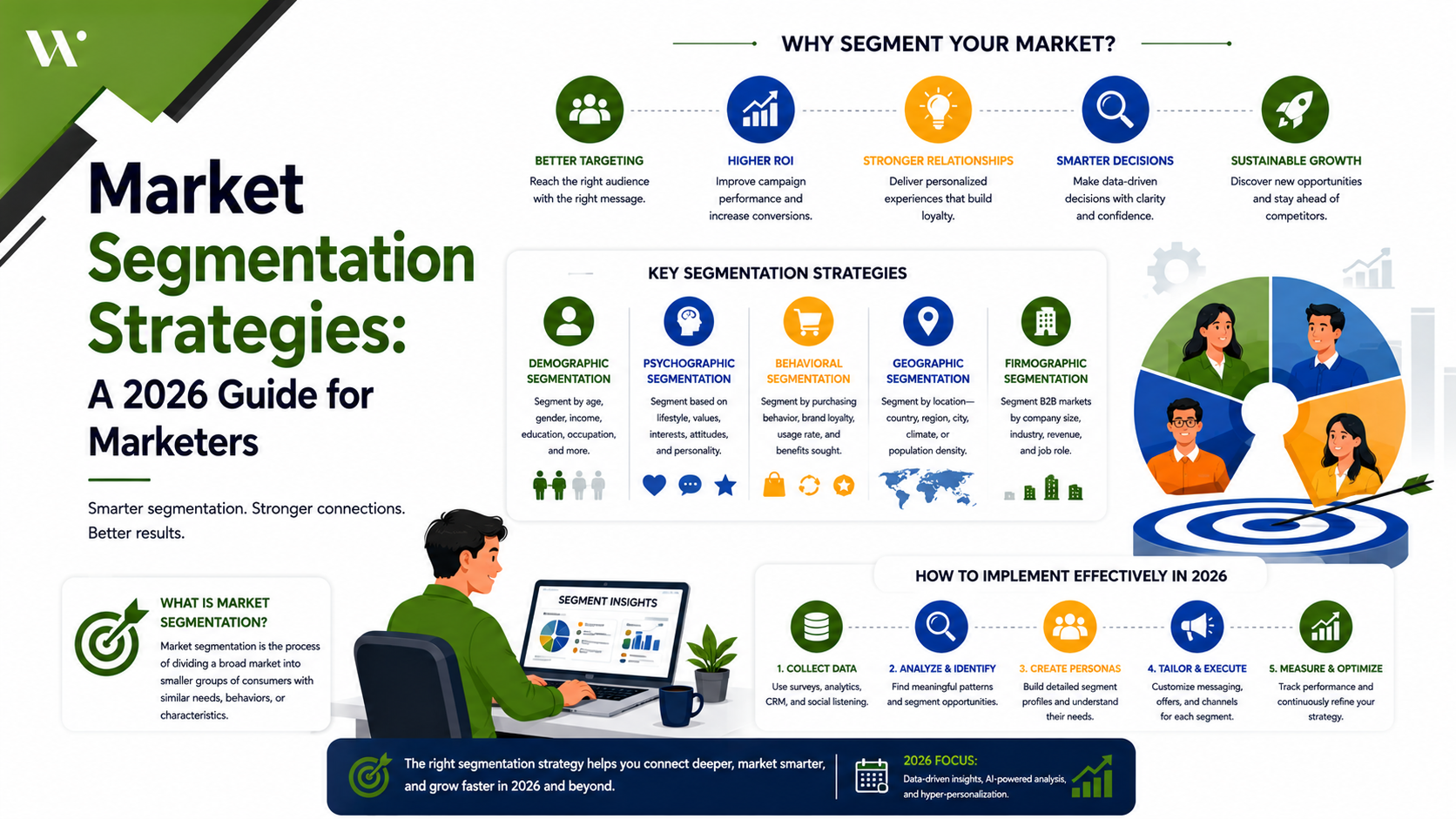
Start with segmentation. Not all leads are equal, and treating them the same destroys conversion rates. Segment your audience by:
- Persona: Decision-maker, influencer, end user.
- Industry: Different pain points require different messaging.
- Behavior: Visited pricing page? Downloaded a case study? Treat them differently.
- Company size: An SMB prospect needs different content than an enterprise buyer.
Once you’ve segmented, automate the friction points. 92% of B2B teams now use automation for lead scoring, nurturing, and re-engagement. If you’re not in that group, you’re managing manually what your competitors handle automatically.
Here’s a practical workflow setup checklist:
- Define lead scoring criteria (job title, page visits, email opens, content downloads)
- Build a nurture sequence for each persona segment
- Set up re-engagement triggers for cold leads (no activity in 30+ days)
- Connect your CRM to your email platform for seamless handoff
- Configure routing rules so leads land with the right sales rep immediately
| Automation task | Tool example | Impact |
|---|---|---|
| Lead scoring | HubSpot, Marketo | Prioritizes high-intent prospects |
| Nurture sequences | ActiveCampaign, Mailchimp | Keeps leads warm automatically |
| Re-engagement | Klaviyo, HubSpot | Recovers dormant leads |
| Lead routing | Salesforce, LeanData | Speeds up response time |
AI enables persona targeting and smart lead routing, but human creativity still drives the messaging that actually resonates. Let automation handle repetition. Let your team handle relationship-building and creative strategy.
Pro Tip: Review your B2B lead nurturing tips before you write a single nurture email. The sequence structure matters as much as the content inside it.
For email specifically, email newsletter best practices will help you set the right cadence and avoid the spam filters that kill deliverability.
Execute your workflow: Step-by-step process for lead generation
Preparation sets the table. Execution is where leads are won or lost. Here’s a step-by-step breakdown of how to run your workflow with precision.
- Create stage-matched content. TOFU needs educational blog posts, LinkedIn articles, and SEO-optimized guides. MOFU needs case studies, comparison content, and email sequences. BOFU needs demos, testimonials, and ROI calculators.
- Publish and distribute. Don’t just post content. Amplify it. Repurpose blog posts into LinkedIn carousels. Turn webinar recordings into short clips.
- Capture leads. Use gated content, contact forms, and chatbots at key pages. Visitor ID tools capture anonymous traffic you’d otherwise lose entirely.
- Score and route. As leads engage, your CRM scores them automatically. High-score leads route to sales. Lower scores stay in nurture.
- Nurture with email sequences. A well-structured sequence of 6 to 8 emails converts 20 to 30% of MQLs, and nurtured leads tend to make larger purchases than cold ones.
- Multi-touch engagement. Combine LinkedIn connection requests, email follow-ups, and retargeting ads. No single channel closes a B2B deal alone.
- Measure at every touchpoint. Open rates, click rates, demo bookings, and pipeline contribution all tell a different part of the story.
“B2B content marketing delivers 3x leads at 62% lower cost versus outbound, while LinkedIn captures 59% of all B2B social leads.”
Common mistakes to avoid:
- Sending the same email sequence to every segment regardless of behavior
- Waiting too long to hand off leads to sales (response time under five minutes dramatically improves conversion)
- Skipping the advocacy stage entirely after a deal closes
- Publishing content without keyword research or distribution strategy
Pro Tip: Review B2B lead generation tips for specific tactics on capturing and qualifying leads faster.
Looking at successful B2B marketing examples can also give you a clearer picture of how real teams execute these steps in competitive markets.
Verification and optimization: Measuring performance and maximizing ROI
Running a workflow without measuring it is like driving with your eyes closed. You need a clear dashboard, the right metrics, and a process for improving what isn’t working.
Start with pipeline velocity. This metric tells you how fast deals move through your funnel. Slow velocity often points to a weak nurture sequence or a misaligned sales handoff. Pipeline velocity and ROI matter far more than page views or follower counts.
Key metrics to track:
- Lead-to-MQL conversion rate: Are the right people entering your funnel?
- MQL-to-SQL conversion rate: Is sales agreeing with your lead quality?
- Cost per lead by channel: Where is your budget working hardest?
- Email sequence engagement: Open rate, click rate, reply rate, and unsubscribe rate
- Closed-won revenue by source: Which channel actually drives revenue?
One overlooked tool is website visitor identification. Visitor ID captures up to 98% of anonymous site traffic, which means you can identify companies browsing your site and target them before they ever fill out a form. This changes the economics of your top-of-funnel entirely.
Pro Tip: Build a simple weekly dashboard with five to seven core metrics. Too many numbers create noise. The goal is to spot patterns fast and act on them.
For channel optimization, compare LinkedIn, SEO, and paid ads side by side on a cost-per-pipeline-opportunity basis, not just cost-per-click. The B2B digital strategy guide walks through how to structure this kind of analysis properly.
Once you’ve identified your top channels, double down. Reallocate budget from underperformers. Refine your content and segmentation based on what’s converting. And build a quarterly review cycle to catch drift before it becomes a problem. Managing B2B digital campaigns with this discipline is what separates teams that scale from those that plateau.
Why ‘loop marketing’ and adaptivity trump linear funnels for SMBs
Here’s something most workflow guides won’t tell you: the linear funnel model is already outdated for competitive SMB markets. Most B2B buyers don’t move neatly from awareness to purchase. They loop back. They re-evaluate. They disappear and return six months later.
The shift to loop marketing as a continuous improvement model is gaining traction precisely because it reflects how buyers actually behave. The framework: Express (identify your position), Tailor (customize for each segment), Amplify (scale what works), Evolve (adapt based on data). Repeat.
For SMBs, this matters more than it does for enterprises. You don’t have the runway to run a 12-month campaign before checking results. You need fast feedback loops, weekly optimizations, and the flexibility to pivot messaging when market conditions shift. A rigid funnel locks you into a plan that may be wrong by Q2.
The teams winning in 2026 aren’t running funnels. They’re running adaptive cycles. Brand performance and pipeline velocity don’t have to conflict. They compound when you treat your workflow as a living system, not a one-time setup. Explore high-ROI strategies for SMEs to see how this translates into practical decisions.
Take your B2B workflow to the next level with proven solutions
Building a high-performance B2B digital marketing workflow takes more than a checklist. It takes the right channel strategy, tools, and ongoing optimization. At Web Spider Solutions, we work with B2B teams in competitive industries to do exactly that. Whether you need better social media management to amplify your LinkedIn presence, or a sharper SEO strategy guide to fuel your top-of-funnel, we have the experience to move the needle. Explore the full range of B2B digital marketing solutions we offer and find out how we can help your team generate more pipeline with less wasted effort.
Frequently asked questions
What stages make up a typical B2B digital marketing workflow?
A typical workflow includes awareness, consideration, decision, and advocacy, each mapped to a specific buyer journey stage with distinct content types and conversion goals.
Which channels deliver the most leads for SMBs in B2B marketing?
LinkedIn, SEO, and content marketing are the top performers, with LinkedIn responsible for 59% of B2B social leads and content generating three times more leads than outbound methods.
How can automation improve my B2B digital marketing workflow?
92% of B2B teams use automation to handle lead scoring, nurture sequences, segmentation, and routing, which significantly boosts efficiency and conversion rates without adding headcount.
What are common mistakes when setting up B2B workflows?
The most damaging errors include skipping segmentation, tracking vanity metrics instead of pipeline velocity, and neglecting the advocacy stage after a deal closes.
How can I measure ROI for my B2B digital marketing workflow?
Focus on pipeline velocity, MQL-to-SQL conversion rates, and closed-won revenue by source rather than surface-level metrics like page views or social followers, since ROI matters more than vanity numbers.