






TL;DR:
- A structured digital marketing strategy links tactics to business outcomes and fosters team alignment.
- SMART goals, audits, competitive analysis, and proven frameworks guide SMBs through planning and optimization.
- Ongoing flexibility, data-driven adjustments, and customer value focus drive sustained digital marketing success.
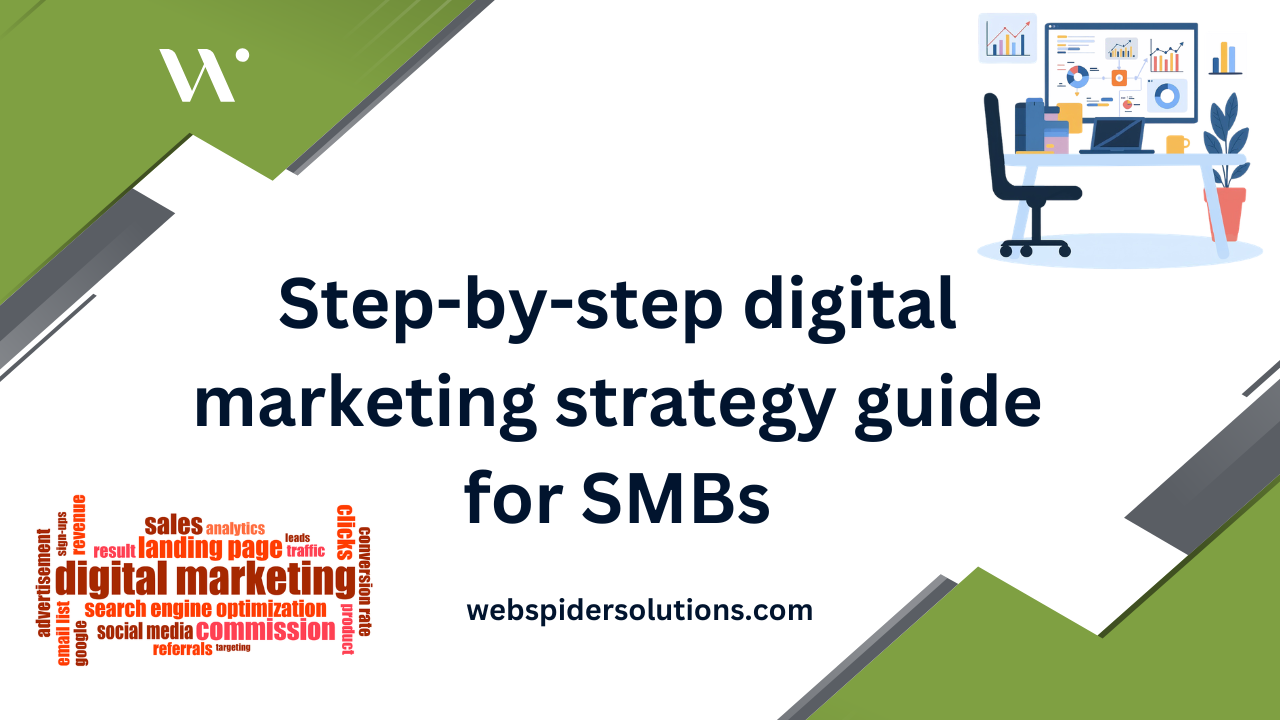
Most small and medium-sized businesses run their digital marketing like a collection of unrelated experiments. A blog post here, a paid ad there, a social campaign that nobody measured. The result is wasted budget and zero clarity on what actually drives growth. A structured, step-by-step digital marketing strategy changes that. It connects every tactic to a business outcome, keeps teams aligned, and creates a feedback loop that compounds over time. This guide walks you through each major phase, from goal-setting to budget optimization, using proven frameworks built for SMBs operating in competitive sectors where every dollar and every click must count.
Table of Contents
- Define goals and prepare your foundation
- Audit your current performance and competitive landscape
- Map channels and tactics using proven frameworks
- Develop content strategy and personalize the customer journey
- Budget, analytics, and optimization for ROI
- Our take: The real driver of digital marketing success
- Unlock your digital growth — solutions for every step
- Frequently asked questions
Key Takeaways
| Point | Details |
|---|---|
| Set SMART goals | Start with clear, measurable goals tightly aligned to business outcomes before launching tactics. |
| Prioritize orchestration | Integrate multiple channels for maximum impact, using frameworks like RACE for structure. |
| Continuously optimize | Monitor your KPIs and iteratively refine strategies using data and AI for sustained ROI. |
| Invest in personalization | Map content to the customer journey and use first-party data to create targeted experiences. |
Define goals and prepare your foundation
With your strategy context in mind, the first step is clarity and alignment. Most digital marketing initiatives fail not because of poor execution, but because nobody agreed on what success looks like before the work started. Vague goals like “grow our online presence” give teams nothing measurable to aim for. Without a target, you cannot know whether your efforts are working or just keeping people busy.
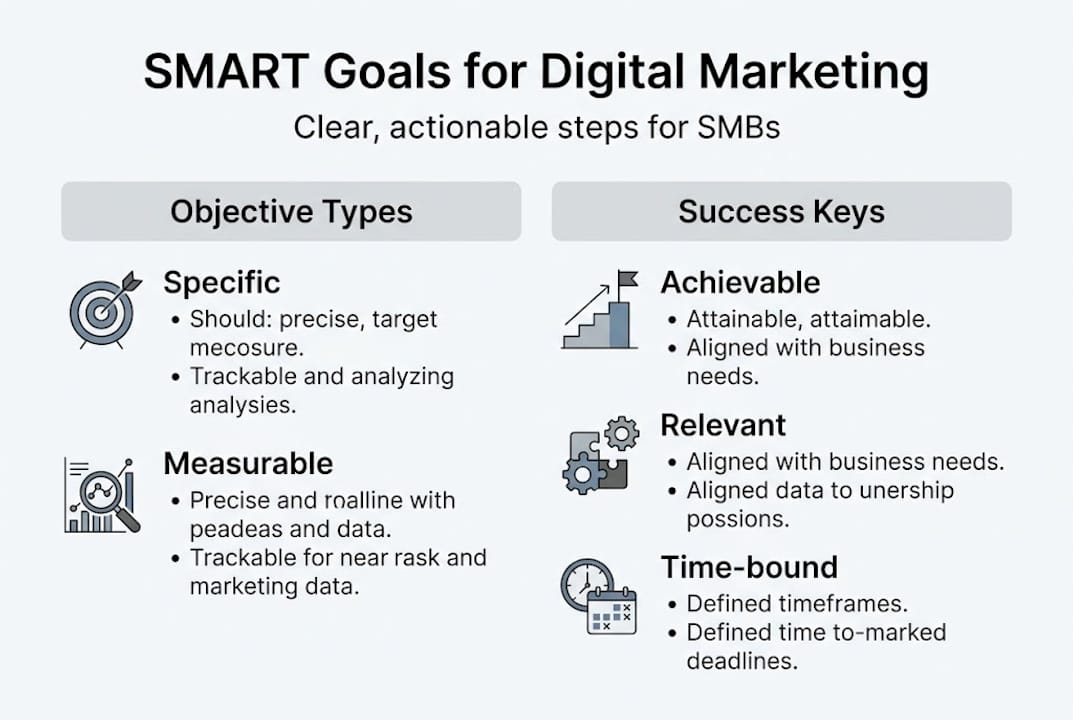
The solution is setting SMART objectives: goals that are Specific, Measurable, Achievable, Relevant, and Time-bound. According to Gartner digital strategy advice, the most effective organizations set clear goals aligned with business outcomes using SMART criteria before any campaign launches. This means translating a business goal like “increase revenue” into a digital objective like “generate 150 qualified leads per month via organic search by Q3.”
Here is a quick reference for how business goals translate into digital objectives and trackable KPIs:
| Business goal | Digital objective | Key KPI |
|---|---|---|
| Increase revenue | Generate more qualified leads | Cost per lead, lead-to-close rate |
| Improve brand awareness | Grow organic traffic | Sessions, impressions, share of voice |
| Retain existing customers | Reduce churn via email | Email open rate, repeat purchase rate |
| Enter a new market | Build local search visibility | Local rankings, map pack appearances |
Before you launch anything, follow these steps to lock in your foundation:
- Align your marketing team and leadership on 2 to 3 core business priorities for the next 12 months.
- Write a SMART goal for each priority and assign an owner.
- Identify the KPIs that will confirm progress, not just activity.
- Review digital marketing basics to ensure your team shares a common vocabulary.
- Document everything in a single shared strategy brief.
Pro Tip: Avoid vanity metrics like total followers or page views unless they directly connect to a revenue goal. If a number cannot influence a business decision, it is not worth tracking.
Audit your current performance and competitive landscape
With goals set, it is essential to understand your current position. Skipping an audit is one of the most common and costly mistakes SMBs make. You might invest heavily in paid search while your website converts at 0.8%, or you might ignore email entirely when it is already your highest-performing channel. An audit surfaces these blind spots before they drain your budget.

A proper digital marketing audit steps process covers four areas: website performance (speed, UX, conversion rate), organic search (rankings, traffic, backlink profile), paid advertising (click-through rate, cost per acquisition, ROAS), and social media (engagement rate, follower growth, content performance). The 2026 marketing audit guide recommends pulling at least 90 days of data for each channel before drawing conclusions.
Competitor analysis runs parallel to your own audit. Track these metrics for your top 3 competitors:
- Estimated organic traffic and top-ranking keywords
- Paid ad spend and messaging angles
- Content publishing frequency and formats
- Social engagement rates and platform focus
- Backlink volume and referring domain quality
Here is a simplified comparison framework:
| Metric | Your brand | Competitor A | Competitor B |
|---|---|---|---|
| Monthly organic sessions | 4,200 | 18,500 | 9,800 |
| Domain authority | 28 | 47 | 39 |
| Avg. conversion rate | 1.2% | 2.8% | 2.1% |
| Cost per lead (paid) | $74 | $51 | $63 |
As Gartner peer benchmarks confirm, competitive analysis and auditing current performance are foundational to any effective strategy.
Pro Tip: Do not just copy what competitors are doing well. Look for the gaps they are ignoring. A competitor ranking for 500 keywords does not mean those are the right keywords for your business model.
Map channels and tactics using proven frameworks
Armed with your audit, it is time to select your marketing routes. The mistake most SMBs make here is choosing channels based on what is trending rather than what fits their audience and resources. Spreading thin across six platforms is worse than going deep on two.
Start by categorizing your channel options:
- Owned channels: Website, blog, email list, app. These are long-term assets you control.
- Earned channels: SEO, PR, word-of-mouth, organic social. These take time but compound.
- Paid channels: Search ads, social ads, display, remarketing. Fast results, ongoing cost.
The RACE framework details offer a practical structure: RACE stands for Reach, Act, Convert, and Engage. Each stage maps to specific tactics and channels, making it easier to spot gaps in your current mix. For example, if you have strong Reach but weak Convert metrics, you know where to focus next.
For SMBs specifically, rising paid costs (CPC has increased roughly 20% in competitive sectors) mean owned channels deserve priority as long-term assets. Paid channels should amplify what is already working organically, not substitute for it.
Follow these steps to build your multichannel plan using an eight-step strategy framework:
- Map each RACE stage to 1 to 2 primary channels based on your audience data.
- Define the specific tactics and content formats for each channel.
- Set a 90-day roadmap with clear milestones rather than a rigid annual plan.
- Assign channel owners and review cadences.
- Build in integration points so channels reinforce each other rather than operate in silos.
The strategy planning for growth approach works best when channels share data and messaging, not when each team runs its own disconnected campaign.
Develop content strategy and personalize the customer journey
Next, convert strategic plans into actionable content tailored to your audience. Content is not just blog posts. It is every piece of communication that moves a potential customer from unaware to loyal. The key is mapping content types to the right stage of the journey.
Here is how to align content with each stage:
- Awareness: Blog articles, short-form video, social posts, SEO-driven guides
- Consideration: Comparison pages, webinars, email nurture sequences, case studies
- Decision: Product demos, testimonials, free trials, detailed pricing pages
- Retention: Onboarding emails, loyalty content, exclusive updates, community access
Personalization is what separates average content programs from high-performing ones. When you tailor messaging to behavior, industry, or stage, conversion rates climb. Customer journey personalization and integrated content strategy are now baseline expectations, not differentiators.
The challenge for SMBs is resource constraints. You do not need to create everything from scratch. Repurpose a strong blog post into a LinkedIn carousel, an email sequence, and a short video script. Small-scale automation tools can trigger the right content at the right time without a large team.
Privacy regulations are reshaping personalization options. Third-party cookies are fading, and 80% of marketers struggle with multichannel attribution. The answer is building your first-party data infrastructure now, before it becomes urgent. Review your marketing strategy steps to ensure data collection is built into every touchpoint.
Pro Tip: Your email list, CRM data, and on-site behavior are your most valuable personalization assets. Invest in capturing and organizing first-party data today. It will power your targeting capabilities for years.
Budget, analytics, and optimization for ROI
Finally, sustain your strategy with smart investments, analytics, and continuous improvement. Budget decisions made without data are guesses. Budget decisions made with a clear analytics framework are investments.
According to Gartner CMO budget trends, marketing budgets have flatlined at 7.7% of overall company revenue, with AI delivering a 22% productivity gain but only 1% of teams at true maturity. The implication is clear: reinvest AI-driven savings into branding and performance channels rather than cutting budgets.
Here is a practical starting allocation for SMBs:
| Channel | Recommended budget share |
|---|---|
| Paid media (search, social) | 30 to 35% |
| SEO and content | 25 to 30% |
| Email and automation | 10 to 15% |
| Analytics and tools | 10% |
| Testing and experimentation | 5 to 10% |
Digital channels now account for 61.1% of total marketing spend across industries, with paid media consuming roughly 30.6% of total marketing budgets.
“Average conversion rates across digital channels sit at 2.35%, with email averaging 2 to 5% and paid search reaching 3 to 4% for well-optimized campaigns.” Track conversion rate benchmarks against these numbers to know where you stand.
For ongoing ROI tracking guide implementation, follow this cycle:
- Set baseline KPIs before any campaign launches.
- Run campaigns for a minimum of 30 days before drawing conclusions.
- Identify the top and bottom performing channels each month.
- Reallocate budget from underperformers to proven channels.
- Test one new variable per cycle (creative, audience, offer, landing page).
Use boosting marketing ROI strategies and measuring marketing ROI frameworks to build a reporting rhythm your leadership team can actually act on.
Our take: The real driver of digital marketing success
With tactical steps covered, let us reframe what truly powers digital marketing wins. Most strategy guides hand you a checklist and call it done. But the SMBs that consistently outperform their competitors are not the ones with the longest channel list. They are the ones who stay obsessively focused on customer value and treat their strategy as a living system, not a static document.
The uncomfortable truth is that flexibility beats perfection. A rigid annual plan built on last year’s assumptions will underperform a 90-day roadmap that adapts to real data every quarter. We have seen businesses in highly competitive sectors gain significant ground not by outspending rivals, but by being faster to learn and adjust.
Right-sized innovation matters more than copying enterprise playbooks. What works for a Fortune 500 brand with a $10 million budget often fails at the SMB level. Focus on beyond the basics thinking: prioritize customer lifetime value, build genuine relationships through personalized journeys, and measure what actually connects to revenue. That mindset, not any single tactic, is the real competitive advantage.
Unlock your digital growth — solutions for every step
Ready to accelerate your digital growth with expert-backed guidance? Web Spider Solutions offers the tools, frameworks, and hands-on expertise to move you from planning to measurable results. Explore our advanced SEO strategy guide to build lasting organic visibility, or tap into our social media management solutions to create consistent, high-impact brand presence across channels. For teams focused on financial outcomes, our marketing ROI boost resources provide the analytics frameworks and optimization tactics you need to justify every dollar spent. Whether you are starting from scratch or refining an existing strategy, we are built to help competitive SMBs grow with precision and confidence.
Frequently asked questions
What is the first step in building a digital marketing strategy?
The first step is defining clear, SMART goals tied directly to business outcomes. Without this foundation, every tactic that follows lacks direction and measurable purpose.
Which frameworks can help map out marketing channels and tactics?
The RACE framework (Reach, Act, Convert, Engage) is one of the most practical tools for coordinating channels and campaigns across the full customer journey.
How much should SMBs budget for digital marketing in 2026?
Digital channels account for 61.1% of total marketing spend on average, but your specific allocation should reflect your business goals, competitive intensity, and current channel performance.
What are the most important KPIs to track for digital marketing success?
Prioritize conversion rate, customer lifetime value, and overall ROI. These three metrics connect digital activity directly to business health and guide smarter budget decisions.
How can SMBs keep their digital strategy competitive over time?
Review results on a 90-day cycle, embrace multichannel orchestration, and use AI tools and fresh data to optimize iteratively rather than waiting for an annual planning window.
Recommended