






Pouring budget into paid ads and SEO while watching your revenue stay flat is one of the most frustrating experiences in digital marketing. Many business owners assume that more website visitors automatically means more sales, but that logic breaks down fast when you look at the numbers. The real question is not how many people visit your site, it is how many of them actually do something valuable when they get there. Conversion rate is the metric that answers that question, and understanding it can completely change how you allocate your marketing budget and grow your business.
Table of Contents
- What is conversion rate and why does it matter?
- How to calculate your conversion rate
- Conversion rate benchmarks for different industries
- Top strategies to increase your conversion rate
- Common conversion rate pitfalls to avoid
- Case studies: Real-world conversion rate improvements
- Get expert help to maximize your conversion rate
- Frequently asked questions
Key Takeaways
| Point | Details |
|---|---|
| Conversion rate basics | Conversion rate measures the percentage of visitors who complete a desired action on your site. |
| Measurement matters | Calculating and tracking conversion rate reveals what’s working and where to improve. |
| Benchmark for success | Compare your results to industry averages but focus on your own ongoing improvement. |
| Boost with clear actions | Simple changes like better calls to action and streamlined design can lift conversion rates fast. |
| Avoid common mistakes | Steer clear of slow load times and complex processes to keep your conversions rising. |
What is conversion rate and why does it matter?
Conversion rate is the percentage of website visitors who complete a desired action. That action could be making a purchase, signing up for a newsletter, downloading a resource, or filling out a lead form. It is one of the clearest signals of whether your marketing is actually working.
The conversion rate meaning goes beyond a simple percentage. It tells you how well your website, messaging, and offer are aligned with what your visitors actually want. A site with 50,000 monthly visitors but a 0.5% conversion rate is underperforming compared to a site with 10,000 visitors and a 4% rate.
“Conversion rate is a core metric for evaluating marketing effectiveness.”
Here is why why conversion rate matters more than raw traffic numbers:
- It reveals the true return on your marketing spend
- It identifies friction points in your customer journey
- It helps you grow revenue without increasing ad budgets
- It gives you a measurable baseline for testing improvements
According to the conversion rate definition from Hotjar, only about 2 to 3% of website visitors typically convert on any given visit. That means 97% of your traffic leaves without taking action. Even a small improvement, say from 2% to 3%, represents a 50% increase in conversions from the same traffic volume. That multiplier effect is why smart marketers obsess over this number.
How to calculate your conversion rate
The math is straightforward. Conversion rate is calculated as conversions divided by total visitors, multiplied by 100.
Formula: Conversion Rate = (Conversions / Total Visitors) x 100
For example, if your landing page received 2,000 visitors last month and 60 of them submitted a contact form, your conversion rate is 3%.

Here is a quick reference table showing how different business goals map to specific conversion actions:
| Business type | Goal | Conversion action |
|---|---|---|
| Ecommerce store | Sell products | Completed purchase |
| SaaS company | Grow user base | Free trial signup |
| B2B service firm | Generate leads | Contact form submission |
| Content publisher | Build audience | Newsletter subscription |
| Local business | Drive calls | Phone number click |
To calculate your rate accurately, follow these steps:
- Define your conversion goal clearly before you start measuring
- Set up goal tracking in Google Analytics or your preferred platform
- Pull total visitor data for the same time period as your conversions
- Apply the formula above to get your percentage
- Segment by traffic source to see which channels convert best
One common mistake is mixing up sessions and unique visitors. Sessions count every visit, including repeat visits from the same person. Unique visitors count each person once. For ecommerce conversion rate tracking, using sessions is standard practice, but always be consistent so your data stays comparable over time. You can also cross-reference your approach with Optimizely’s conversion rate guide for additional clarity.
Pro Tip: Before you set up any tracking, write down exactly what action counts as a conversion for your business. Vague goals produce misleading data.
Conversion rate benchmarks for different industries
Knowing your conversion rate is only useful when you have something to compare it against. Industry benchmarks vary widely, with ecommerce averaging 2 to 3% and financial or services sites often performing higher.
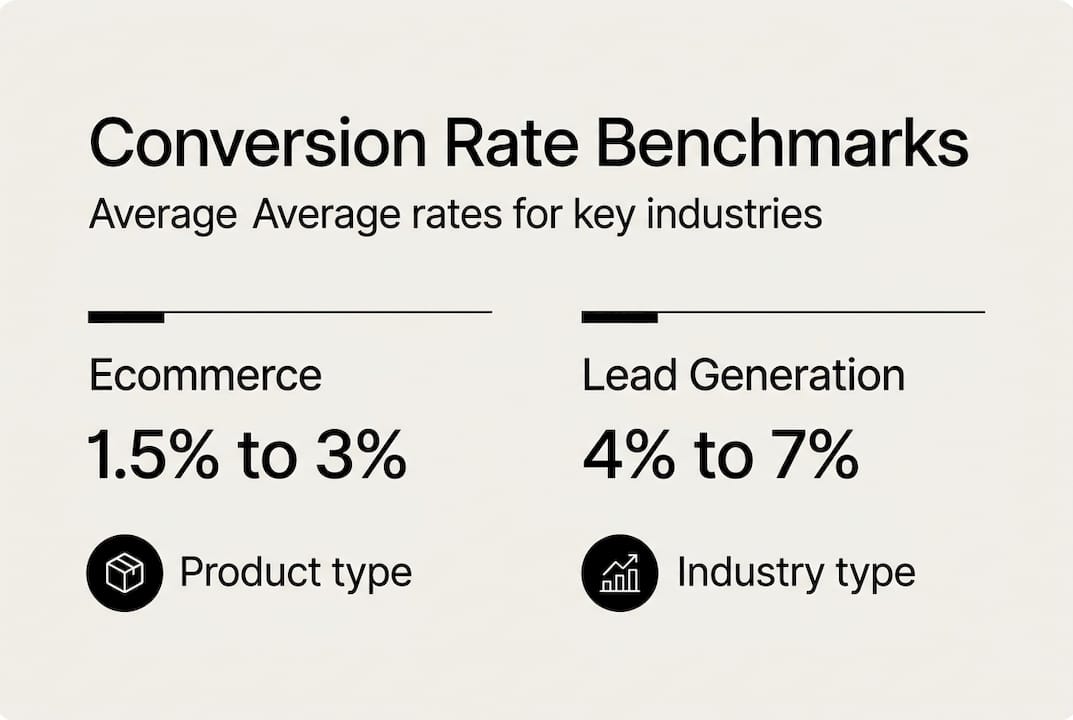
Here is a comparison of average conversion rates across common sectors:
| Industry | Average conversion rate | Notes |
|---|---|---|
| Ecommerce (retail) | 1.5% to 3% | Varies by product category |
| B2B services | 2% to 5% | Higher intent traffic |
| SaaS (free trial) | 5% to 7% | Lower friction offer |
| Finance and insurance | 5% to 10% | Strong purchase intent |
| Travel and hospitality | 2% to 4% | Seasonal fluctuations |
| Legal services | 3% to 6% | High-value leads |
SaaS companies often see signup rates above 7% for free trials because the barrier to entry is low. But demo booking rates for the same companies can drop to 1 to 2% because the commitment level is higher.
Several factors influence where your rate lands:
- Audience intent: Visitors from branded search convert far better than cold social traffic
- Offer clarity: A confusing value proposition kills conversions regardless of traffic quality
- Device type: Mobile users often convert at lower rates due to friction in checkout or form flows
- Page load speed: Every extra second of load time reduces conversions measurably
Do not chase a competitor’s benchmark blindly. A typical ecommerce conversion rate for luxury goods will look very different from one for everyday consumables. Context always matters.
Top strategies to increase your conversion rate
Conversion rate optimization involves improving site design, messaging, and user experience to increase the percentage of visitors who convert. The good news is that many of the most effective tactics do not require a full site rebuild.
Here are proven methods to move the needle:
- Sharpen your calls to action: Vague buttons like “Submit” or “Click Here” underperform. Specific call to action effectiveness improves when you use action-oriented language like “Get my free quote” or “Start saving today”
- Reduce form fields: Every additional field you ask visitors to fill out reduces completion rates. Ask only for what you genuinely need at that stage
- Add social proof: Customer reviews, case study snippets, and trust badges near your CTA reduce hesitation and build credibility
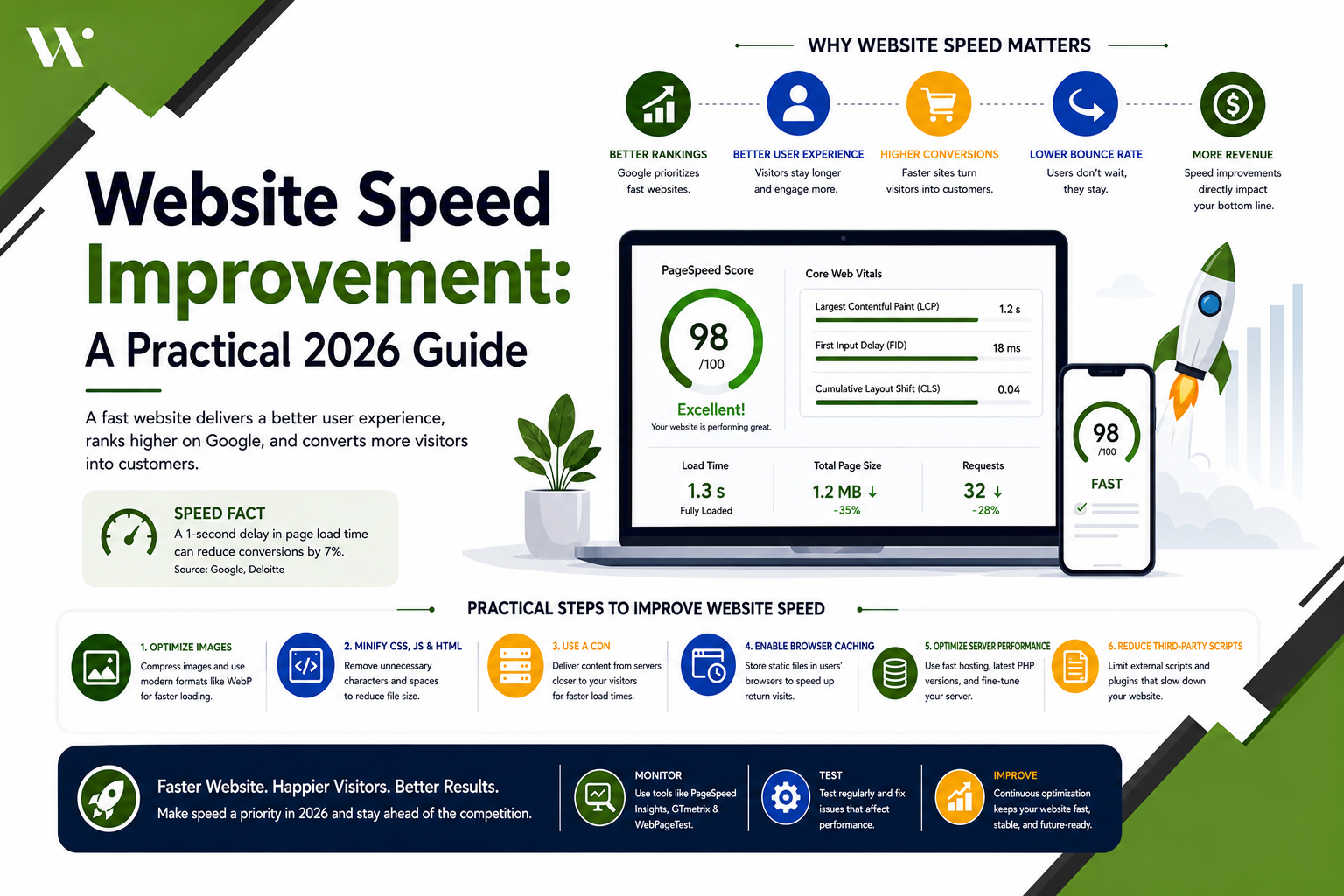
- Improve page speed: A one-second delay in page load can reduce conversions by up to 7%. Compress images, minimize scripts, and use a content delivery network
- Optimize for mobile: More than half of web traffic now comes from mobile devices. If your forms or checkout flow are clunky on a phone, you are losing sales
- Use A/B testing: Run controlled experiments on headlines, images, and button colors before making permanent changes
For a deeper breakdown of what works, the conversion optimization guide from Backlinko covers advanced tactics with supporting data. You can also explore proven CRO strategies tailored to different business models.
Pro Tip: Never copy a competitor’s CTA or page layout just because it looks polished. What works for their audience may not work for yours. Test everything against your own data.
Common conversion rate pitfalls to avoid
Even well-intentioned optimization efforts can stall when common mistakes go unchecked. Conversion rates can stagnate due to slow load times, complex processes, or unclear messaging.
Here are the most frequent pitfalls and how to fix them:
- Ignoring mobile users: Test your entire conversion flow on multiple devices every time you make a change
- Overloading forms: Audit your forms quarterly and remove any field that is not essential to your follow-up process
- Skipping analytics review: Set a recurring calendar reminder to review your conversion data at least monthly
- Abandoning cart recovery: Set up automated email sequences for users who add items to a cart but do not complete checkout
- Neglecting page speed: Use Google PageSpeed Insights regularly and treat speed as a conversion issue, not just a technical one
“The biggest conversion killer is often the thing you stopped noticing because it has always been there.”
Reviewing website design best practices can help you spot layout and UX issues that quietly suppress your rate. You can also cross-check your process against a list of CRO mistakes to avoid from VWO for a broader perspective.
Case studies: Real-world conversion rate improvements
Theory is useful, but real examples make the path forward clearer. Here are three mini case studies showing how targeted changes produced measurable conversion lifts.
| Sector | Problem | Tactic applied | Conversion lift |
|---|---|---|---|
| Ecommerce (apparel) | High cart abandonment | Simplified checkout, added trust badges | +34% |
| B2B software | Low demo bookings | Rewrote CTA copy, added social proof | +22% |
| Hospitality | Low direct bookings | Redesigned booking flow, added urgency cues | +18% |
Key takeaways from these examples:
- Small copy changes on a CTA can outperform a full page redesign
- Trust signals placed near the conversion point have an outsized impact
- A conversion-focused redesign in the hospitality industry led to a measurable lift in direct bookings by reducing steps in the booking process
- Urgency cues like limited availability or time-sensitive offers work best when they are genuine, not manufactured
These results are not outliers. They reflect what happens when businesses stop guessing and start testing with clear goals. Exploring hotel digital marketing strategies shows how even traditional industries can achieve strong conversion gains with the right approach.
Get expert help to maximize your conversion rate
Understanding conversion rate is the first step. Consistently improving it requires ongoing testing, data analysis, and strategic adjustments that most in-house teams struggle to maintain alongside daily operations. At Web Spider Solutions, we offer dedicated conversion rate optimization services designed to identify exactly where your visitors drop off and what changes will bring the highest return. Whether you need a full audit, a targeted campaign, or guidance on improving website conversion rates, our team builds strategies around your specific goals and audience. Pair that with a solid SEO strategy guide and you have a foundation for sustainable, compounding growth.
Frequently asked questions
What is a good conversion rate for my website?
A good conversion rate typically falls between 2 and 5%, but the right target depends on your industry, traffic sources, and the specific action you are measuring.
How can I improve my conversion rate fast?
Streamline your forms, clarify your calls to action, and speed up your site load time. These three changes often produce the fastest results, as better design and focused messaging directly reduce friction for visitors.
Does more web traffic guarantee higher conversions?
No. Quality and experience drive conversion, not pure volume. Sending unqualified traffic to a poorly optimized page will not move your conversion rate.
What types of conversions should I track?
Track actions that are meaningful to your specific business model. Conversions depend on your business objective and can include purchases, signups, downloads, phone calls, or contact form submissions.
Should I focus on conversion rate or traffic?
Both matter, but optimizing conversion rate typically delivers faster revenue gains because it extracts more value from the visitors you already have.