







Most business owners think website design is about choosing pretty colors and fonts. The reality? Strategic design choices directly shape how customers perceive your brand, influence their trust, and determine whether they stay or leave within seconds. For small and medium businesses competing in crowded markets, effective website design drives brand visibility and user engagement far beyond surface aesthetics. Your website is your digital storefront, and every design element either strengthens or weakens your brand position. This article reveals proven strategies to leverage website design as a competitive advantage, helping you build recognition, earn trust, and convert visitors into loyal customers.
Table of Contents
- Key takeaways
- Understanding the impact of website design on branding
- Key elements of website design that boost brand visibility
- Advanced design strategies to differentiate your brand
- Measuring and optimizing website design for brand success
- Enhance your brand with expert website design and digital marketing
- What are the most important website design elements for branding?
- How can website design improve user experience and brand trust?
- What metrics should I track to measure website branding success?
Key Takeaways
| Point | Details |
|---|---|
| Brand consistency | Consistent color schemes, typography, and imagery across pages build recognition and trust over time. |
| Mobile responsiveness | Designing for mobile devices increases audience reach and helps search engines and users access your site smoothly. |
| SEO integrated design | Responsive design and SEO friendly structures work together to improve visibility in search results. |
| Clear navigation | A well structured menu guides visitors to key actions and reduces abandonment. |
| Brand style guide | Documenting exact color codes fonts and image guidelines ensures consistency across pages and future updates. |
Understanding the impact of website design on branding
Your website creates the first impression that shapes how potential customers perceive your business. Within 3 seconds, visitors form judgments about your credibility, professionalism, and trustworthiness based purely on design. For SMBs in competitive industries, this snap judgment can mean the difference between a new customer and a lost opportunity.
Consistent visual branding elements build recognition over time. When your color scheme, typography, and imagery align across every page, visitors subconsciously connect these elements with your brand values. This consistency transforms casual browsers into familiar prospects who remember you when they’re ready to buy. Design choices directly influence user behavior, from how long someone stays on your site to whether they click your call to action.
Aligning design with your brand values reinforces your market positioning. A law firm needs different visual language than a creative agency, and your design should communicate your unique value proposition instantly. Consider these essential design elements that shape brand perception:
- Color scheme that reflects brand personality and industry expectations
- Typography choices that balance readability with character
- Imagery style that resonates with your target audience
- Layout structure that guides visitors toward conversion goals
- White space usage that creates breathing room and focus
Pro Tip: Create a brand style guide documenting your exact color codes, fonts, and image guidelines before starting any design work. This ensures consistency across all pages and future updates, strengthening brand recognition with every visitor interaction.
The connection between design and branding goes deeper than visual appeal. Your website design business growth impact extends to how users interact with content, navigate between pages, and ultimately perceive your authority in your industry. Strategic design transforms your website from a digital brochure into a powerful branding tool that works 24/7 to build trust and drive results.
Key elements of website design that boost brand visibility
Mobile responsiveness has become non-negotiable for brand visibility. Over 60% of web traffic now comes from mobile devices, and search engines penalize sites that don’t adapt seamlessly to smaller screens. When your design responds fluidly to different devices, you’re not just improving user experience but also expanding your potential audience and demonstrating that your brand values accessibility.
SEO integration in design architecture directly impacts how search engines understand and rank your content. Responsive design and SEO-friendly structures work together to improve visibility in search results. Clean code, proper heading hierarchy, and strategic internal linking help search engines crawl your site efficiently while making it easier for visitors to find relevant information. This dual benefit positions your brand in front of more qualified prospects.
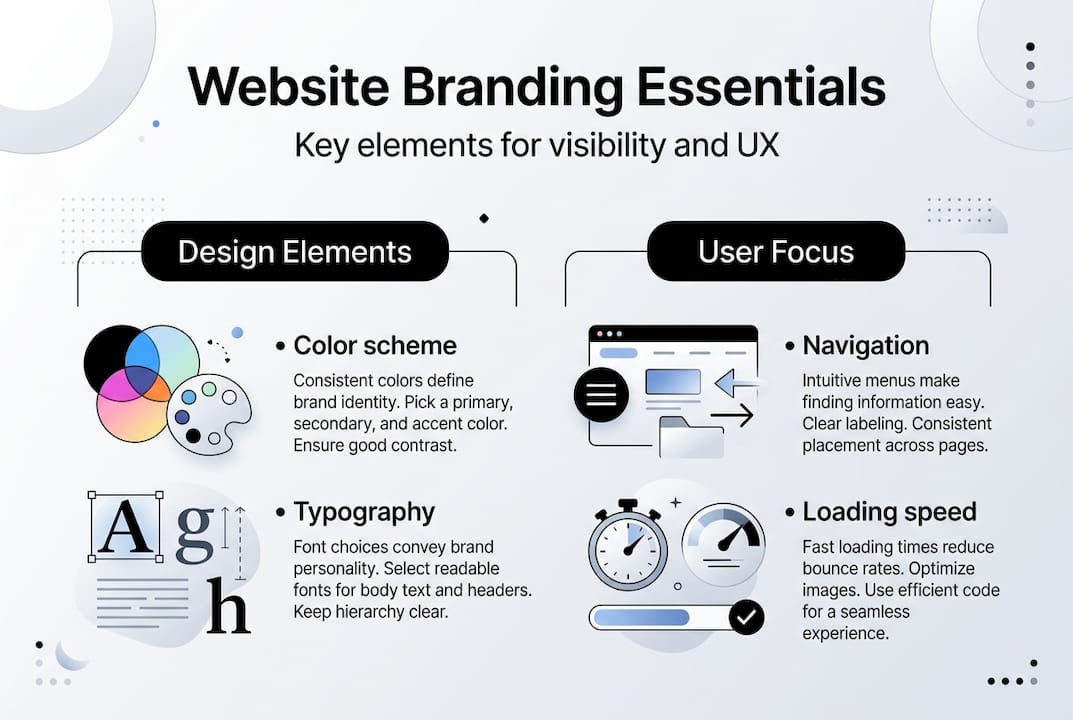
Navigation clarity determines whether visitors explore your site or abandon it in frustration. A well-structured menu system builds trust by showing visitors you respect their time and understand their needs. Clear navigation reduces cognitive load, allowing users to focus on your brand message rather than figuring out how to find basic information. This seamless experience translates directly into longer sessions and higher conversion rates.

| Design Element | Brand Visibility Impact | User Experience Benefit |
|---|---|---|
| Mobile Responsiveness | Expands reach across devices | Ensures consistent experience |
| SEO Integration | Improves search rankings | Makes content discoverable |
| Clear Navigation | Reduces bounce rates | Simplifies user journey |
| Fast Loading Speed | Decreases abandonment | Creates positive first impression |
| Accessibility Features | Broadens audience | Demonstrates brand values |
Loading speed affects both search rankings and user perception of your brand. When pages load in under 2 seconds, visitors associate your brand with efficiency and professionalism. Slow sites communicate carelessness, regardless of how polished your design appears. Optimizing images, minimizing code, and leveraging browser caching are technical design choices that directly impact brand credibility.
Accessibility features expand your audience while demonstrating social responsibility. Implementing proper contrast ratios, alt text for images, and keyboard navigation shows that your brand values inclusivity. These features also improve overall usability for all visitors, not just those with disabilities. When you design with accessibility in mind, you’re building a stronger brand reputation and reaching customers your competitors might overlook.
Pro Tip: Test your website on actual mobile devices, not just desktop browser simulators. Real-world testing reveals navigation issues and loading problems that only appear on specific devices, helping you deliver a consistently excellent brand experience.
The 2026 website redesign checklist for success emphasizes that these elements work synergistically. When combined strategically, they create a compound effect that amplifies your brand visibility far beyond what any single element could achieve. Following web design best practices user engagement ensures every design choice contributes to both immediate user satisfaction and long-term brand building.
Advanced design strategies to differentiate your brand
Personalized user experiences transform generic visitors into engaged prospects who feel understood. By tracking user behavior and preferences, you can adapt content, layout, and calls to action to match individual needs. This level of customization demonstrates that your brand pays attention to customer preferences, building loyalty through relevant interactions. Dynamic content that changes based on visitor location, browsing history, or referral source creates a more memorable brand experience than static pages ever could.
Integrating storytelling through visual design deepens emotional connections with your brand. Rather than simply listing features or services, use imagery, video, and layout to guide visitors through a narrative that resonates with their challenges and aspirations. A compelling visual story helps prospects see themselves succeeding with your solution, making your brand more relatable and memorable than competitors who focus solely on specifications.
Consistent cross-channel branding creates a unified presence that reinforces recognition. Your website design should echo the visual language used in social media profiles, email campaigns, and offline materials. This consistency builds trust by showing prospects they’re interacting with the same professional organization regardless of touchpoint. When design elements remain cohesive across channels, each interaction strengthens overall brand recall.
- Audit all digital touchpoints to identify branding inconsistencies in color, typography, and messaging tone
- Create a comprehensive style guide that documents exact specifications for every brand element
- Implement design systems that make it easy to maintain consistency as your site grows
- Train team members on brand guidelines to ensure new content aligns with established standards
- Schedule quarterly reviews to verify all channels still reflect current brand positioning
Micro-interactions add delight to user experiences while subtly reinforcing brand personality. These small animations and feedback responses, like buttons that change color on hover or progress indicators during form submission, make your site feel alive and responsive. Well-designed micro-interactions communicate attention to detail and create positive associations with your brand. They transform mundane tasks into engaging moments that visitors remember.
“The brands that win in competitive markets don’t just look good, they create experiences that make customers feel something. Strategic design turns every interaction into an opportunity to strengthen emotional connections and build lasting loyalty.”
Regular design updates keep your brand relevant and demonstrate ongoing commitment to excellence. Markets evolve, design trends shift, and user expectations change. Building a strong online brand requires periodic refreshes that maintain core brand identity while incorporating contemporary design elements. These updates signal to prospects that your business stays current and invests in providing the best possible experience.
Innovative design distinguishes your brand in crowded markets by showing you’re willing to challenge conventions. While maintaining usability, strategic use of unexpected layouts, bold color choices, or interactive elements can make your site memorable. The key is balancing innovation with user expectations, pushing boundaries without sacrificing clarity or functionality. When executed well, distinctive design becomes a competitive advantage that sets you apart from look-alike competitors.
Measuring and optimizing website design for brand success
Tracking key performance indicators reveals how design choices impact branding goals. Bounce rate shows whether your design captures attention or drives visitors away immediately. Session duration indicates if your layout encourages exploration or creates confusion. Conversion rate measures whether design elements guide visitors toward desired actions. Data-driven design decisions transform subjective opinions into objective insights that improve brand impact and ROI.
A/B testing compares design variations to identify what resonates with your audience. Test different hero images, button colors, headline placements, or navigation structures to discover which combinations drive better engagement. Rather than relying on assumptions about what works, systematic testing provides concrete evidence about design choices that strengthen brand perception. Even small improvements compound over time, gradually optimizing your site into a more effective branding tool.
| Metric | What It Measures | Target Range | Optimization Action |
|---|---|---|---|
| Bounce Rate | First impression effectiveness | 40-55% | Improve hero section, clarify value proposition |
| Session Duration | Content engagement | 2-4 minutes | Enhance readability, add internal links |
| Pages Per Session | Navigation effectiveness | 3-5 pages | Simplify menu, add related content suggestions |
| Conversion Rate | Design persuasiveness | 2-5% | Optimize CTAs, reduce friction points |
| Mobile vs Desktop Performance | Responsive design quality | Within 10% variance | Fix mobile-specific issues, optimize touch targets |
Analyzing SEO performance related to design changes helps you understand how technical choices affect visibility. Monitor organic traffic patterns, keyword rankings, and click-through rates from search results after implementing design updates. Correlating these metrics with specific changes reveals which design elements contribute most to search engine success. This connection between design and SEO performance guides future optimization decisions.
User feedback tools provide qualitative insights that complement quantitative data. Heatmaps show where visitors click, scroll, and spend time on your pages. Session recordings reveal navigation patterns and frustration points. Surveys and feedback forms capture direct opinions about design effectiveness. These tools help you understand the why behind the numbers, identifying specific design elements that enhance or hinder brand perception.
- Install analytics tracking on all pages to establish baseline performance metrics
- Set up conversion goals that align with specific branding objectives
- Create custom dashboards that highlight design-related KPIs for quick monitoring
- Schedule monthly reviews to identify trends and opportunities for improvement
- Document changes and their impact to build institutional knowledge over time
Pro Tip: Focus on one design element at a time when testing and optimizing. Changing multiple elements simultaneously makes it impossible to determine which change drove results, wasting time and potentially harming performance.
Iterating design based on measurable outcomes creates a continuous improvement cycle. Rather than treating your website as a finished product, view it as an evolving asset that grows stronger through systematic refinement. Regular optimization informed by real user data ensures your design consistently supports branding goals. This approach transforms your website from a static presence into a dynamic tool that adapts to changing market conditions and user preferences.
The SEO strategy guide 14 must do things emphasizes that measurement and optimization should align with broader business objectives. By connecting design metrics to website goals and objectives, you ensure every optimization effort contributes to meaningful business outcomes rather than vanity metrics that look impressive but don’t drive growth.
Enhance your brand with expert website design and digital marketing
Implementing these strategies requires expertise, time, and ongoing commitment. Web Spider Solutions specializes in helping small and medium businesses transform their websites into powerful branding assets. Our team combines strategic design thinking with technical SEO knowledge to create sites that look exceptional and perform measurably better in competitive markets.
We offer website designing packages tailored specifically for businesses seeking to strengthen brand visibility through professional design. Each package integrates proven UX principles with SEO best practices, ensuring your site attracts visitors and converts them into customers. Our approach balances aesthetic appeal with functional excellence, creating designs that reflect your unique brand while meeting user expectations.
Our comprehensive services extend beyond initial design to include ongoing optimization and measurement. Following the SEO strategy guide 14 must do things ensures your site maintains competitive visibility as search algorithms evolve. We implement web design best practices user engagement that keep visitors engaged and build lasting brand recognition.
What are the most important website design elements for branding?
How do color schemes impact brand recognition?
Consistent color schemes create immediate visual associations that help visitors recognize your brand across different contexts. Choose colors that reflect your industry positioning and evoke appropriate emotional responses. Document exact color codes in a style guide to maintain consistency across all pages and future updates.
Why does typography matter for branding?
Typography communicates personality and professionalism before visitors read a single word. Select fonts that balance readability with character, using no more than two or three typefaces throughout your site. Consistent typography strengthens brand identity and improves overall user experience.
What role does imagery play in website branding?
Imagery creates emotional connections and communicates brand values more powerfully than text alone. Use photos, illustrations, and graphics that authentically represent your brand personality and resonate with your target audience. Consistent imagery style across all pages reinforces brand recognition and builds trust.
How can website design improve user experience and brand trust?
What makes navigation intuitive for users?
Intuitive navigation follows established conventions while organizing content logically based on user needs. Clear labels, consistent placement, and hierarchical structure help visitors find information quickly. Simple navigation demonstrates respect for user time and builds confidence in your brand’s professionalism.
How does loading speed affect brand perception?
Fast loading speeds create positive first impressions and signal technical competence. Sites that load in under 2 seconds feel professional and reliable, while slow sites frustrate visitors and damage brand credibility. Optimize images, minimize code, and use efficient hosting to ensure consistently fast performance.
Why is mobile responsiveness critical for brand trust?
Mobile responsiveness shows your brand understands modern user behavior and values accessibility. Sites that work seamlessly across devices demonstrate attention to detail and commitment to user experience. Poor mobile experiences damage trust and send visitors to competitors with better-designed sites.
What metrics should I track to measure website branding success?
Which KPIs best indicate design effectiveness?
Bounce rate, session duration, pages per session, and conversion rate directly reflect how well your design engages visitors and guides them toward goals. Monitor these metrics consistently to identify trends and opportunities for improvement. Comparing performance before and after design changes reveals which elements strengthen brand impact.
How can A/B testing improve branding outcomes?
A/B testing removes guesswork by comparing different design variations with real user data. Test one element at a time, such as headline placement or button color, to identify which version drives better engagement. Systematic testing builds knowledge about what resonates with your audience, enabling data-driven design decisions.
What role does user feedback play in optimization?
User feedback provides qualitative insights that explain the why behind quantitative metrics. Heatmaps, session recordings, and surveys reveal specific pain points and opportunities that numbers alone can’t capture. Combining feedback with analytics creates a complete picture of how design affects brand perception and user satisfaction.