






You put hours of effort into your website, hoping visitors will stay, explore, and turn into customers. Yet, slow load times, confusing navigation, and low engagement can leave you wondering what’s holding your results back. The obstacles that block your success are often invisible but consistently undermine your goals online.
This article delivers actionable ways to transform your website’s performance based on proven data. You’ll learn which metrics actually influence user engagement, why load speed matters, and how tracking the right signals can boost visitor satisfaction.
Get ready to uncover practical tips and strategies that will help your website connect, convert, and thrive. The numbered list ahead reveals how you can measure, fix, and optimize every aspect that shapes your digital presence.
Table of Contents
- 1. Page Load Time: Enhancing User Experience
- 2. Bounce Rate: Measuring Visitor Engagement
- 3. Conversion Rate: Maximizing Lead Generation
- 4. Average Session Duration: Understanding User Behavior
- 5. Traffic Sources: Identifying High-Value Channels
- 6. Mobile Responsiveness: Reaching Every Audience
- 7. Core Web Vitals: Improving SEO and Performance
Quick Summary
| Key Message | Explanation |
|---|---|
| 1. Optimize Page Load Time | Faster load times enhance user experience and engagement, leading to higher conversion rates. Aim for under 3 seconds. |
| 2. Analyze Bounce Rate Effectively | A high bounce rate signals potential content or design issues that could hinder user retention. Assess by traffic source. |
| 3. Improve Conversion Rates | High conversion rates indicate effective messaging. Use A/B testing to refine calls-to-action and page elements. |
| 4. Focus on Mobile Responsiveness | Over 60% of web traffic comes from mobile devices. Ensure your site is optimized for all screen sizes. |
| 5. Monitor Core Web Vitals | These Google metrics affect search rankings and user satisfaction. Aim for excellent scores to improve performance. |
1. Page Load Time: Enhancing User Experience
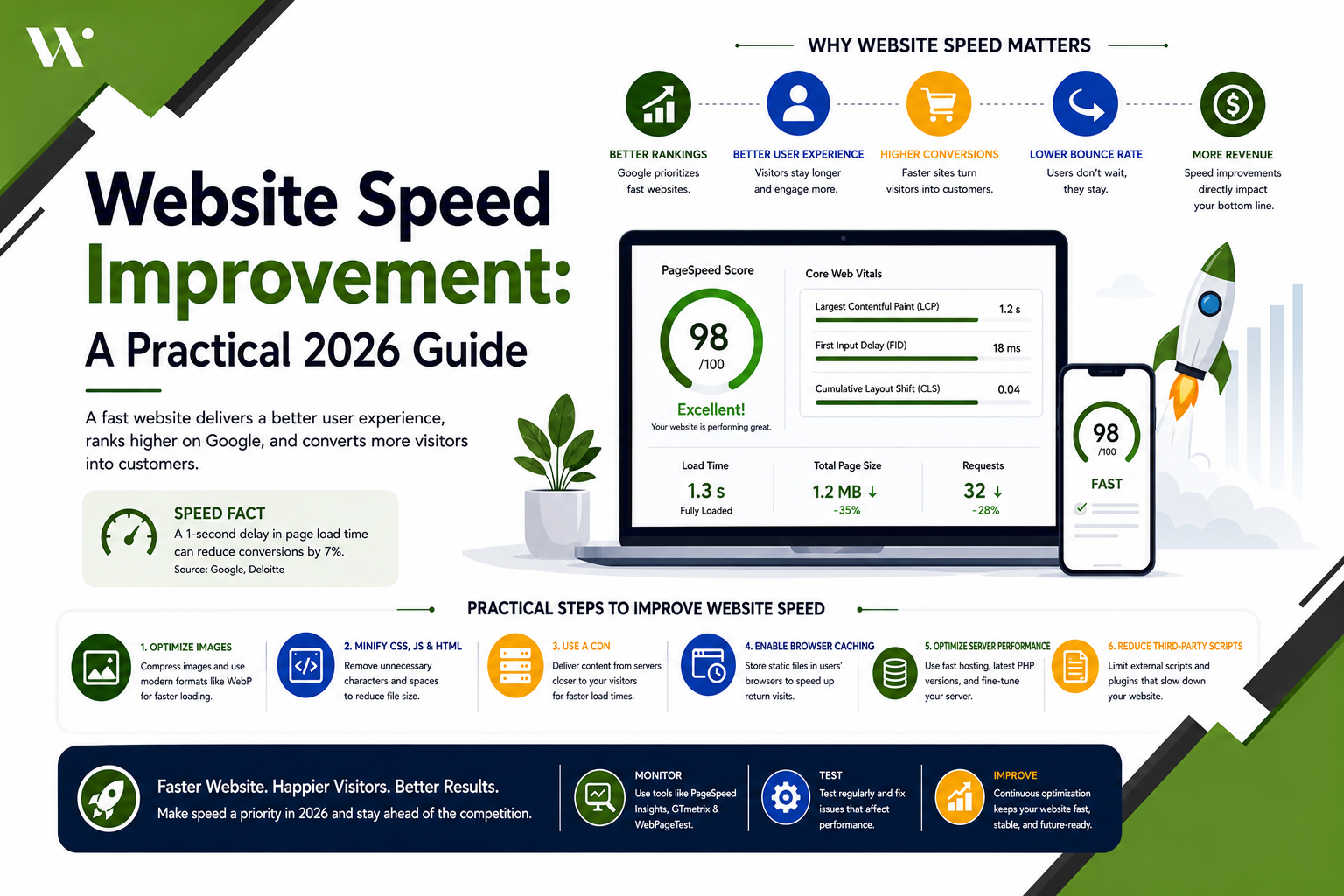
In the digital marketing world, page load time is the critical first impression your website makes on potential customers. A slow-loading webpage can cost you valuable leads and conversions before users even see your content.
Research demonstrates that website speed directly impacts user engagement and satisfaction. Faster load times significantly improve user perceptionWebsite visitor interaction studies of your website and brand credibility.
Key reasons page load time matters:
- Directly influences user experience
- Impacts search engine rankings
- Reduces bounce rates
- Increases conversion potential
- Signals professional website management
Users typically expect websites to load within 2-3 seconds. Anything longer dramatically increases the likelihood they will abandon your site. Google’s research shows that 53% of mobile users will leave a webpage that takes longer than three seconds to load.
Slow websites don’t just lose visitors – they lose potential revenue and damage brand reputation.
Factors affecting page load time include:
- Server response speed
- Image and multimedia optimization
- Coding efficiency
- Browser caching
- Content delivery network (CDN) usage
Technical optimization strategies can dramatically improve your website’s performance. Compress images, minimize JavaScript, and leverage browser caching to accelerate load times.
Pro tip: Use free tools like Google PageSpeed Insights to diagnose and address specific page load performance issues systematically.
2. Bounce Rate: Measuring Visitor Engagement
Bounce rate is a critical metric that reveals how effectively your website captures and retains visitor attention. Understanding this metric helps marketers diagnose potential issues in content strategy and user experience.
Website visitor interaction studies demonstrate that bounce rate represents the percentage of visitors who navigate away from your site after viewing only one page.
Key insights about bounce rate:
- Indicates initial user engagement
- Reflects content relevance
- Signals potential website design issues
- Impacts search engine rankings
- Helps identify conversion barriers
Why Bounce Rate Matters:
A high bounce rate suggests visitors are not finding what they expect. This could mean your content, design, or user experience is not meeting audience needs.
Not all bounces are negative – context and user intent matter significantly.
Bounce rate benchmarks vary by industry:
- Blogs: 70-90% acceptable
- Retail sites: 20-45% ideal
- Service websites: 10-55% typical range
- Landing pages: 70-90% can be normal
Factors influencing bounce rate include page load speed, content quality, mobile responsiveness, and clarity of value proposition.
Pro tip: Segment your bounce rate analysis by traffic source to understand which channels drive more engaged visitors.
3. Conversion Rate: Maximizing Lead Generation
Conversion rate is the critical metric that transforms website visitors into valuable leads and customers. It represents the percentage of visitors who complete a desired action such as purchasing a product, signing up for a newsletter, or requesting a consultation.
Lead scoring models demonstrate how strategic tracking can dramatically improve marketing performance and sales outcomes.
Key components of conversion rate include:
- Number of website visitors
- Total number of conversions
- Percentage of successful interactions
- Quality of lead generation
- Effectiveness of marketing strategies
Why Conversion Rate Matters:
A high conversion rate indicates your marketing messages resonate with your target audience and your website effectively communicates value.
Not all traffic is equal – quality trumps quantity in lead generation.
Typical conversion rate benchmarks across industries:
- E-commerce: 2-5%
- Professional services: 5-10%
- SaaS platforms: 3-7%
- B2B websites: 2-3%
Factors influencing conversion rates include website design, clear value propositions, trust signals, and streamlined user experience.
Pro tip: Implement A/B testing to systematically improve conversion rates by experimenting with different page elements and messaging.
4. Average Session Duration: Understanding User Behavior
Average session duration reveals how long visitors genuinely engage with your website content. This critical metric goes beyond simple page views to measure the depth of user interaction and interest.
User engagement metrics demonstrate how session duration provides insights into content quality and visitor satisfaction.
Key aspects of session duration include:
- Total time spent on website
- Number of pages viewed
- Depth of content exploration
- User interest level
- Content relevance assessment
Why Average Session Duration Matters:
Longer session durations typically indicate that your content resonates with your target audience and provides genuine value.
Engagement is about quality time spent, not just quantity of visits.
Typical session duration benchmarks:
- Blogs: 2-3 minutes
- E-commerce sites: 3-4 minutes
- Professional services: 1-2 minutes
- Media websites: 4-5 minutes
Factors influencing session duration include content quality, website design, page load speed, and relevance of information.
Pro tip: Analyze session duration by content type to identify which topics and formats most effectively capture and maintain user attention.
5. Traffic Sources: Identifying High-Value Channels
Traffic sources reveal the strategic pathways through which potential customers discover your website. Understanding and optimizing these channels is crucial for targeted marketing and efficient resource allocation.
Digital marketing channel interactions demonstrate how different traffic sources contribute uniquely to business performance.
Key traffic source categories include:
- Organic search
- Paid advertising
- Social media
- Direct traffic
- Referral links
- Email marketing
Why Traffic Source Analysis Matters:
Not all traffic is created equal. Some channels deliver higher quality leads and better conversion potential than others.
Knowing your best-performing channels allows for smarter marketing investments.
Traffic source performance benchmarks:
- Organic search: 40-50% of total traffic
- Paid advertising: 10-20% of total traffic
- Social media: 5-15% of total traffic
- Direct traffic: 20-30% of total traffic
- Referral links: 5-10% of total traffic
Factors influencing traffic source effectiveness include target audience behavior, content quality, and marketing strategy alignment.
Pro tip: Regularly track and compare conversion rates across different traffic sources to continuously refine your marketing channel strategy.
6. Mobile Responsiveness: Reaching Every Audience
Mobile responsiveness has become a critical factor in digital success, determining how effectively your website connects with users across various devices. In an increasingly mobile-first world, your digital presence must adapt seamlessly to smartphones, tablets, and desktops.
Mobile-first research strategies demonstrate the importance of comprehensive audience engagement across different devices.
Key aspects of mobile responsiveness include:
- Fluid layout adaptation
- Touch-friendly navigation
- Readable text sizes
- Fast loading times
- Optimized image rendering
- Simplified user interactions
Why Mobile Responsiveness Matters:
Over 60% of global internet traffic now comes from mobile devices, making responsive design not just an option but a necessity.
A non-responsive website is like a closed door in the digital marketplace.
Mobile responsiveness performance indicators:
- Page load speed under 3 seconds
- Content readability across screen sizes
- Intuitive navigation on touch devices
- Consistent user experience
- Minimal horizontal scrolling
Factors affecting mobile responsiveness include screen resolution, device capabilities, and cross-platform compatibility.
Pro tip: Use free tools like Google Mobile-Friendly Test to quickly assess and improve your website’s mobile performance.
7. Core Web Vitals: Improving SEO and Performance
Core Web Vitals represent Google’s definitive metrics for measuring website performance and user experience. These critical indicators help marketers understand how real users interact with their digital platforms.
Web performance optimization metrics provide essential insights into creating seamless online experiences.
Key Core Web Vitals include:
- Largest Contentful Paint (LCP)
- First Input Delay (FID)
- Cumulative Layout Shift (CLS)
- Interaction to Next Paint (INP)
- Total Blocking Time (TBT)
Why Core Web Vitals Matter:
These metrics directly impact search rankings, user satisfaction, and conversion potential.
Performance isn’t just technical – it’s about creating smooth, responsive experiences.
Performance score benchmarks:
- Excellent: 90-100
- Needs improvement: 50-89
- Poor: 0-49
Factors affecting Core Web Vitals include server response times, JavaScript execution, image optimization, and content loading strategies.
Pro tip: Use Google PageSpeed Insights to diagnose and prioritize your website’s Core Web Vitals performance improvements.
Below is a comprehensive table summarizing the main concepts and strategies discussed throughout the article.
| Metric | Description | Key Considerations |
|---|---|---|
| Page Load Time | Measures how quickly a webpage loads for users. | Faster load times improve user experience and reduce bounce rates. Utilize tools like PageSpeed Insights. |
| Bounce Rate | Percentage of visitors leaving after viewing only one page. | Indicates user engagement and content relevance. Analyze by industry benchmarks and traffic sources. |
| Conversion Rate | Proportion of visitors completing desired actions, such as purchases. | Reflects marketing success and user connection. Employ strategies like A/B testing. |
| Average Session Duration | Average time visitors spend engaging with content. | Longer durations point to quality and relevant content. Analyze topic and format effectiveness. |
| Traffic Sources | Channels through which users access a website. | High-performing sources enhance marketing efficiency. Track channel-specific conversion rates. |
| Mobile Responsiveness | Adaptability of a website to various devices and screen sizes. | Critical for over 60% of internet traffic. Optimize using tools like Mobile-Friendly Test. |
| Core Web Vitals | Performance metrics defining user experience quality. | Includes LCP, FID, CLS. Prioritize through Google PageSpeed Insights and optimization techniques. |
Take Control of Your Website Performance Today
Tracking essential website performance metrics such as page load time, bounce rate, and conversion rate is crucial to delivering the outstanding user experience your audience demands. If you are struggling with slow site speed or low conversion rates, these issues can quietly cost you leads and revenue every day. At Web Spider Solutions, we understand the challenges businesses face in optimizing these critical factors to boost traffic and maximize growth.
Discover expert strategies that harness technical SEO, creative content marketing, and targeted paid advertising to improve your site’s core web vitals and visitor engagement. Explore success stories and proven tactics in our Stories Archives to see how we transform challenges into measurable results. Ready to elevate your digital marketing efforts and generate more qualified leads? Visit Web Spider Solutions now for a free consultation and learn how our customized solutions can drive lasting business growth. For insights on maximized paid campaigns, see our Paid Advertising Archives. Take action today to ensure your website performs at its peak and converts with confidence.
Frequently Asked Questions
What is page load time and why is it important?
Page load time measures how quickly a webpage loads for users. It is crucial because a slow page can lead to higher bounce rates and lost conversions. Aim to keep your load time under 3 seconds to maintain user engagement and improve your search engine rankings.
How can I measure my website’s bounce rate effectively?
Bounce rate is calculated by the percentage of visitors who leave after viewing just one page. To measure it effectively, use analytics tools to segment data by traffic sources, which can help identify channels that drive more engaged visitors.
What constitutes a good conversion rate for my website?
A good conversion rate varies by industry but typically ranges from 2-5% for e-commerce sites. To maximize your conversion potential, focus on improving your website design and value propositions, then track changes over a few weeks to see improvements.
How can I increase the average session duration on my site?
Increasing average session duration involves creating engaging content that resonates with your audience. Analyze your content performance and optimize topics that hold visitor attention longer, aiming for an average duration of at least 3 minutes for your blog posts.
What are the main traffic sources I should track?
Key traffic sources include organic search, paid advertising, social media, and email marketing. Focus on analyzing which sources provide the highest quality leads and allocate your marketing budget accordingly, regularly reviewing performance to optimize your strategy.
Why is mobile responsiveness crucial for website performance?
Mobile responsiveness ensures that your website functions well across various devices, enhancing user experience. With over 60% of internet traffic coming from mobile, ensure your site is optimized by testing it across devices and minimizing loading times to under 3 seconds.
Recommended