






Misconceptions about digital marketing can hold your team back and waste valuable resources. You might rely on high traffic, chase quantity over quality, or believe that only big companies can afford real results. The truth is, many long-standing marketing myths can quietly derail your strategy if you let them.
This list reveals actionable insights backed by research, helping you avoid wasted effort and build smarter campaigns. Discover which common beliefs no longer hold up and what practical steps you can take to outsmart them. Get ready to rethink your approach and unlock higher performance from your digital marketing without falling into familiar traps.
Table of Contents
- Myth 1: SEO Is a One-Time Effort
- Myth 2: More Website Traffic Equals More Sales
- Myth 3: Paid Ads Are Always Expensive
- Myth 4: Content Quantity Beats Quality
- Myth 5: Social Media Isn’t Useful for B2B
- Myth 6: Only Big Budgets Drive Success
- Myth 7: Digital Marketing Works Instantly
Quick Summary
| Takeaway | Explanation |
|---|---|
| 1. SEO is an ongoing process | Search engine optimization requires continuous effort and adaptation to changing algorithms for sustained visibility and performance. |
| 2. Quality traffic drives sales | Attracting relevant visitors is more crucial than sheer volume. Effective conversion strategies are essential for turning interest into sales. |
| 3. Paid ads can be budget-friendly | Strategic optimization and precise targeting can lead to successful campaigns without requiring large budgets. |
| 4. Content quality is more important than quantity | Producing fewer, high-value pieces fosters engagement and trust, outperforming high volumes of low-quality content. |
| 5. Patience is vital for success | Effective digital marketing demands time and consistent effort; instant results are unrealistic and can lead to strategy abandonment. |
1. Myth 1: SEO Is a One-Time Effort
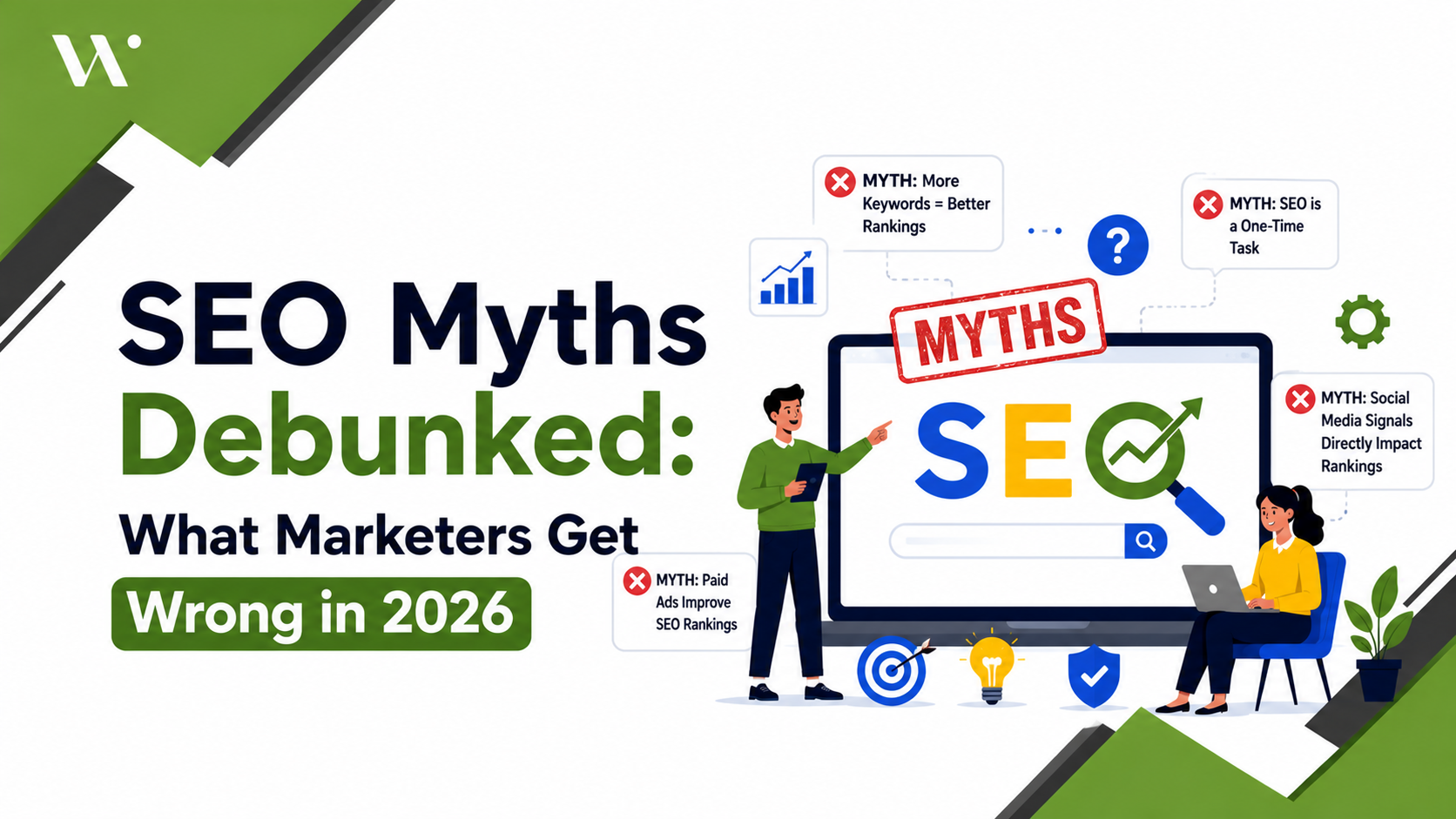
Many digital marketing managers mistakenly believe SEO is a single task you complete and then forget about. Nothing could be further from the truth. Search engine optimization is a dynamic, continuous process that requires ongoing attention and strategic adaptation.
Search algorithms constantly evolve, changing how websites rank and gain visibility. Google updates its ranking criteria multiple times per year, which means your SEO strategy must be flexible and responsive. Continuous keyword research and content updates are critical for maintaining and improving organic search performance.
Successful SEO involves multiple ongoing activities: monitoring website performance, analyzing competitor strategies, refreshing existing content, identifying new keyword opportunities, improving site speed and user experience, and building high quality backlinks. These are not one time tasks but regular strategic actions that compound over time.
Your SEO approach should be viewed as a long term investment. Just like maintaining physical fitness requires consistent effort, digital visibility demands regular optimization. Websites that treat SEO as an occasional checkbox will quickly fall behind more proactive competitors.
Pro tip: Schedule quarterly SEO audits to review your website’s performance, identify potential improvements, and adjust your strategy based on the latest search engine algorithm changes.
2. Myth 2: More Website Traffic Equals More Sales
Most digital marketing managers mistakenly believe that generating high website traffic automatically translates into increased sales. However, raw visitor numbers mean very little without strategic conversion planning.
Traffic volume is meaningless if those visitors are not genuinely interested in your product or service. Targeted traffic quality matters far more than sheer visitor numbers.
Successful digital marketing requires understanding your audience and creating a compelling user experience that transforms casual browsers into paying customers. This means focusing on several critical elements: precise audience targeting, engaging website design, clear value propositions, intuitive navigation, and strategic conversion pathways.
Key factors that determine sales potential include visitor relevance, website user experience, page load speed, content quality, and effective call to action strategies. A site attracting 1000 highly interested potential customers will outperform a site drawing 10000 disinterested visitors.
Pro tip: Implement detailed website analytics to track not just traffic volume but conversion rates user engagement metrics and audience segmentation to truly understand your digital marketing performance.
3. Myth 3: Paid Ads Are Always Expensive
Many digital marketing managers believe paid advertising requires massive budgets. However, this widespread assumption is far from reality. Modern digital advertising platforms offer flexible options for businesses of all sizes and financial capabilities.
Effective paid advertising strategies depend more on precise targeting and strategic optimization than raw spending power. Small businesses can achieve significant results with carefully managed campaigns that focus on audience relevance and incremental performance testing.
Digital advertising platforms like Google Ads and Facebook Ads provide granular budget controls. You can start with minimal daily spending sometimes as low as five dollars and gradually scale based on performance. The key is understanding your target audience, crafting compelling ad content, and continuously monitoring campaign metrics.
Successful paid advertising requires a scientific approach. Test multiple ad variations, track conversion rates, and allocate budget to top performing ads. This data driven method allows even businesses with limited marketing budgets to generate meaningful results and compete effectively against larger competitors.
Pro tip: Begin with small budget experiments targeting highly specific audience segments and use performance data to progressively refine and expand your paid advertising approach.
4. Myth 4: Content Quantity Beats Quality
Many digital marketing managers fall into the trap of believing that pumping out massive amounts of content will automatically drive engagement and results. This misconception can severely damage your brand’s credibility and audience trust.
Quality content demands strategic depth rather than simply increasing publication volume. Each piece of content should provide genuine value solving specific audience problems, offering unique insights or addressing precise customer pain points.
Successful content marketing requires thoughtful creation focused on relevance precision and audience understanding. Instead of generating dozens of shallow articles consider developing fewer but more comprehensive resources that demonstrate genuine expertise. A single well researched in depth article can generate more engagement and trust than ten superficial pieces.
Effective content strategies prioritize comprehensive research targeted messaging and clear value propositions. Understand your audience deeply analyze their needs and create content that speaks directly to their challenges. Quality trumps quantity every time in digital marketing.
Pro tip: Implement a rigorous content review process that evaluates each piece based on audience relevance depth of insight and potential to solve specific user problems.
5. Myth 5: Social Media Isn’t Useful for B2B
Many B2B marketing managers dismiss social media as a platform exclusively for consumer brands. This outdated perspective prevents businesses from leveraging powerful digital communication channels that can drive significant professional engagement and growth.
Social media transforms B2B communication strategies by providing unprecedented opportunities for professional networking relationship building and targeted marketing. Platforms like LinkedIn have become critical tools for industry professionals to connect share insights and generate high quality business leads.
B2B companies can strategically use social media to showcase thought leadership demonstrate expertise and directly engage with potential clients. By sharing industry research case studies and professional content businesses can position themselves as authoritative voices in their specific market segments.
Understanding social media as a professional networking and marketing platform requires a targeted approach. Focus on creating valuable content that addresses specific industry challenges offers genuine insights and provides solutions for your target audience. Each post should deliver meaningful professional value not just generic marketing messages.
Pro tip: Develop a content strategy that balances professional insights thought leadership and genuine value creating content that professionals in your industry would find genuinely useful and shareable.
6. Myth 6: Only Big Budgets Drive Success
Many digital marketing managers believe substantial financial investment is the primary key to achieving remarkable campaign results. This misconception overlooks the critical importance of strategic planning and intelligent resource allocation.
Strategic focus trumps budget size in driving marketing success. Smaller teams with laser focused strategies can consistently outperform larger organizations with bloated budgets and unfocused approaches.
Successful digital marketing requires precise targeting intelligent content creation and data driven decision making. Instead of spending enormous amounts of money marketers should prioritize understanding their audience developing compelling messaging and continuously optimizing their strategies based on real performance metrics.
The most effective marketing campaigns are built on creativity innovation and strategic thinking not merely financial muscle. Smart marketers learn to maximize limited resources by being agile experimental and responsive to audience feedback. Budget constraints can actually foster more innovative and efficient marketing solutions.
Pro tip: Invest time in developing a comprehensive understanding of your target audience and create highly targeted campaigns that deliver maximum value with minimal financial investment.
7. Myth 7: Digital Marketing Works Instantly
Many marketing managers expect immediate results from their digital strategies, believing that launching a campaign automatically translates into instant success. This misconception can lead to unrealistic expectations and premature strategy abandonment.
Digital marketing requires patient strategic approach with consistent effort and sustained commitment. Different marketing channels have varying timelines for generating meaningful results.
Paid advertising might deliver faster visibility while organic strategies like search engine optimization and content marketing demand longer development periods. Search engines and social media platforms require time to recognize and reward high quality content consistently published by businesses.
Successful digital marketing involves building credibility creating valuable audience connections and developing a robust online presence. This process happens incrementally through persistent strategic efforts data analysis and continuous optimization. Expecting overnight transformation undermines the nuanced nature of effective digital marketing.
Pro tip: Develop a comprehensive digital marketing strategy with realistic timelines and performance benchmarks for each channel understanding that sustainable growth requires consistent and patient execution.
Below is a comprehensive table summarizing the myths, misconceptions, and realities of digital marketing discussed throughout the article.
| Myth | Misconception | Reality |
|---|---|---|
| SEO is a one-time effort | SEO is only a task completed once. | SEO requires continuous optimization, monitoring, and adaptation to algorithm updates for sustained results. |
| More website traffic equals more sales | High traffic always translates to higher sales. | Traffic quality and conversion planning matter more than sheer volume to achieve increased sales. |
| Paid ads are always expensive | Paid advertisement demands substantial financial resources. | Strategic implementation of paid ads can achieve results with limited budgets and focused audience targeting. |
| Content quantity beats quality | Publishing a large volume of content ensures success. | Quality and relevance of content generate better engagement and build credibility. |
| Social media isn’t useful for B2B | Social media is not effective for B2B marketing. | Social media, especially platforms like LinkedIn, is essential for professional engagement, industry networking, and showcasing expertise. |
| Only big budgets drive success | Significant financial resources are the key to effective marketing. | Strategic planning and intelligent allocation of resources often matter more than budget size. |
| Digital marketing works instantly | Launching a campaign will yield immediate results. | Sustainable success in digital marketing comes from persistent effort, credibility building, and long-term strategy implementation. |
Break Free from Digital Marketing Myths to Unlock Real Growth
Struggling with common digital marketing myths that slow your business progress can be frustrating. From believing SEO is a one-time fix to thinking paid ads require huge budgets, these misunderstandings can waste precious time and resources. Your goals for sustained visibility, targeted leads, and meaningful sales need clear strategies that debunk these myths and embrace proven tactics. Our expert team at Web Spider Solutions specializes in transforming these challenges into opportunities.
Explore tailored solutions in B2B Marketing Archives – Web Spider Solutions to connect with your professional audience effectively. Optimize your budget and results with smart strategies from our Paid Advertising Archives – Web Spider Solutions while we continuously fine-tune your SEO and content for lasting impact. Don’t let outdated assumptions hold your business back. Visit Web Spider Solutions today and take the first step toward a digital marketing strategy built on clarity, quality, and measurable growth.
Frequently Asked Questions
Is SEO a one-time effort or a continuous process?
SEO is a continuous process that requires regular attention and adaptation. To maintain and improve your search visibility, schedule quarterly SEO audits and consistently update your content and keywords based on the latest trends.
Does more website traffic guarantee higher sales?
No, generating high website traffic does not automatically lead to increased sales. Focus on attracting targeted traffic by optimizing visitor relevance and enhancing user experience on your site for better conversion rates.
Are paid ads always expensive for digital marketing campaigns?
Paid ads do not require large budgets; you can start with a small daily budget and test different strategies. Begin with a budget as low as five dollars to understand what works for your audience, and gradually scale your campaigns based on positive results.
Is it better to focus on content quantity over quality?
No, producing high-quality content is more effective than generating a large volume of shallow articles. Prioritize creating a few well-researched pieces that offer real value to your audience, which can yield higher engagement and trust compared to numerous lower-quality articles.
Can social media be useful for B2B marketing?
Yes, social media is a powerful tool for B2B marketing, allowing businesses to build professional relationships and showcase expertise. Develop a content strategy that delivers valuable insights and thought leadership relevant to your industry to engage your audience effectively.
Do I need a big budget to succeed in digital marketing?
No, a successful digital marketing campaign relies more on strategic planning than on having a large budget. Invest time in understanding your audience and create targeted, effective campaigns that maximize your available resources.
Recommended