








Most american businesses underestimate just how quickly negative SEO threats can unravel even the strongest digital presence. Competitive sectors like SaaS and BFSI face relentless algorithmic sabotage that leaves brands exposed to penalties and brand erosion overnight. Knowing that over 60 percent of all significant backlink spikes are linked to intentional sabotage, digital marketing managers need clear insights on protecting their clients and staying ahead of sophisticated manipulation tactics.
Table of Contents
- Defining Negative SEO And Common Myths
- Types Of Negative SEO Attacks Explained
- Mechanisms And Tactics Used By Attackers
- Detecting And Recovering From Negative SEO
- Preventing Attacks And Protecting Reputation
Key Takeaways
| Point | Details |
|---|---|
| Understanding Negative SEO | Negative SEO is a strategy that intentionally harms a competitor’s search rankings through various malicious techniques. |
| Common Myths | Many believe negative SEO is rare and only affects large companies; however, all websites are vulnerable to such attacks. |
| Monitoring & Recovery | Regularly audit backlinks and monitor search rankings to detect negative SEO attacks and maintain website credibility. |
| Preventive Measures | Implement a robust security infrastructure and maintain quality content to protect against potential negative SEO threats. |
Defining Negative SEO and Common Myths
Negative SEO represents a deliberate strategy designed to sabotage a website’s search engine rankings through malicious manipulation. Unlike traditional competitive marketing techniques, negative SEO involves intentionally harming another organization’s online visibility by exploiting search engine algorithmic vulnerabilities. SEO poisoning emerges as a sophisticated digital attack mechanism targeting unsuspecting businesses.
The landscape of negative SEO encompasses multiple destructive tactics targeting search engine credibility. Attackers might generate hundreds of low-quality, spammy backlinks pointing to a competitor’s website, artificially triggering search engine penalties. Other sophisticated methods include content scraping, duplicating website content across multiple domains, and creating fake negative reviews designed to undermine digital reputation. Spamdexing represents a comprehensive term describing these manipulative practices aimed at disrupting organic search rankings.
Contrary to popular misconceptions, negative SEO is not a rare occurrence confined to extreme circumstances. Competitive digital markets increasingly witness strategic attempts to damage competitor visibility through calculated algorithmic exploits. Common myths surrounding negative SEO include believing that search engines automatically detect and prevent such attacks, or that only large corporations experience these challenges. In reality, websites across various scales remain vulnerable to sophisticated manipulation techniques that can significantly impact organic search performance.
Pro tip: Regularly monitor your backlink profile using professional SEO tools and immediately disavow suspicious or spammy links to protect your website’s search engine reputation.
Types of Negative SEO Attacks Explained
Negative SEO attacks represent a sophisticated arsenal of digital manipulation techniques designed to undermine a website’s search engine credibility. SEO poisoning techniques encompass a range of strategic approaches that exploit search engine algorithmic vulnerabilities, targeting businesses across different digital landscapes. These attacks go beyond simple competitive tactics, involving complex and intentional strategies to degrade online performance.

The primary types of negative SEO attacks include link spam, content manipulation, and website infrastructure attacks. Link spam involves generating massive volumes of low-quality, irrelevant backlinks from suspicious domains to trigger search engine penalties. Content manipulation tactics include scraping and duplicating website content, creating fake duplicate pages, and strategically inserting hidden or spammy content to confuse search engine crawlers. Spamdexing particularly highlights how attackers exploit algorithmic weaknesses through keyword stuffing, hidden text, and misleading metadata designed to artificially influence search rankings.
Moreover, website infrastructure attacks can involve more technically sophisticated approaches like hacking attempts, inserting malicious code, triggering unnatural redirect chains, or exploiting server vulnerabilities to compromise site performance. Cybercriminals might strategically target websites with complex technical implementations, knowing that search engines penalize sites with compromised security or unusual technical configurations. These attacks often blend multiple techniques, making detection and prevention challenging for unsuspecting website owners.
Here’s a quick comparison of negative SEO attack types and their typical business impact:
| Attack Type | Description | Potential Business Impact |
|---|---|---|
| Link Spam | Flooding with low-quality backlinks | Search ranking penalties |
| Content Manipulation | Duplicating and scraping website text | Loss of trust, decreased visibility |
| Website Infrastructure | Hacking and server exploits | Downtime, loss of visitor traffic |
Pro tip: Implement robust monitoring tools that track backlink profiles, content duplications, and website performance metrics to quickly identify and neutralize potential negative SEO attack vectors.
Mechanisms and Tactics Used by Attackers
Negative SEO attackers employ a sophisticated and multifaceted arsenal of digital manipulation techniques designed to compromise website credibility and search engine rankings. Attack mechanisms reveal a complex landscape of strategic exploitation, where cybercriminals leverage intricate methods to undermine digital properties. These tactics go far beyond simple link manipulation, involving nuanced approaches that target multiple vulnerabilities within search engine algorithms and website infrastructures.
The primary mechanisms include keyword poisoning, link injection, and content manipulation. Attackers strategically stuff compromised websites with irrelevant or malicious keywords, creating artificial signals that confuse search engine crawlers. Link injection involves deliberately generating massive volumes of low-quality, spammy backlinks from suspicious domains to trigger punitive search engine responses. Web application attack strategies demonstrate how these tactics can include sophisticated techniques like cloaking, where different content is served to search engines versus human visitors, effectively masking malicious intent.
More advanced attack vectors incorporate technical exploitation methods such as cross-site scripting (XSS), server-side vulnerabilities, and complex redirect chains. Cybercriminals might introduce malicious scripts that appear legitimate, exploit unpatched website frameworks, or create elaborate networks of compromised websites designed to systematically degrade a target’s search engine credibility. These multidimensional approaches make detection challenging, as attackers continuously evolve their methods to bypass increasingly sophisticated search engine security mechanisms.
Pro tip: Implement comprehensive website monitoring with real-time anomaly detection, focusing on unexpected backlink patterns, sudden content changes, and unusual server-side behaviors to proactively identify potential negative SEO attack vectors.
Detecting and Recovering From Negative SEO
Detecting negative SEO requires a comprehensive and proactive monitoring approach that goes beyond traditional website analytics. Website protection strategies emphasize the importance of continuous vigilance, focusing on identifying subtle changes in search rankings, backlink profiles, and website performance metrics. Digital marketing professionals must develop sophisticated detection mechanisms that can quickly recognize potential malicious activities targeting their online presence.
The core detection process involves multiple strategic components, including comprehensive backlink audits, search ranking trend analysis, and content integrity monitoring. Automated tools and manual investigations help identify suspicious patterns such as sudden spikes in low-quality backlinks, unexpected keyword changes, or unusual redirects. SEO poisoning detection techniques recommend creating baseline performance metrics to recognize deviations that might indicate a targeted negative SEO attack. Organizations should pay special attention to unexpected drops in search engine rankings, unusual domain referral patterns, and potential content scraping or duplication attempts.
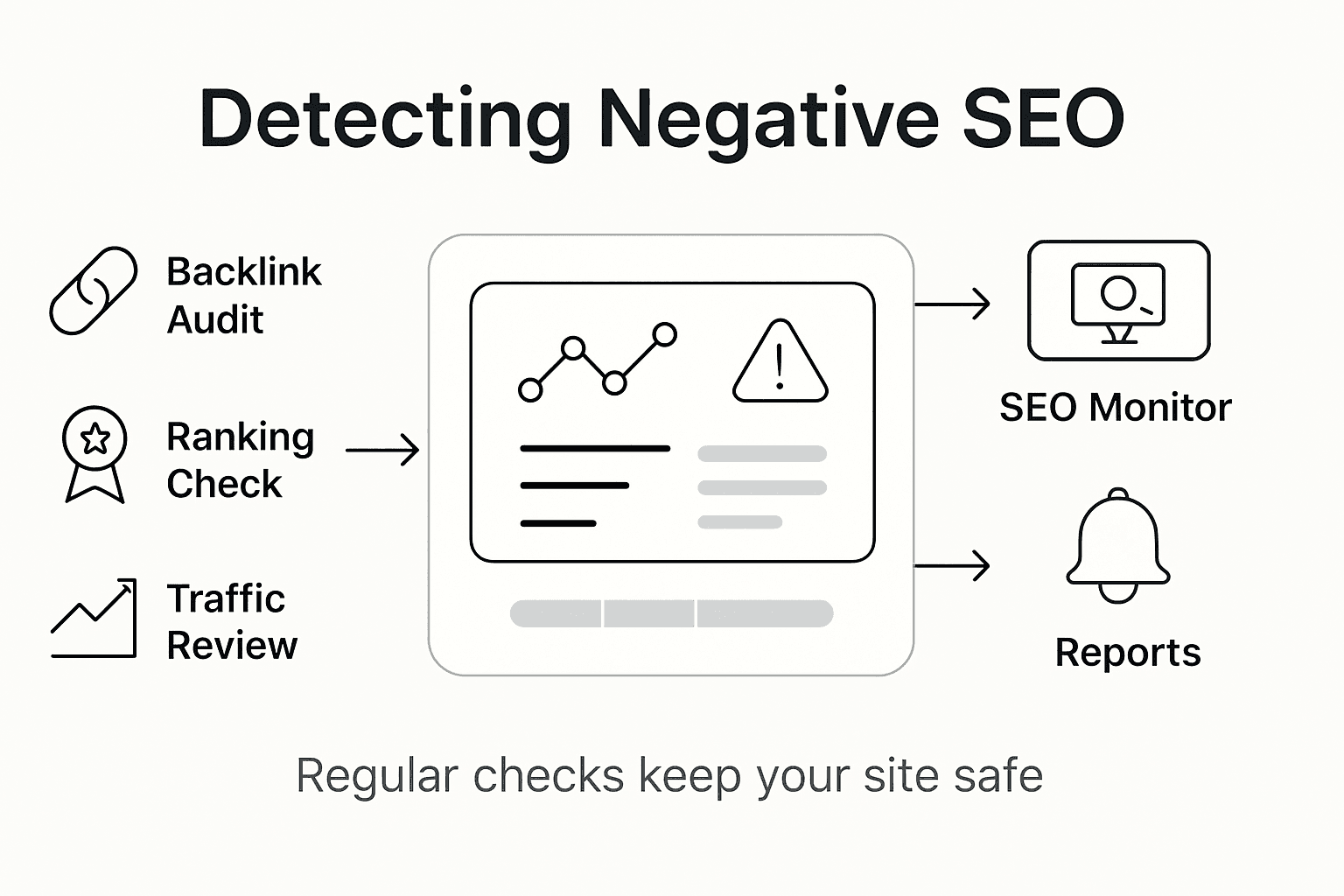
Recovery from negative SEO attacks requires a multi-layered approach combining technical remediation and strategic communication. This process includes systematically disavowing harmful backlinks, removing duplicated or maliciously manipulated content, and implementing robust security measures to prevent future infiltrations. Cybersecurity and SEO professionals must collaborate closely to investigate attack vectors, patch vulnerabilities, and rebuild the website’s search engine credibility through consistent, high-quality content and transparent link-building strategies.
The table below summarizes recommended responses to negative SEO incidents:
| Action | Business Purpose | Expected Outcome |
|---|---|---|
| Backlink Audit | Detect harmful external links | Restoration of ranking, improved SEO |
| Content Restoration | Remove duplicate or fake content | Protects brand, rebuilds reputation |
| Technical Remediation | Patch vulnerabilities, secure site | Prevents future attacks |
| Communication Strategy | Notify stakeholders/correct info | Maintains customer trust |
Pro tip: Develop a comprehensive digital forensics protocol that includes regular backlink audits, maintaining detailed attack documentation, and creating rapid response workflows to neutralize negative SEO threats before they significantly impact your online reputation.
Preventing Attacks and Protecting Reputation
Preventing negative SEO attacks requires a comprehensive, multifaceted approach that integrates cybersecurity principles with strategic digital marketing practices. Website protection strategies emphasize the critical importance of proactive defense mechanisms designed to safeguard digital assets against sophisticated online threats. Digital marketing professionals must develop robust security protocols that anticipate and neutralize potential vulnerabilities before they can be exploited.
The foundation of effective prevention involves implementing multilayered security infrastructure, which includes secure coding practices, regular software updates, and advanced web application firewalls. Organizations should establish comprehensive monitoring systems that track domain reputation, analyzing signals such as backlink quality, content authenticity, and unusual traffic patterns. Domain reputation management plays a crucial role in maintaining online credibility, requiring continuous vigilance and strategic interventions to protect against potential reputational damage. Key preventive measures include conducting regular SEO audits, implementing strict access controls, and developing rapid response protocols for identifying and mitigating potential negative SEO threats.
Moreover, protecting online reputation demands a proactive approach that extends beyond technical defenses. Businesses must cultivate a strong, authentic digital presence through high-quality content, transparent communication, and strategic engagement with their online audience. This involves maintaining consistent brand messaging, promptly addressing potential vulnerabilities, and building a resilient digital ecosystem that can withstand potential malicious attempts to undermine search engine rankings and brand perception.
Pro tip: Develop a comprehensive digital defense playbook that includes automated monitoring tools, clear escalation protocols, and predefined response strategies to quickly neutralize potential negative SEO threats before they can cause significant damage.
Defend Your Brand From Negative SEO Threats with Expert Digital Marketing Solutions
Negative SEO can drastically damage your online visibility and brand reputation through tactics like link spam, content manipulation, and infrastructure attacks. If your business faces these challenges, it is crucial to act quickly to restore search engine rankings and protect your digital presence. At Web Spider Solutions, we understand the complexities of negative SEO and offer tailored strategies that combine technical SEO, authoritative content marketing, and vigilant reputation management designed for competitive markets.
Don’t let malicious attacks undermine your hard-earned online trust. Explore our B2B Marketing Archives – Web Spider Solutions for strategic approaches to strengthen your brand’s resilience. Enhance your defense with targeted campaigns from our Paid Advertising Archives – Web Spider Solutions that boost visibility safely and effectively. Take control of your online reputation now with a comprehensive consultation at Web Spider Solutions and secure a free SEO audit to pinpoint vulnerabilities before they impact your growth.
Frequently Asked Questions
What is negative SEO?
Negative SEO is a malicious strategy aimed at sabotaging a website’s search engine rankings. It involves manipulating search engine algorithms to harm a competitor’s online visibility through tactics like spammy backlinks and content duplication.
What are common types of negative SEO attacks?
Common negative SEO attacks include link spam, where attackers flood a website with low-quality backlinks, and content manipulation, which involves scraping or duplicating site content to confuse search engines and degrade online reputation.
How can I detect negative SEO attacks on my website?
You can detect negative SEO by regularly monitoring your backlink profile, analyzing search ranking trends, and watching for sudden changes in website performance, such as drops in traffic or unusual referral patterns.
What steps can I take to protect my website from negative SEO?
To protect your website, implement a multilayered security infrastructure, conduct regular SEO audits, monitor your domain reputation, and foster a strong digital presence with high-quality content and transparent communication.
Recommended