






Over half of American businesses struggle to gain real traction in search results without a clear SEO strategy. In today’s competitive online environment, knowing where you stand and how your website compares is the first step to outperforming your rivals. This guide shows actionable ways to assess your current position, use essential SEO tools, and make smart improvements that drive measurable growth.
Table of Contents
- Step 1: Assess Current Website and Competitor Status
- Step 2: Set Up Essential SEO Tools and Tracking
- Step 3: Optimize On-Page Content and Keywords
- Step 4: Build Authoritative Local and Niche Links
- Step 5: Measure Results and Refine Your Strategy
Quick Summary
| Key Point | Explanation |
|---|---|
| 1. Conduct a Website Audit | Start with a thorough evaluation of your website’s technical performance and content quality to establish a baseline for SEO improvements. |
| 2. Set Up SEO Tracking Tools | Use tools like Google Analytics and Google Search Console to monitor visibility and user behavior for informed optimization decisions. |
| 3. Optimize On-Page Content | Perform keyword research and integrate relevant keywords into your content to enhance search visibility and user engagement. |
| 4. Build Quality Backlinks | Focus on acquiring high-quality, relevant backlinks to improve your site’s authority and search engine credibility. |
| 5. Monitor and Adjust Your Strategy | Continuously track key performance indicators and be prepared to adapt your strategy based on data insights for ongoing SEO success. |
Step 1: Assess Current Website and Competitor Status
Understanding your website’s search performance requires a strategic website audit that examines technical infrastructure, content quality, and competitive positioning. This initial assessment provides a critical baseline for your SEO improvement strategy.
Start by conducting a comprehensive technical evaluation of your website. Analyze your site’s loading speed, mobile responsiveness, URL structure, and internal linking. Use free tools like Google Search Console and Google Analytics to review current search rankings, organic traffic patterns, and potential technical issues blocking search engine indexing. Next, perform a detailed competitor backlinking analysis to identify strategic opportunities. Examine the top-ranking websites in your industry to understand their backlink profiles, content strategies, and keyword targeting.
Pro tip: Document everything meticulously. A detailed audit report will serve as your strategic roadmap, helping you prioritize SEO improvements and track progress over time. By understanding your current digital landscape, you can develop targeted tactics that dramatically improve your search visibility and lead generation potential.
Step 2: Set Up Essential SEO Tools and Tracking
To gain meaningful insights into your website’s search performance, you need to implement robust tracking mechanisms. Setting up essential SEO tools will help you monitor your site’s visibility, understand user behavior, and make data-driven optimization decisions.
Start by creating accounts in key platforms like Google Analytics and Google Search Console. These free tools provide comprehensive data about your website’s search performance, including organic traffic sources, keyword rankings, click through rates, and potential technical issues. Integrate these tools by adding tracking codes to your website and verifying site ownership. For deeper competitive insights, consider using online SEO tools that offer advanced keyword research, backlink analysis, and ranking tracking capabilities.
Pro tip: Configure custom dashboards and set up regular reporting to track your progress. Consistent monitoring allows you to quickly identify trends, adjust your strategy, and measure the impact of your SEO efforts. By establishing a solid tracking foundation, you will transform raw data into actionable strategies that drive your website’s search performance forward.
Step 3: Optimize On-Page Content and Keywords
Improving your website’s search performance requires strategic on-page SEO optimization that aligns your content with search engine algorithms and user intent. This step focuses on fine-tuning your website’s content to boost visibility and attract targeted organic traffic.

Begin by conducting comprehensive keyword research to identify high-value search terms relevant to your business. Integrate these keywords naturally into your website’s content, including page titles, headers, meta descriptions, and body text. Ensure each page targets a primary keyword while maintaining readability and value for your audience. When developing website content, focus on creating in-depth, informative articles that answer user questions and provide genuine value.
Pro tip: Avoid keyword stuffing. Search engines prioritize content that reads naturally and provides real insights. Aim to create comprehensive, user-focused content that organically incorporates your target keywords. By balancing technical optimization with high-quality information, you will improve both search rankings and user engagement.
Step 4: Build Authoritative Local and Niche Links
Developing a powerful link building strategy is crucial for improving your website’s search engine credibility and domain authority. Strategic link acquisition helps search engines recognize your business as a trusted resource within your specific industry or local market.
Start by identifying natural link building strategies that align with your business goals. Focus on creating high-quality, relevant content that local businesses, industry publications, and niche websites would naturally want to reference. Engage with local chambers of commerce, professional associations, and community organizations to secure high-quality backlinks that demonstrate your local relevance and expertise. Consider guest posting on respected industry blogs, participating in local business directories, and collaborating with complementary businesses in your area.
Pro tip: Quality trumps quantity in link building. Prioritize obtaining links from reputable websites with strong domain authority that are directly related to your industry. Avoid purchasing links or using manipulative tactics that could trigger search engine penalties. By developing genuine relationships and creating valuable content, you will naturally attract authoritative links that significantly boost your search rankings and online visibility.
Step 5: Measure Results and Refine Your Strategy
Successful SEO requires continuous monitoring and strategic adaptation. Search Engine Result Page (SERP) features significantly impact organic click-through rates, making it crucial to track and analyze your website’s performance systematically.
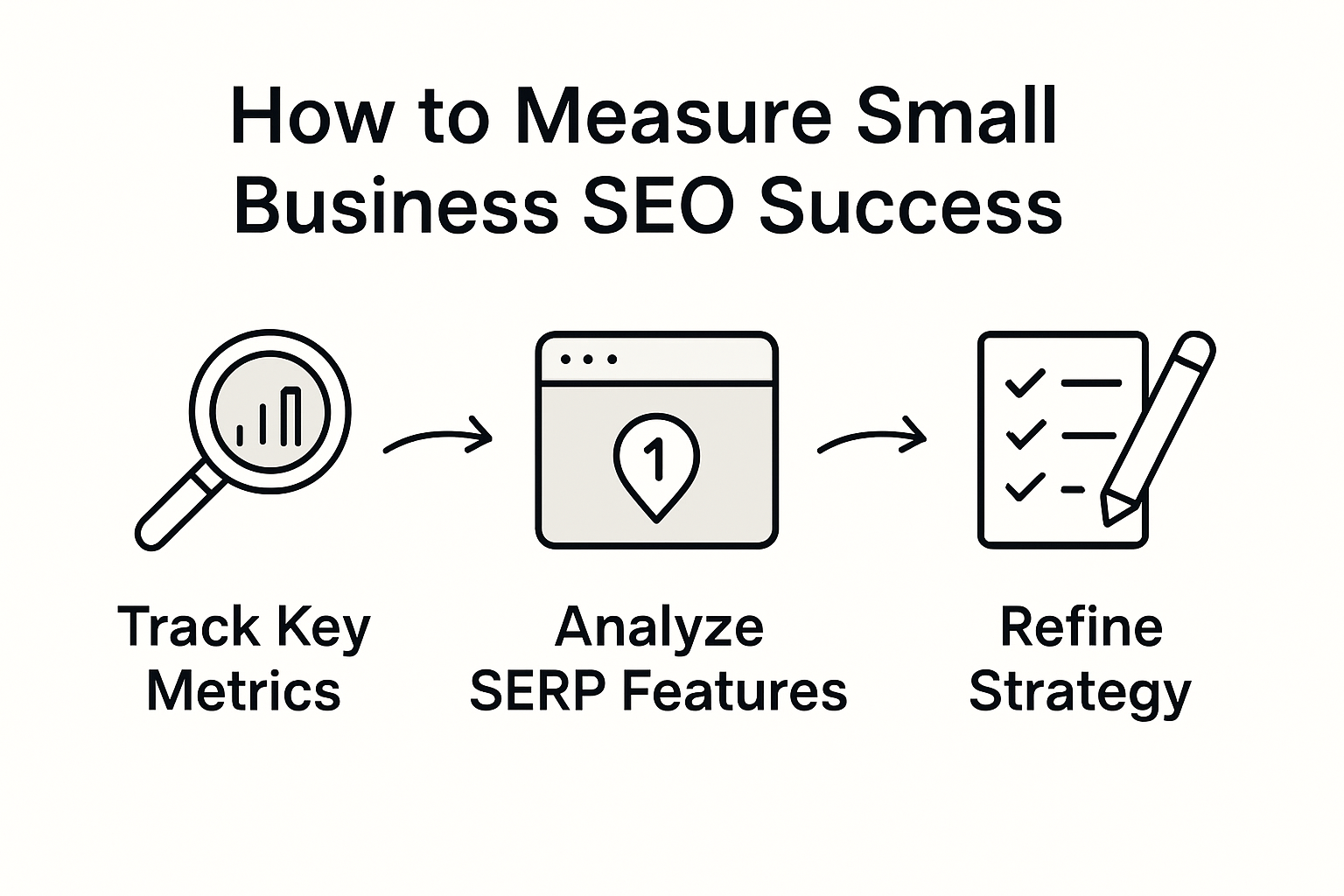
Establish a comprehensive tracking system using tools like Google Analytics and Google Search Console. Monitor key performance indicators such as organic traffic, keyword rankings, conversion rates, and user engagement metrics. Analyze user navigation patterns to understand how visitors interact with your website and identify opportunities for improvement. Measure your marketing ROI by comparing your SEO investments against tangible business outcomes like lead generation and revenue growth.
Pro tip: Treat your SEO strategy as a living document. Review your analytics monthly and be prepared to pivot quickly. Small incremental adjustments based on data insights can compound into significant performance improvements over time. Remember that SEO is not a one-time task but an ongoing process of learning, adapting, and optimizing your online presence.
Elevate Your Small Business SEO for Faster Growth
Struggling to boost your small business rankings and generate quality leads quickly is a common challenge. This article highlights key pain points like optimizing on-page content, building authoritative backlinks, and measuring SEO results effectively. At Web Spider Solutions, we understand the struggle to navigate complex SEO concepts such as technical audits, keyword research, and local link building while maintaining your business focus.
Our expert digital marketing team specializes in delivering tailored strategies that improve organic search rankings and drive targeted traffic. Whether you need help setting up essential SEO tools, creating engaging content, or developing a robust link building campaign, our solutions are designed to turn these challenges into opportunities for long-term growth.
Ready to accelerate your SEO success? Visit Web Spider Solutions now for a free SEO audit and personalized consultation. Don’t wait to transform your online visibility and start attracting the leads your business deserves. Discover how our comprehensive services can help you dominate your digital market today.
Frequently Asked Questions
How can small businesses boost their SEO rankings quickly?
Small businesses can boost their SEO rankings quickly by conducting a thorough website audit to identify technical issues and optimize on-page content with relevant keywords. Start by using free tools to assess your website’s performance and make the necessary corrections within 30 days to see a noticeable improvement.
What are the essential SEO tools small businesses should set up?
Essential SEO tools include Google Analytics and Google Search Console, which help track your website’s performance and user behavior. Set up these tools by creating accounts, adding tracking codes, and monitoring data on a weekly basis to uncover insights for optimizing your SEO strategy.
How do I conduct keyword research for my small business?
To conduct keyword research for your small business, identify search terms that potential customers use to find your services or products. Use these insights to target primary keywords across your website, ensuring to integrate them naturally into content and metadata over the next month for maximum effect.
What strategies can small businesses use for effective link building?
Effective link building strategies include engaging with local chambers of commerce and contributing content to reputable industry blogs. Focus on acquiring high-quality backlinks from trusted websites within the next three months to significantly boost your site’s authority and rankings.
Why is measuring SEO results important for small businesses?
Measuring SEO results is crucial as it helps small businesses evaluate the effectiveness of their strategies and adapt as necessary. Set up tracking for key performance indicators and review results monthly to make informed adjustments that can enhance lead generation over time.