






Over 80 percent of American businesses now invest in digital campaigns to reach their customers online. With new technologies emerging at a rapid pace, mastering digital campaign management has become essential for organizations competing in the crowded digital marketplace. Whether you are an established American brand or a growing startup, understanding the key strategies and tools behind effective campaign management gives you a critical edge in driving real results.
Table of Contents
- Defining Digital Campaign Management Today
- Main Types of Digital Campaigns
- Core Processes and Essential Tools
- Key Roles and Responsibilities in Management
- Common Challenges and Mistakes to Avoid
Key Takeaways
| Point | Details |
|---|---|
| Effective Digital Campaign Management | Involves strategic planning, execution, monitoring, and optimization across various digital channels to achieve business goals. |
| Core Components | Essential elements include audience targeting, content development, performance tracking, and continuous campaign refinement. |
| Key Roles Required | Successful management relies on a collaborative team with specialized roles such as Digital Marketing Manager, SEO Specialist, and Data Analyst. |
| Common Challenges | Organizations face strategic challenges like inadequate targeting and operational mistakes such as ignoring analytics, which can undermine campaign success. |
Defining Digital Campaign Management Today
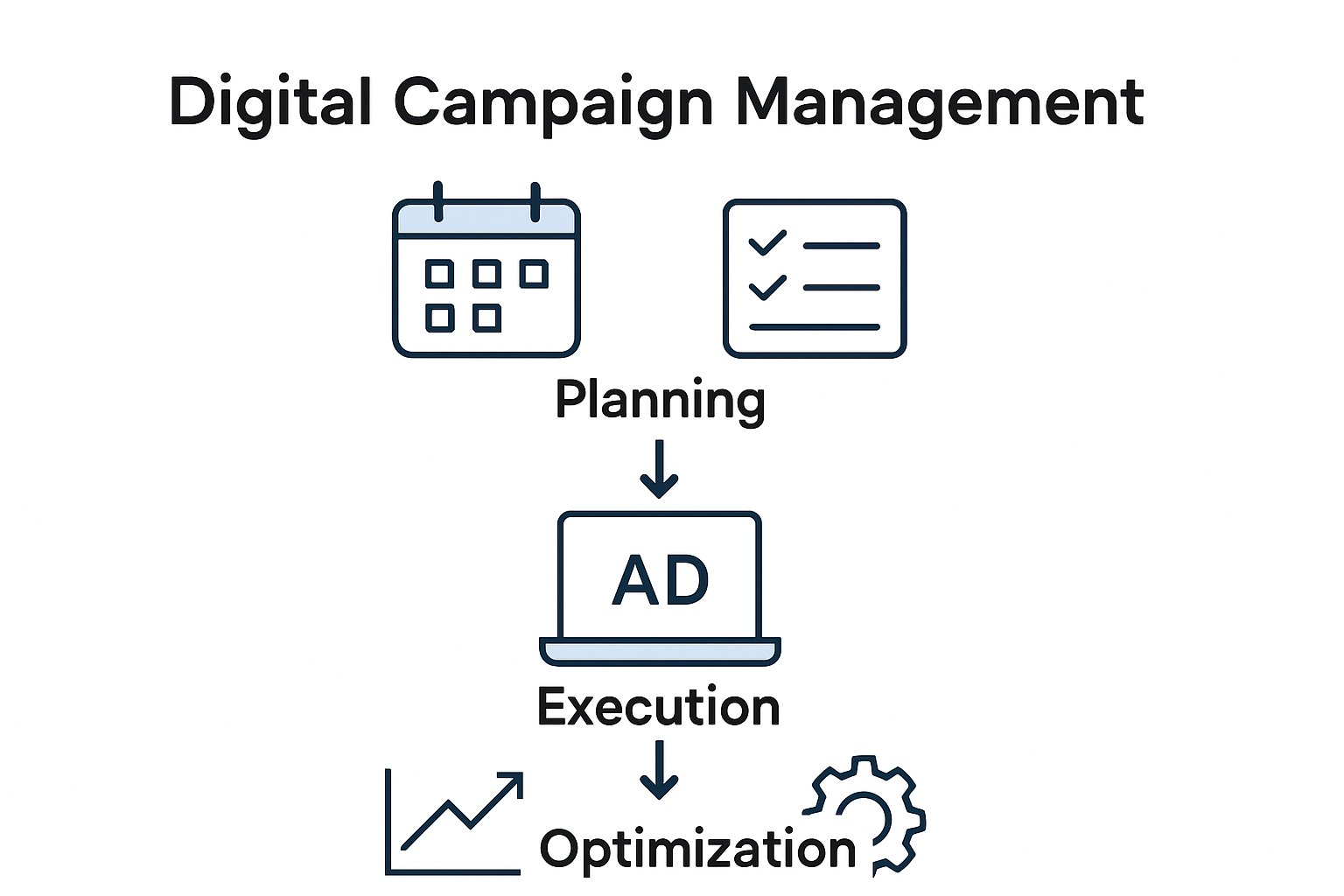
Digital campaign management is the strategic process of planning, executing, monitoring, and optimizing online marketing initiatives across multiple digital channels. In today’s interconnected digital landscape, this discipline involves comprehensive coordination of marketing strategies to maximize audience engagement and business outcomes.
At its core, digital campaign management encompasses the systematic administration of online marketing efforts. Organizations leverage various digital platforms like search engines, social media, email, and websites to connect with potential customers. Digital advertising strategies play a critical role in these campaigns, helping businesses target specific audience segments with precision and measurable results.
The fundamental components of effective digital campaign management include:
- Strategic planning and goal setting
- Channel selection and audience targeting
- Content creation and optimization
- Performance tracking and analytics
- Continuous campaign refinement
Modern digital campaign management requires a data-driven approach that integrates multiple marketing tactics. Professionals must monitor key performance indicators, analyze user behavior, and adapt strategies in real time to ensure maximum impact and return on investment.
Main Types of Digital Campaigns
Digital campaigns represent diverse strategies designed to connect businesses with their target audiences across multiple online platforms. Digital marketing encompasses several fundamental campaign types that help organizations achieve specific marketing objectives and drive meaningful engagement.
Key types of digital marketing campaigns include:
- Search Engine Optimization (SEO) Campaigns: Focus on improving website visibility and organic search rankings
- Pay-Per-Click (PPC) Advertising Campaigns: Target specific audience segments through paid search and display advertisements
- Social Media Marketing Campaigns: Leverage platforms like Facebook, Instagram, and LinkedIn to build brand awareness and community engagement
- Content Marketing Campaigns: Create and distribute valuable, relevant content to attract and retain a clearly defined audience
- Email Marketing Campaigns: Develop personalized communication strategies to nurture leads and maintain customer relationships
- Mobile Marketing Campaigns: Optimize marketing efforts for smartphone and tablet users
Each digital campaign type serves unique purposes, employing specialized techniques to reach potential customers. Digital marketing strategies require careful planning, precise targeting, and continuous optimization to maximize return on investment and achieve specific business goals.

Successful digital campaigns integrate multiple channels and tactics, creating a comprehensive approach that adapts to evolving consumer behaviors and technological advancements. Businesses must remain agile, using data-driven insights to refine their marketing strategies and deliver compelling, personalized experiences across digital platforms.
Core Processes and Essential Tools
Digital campaign management relies on a sophisticated ecosystem of processes and technological tools designed to streamline marketing efforts and maximize performance. Digital marketing strategies require comprehensive technological support to effectively track, analyze, and optimize campaign outcomes.
Key core processes in digital campaign management include:
- Strategic planning and goal setting
- Audience segmentation and targeting
- Content development and optimization
- Performance tracking and measurement
- Continuous campaign refinement
- Cross-channel integration
- Data analysis and insights generation
Essential tools that support these processes span multiple functional categories:
Analytics and Tracking Tools:
- Google Analytics
- Adobe Analytics
- Mixpanel
- Heap
Marketing Automation Platforms:
- HubSpot
- Marketo
- Salesforce Marketing Cloud
- Mailchimp
SEO and Content Optimization Tools:
- SEMrush
- Ahrefs
- Moz Pro
- Google Search Console
Successful digital campaign management demands a strategic approach to tool selection, ensuring seamless integration and comprehensive performance visibility. Professionals must carefully evaluate and combine these technologies to create a robust marketing technology stack that delivers actionable insights and drives meaningful business results.
Key Roles and Responsibilities in Management
Digital campaign management requires a collaborative team of professionals with specialized skills and strategic responsibilities. Digital marketing managers play a critical role in orchestrating comprehensive marketing strategies that drive business growth and engagement.
Key roles within digital campaign management include:
Strategic Leadership Roles:
- Digital Marketing Manager: Overall campaign strategy and coordination
- Marketing Strategy Director: Long-term vision and strategic planning
- Chief Marketing Officer (CMO): High-level marketing direction and innovation
Tactical Execution Roles:
- Content Strategist: Develop compelling content across channels
- SEO Specialist: Optimize digital content for search visibility
- Social Media Coordinator: Manage platform-specific engagement
- Data Analyst: Track performance and generate actionable insights
- Paid Advertising Specialist: Manage and optimize advertising campaigns
Each team member brings unique expertise to ensure comprehensive campaign management. Digital marketing strategies demand continuous collaboration, with professionals working synergistically to adapt to rapidly changing digital landscapes and consumer behaviors.
Successful digital campaign management hinges on clear communication, defined roles, and a shared commitment to data-driven decision making. Teams must remain agile, leveraging individual strengths to create integrated marketing approaches that deliver measurable business outcomes and exceptional customer experiences.
Common Challenges and Mistakes to Avoid
Digital campaign management demands precision and strategic thinking to navigate complex marketing landscapes. Digital marketing strategies frequently encounter significant challenges that can undermine campaign effectiveness and organizational goals.
Critical challenges and potential pitfalls include:
Strategic Challenges:
- Inadequate audience targeting
- Inconsistent brand messaging
- Overlooking data privacy regulations
- Failing to adapt to emerging technologies
- Neglecting cross-channel integration
Operational Mistakes to Avoid:
- Ignoring Analytics: Proceeding without comprehensive performance tracking
- Poor Budget Allocation: Mismanaging resources across different marketing channels
- Inconsistent Content: Creating disconnected messaging across platforms
- Slow Response Time: Delayed reactions to market changes and customer feedback
- Overemphasis on Quantity: Prioritizing content volume over quality
Tracking campaign performance requires continuous monitoring and a willingness to pivot strategies based on real-time insights. Successful digital marketers understand that adaptability is not just a skill but a necessity in the rapidly evolving digital ecosystem.
Professionals must cultivate a proactive approach, embracing continuous learning and maintaining flexibility. By anticipating potential challenges and developing robust contingency plans, marketing teams can transform potential obstacles into opportunities for innovation and strategic growth.
Elevate Your Digital Campaign Management with Proven Strategies
Managing digital campaigns effectively requires mastering audience targeting, continuous optimization, and seamless cross-channel integration. If you are facing challenges like inconsistent brand messaging, lack of actionable data insights, or slow adaptation to market changes, you are not alone. These pain points can stall campaign success and limit your return on investment. Leveraging expert digital marketing methodologies and tools is critical to transforming these challenges into growth opportunities.
At Web Spider Solutions, we specialize in creating tailored digital campaigns that address these exact challenges. Whether your focus is on boosting organic search rankings through SEO, driving targeted traffic with paid advertising, or crafting engaging content that resonates with your audience, our comprehensive approach ensures measurable results. Explore our expertise in B2B Marketing and Paid Advertising to harness strategies designed for long-term growth and competitive advantage.
Ready to overcome the common hurdles of digital campaign management and unlock your business’s full potential? Visit Web Spider Solutions today to request a free consultation and start building a digitally optimized future.
Frequently Asked Questions
What is digital campaign management?
Digital campaign management is the process of planning, executing, monitoring, and optimizing online marketing initiatives across multiple channels to maximize audience engagement and business outcomes.
What are the main types of digital marketing campaigns?
The main types include Search Engine Optimization (SEO) campaigns, Pay-Per-Click (PPC) advertising campaigns, Social Media Marketing campaigns, Content Marketing campaigns, Email Marketing campaigns, and Mobile Marketing campaigns.
What tools are essential for effective digital campaign management?
Key tools for digital campaign management include analytics and tracking tools like Google Analytics, marketing automation platforms like HubSpot, and SEO tools like SEMrush.
What common challenges do businesses face in digital campaign management?
Common challenges include inadequate audience targeting, inconsistent brand messaging, overlooking data privacy regulations, and failing to adapt to emerging technologies.