






Most american businesses struggle to turn social media followers into real growth, even though over 75 percent of the US population actively uses at least one platform. The right optimization strategy can transform scattered efforts into measurable results. Understanding where your business stands now and setting sharp, data-informed goals are the foundation for higher engagement and meaningful conversion. With these steps, even small teams can focus their resources and see steady improvement in their online presence.
Table of Contents
- Step 1: Assess Current Social Media Performance
- Step 2: Define Clear Social Media Goals
- Step 3: Identify Target Audience and Key Platforms
- Step 4: Develop and Implement Optimization Strategies
- Step 5: Measure Results and Adjust Tactics
Quick Summary
| Key Point | Explanation |
|---|---|
| 1. Conduct a Social Media Audit | Review key performance metrics and qualitative factors to establish a baseline for your social media efforts. |
| 2. Set SMART Goals | Define Specific, Measurable, Achievable, Relevant, and Time-bound objectives directly aligned with your business aims. |
| 3. Understand Your Audience | Create detailed personas to identify where your target audience engages most and select the right platforms to reach them. |
| 4. Develop a Content Calendar | Plan and optimize your content strategy based on audience preferences and previous performance metrics for maximum engagement. |
| 5. Continuously Measure and Adjust | Implement a systematic approach to analytics, allowing for incremental changes based on comprehensive performance evaluations. |
Step 1: Assess Current Social Media Performance
To effectively boost your business growth through social media optimization, you must first understand your current performance landscape. According to the Barcelona Principles, successful digital strategies require comprehensive outcome based evaluation instead of simplistic output metrics.
Start by conducting a thorough audit of your existing social media accounts. Review key performance indicators like engagement rates, follower growth, content reach, and conversion metrics. Pull analytics from each platform to establish baseline measurements. Look beyond surface level numbers by examining qualitative aspects such as audience sentiment, comment quality, and interaction depth. Social Media Marketing Explained for Business Success 2025 can provide additional insights into advanced performance tracking.
Warning: Do not get overwhelmed by massive data sets. Focus on metrics directly tied to your specific business objectives. Select 3-5 core indicators that genuinely reflect your social media marketing goals. This targeted approach ensures you can make meaningful strategic adjustments without getting lost in complex analytics.
Your next step will involve interpreting these performance metrics and developing a strategic optimization plan based on your findings.
Step 2: Define Clear Social Media Goals
Defining precise social media goals is crucial for driving meaningful business growth and creating a strategic digital marketing approach. According to the SMART criteria, your objectives must be Specific, Measurable, Achievable, Relevant, and Time bound to ensure effective implementation and tracking.
Develop goals that align directly with your broader business objectives. For instance, if increasing brand awareness is your primary aim, set concrete targets like growing follower count by 25% within six months or improving engagement rates by 40%. As recommended by Buffer, incorporate Locke and Latham’s principles of goal setting by ensuring your objectives are clear, challenging, and supported by team commitment. This means creating goals that stretch your capabilities without becoming unrealistic.
Warning: Avoid generic goals like “increase social media presence.” Instead, craft specific and quantifiable objectives such as “generate 100 qualified leads through LinkedIn advertising by quarter end” or “increase Instagram story views by 50% through interactive content strategies.” 8 Steps for a Successful Digital Marketing Strategy can provide additional guidance on translating broad ambitions into actionable social media goals.
Your next phase will involve selecting appropriate platforms and developing targeted content strategies that support these precisely defined objectives.
Step 3: Identify Target Audience and Key Platforms
Successful social media optimization requires a strategic approach to understanding and reaching your ideal audience. According to BAOU, a robust social media strategy hinges on defining clear objectives and comprehensively understanding your target demographic.
Begin by creating detailed audience personas that go beyond basic demographics. Analyze characteristics like professional interests, online behaviors, content consumption patterns, and pain points. This deep dive helps you select platforms where your audience naturally congregates. Instagram vs Facebook vs Twitter (X) vs Snapchat offers insights into platform-specific audience dynamics. For B2B companies, LinkedIn might be paramount. Ecommerce brands could find more traction on Instagram or Pinterest. Technology startups often thrive on Twitter (X), while visually driven brands excel on TikTok and YouTube.
Warning: Resist the temptation to be everywhere at once. Quality trumps quantity in social media marketing. Select 2-3 platforms where your target audience is most active and concentrate your resources on creating exceptional, platform optimized content. This focused approach ensures higher engagement and more meaningful connections with potential customers.

Your next step involves developing a content strategy tailored to your chosen platforms and audience preferences.
Step 4: Develop and Implement Optimization Strategies
Transforming your social media approach requires a strategic and data driven methodology for optimization. Insights from arXiv suggest that understanding recommendation systems can significantly enhance your social media performance through advanced network modeling techniques.
Begin by creating a comprehensive content calendar that aligns with your previously defined goals and target audience preferences. This involves developing platform specific content strategies that maximize engagement and reach. Analyze your existing content performance metrics and identify top performing post types, optimal posting times, and content themes that resonate most with your audience. Implement A/B testing for different content formats visual styles and messaging to continuously refine your approach. Conversion Rate Optimization principles can be effectively applied to social media content to improve audience interaction and conversion potential.
Warning: Be vigilant about potential algorithmic challenges. As highlighted by research from arXiv, social media platforms constantly evolve, and understanding collective behavior patterns is crucial to staying ahead of potential optimization barriers. Regularly audit your strategies, monitor emerging platform trends, and be prepared to adapt quickly.
Your next phase will involve implementing advanced tracking and analytics to measure the effectiveness of these optimization strategies.
Step 5: Measure Results and Adjust Tactics
Effective social media optimization requires a systematic approach to analyzing and interpreting performance metrics. According to research from arXiv, measuring social media activities provides critical insights into strategic influence and engagement mechanisms that can drive meaningful business outcomes.
Establish a comprehensive analytics dashboard that tracks key performance indicators aligned with your original objectives. This should include metrics like engagement rates, follower growth, content reach, click through rates, and conversion percentages. Use platform native analytics tools supplemented by advanced third party tracking software to gain a holistic view of your social media performance. Compare your current results against initial benchmarks and identify specific areas of success and potential improvement. Look beyond surface level numbers to understand deeper audience behaviors and content resonance.
Warning: Avoid making radical changes based on short term data fluctuations. As highlighted by arXiv, social media performance requires nuanced interpretation. Implement incremental adjustments and allow sufficient time to validate the effectiveness of each strategic modification. Develop a quarterly review process that systematically evaluates your social media optimization strategies and aligns them with evolving business goals and audience preferences.
Your final step will involve creating a continuous improvement framework that allows for agile and responsive social media marketing strategies.
Unlock Your Business Growth with Expert Social Media Optimization
Struggling to translate your social media efforts into real business results is a common challenge. This article highlights crucial steps such as assessing performance metrics, defining clear goals, and focusing on platforms where your audience truly engages.
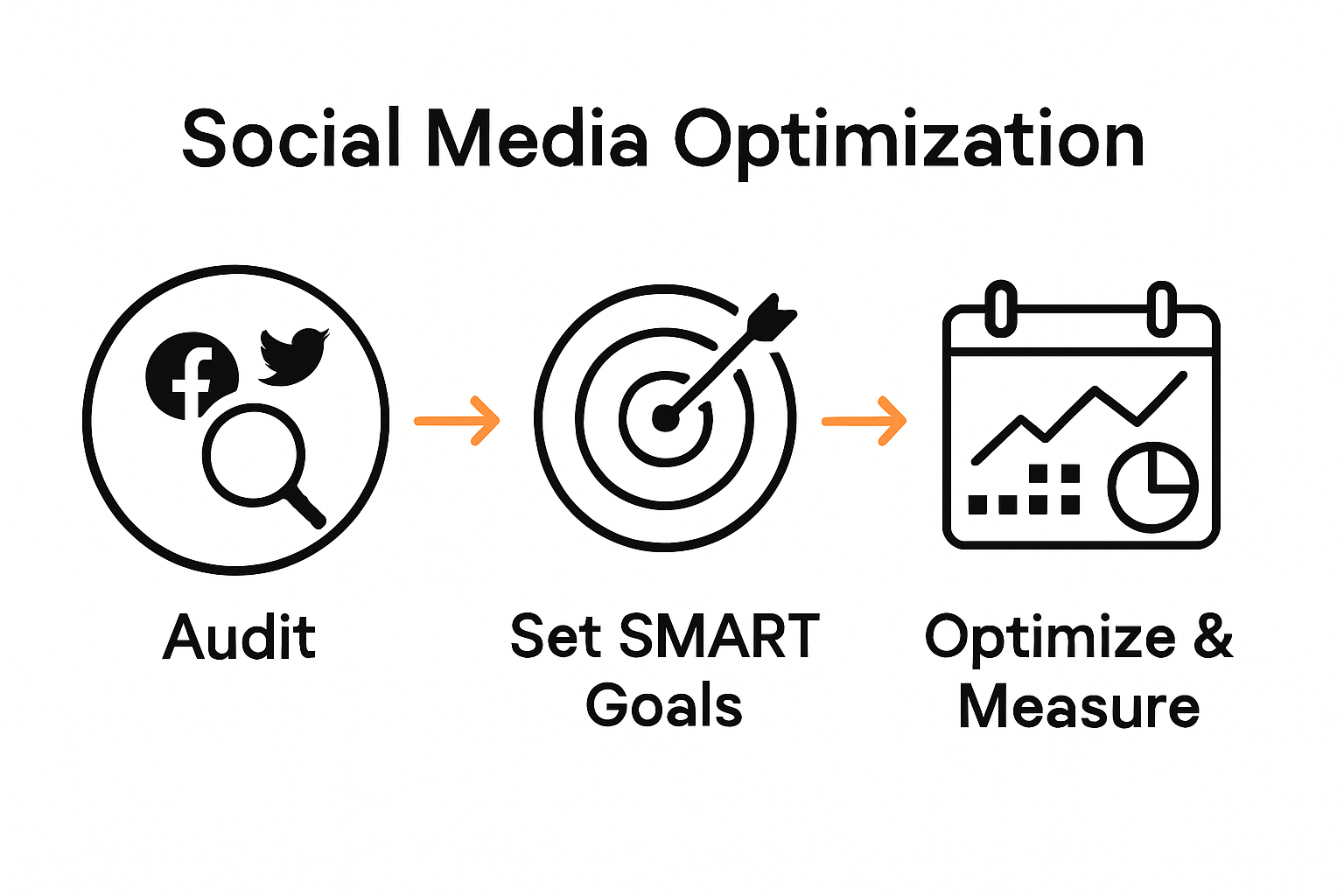 If you are aiming to move beyond generic strategies and want to maximize your social media impact through precise optimization, it is essential to have expert guidance and tailored solutions.
At Web Spider Solutions we specialize in turning these pain points into growth opportunities. Our B2B Marketing Archives – Web Spider Solutions offers deep insights into strategic social media management designed for focused outcomes like lead generation and brand awareness. Do not let unclear metrics or scattered platforms slow your progress. Contact us now to craft a personalized social media optimization plan that drives measurable results. Visit Web Spider Solutions and take the first step toward transforming your social media into a powerful business growth engine.
Frequently Asked Questions
How can I assess my current social media performance?
To assess your current social media performance, conduct a thorough audit of your existing accounts by reviewing key performance indicators such as engagement rates, follower growth, and content reach. Start by pulling analytics from each platform, focusing on 3-5 metrics directly tied to your business objectives to establish a baseline for future improvements.
What are some specific social media goals I should set for my business?
Define social media goals that are specific, measurable, achievable, relevant, and time-bound. For example, aim to increase your follower count by 25% in six months or generate 100 qualified leads through advertising by the end of the quarter.
How do I identify my target audience for social media optimization?
Identify your target audience by creating detailed audience personas that include their professional interests and online behaviors. This research will help you select 2-3 platforms where your audience is most active, allowing for a more focused approach in your content strategy.
What methods can I use to optimize my social media content?
To optimize your social media content, create a comprehensive content calendar that aligns with your goals and audience preferences. Implement A/B testing to refine your content formats and posting times based on analysis of past performance metrics.
How should I measure the results of my social media strategies?
Measure the results by establishing an analytics dashboard that tracks key performance indicators aligned with your objectives. Review metrics such as engagement rates and conversion percentages to assess effectiveness and make incremental adjustments every quarter based on your findings.
What steps can I take to continuously improve my social media marketing?
Create a continuous improvement framework that allows for agile responses to audience feedback and performance data. Regularly audit your strategies and make data-driven adjustments to enhance your social media optimization efforts, aiming for sustained growth over time.