







Over eighty percent of american consumers now start their search for products online, a shift that has changed the way companies approach marketing forever. Understanding digital marketing is more crucial than ever because it empowers businesses to reach their audience where they spend the most time. This guide breaks down core concepts and major channels, giving you the foundation to compete in today’s data-driven market and avoid costly mistakes.
Table of Contents
- Defining Digital Marketing And Core Concepts
- Major Channels And Strategies Explained
- Key Benefits For Modern Businesses
- How Digital Marketing Drives ROI
- Comparing Digital And Traditional Marketing
- Common Challenges And Mistakes To Avoid
Key Takeaways
| Point | Details |
|---|---|
| Digital Marketing Distinction | Digital marketing leverages electronic platforms for targeted engagement, unlike traditional marketing methods. |
| Channel Integration | A holistic approach that combines multiple digital channels enhances campaign effectiveness and reach. |
| Cost Efficiency and Tracking | Digital marketing offers lower costs and real-time analytics, improving ROI over traditional methods. |
| Common Challenges | Businesses must understand audience targeting and resource allocation to avoid pitfalls in their marketing strategies. |
Defining Digital Marketing And Core Concepts
Digital marketing represents a strategic approach to promoting businesses, brands, and services through digital channels and electronic technologies. According to research from Science LNU, digital marketing fundamentally differs from traditional marketing by leveraging electronic media platforms to engage and convert potential customers.
At its core, digital marketing encompasses a wide range of online strategies designed to reach audiences through digital touchpoints. These strategies include search engine optimization (SEO), social media marketing, email campaigns, content marketing, and paid digital advertising. Unlike traditional marketing methods that rely on print, television, or radio, digital marketing allows businesses to target specific demographics with unprecedented precision and measurability. As Journal IJAR highlights, electronic media has transformed promotional strategies by enabling real-time interaction and data-driven decision making.
Key characteristics that distinguish digital marketing include:
- Immediate Engagement: Direct interaction with target audiences
- Data-Driven Insights: Precise tracking of campaign performance
- Cost-Effectiveness: Lower investment compared to traditional marketing channels
- Global Reach: Ability to connect with international audiences instantly
- Personalization: Tailoring messages to specific customer segments
By understanding these fundamental concepts, businesses can leverage digital marketing to create more targeted, efficient, and impactful promotional strategies that drive meaningful growth and customer connection.

Major Channels And Strategies Explained
Digital marketing channels represent the diverse platforms and approaches businesses use to connect with potential customers online. ArXiv Research highlights that these channels form a complex ecosystem involving advertisers, publishers, and web users, each playing a critical role in modern marketing strategies.
The primary digital marketing channels include:
- Search Engine Marketing (SEM): Paid advertising and SEO strategies to increase visibility on search platforms
- Social Media Marketing: Engagement through platforms like Facebook, Instagram, LinkedIn, and Twitter
- Email Marketing: Direct communication with targeted audience segments
- Content Marketing: Creating valuable, relevant content to attract and retain customers
- Influencer Marketing: Leveraging personalities with significant online followings
Interestingly, ArXiv Research suggests that optimal digital marketing success requires strategic budget allocation across these channels, considering both their individual performance and network-wide influence mechanisms. This means businesses must continuously analyze and adapt their approach, recognizing that each channel offers unique advantages.
Successful digital marketing strategies demand a holistic approach that integrates multiple channels. By understanding the strengths of each platform and how they interconnect, businesses can create comprehensive campaigns that reach audiences more effectively, track performance with precision, and generate measurable results that drive growth and engagement.
Key Benefits For Modern Businesses
Digital marketing provides transformative advantages for businesses across industries, enabling unprecedented growth and customer engagement. According to IJEBE Research, digital content marketing strategies have become essential for small businesses seeking to expand their reach and compete effectively in the digital landscape.
The key benefits of digital marketing for modern businesses include:
- Cost-Effective Marketing: Significantly lower expenses compared to traditional advertising channels
- Precise Targeting: Ability to reach specific demographic and psychographic segments
- Real-Time Performance Tracking: Immediate insights into campaign effectiveness
- Global Market Access: Elimination of geographical barriers for business expansion
- Enhanced Customer Interaction: Direct communication and feedback mechanisms
Journal IJAR emphasizes that digital marketing facilitates superior brand interaction through digital media, offering businesses unprecedented opportunities to attract and retain customers. By leveraging data-driven strategies, companies can create personalized experiences that resonate with their target audience, driving engagement and conversion rates.
Ultimately, digital marketing empowers businesses to build smart, adaptive marketing ecosystems that respond dynamically to customer needs. This approach not only maximizes marketing efficiency but also provides a competitive edge in an increasingly digital-first marketplace, enabling businesses to grow, innovate, and connect with customers in ways traditional marketing could never achieve.
How Digital Marketing Drives ROI
Return on Investment (ROI) in digital marketing represents the critical metric that demonstrates the financial effectiveness of online marketing strategies. ArXiv Research highlights that optimal budget allocation across digital channels is fundamental to maximizing marketing performance and driving tangible business results.
The key mechanisms through which digital marketing generates ROI include:
- Precise Targeting: Reducing advertising waste by reaching only interested consumers
- Lower Customer Acquisition Costs: Significantly cheaper than traditional marketing methods
- Scalable Campaign Optimization: Real-time performance tracking and immediate adjustments
- Measurable Performance Metrics: Detailed analytics providing clear insights into campaign effectiveness
- Conversion Tracking: Direct attribution of marketing spend to revenue generation
ArXiv’s Internet Advertising Survey emphasizes that digital marketing’s unique strength lies in its ability to provide granular insights into advertising dynamics, enabling businesses to make data-driven decisions that directly impact financial performance. By leveraging advanced tracking technologies, companies can understand exactly how each marketing dollar contributes to overall revenue.
Ultimately, digital marketing transforms ROI calculation from a guessing game to a precise science. Businesses can now understand ROI of content marketing with unprecedented accuracy, creating marketing strategies that are not just creative, but financially intelligent and strategically aligned with core business objectives.
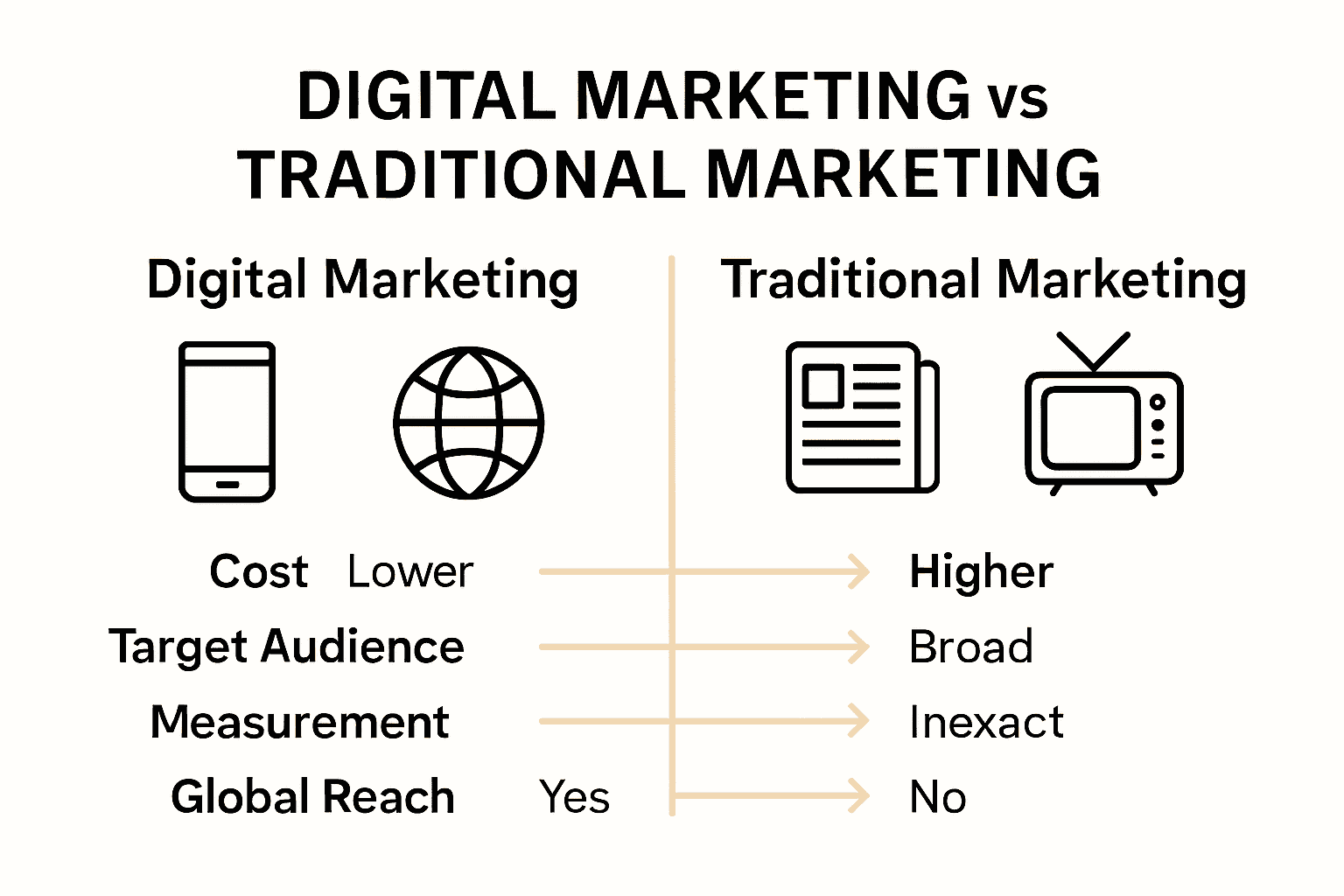
Comparing Digital And Traditional Marketing
Marketing approaches have undergone a radical transformation with the emergence of digital technologies. Science LNU Research systematically demonstrates the evolutionary shift from traditional to digital marketing strategies, highlighting fundamental differences in approach and execution.
Key distinctions between digital and traditional marketing include:
- Audience Targeting: Digital marketing enables precise demographic targeting, while traditional marketing uses broad, generalized approaches
- Cost Efficiency: Digital channels typically require significantly lower investment compared to print, TV, or radio advertising
- Measurement: Real-time analytics in digital marketing versus limited tracking in traditional methods
- Interaction Level: Immediate two-way communication in digital platforms versus one-way communication in traditional media
- Geographical Reach: Global accessibility through digital channels versus localized reach in traditional marketing
Journal IJAR emphasizes that electronic media has fundamentally transformed promotional strategies, enabling businesses to create more dynamic, responsive, and personalized marketing experiences. This shift means companies can now engage customers with unprecedented precision and adaptability, moving beyond the static, interrupt-based model of traditional advertising.
Businesses seeking to understand these strategic differences can explore our digital advertising explained guide to gain deeper insights into how modern marketing approaches are reshaping customer engagement and business growth.
Common Challenges And Mistakes To Avoid
Digital marketing presents complex challenges that can derail even the most well-intentioned campaigns. ArXiv Research reveals the intricate dynamics of internet advertising, highlighting the critical importance of understanding potential pitfalls before they impact marketing performance.
The most common digital marketing challenges include:
- Inadequate Audience Targeting: Failing to define and understand precise customer segments
- Budget Misallocation: Inefficient distribution of marketing resources across channels
- Inconsistent Brand Messaging: Lack of cohesive communication across different platforms
- Neglecting Analytics: Ignoring critical performance data and insights
- Poor Content Strategy: Creating content without clear purpose or audience alignment
ArXiv’s Advertising Budget Research emphasizes that strategic planning is crucial in navigating the complex digital marketing landscape. Businesses often struggle with optimal channel allocation, which can lead to wasted resources and diminished campaign effectiveness. Understanding these challenges requires a proactive approach that combines data-driven insights with flexible strategic thinking.
To maximize digital marketing success, businesses must continuously learn and adapt. Continuous learning becomes the key to overcoming these challenges, requiring regular performance reviews, staying updated with emerging technologies, and maintaining a nimble, responsive marketing approach that can quickly pivot based on real-world performance data.
Unlock the Full Power of Digital Marketing for Your Business
If you are feeling overwhelmed by the many channels and strategies involved in digital marketing or struggling to get measurable results from your campaigns you are not alone. This complete guide highlights common challenges like budget misallocation business growth barriers and the need for precise targeting and real-time performance tracking. You need a partner who understands how to combine cost-effective paid advertising with strategic SEO and compelling content creation to build a digital marketing ecosystem that truly drives ROI and expands your reach.
At Web Spider Solutions we specialize in providing tailored digital marketing services that help businesses leverage key benefits like global reach personalization and data-driven insights. Whether you want to enhance your B2B marketing approach or optimize your investment in paid marketing we have proven solutions designed to overcome these exact challenges.
Ready to turn digital marketing complexity into a clear path for growth Take action now and contact us for a free consultation at Web Spider Solutions. Start transforming your digital presence today with expert help you can trust.
Frequently Asked Questions
What is digital marketing?
Digital marketing is a strategic approach to promoting businesses and brands through digital channels and electronic technologies, distinguishing itself from traditional marketing by engaging with audiences online.
What are the key benefits of digital marketing for businesses?
The key benefits include cost-effectiveness, precise targeting, real-time performance tracking, global market access, and enhanced customer interaction.
How does digital marketing improve ROI for businesses?
Digital marketing improves ROI by enabling precise targeting, lowering customer acquisition costs, providing scalable campaign optimization, measurable performance metrics, and effective conversion tracking.
What are some common challenges businesses face in digital marketing?
Common challenges include inadequate audience targeting, budget misallocation, inconsistent brand messaging, neglecting analytics, and poor content strategy.