






Most American businesses find that standing out online is much harder than it seems. With over 90 percent of web traffic going to the top results on search engines, the pressure to master search engine optimization is real. SEO shapes how companies reach new customers, build trust, and compete in crowded markets. Learning how strategic techniques drive visibility can give any brand a lasting edge online.
Table of Contents
- SEO Defined And Its Critical Role Online
- Key Types Of SEO And Their Differences
- How SEO Drives Brand Visibility And Traffic
- SEO’s Role In Competitive Digital Markets
- Common SEO Challenges And How To Overcome Them
Key Takeaways
| Point | Details |
|---|---|
| Understanding SEO’s Importance | SEO is essential for enhancing online visibility and driving qualified traffic, impacting business performance significantly. |
| Types of SEO Strategies | On-Page, Off-Page, and Technical SEO are critical for a comprehensive digital marketing strategy; each addresses different visibility aspects. |
| Long-term Benefits of SEO | Investing in SEO leads to sustainable brand recognition and increased organic traffic without relying solely on paid advertising. |
| Navigating SEO Challenges | Businesses must continuously adapt to changing algorithms and competitive landscapes to maintain effective SEO strategies. |
SEO Defined and Its Critical Role Online
Search Engine Optimization (SEO) is the strategic process of improving website visibility and traffic quality through targeted digital techniques. At its core, SEO transforms how businesses connect with potential customers in the digital marketplace by enhancing their online presence and searchability.
The fundamental goal of SEO revolves around understanding and optimizing how search engines like Google evaluate and rank web content. Search algorithms examine multiple factors including relevance, authority, user experience, and content quality to determine which websites appear in search results. By strategically aligning website elements with these algorithmic requirements, businesses can significantly increase their organic visibility and attract more qualified web traffic.
SEO typically encompasses two primary optimization domains: On-Page SEO and Off-Page SEO. On-Page SEO focuses on optimizing individual web pages through technical improvements like:
- Keyword-optimized content
- Fast page loading speeds
- Mobile responsiveness
- Clear website structure
- Effective meta descriptions
Off-Page SEO, conversely, involves building external credibility through strategies like backlink development, social media engagement, and brand mentions across digital platforms. These complementary approaches work together to signal a website’s trustworthiness and relevance to search engine algorithms.
Businesses investing in comprehensive SEO strategies can expect substantial long-term benefits: increased website traffic, enhanced brand visibility, higher conversion rates, and a competitive edge in their digital marketplace. By understanding and implementing strategic SEO techniques, organizations transform their online presence from passive web pages into dynamic, discoverable digital assets.
Key Types of SEO and Their Differences
Search engine optimization encompasses several specialized approaches designed to improve a website’s visibility and performance across different digital platforms. Understanding these distinct SEO types is crucial for developing a comprehensive digital marketing strategy that addresses multiple aspects of online visibility.
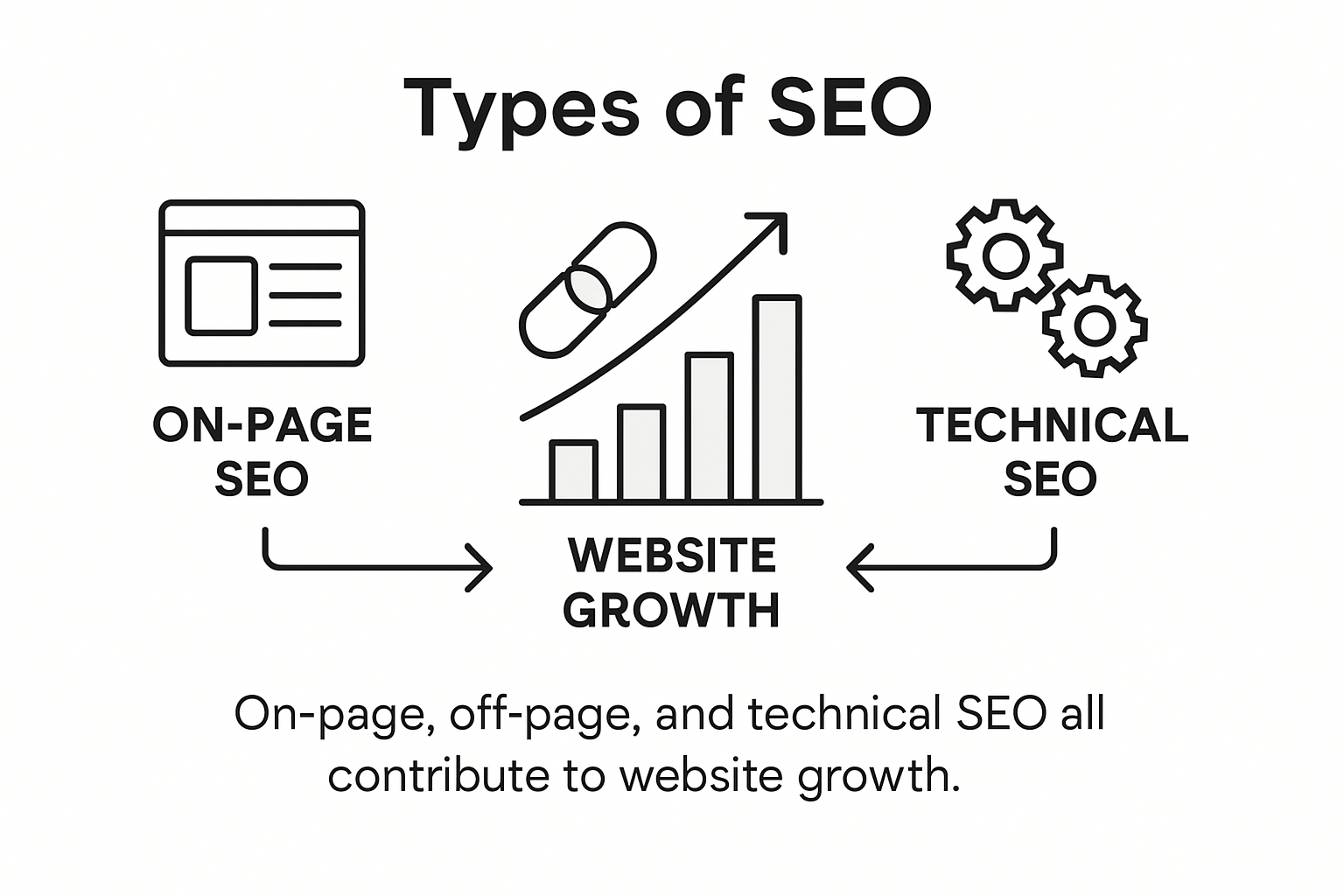
The primary categories of SEO include On-Page SEO, Off-Page SEO, and Technical SEO. On-Page and Off-Page SEO require balanced attention to create a holistic optimization strategy. Here’s a detailed breakdown:
On-Page SEO focuses on optimizing individual web page elements:
- Content quality and relevance
- Keyword optimization
- Meta descriptions and title tags
- Internal linking structure
- User experience and readability
Off-Page SEO involves external factors that build website authority:
- Backlink development
- Social media engagement
- Brand mentions
- Online reputation management
- External content marketing
Technical SEO addresses the backend infrastructure that supports search performance:
- Website speed optimization
- Mobile responsiveness
- Secure connections (HTTPS)
- Crawlability and indexing
- Structured data markup
Beyond these primary categories, modern SEO also includes specialized approaches like local SEO for geographically targeted businesses, image SEO, video SEO, and news SEO. Each type requires unique strategies to maximize visibility in specific search environments.
Successful digital marketing demands a nuanced approach that integrates these SEO types strategically. Businesses must recognize that no single optimization method guarantees success. Instead, a comprehensive, multifaceted SEO strategy that adapts to evolving search algorithms and user behaviors will provide the most sustainable path to improved online visibility and organic growth.
How SEO Drives Brand Visibility and Traffic
Strategic search engine optimization transforms digital marketing by elevating a brand’s online presence and driving targeted website traffic through sophisticated visibility techniques. Modern businesses recognize that effective SEO is no longer optional but a critical component of sustainable digital growth strategies.
Organic Search Performance plays a pivotal role in brand visibility. SEO effectiveness directly correlates with business performance, enabling companies to attract high-quality visitors without continuous financial investment in paid advertising. By optimizing content, technical infrastructure, and digital signals, brands can achieve:
- Higher search engine rankings
- Increased website credibility
- More targeted visitor acquisition
- Enhanced user engagement
- Improved conversion potential
The mechanics of SEO-driven visibility involve multiple sophisticated strategies. Search algorithms evaluate websites based on complex criteria including content relevance, user experience, technical performance, and external validation. Top SEO best practices help businesses signal their authority and trustworthiness to these algorithmic systems.

Successful brands understand that SEO represents a long-term investment in digital real estate. Unlike traditional advertising that provides temporary exposure, strategic SEO creates sustainable visibility pathways. Companies that consistently optimize their digital presence can generate continuous organic traffic, build brand recognition, and establish themselves as industry thought leaders without perpetual marketing expenditures.
SEO’s Role in Competitive Digital Markets
In today’s hyper-competitive digital landscape, SEO has become a critical strategic weapon for businesses seeking to establish and maintain their online market presence. Companies across industries now understand that visibility is no longer about simply existing online, but about strategically positioning themselves where potential customers are actively searching.
The competitive dynamics of digital markets demand sophisticated optimization strategies. Search Engine Ranking represents a direct measure of a brand’s digital competitiveness, with top-positioned websites capturing significantly more market attention and potential customer interactions. Businesses that invest in comprehensive SEO strategies can:
- Outrank direct competitors
- Capture market share more efficiently
- Reduce customer acquisition costs
- Build long-term brand credibility
- Create sustainable digital visibility
Algorithmic Intelligence plays an increasingly nuanced role in determining digital market competitiveness. Advanced machine learning technologies are transforming how search engines evaluate and rank online content, making adaptive SEO strategies more critical than ever. Successful brands must continuously evolve their digital optimization approaches to remain competitive.
Ultimately, SEO in competitive digital markets is about more than technical optimization. It represents a holistic approach to digital storytelling, brand positioning, and strategic market communication. Companies that view SEO as a dynamic, integrated business strategy rather than a standalone technical function will be best positioned to thrive in an increasingly complex digital ecosystem.
Common SEO Challenges and How to Overcome Them
Navigating the complex landscape of search engine optimization requires businesses to understand and proactively address multiple strategic challenges. Successful digital marketing demands a nuanced approach that goes beyond basic optimization techniques, recognizing the evolving nature of search algorithms and user behaviors.
Technical SEO Complexity presents significant hurdles for many organizations. Public awareness and perception of SEO techniques reveal multiple critical challenges that businesses must systematically address:
- Rapidly changing search engine algorithms
- Increasing competition for top search rankings
- Complex technical optimization requirements
- Balancing user experience with technical optimization
- Maintaining content relevance and quality
Keyword Strategy Challenges require sophisticated approaches. Businesses must move beyond simple keyword insertion and develop comprehensive content strategies that demonstrate genuine expertise. Strategic directory submissions and targeted keyword generation can help organizations overcome traditional optimization limitations.
Overcoming SEO challenges demands continuous learning and adaptive strategies. Successful digital marketing teams recognize that SEO is not a one-time task but an ongoing process of refinement, testing, and strategic optimization. Companies willing to invest time, resources, and intellectual capital into understanding search ecosystem dynamics will be best positioned to achieve sustainable online visibility and competitive advantage.
Unlock Business Growth with Expert SEO Solutions
The article underscores why SEO is essential for any business aiming to increase online visibility, attract targeted traffic, and build long-term digital authority. You might be facing challenges like evolving search algorithms, tough competition, and the need to balance technical SEO with compelling content. These pain points require a strategic approach that blends on-page optimization, technical precision, and off-page credibility to truly drive sustainable growth.
At Web Spider Solutions, we specialize in turning these SEO complexities into clear advantages. Our comprehensive services help you improve organic rankings, enhance user experience, and capture qualified leads through tailored campaigns. If you want to see how integrating paid strategies can amplify those results, explore our Paid Advertising Archives. Curious about how the latest AI tools shape search performance? Discover insights at our Artificial Intelligence Archives.
Take control of your digital presence today with proven SEO strategies designed for competitive markets. Connect with us now at Web Spider Solutions for a free audit and start transforming your online growth journey.
Frequently Asked Questions
What is SEO and why is it important for businesses?
SEO, or Search Engine Optimization, is the process of improving a website’s visibility and traffic quality through strategic techniques. It is crucial for businesses because it enhances online presence, helps attract potential customers, and increases organic traffic without the immediate costs associated with paid advertising.
What are the main types of SEO that businesses should focus on?
The primary types of SEO include On-Page SEO, which optimizes individual web page elements; Off-Page SEO, which builds external credibility through backlinks and online engagement; and Technical SEO, which ensures website infrastructure supports search performance. A balanced approach to all three is essential for comprehensive optimization.
How does SEO drive brand visibility online?
SEO drives brand visibility by improving search engine rankings, thereby allowing companies to attract high-quality visitors more effectively. This increases website credibility and user engagement, ultimately leading to better conversion rates and sustained digital growth.
What are some common challenges businesses face with SEO?
Common challenges include rapidly changing search engine algorithms, increasing competition among websites, complex technical requirements, and maintaining content relevance. Businesses need to continuously adapt their strategies to stay ahead in the competitive digital landscape.
Recommended