








Most american businesses learn quickly that even a single online review can shape public opinion overnight. Over 80 percent of consumers say trust in a brand directly impacts their buying decisions, making reputation management a make-or-break factor for success. With digital channels amplifying every comment and crisis, understanding how to guide that public perception is more important than ever. This article unpacks what reputation management means for the modern american organization and how strategic action can safeguard a lasting, positive brand image.
Table of Contents
- Defining Reputation Management in Business
- Types of Reputation Management Strategies
- Core Elements and Processes Explained
- Real-World Applications for Brands and Firms
- Risks, Challenges, and Common Mistakes
Key Takeaways
| Point | Details |
|---|---|
| Reputation Management Definition | It is a strategic process to influence perceptions of stakeholders, requiring continuous monitoring and proactive communication. |
| Types of Strategies | Reputation management strategies are categorized into proactive, focusing on brand building, and reactive, addressing reputation damage post-incident. |
| Core Elements | Critical elements include information transparency, security, and compliance, which significantly influence organizational reputation. |
| Common Challenges | Organizations face risks such as inconsistent messaging and inadequate monitoring, which can lead to rapid reputational crises in a digital landscape. |
Defining Reputation Management in Business
Reputation management represents a strategic organizational process designed to shape and influence how various stakeholders perceive a business. According to Sage Publications, reputation management involves strategically utilizing corporate resources to positively influence the attitudes, beliefs, opinions, and actions of key stakeholders, including consumers, employees, investors, and media professionals.
At its core, business reputation management is about proactively controlling and monitoring the narrative surrounding an organization’s brand image. This goes beyond simple public relations or marketing strategies – it’s a comprehensive approach that requires continuous monitoring, strategic communication, and rapid response capabilities. Businesses must understand that reputation is a dynamic asset that can be enhanced or damaged through various interactions, online and offline.
Historical perspectives underscore the complexity of corporate reputation. As Cambridge Business History Review highlights, corporate reputation evolves over time and varies significantly among different stakeholder groups. This means reputation is not a static concept but a nuanced, contextual construct that requires sophisticated management strategies.
Key elements of effective reputation management include:
- Consistent brand messaging
- Transparent communication
- Proactive crisis management
- Digital presence monitoring
- Stakeholder engagement
By implementing a robust reputation management approach, businesses can protect their brand integrity, build trust, and create a positive perception that supports long-term success.
Types of Reputation Management Strategies
Reputation management strategies encompass a diverse range of approaches designed to protect, enhance, and maintain an organization’s public perception. Wikipedia’s Image Restoration Theory outlines several critical strategies for addressing reputational challenges, including denial, evasion of responsibility, reducing offensiveness, implementing corrective actions, and demonstrating mortification – techniques applicable to both individual and organizational contexts.
These strategies can be broadly categorized into proactive and reactive approaches. Proactive strategies focus on building a positive reputation before any potential issues arise, while reactive strategies are designed to address and mitigate reputational damage after an incident. Organizations must develop a comprehensive approach that balances both preventative and responsive tactics to effectively manage their brand perception.
According to Texila Journal, effective reputation management extends beyond simple communication tactics. The most successful strategies integrate robust stakeholder relations and corporate social responsibility initiatives as core components of reputation maintenance. This holistic approach ensures that businesses are not just managing perceptions, but actively creating positive brand experiences.
Key reputation management strategies include:
- Transparent communication
- Proactive brand monitoring
- Swift crisis response
- Stakeholder engagement
- Digital reputation management
- Corporate social responsibility initiatives
By implementing a multi-faceted approach to reputation management, businesses can build resilience, maintain stakeholder trust, and create a strong, positive brand image that withstands potential challenges.

Core Elements and Processes Explained
Reputation management is built upon several critical foundational elements that determine an organization’s ability to effectively control and shape its public perception. Public SCN Hub Research identifies three core elements as particularly crucial: information transparency, security, and compliance, which collectively have a significant impact on an enterprise’s economic security and overall reputation.
The processes involved in reputation management are intricate and multifaceted, requiring a sophisticated approach to monitoring and managing organizational perception. According to ArXiv Research, mapping organizational knowledge networks and managing social media-based reputation are essential processes that help organizations understand knowledge flow and the influence of employee reputation on the broader organizational ecosystem.
Effective reputation management requires a comprehensive framework that integrates multiple strategic components. This includes continuous monitoring of digital channels, real-time response mechanisms, stakeholder engagement strategies, and proactive brand communication. Organizations must develop robust systems that can quickly detect potential reputation risks, assess their potential impact, and implement swift, strategic responses.
Key elements and processes in reputation management include:
- Continuous digital brand monitoring
- Real-time reputation risk assessment
- Strategic communication planning
- Stakeholder engagement protocols
- Social media reputation management
- Crisis response and mitigation strategies
By understanding and implementing these core elements and processes, businesses can create a resilient reputation management system that protects and enhances their brand’s public perception across various platforms and stakeholder groups.
Real-World Applications for Brands and Firms
Reputation management has become a critical strategic function across diverse industries, with organizations implementing sophisticated approaches to protect and enhance their brand image. ArXiv Research reveals a fascinating trend where corporate reputation is increasingly tied to leadership visibility, highlighting how CEOs’ social media reputation management directly impacts overall corporate perception in the digital age.
Modern firms are leveraging advanced technological solutions to monitor and manage their online reputation more effectively. Innovative approaches like the BERT-based deep learning method discussed in ArXiv’s recent study demonstrate how artificial intelligence can automate and enhance online reputation management efforts, providing real-time insights and predictive analysis of brand sentiment across digital platforms.
Brands are applying reputation management strategies across multiple domains, including crisis communication, customer engagement, and proactive brand positioning. This multifaceted approach requires integrated strategies that span digital channels, traditional media, and direct stakeholder interactions. Organizations must develop agile systems that can quickly detect, assess, and respond to potential reputation challenges while maintaining a consistent and authentic brand narrative.
Practical applications of reputation management include:
- Executive social media strategy development
- Real-time sentiment monitoring
- Crisis communication planning
- Digital brand protection
- Customer feedback integration
- Competitive reputation benchmarking
By embracing these comprehensive reputation management techniques, businesses can transform potential reputation risks into opportunities for building trust, demonstrating transparency, and strengthening their market positioning.
Risks, Challenges, and Common Mistakes
Reputation risk represents a critical vulnerability for organizations across all industries. IOSR Journals Research conceptualizes reputation risk as a significant asset or liability fundamentally influenced by stakeholders’ perceptions, underscoring the complex nature of maintaining a positive corporate image in an increasingly interconnected digital landscape.
Organizations frequently encounter substantial challenges in managing their online presence, with many falling prey to common reputation management pitfalls. These challenges range from inconsistent messaging and delayed crisis response to inadequate monitoring of digital channels. The rapid spread of information through social media platforms means that a single misstep can quickly escalate into a full-blown reputational crisis, demanding sophisticated and proactive management strategies.
Professional environments are not immune to reputation management complexities. As highlighted by Deakin University Research, professionals face significant challenges in managing their online personas across multiple platforms, necessitating institutional support to mitigate potential negative consequences of heightened digital exposure. This challenge extends beyond individual professionals to entire organizations that must navigate the intricate balance between transparency and strategic communication.
Common reputation management mistakes include:
- Ignoring negative feedback
- Inconsistent brand messaging
- Slow response to criticism
- Lack of digital monitoring
- Inauthentic communication
- Neglecting stakeholder perspectives
By understanding these risks and proactively developing robust reputation management strategies, businesses can transform potential vulnerabilities into opportunities for building trust, demonstrating accountability, and strengthening their overall brand resilience.
Strengthen Your Brand with Expert Reputation Management Solutions
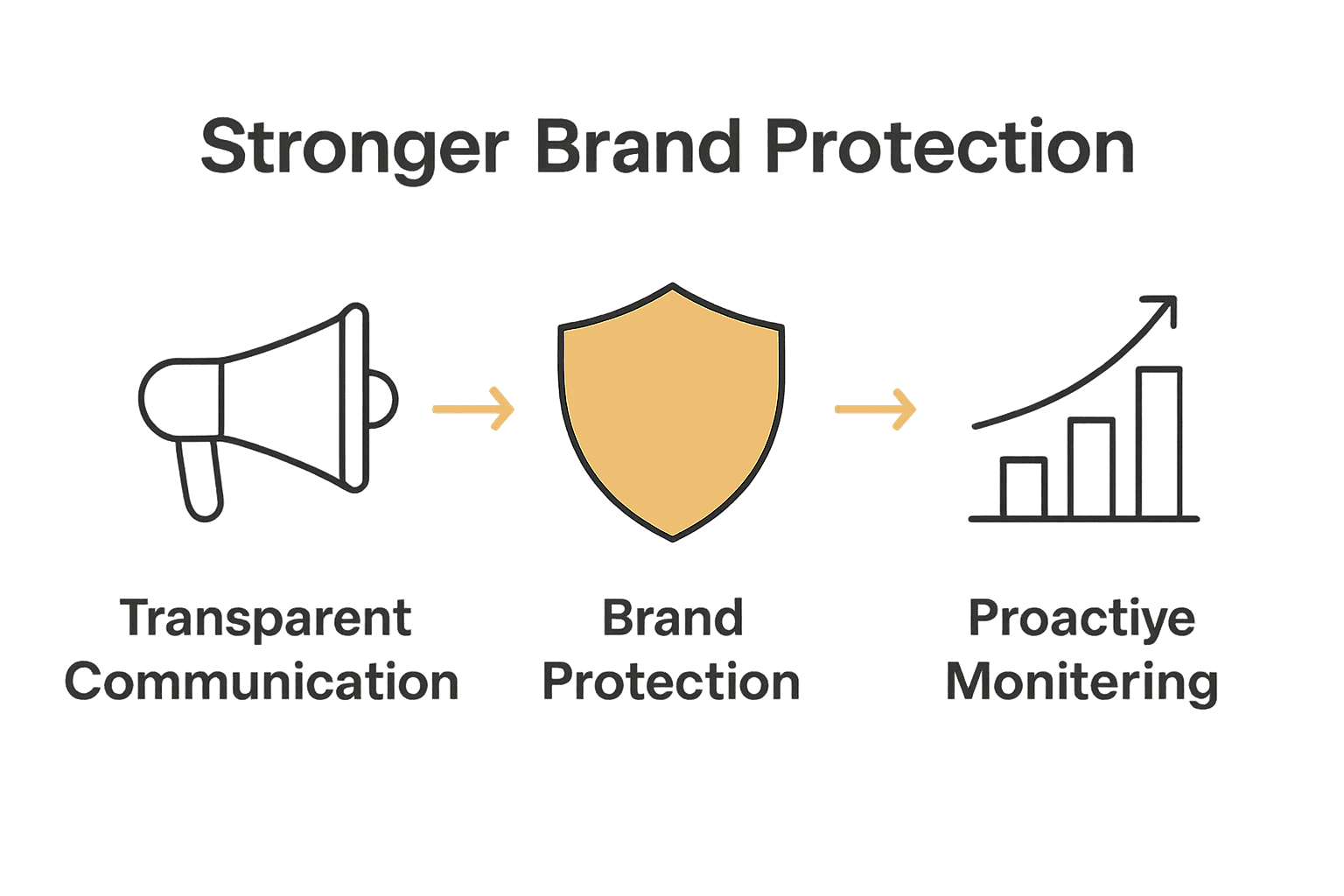
Reputation management is more than just responding to crises. As highlighted in the article, businesses face the challenge of maintaining consistent brand messaging, transparent communication, and real-time monitoring to protect their image across all digital channels. Negative feedback can spread quickly and damage trust if it is ignored or handled poorly. Your brand’s reputation is a valuable asset that demands proactive strategies and swift responses to mitigate risks and build lasting stakeholder confidence.
At Web Spider Solutions, we understand these pain points and offer tailored digital marketing services that integrate advanced reputation management techniques. With our expertise in SEO, social media management, and content marketing, we help you monitor your brand’s online presence, engage your audience authentically, and respond to challenges effectively. Don’t let inconsistent messaging or slow reaction times undermine your success. Explore how our digital marketing services can empower your business to transform reputation risks into opportunities.
Ready to take control of your brand perception? Get started today with a free SEO audit and consultation at Web Spider Solutions. The time to protect and enhance your reputation is now.
Frequently Asked Questions
What is the purpose of reputation management in business?
Reputation management in business aims to shape and influence how stakeholders perceive an organization. It involves proactively controlling and monitoring a company’s brand image to build trust and maintain a positive perception among consumers, employees, investors, and the media.
What are the key strategies for effective reputation management?
Effective reputation management strategies include transparent communication, proactive brand monitoring, swift crisis response, stakeholder engagement, digital reputation management, and Corporate Social Responsibility (CSR) initiatives. These strategies help businesses maintain a strong, positive brand image.
How do businesses assess reputation risk?
Businesses assess reputation risk by continuously monitoring digital channels, conducting real-time sentiment analysis, and evaluating stakeholder feedback. This helps identify potential vulnerabilities that could affect their public perception and allows for timely responses to mitigate risks.
What are common mistakes to avoid in reputation management?
Common mistakes in reputation management include ignoring negative feedback, having inconsistent brand messaging, responding slowly to criticism, lacking digital monitoring, communicating inauthentically, and neglecting stakeholder perspectives. Avoiding these pitfalls is crucial for maintaining a positive corporate image.