







More than eighty percent of american businesses update or redesign their websites every three to five years, yet many still miss key steps that drive real results. A website is often the main way your customers interact with your brand, so understanding each critical phase in the redesign process makes a huge impact. This guide uncovers clear, actionable strategies to help american brands turn a basic redesign into lasting digital success.
Table of Contents
- Step 1: Assess Current Website Performance
- Step 2: Define Redesign Goals And Strategy
- Step 3: Develop And Implement New Website Design
- Step 4: Optimize Content And Technical Elements
- Step 5: Test Functionality And Gather Feedback
- Step 6: Launch And Monitor Website Performance
Quick Summary
| Key Takeaway | Explanation |
|---|---|
| 1. Assess Website Performance | Analyze quantitative and qualitative data to identify usability and technical issues. |
| 2. Establish Redesign Objectives | Define measurable goals linked to business outcomes for effective website redesign. |
| 3. Prioritize User-Centric Design | Focus designs on user experience, blending aesthetic and functional elements effectively. |
| 4. Optimize Website Content | Regularly audit and refine content while considering SEO elements and user needs. |
| 5. Monitor Post-Launch Performance | Continuously track website analytics and user feedback to drive ongoing improvements. |
Step 1: Assess Current Website Performance
Assessing your current website’s performance is a strategic diagnostic process that identifies strengths, weaknesses, and opportunities for improvement. According to research from NCBI, analyzing specific performance features can systematically enhance website usability and effectiveness.
To conduct a comprehensive performance assessment, start by gathering quantitative and qualitative data through multiple channels. Use web analytics tools to examine key metrics like page load speed, bounce rates, user engagement, and conversion rates. Dive into website analytics to understand visitor behavior patterns and identify potential friction points in user experience. Pay special attention to metrics such as time on page, click through rates, and navigation paths.
A computational model introduced by researchers suggests evaluating seventeen distinct features that impact website usability. This approach involves analyzing technical elements like mobile responsiveness, site architecture, content relevance, and interactive elements. Consider performing a technical SEO audit to uncover potential performance bottlenecks. Technical SEO assessments can reveal critical issues affecting your site’s search engine visibility and user experience.
Warning: Do not rely exclusively on quantitative data. Supplement your metrics with user feedback, heatmap analysis, and usability testing to gain holistic insights into your website’s actual performance. The goal is to create a nuanced understanding of how users interact with your digital platform.

With a clear performance assessment complete, you are now ready to move forward with strategic website redesign recommendations.
Step 2: Define Redesign Goals and Strategy
Defining clear goals and strategy is the cornerstone of a successful website redesign project. According to Digital Experience Studio, strategic planning requires a comprehensive approach that aligns business objectives with user experience expectations.
Start by conducting a thorough stakeholder workshop to identify specific redesign objectives. These goals should be measurable and directly tied to your business outcomes. Are you looking to increase conversion rates, improve user engagement, enhance brand perception, or streamline user navigation? Articulate these objectives with precision. Consider creating a goal hierarchy that breaks down broad objectives into specific, actionable targets. For instance, a goal of “improving user experience” might translate into concrete metrics like reducing page load time by 30%, decreasing bounce rates by 25%, or increasing mobile conversion rates by 20%.
Develop a user centric strategy by mapping out detailed user experience process flows. This involves understanding your target audience segments, their primary motivations, pain points, and digital interaction patterns. Use customer personas, journey mapping, and behavioral analytics to inform your redesign approach. Assess website analytics to validate your strategic assumptions and identify key areas for improvement.
Warning: Avoid the common pitfall of redesigning based on personal preferences or aesthetic trends. Every strategic decision must be grounded in user data, business goals, and measurable performance indicators.
With your redesign goals and strategy clearly defined, you are now prepared to move into the detailed planning and research phase of your website transformation.
Step 3: Develop and Implement New Website Design
Developing and implementing a new website design requires a strategic approach that balances aesthetic appeal with functional excellence. According to research from The Scholarship, successful website redesign hinges on carefully integrating visuals, usability, and information design to create a compelling digital experience.
Begin by creating comprehensive wireframes and mockups that translate your strategic goals into visual blueprints. Explore responsive website design principles to ensure your new design adapts seamlessly across different devices and screen sizes. Focus on developing a clean, intuitive layout that guides users through your content with minimal friction. Prioritize visual hierarchy, using typography, color schemes, and whitespace to direct user attention and create a natural flow of information. Each design element should serve a specific purpose aligned with your identified user experience objectives.
Implement your design through an iterative development process that allows for continuous refinement. Work closely with your design and development team to transform wireframes into functional prototypes. Pay special attention to interaction design elements like navigation menus, call to action buttons, and user interface components. Conduct multiple rounds of internal testing to validate design functionality, ensuring that the new website not only looks impressive but also performs efficiently across different browsers and devices.
Warning: Avoid getting trapped in aesthetic perfection at the expense of functionality. Your design must prioritize user experience and meet the practical needs of your target audience.
With your new website design developed and initial implementation complete, you are now ready to move forward with comprehensive testing and quality assurance.
Step 4: Optimize Content and Technical Elements
Optimizing your website’s content and technical elements is a critical phase that transforms your redesign strategy into tangible improvements. According to Web Community, creating an effective content strategy requires systematic assessment and clear goal setting to ensure your website delivers maximum value to users.
Develop website content by conducting a comprehensive content audit. Evaluate existing content against five key quality criteria outlined by Fairfield University’s library research: currency, accuracy, authority, coverage, and objectivity. Update outdated information, remove redundant content, and ensure that each page serves a specific purpose aligned with your strategic goals. Pay special attention to technical SEO elements like metadata, header tags, internal linking structures, and page load speed. Implement schema markup to enhance search engine understanding of your content and improve visibility in search results.
Focus on creating a content optimization workflow that includes regular review and refinement. Prioritize user experience by developing clear, concise, and valuable content that directly addresses your target audience’s needs. Integrate responsive design principles to ensure content displays correctly across all devices. Utilize analytics tools to track content performance and make data driven improvements continuously.
Warning: Content optimization is not a one time task. Websites require ongoing refinement to remain relevant and competitive in rapidly changing digital environments.
With your content and technical elements optimized, you are now prepared to implement comprehensive testing and quality assurance measures.
Step 5: Test Functionality and Gather Feedback
Testing functionality and gathering comprehensive feedback is crucial for ensuring your redesigned website meets user expectations and performs optimally. According to Digital Experience Studio, mapping user experience process flows is essential for identifying potential friction points and validating the effectiveness of your website design.
Implement a multi layered testing approach that covers technical performance and user experience. Conduct thorough cross browser and cross device testing to ensure consistent functionality across different platforms. Explore technical SEO elements to verify that all technical components function correctly. Utilize automated testing tools to check for broken links, page load speeds, mobile responsiveness, and overall site performance. Simultaneously, organize user testing sessions with representative members of your target audience to gather qualitative insights. Create structured feedback mechanisms such as user surveys, heatmap tracking, and user journey analysis to understand how real users interact with your redesigned website.
Develop a systematic feedback collection and evaluation process. Invite beta testers from different demographic groups to provide diverse perspectives on your website’s usability, design, and functionality. Encourage participants to provide detailed feedback on navigation, content clarity, visual appeal, and overall user experience. Analyze the collected data rigorously, identifying patterns and prioritizing improvements based on user suggestions and technical performance metrics.
Warning: Avoid the temptation to implement every piece of feedback. Prioritize suggestions that align with your original strategic goals and have the most significant potential impact on user experience.
With comprehensive testing and feedback gathered, you are now prepared to make final refinements and prepare for website launch.
Step 6: Launch and Monitor Website Performance
Launching your redesigned website marks the beginning of an ongoing performance optimization journey. According to San Francisco State University’s Marketing Communications, implementing a robust post launch strategy is crucial to ensuring your website continues to meet its strategic objectives and deliver exceptional user experiences.
Improve website conversion rates by establishing a comprehensive monitoring framework. Leverage advanced analytics tools to track key performance indicators such as user engagement, traffic sources, conversion rates, and user behavior patterns. Set up real time monitoring dashboards that provide immediate insights into website performance. Configure alerts for critical metrics like page load times, server response rates, and potential technical issues. Utilize tools that offer granular data visualization to help you understand user interactions and identify potential areas for optimization.
Develop a proactive performance management approach that involves continuous analysis and incremental improvements. Schedule regular performance reviews to assess your website against predefined benchmarks and business goals. Implement A/B testing strategies to experiment with design elements, content variations, and user interface modifications. Create a systematic process for collecting and evaluating user feedback, allowing you to make data driven refinements that enhance overall website effectiveness.
Warning: Performance monitoring is not a passive activity. Successful websites require consistent attention, strategic adaptation, and a commitment to ongoing optimization.
With your website launched and performance monitoring systems in place, you are now prepared to continuously evolve and improve your digital presence.
Take Your Website Redesign from Strategy to Success with Expert Support
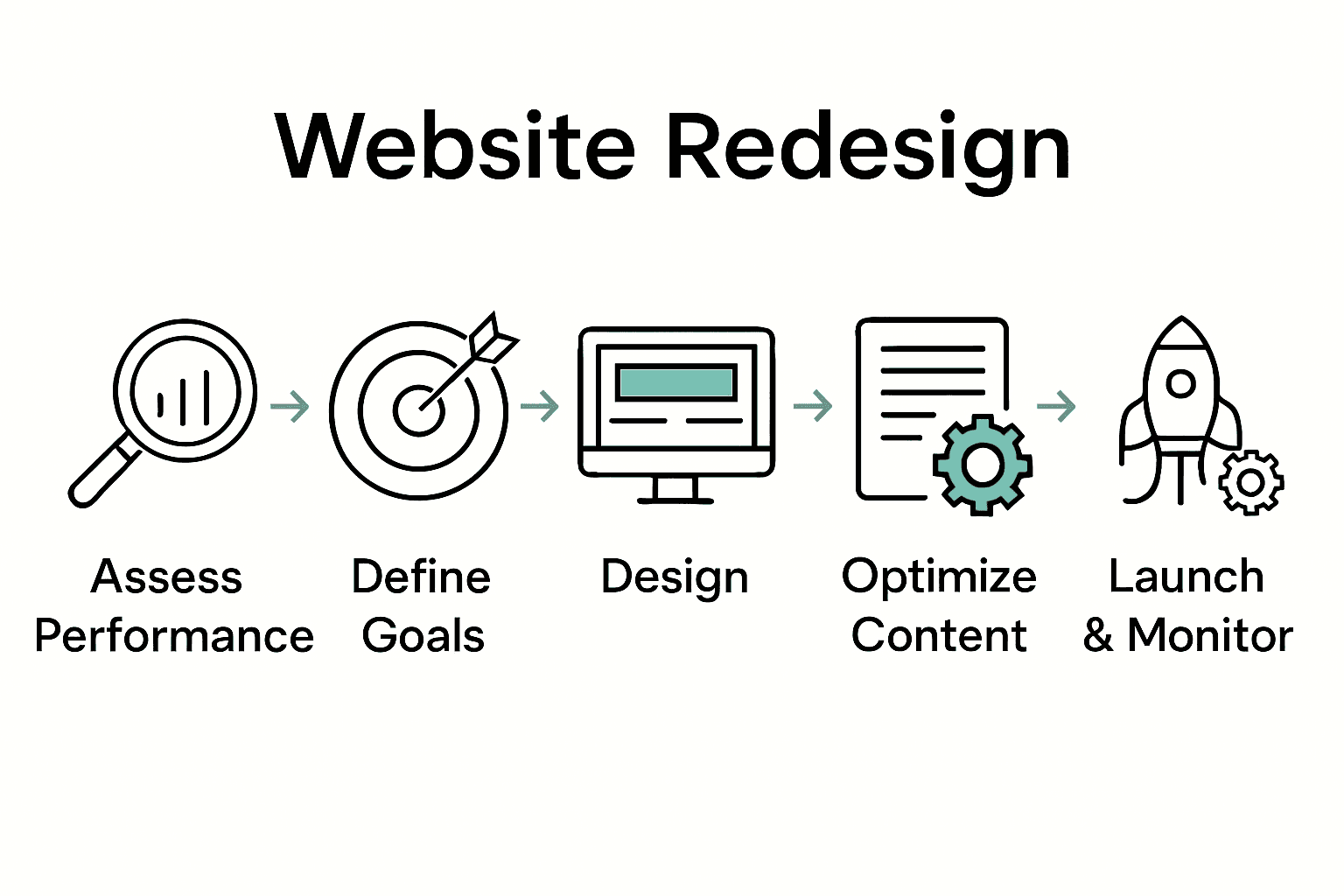
Redesigning a website involves more than just a fresh look. This guide highlights key challenges like assessing performance, defining clear goals, and optimizing content and technical elements to create a seamless user experience that drives real business growth. If you find yourself struggling with aligning your redesign strategy to measurable results or ensuring your new design truly converts visitors into customers then you are not alone. Many businesses face hurdles in balancing aesthetics with functionality while improving SEO and user engagement simultaneously.
At Web Spider Solutions we specialize in transforming website redesign projects into long-term digital success stories. Our team understands the importance of addressing every step from detailed analytics review to proactive performance monitoring. Explore our Stories Archives – Web Spider Solutions to see how we help companies overcome these exact obstacles by crafting data-driven, user-focused redesign strategies paired with expert SEO and content optimization. Ready to move beyond theory and start converting visitors into loyal customers? Visit our Uncategorized Archives – Web Spider Solutions for insights on actionable tactics and connect with us today to get a free consultation.
Don’t let your redesigned website underperform. Take action now to ensure your project delivers measurable results that push your business forward.
Frequently Asked Questions
What are the first steps in website redesigning services?
Assess the current website’s performance by gathering data on metrics like page load speed, bounce rates, and user engagement. Start by using web analytics tools to understand your site’s strengths and weaknesses.
How do I define redesign goals for my website?
Define clear and measurable redesign goals that align with your business objectives. Consider breaking broader goals into specific metrics, like improving conversion rates by 20% or reducing bounce rates by 25%.
What should I focus on during the design phase of a website redesign?
Focus on creating wireframes and mockups that balance aesthetics with functionality. Ensure your design is user-friendly, with clear navigation and effective visual hierarchy to streamline user experience.
How can I optimize content after a website redesign?
Conduct a content audit to evaluate existing materials for accuracy and relevance. Update outdated information and ensure that each piece of content aligns with your strategic goals for better user engagement and search visibility.
What testing methods should I use before launching my redesigned website?
Implement multi-layered testing that includes technical performance checks and user experience evaluations. Engage real users in testing sessions to gather feedback on usability, navigation, and overall satisfaction.
How do I monitor my website’s performance after launching?
Establish a monitoring framework that tracks key performance indicators such as user engagement and conversion rates. Set up alerts for critical metrics to ensure you can quickly respond to any performance issues that arise.