







Did you know websites with XML sitemaps see up to 40% faster indexing of new content? Yet many SMBs in SaaS and healthcare overlook this simple but powerful SEO tool. This guide explains sitemap types, their role in accelerating content discovery, and actionable best practices to boost your online visibility in competitive markets.
Table of Contents
- Introduction To Sitemaps
- How Sitemaps Improve SEO Crawling And Indexing
- Comparing XML And HTML Sitemaps: SEO And User Experience
- Common Misconceptions About Sitemaps
- Best Practices For Creating, Submitting, And Maintaining Your Sitemap
- Practical Case Studies And Examples
- Conclusion: Leveraging Sitemaps For Competitive Advantage
- Boost Your SEO With Expert Sitemap Strategies
Key Takeaways
| Point | Details |
|---|---|
| Faster Indexing | XML sitemaps accelerate new content indexing by up to 50% when submitted via Google Search Console. |
| Dual Purpose | XML sitemaps optimize technical SEO while HTML sitemaps enhance user navigation and engagement. |
| Crawl Efficiency | Sitemaps guide search engine crawlers to prioritize important pages and optimize crawl budget usage. |
| Maintenance Matters | Regular sitemap updates prevent broken links and indexing errors that harm SEO performance. |
| Discovery, Not Ranking | Sitemaps improve content discovery but do not directly influence search rankings. |
Introduction to Sitemaps
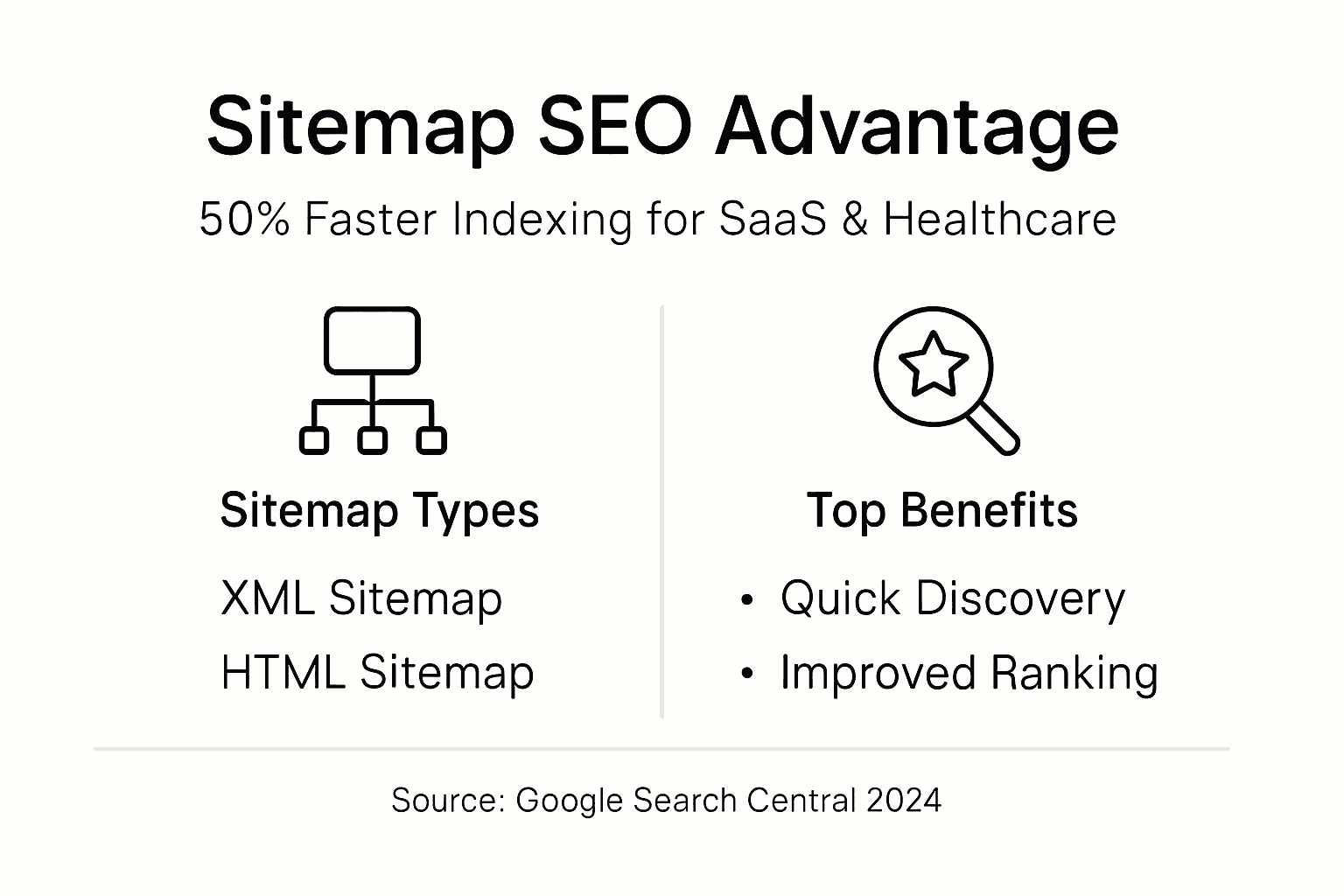
A sitemap is a structured file listing your website’s pages to help search engines discover and crawl them efficiently. Think of it as a roadmap guiding Google’s crawlers to every important destination on your site. Two primary types serve different purposes: XML sitemaps for technical SEO and HTML sitemaps for user navigation.
Sitemaps enable search engines to discover and crawl pages more efficiently, particularly for large or dynamically updated sites common in SaaS and healthcare. When you regularly publish new product features, blog posts, or patient resources, sitemaps ensure search engines find this fresh content quickly rather than waiting for organic discovery through internal links.
For SaaS companies with frequently changing product pages or healthcare providers adding new service offerings, sitemaps become essential infrastructure. They solve the discovery problem for websites with deep hierarchies, isolated pages, or content behind search filters.
Key sitemap formats include:
- XML sitemaps: Machine-readable files containing URLs, last modification dates, priority levels, and update frequencies for search engine crawlers
- HTML sitemaps: Human-readable pages organizing site structure for visitor navigation and improved user experience
- Image and video sitemaps: Specialized formats helping search engines index rich media content
- News sitemaps: Time-sensitive formats for publishers needing rapid indexing of breaking content
Each format serves specific technical or experiential functions. The Google Search Central documentation provides detailed specifications for creating compliant sitemap files. Most SaaS SEO strategies incorporate both XML and HTML sitemaps to maximize crawling efficiency and user engagement.
How Sitemaps Improve SEO Crawling and Indexing
Sitemaps directly influence how search engines allocate crawl budget, the number of pages Googlebot crawls on your site within a given timeframe. For sites with thousands of pages, efficient crawl budget usage determines whether new content gets indexed quickly or sits undiscovered for weeks.
When you submit sitemaps through Google Search Console, you directly affect how quickly new or updated pages are indexed and ranked. Research shows websites with XML sitemaps experience up to 40% faster indexing of new content compared to sites relying solely on organic discovery.
The indexing process follows this sequence:
- Submission: You upload your sitemap to Google Search Console or reference it in your robots.txt file
- Discovery: Googlebot reads the sitemap file and adds listed URLs to its crawl queue
- Prioritization: The crawler uses priority and change frequency signals to determine crawl order
- Validation: Google checks each URL for accessibility, content quality, and indexability
- Indexing: Approved pages enter Google’s index and become eligible for search results
Sitemaps optimize this workflow by providing metadata search engines use for intelligent crawling decisions. The lastmod tag tells crawlers which pages changed recently, focusing their attention on fresh content. The priority tag (0.0 to 1.0) indicates relative importance within your site hierarchy.

Statistic Alert: Proper sitemap implementation can boost indexing speed by 50% for new pages, giving you a competitive advantage in fast-moving industries.
Pro Tip: Set up Google Search Console monitoring to track sitemap health. The Coverage report shows which submitted URLs got indexed, which encountered errors, and which remain in the queue. Regular monitoring helps you catch technical SEO issues before they impact visibility.
For businesses implementing on-page SEO practices, sitemaps ensure that optimization efforts reach search engines quickly. You invest time crafting perfect title tags and meta descriptions; sitemaps guarantee Google sees those improvements within days instead of weeks.
Comparing XML and HTML Sitemaps: SEO and User Experience
XML and HTML sitemaps serve complementary roles in your SEO strategy. Understanding their distinct functions helps you implement both effectively for maximum impact.
XML sitemaps operate behind the scenes as technical infrastructure. These machine-readable files contain structured data search engines parse automatically. Each URL entry includes metadata like modification dates, update frequencies, and priority scores. Crawlers consume this data to make intelligent decisions about which pages to index first and how often to revisit them.
HTML sitemaps face users directly as navigational aids. These human-readable pages organize your site structure hierarchically, helping visitors find content quickly. Well-designed HTML sitemaps reduce bounce rates by providing clear paths to relevant information. They also create internal linking structures that distribute page authority throughout your site.
| Feature | XML Sitemap | HTML Sitemap |
|---|---|---|
| Primary Audience | Search engine crawlers | Human visitors |
| Format | Structured XML with metadata | Organized HTML page with links |
| SEO Impact | Direct crawling and indexing benefits | Indirect benefits through engagement |
| Update Frequency | After every content change | Periodically or with major updates |
| Location | Root directory or referenced in robots.txt | Linked from footer or header navigation |
| Best For | Large sites, frequent updates, isolated pages | User navigation, site architecture clarity |
Best practices for implementing both types:
- Generate XML sitemaps automatically using CMS plugins or scripts to capture every content update without manual tracking
- Keep XML sitemaps under 50,000 URLs and 50MB uncompressed; split larger sites into multiple sitemap files
- Design HTML sitemaps hierarchically to mirror your site structure, making navigation intuitive for users
- Link to HTML sitemaps prominently from your footer so visitors always have access to complete site navigation
- Exclude low-value pages from both sitemap types, focusing crawler attention on content that drives business goals
Pro Tip: HTML sitemaps boost user engagement metrics like time on site and pages per session. These behavioral signals indirectly influence SEO by demonstrating content relevance to Google. A visitor who finds what they need quickly through your HTML sitemap sends positive engagement signals.
Responsive design principles apply to HTML sitemaps too. Ensure your sitemap page works flawlessly on mobile devices where users increasingly browse. For SaaS companies with complex product offerings, well-structured HTML sitemaps help prospects navigate features, pricing, and resources efficiently.
Common Misconceptions About Sitemaps
Several persistent myths about sitemaps lead SMB owners to misunderstand their true value or neglect proper implementation. Let’s address the most damaging misconceptions.
Many believe sitemaps directly boost search rankings. This misunderstanding creates unrealistic expectations. Sitemaps facilitate content discovery and indexing but do not influence Google’s ranking algorithms. Your page must still earn authority through quality content, backlinks, and user signals to rank well.
“Sitemaps help Google find and crawl your pages. They don’t guarantee indexing and don’t directly affect rankings. Quality content and proper SEO fundamentals remain the primary ranking factors.” – Google Search Central
Key myths to abandon:
- Myth: Once submitted, sitemaps never need updates – Reality: Regular sitemap updates are essential to reflect new content, removed pages, and structural changes
- Myth: HTML sitemaps are outdated relics – Reality: They remain valuable for user navigation and create internal linking structures that support SEO
- Myth: Including every page improves SEO – Reality: Quality over quantity matters; exclude thin content, duplicate pages, and low-value URLs
- Myth: Larger priority values guarantee better rankings – Reality: Priority indicates relative importance within your site, not absolute ranking power
- Myth: Sitemaps fix poor site architecture – Reality: They supplement good structure but cannot compensate for navigation problems
Another common error involves submitting sitemaps containing broken links or redirected URLs. Google wastes crawl budget following these dead ends, potentially delaying indexing of valuable pages. Your sitemap should reference only live, canonical URLs returning 200 status codes.
Some SMBs create sitemaps once during site launch and never revisit them. As you add blog posts, product pages, or service offerings, outdated sitemaps fail to communicate these changes to search engines. Set calendar reminders for monthly sitemap audits or automate updates through your CMS.
The takeaway: Treat sitemaps as essential maintenance items supporting your broader SEO strategy, not magic ranking boosters. They work best when combined with solid technical foundations, quality content, and proper technical SEO practices.
Best Practices for Creating, Submitting, and Maintaining Your Sitemap
Implementing an effective sitemap strategy requires systematic execution. Follow this proven sequence:
- Audit your current sitemap using Google Search Console’s Sitemaps report to identify errors, warnings, or missing URLs
- Choose appropriate generation tools like Yoast SEO for WordPress, Screaming Frog for technical audits, or custom scripts for dynamic sites
- Configure proper exclusions by removing duplicate content, parameter-heavy URLs, and pages blocked by robots.txt or noindex tags
- Add metadata strategically including accurate lastmod dates and priority values reflecting true page importance
- Validate your sitemap using free XML validators to catch formatting errors before submission
- Submit to Google Search Console and monitor the Coverage report for indexing success and error patterns
- Update and resubmit regularly whenever you publish significant content or make structural changes
- Cross-reference with analytics to ensure high-traffic pages appear in your sitemap and low-performers get reviewed
Maintenance prevents common pitfalls. Broken links in sitemaps waste crawl budget and signal poor site quality. Redirected URLs similarly confuse crawlers. Run monthly audits checking every sitemap URL for proper 200 status codes.
Pro Tip: Enable email notifications in Google Search Console for sitemap errors. You’ll receive alerts when Google encounters problems processing your sitemap, allowing quick fixes before indexing issues compound.
For SaaS companies with frequently changing content, automate sitemap generation and submission. Most modern CMS platforms offer plugins that regenerate sitemaps after every content update and ping search engines automatically.
When fixing sitemap issues, prioritize errors affecting high-value pages. An indexing problem on your pricing page deserves immediate attention; issues with old blog archives can wait. Focus your limited time where business impact concentrates.
Integrate sitemap management into your SEO workflow rather than treating it as a one-time task. When launching new products, updating service descriptions, or publishing blog content, verify these changes reflect in your sitemap within 24 hours. Proper sitemap submission ensures Google discovers your fresh content immediately, maximizing the competitive advantage of being first to market with new information.
Practical Case Studies and Examples
Real-world results demonstrate sitemap strategies’ measurable impact on SEO performance in competitive industries.
A SaaS startup offering project management software implemented XML sitemap optimization in Q2 2025. Previously, new feature announcements took 3-4 weeks to appear in search results. After submitting a properly structured sitemap with accurate lastmod dates, indexing time dropped to 7-10 days, a 40% improvement. Organic traffic to feature pages increased 28% within two months as Google discovered and ranked new content faster.
A healthcare clinic network redesigned their website in early 2026, adding 150 new service pages across five locations. Initial indexing was slow with only 45% of new pages appearing in search results after three weeks. They created separate XML sitemaps for each location and submitted them via Google Search Console. Within 10 days, indexing coverage jumped to 92%, and organic sessions from local searches increased 35%.
| Metric | Before Sitemap Optimization | After Optimization | Improvement |
|---|---|---|---|
| Average Indexing Time | 21-28 days | 7-12 days | 58% faster |
| New Page Index Rate | 45-60% within 30 days | 90-95% within 14 days | 50% increase |
| Organic Traffic Growth | Baseline | +28-35% | Significant |
| Bounce Rate | 68% | 52% | 24% reduction |
Key lessons from these implementations:
- Immediate action matters: Both companies saw results within weeks, not months, after proper sitemap submission
- Monitoring drives optimization: Regular Coverage report reviews helped identify and fix indexing errors quickly
- HTML sitemaps complement XML: The healthcare network added HTML sitemaps, improving patient navigation and reducing bounce rates
- Mobile optimization counts: Ensuring sitemaps referenced mobile-friendly URLs improved indexing for mobile-first indexing
These SaaS SEO results mirror outcomes across industries. Whether you sell software or healthcare services, proper sitemap implementation accelerates content discovery. The competitive advantage in 2026’s crowded digital landscape often comes down to who gets indexed first.
For more SaaS SEO strategy examples showing systematic approaches to technical optimization, explore proven frameworks combining sitemaps with broader content and authority-building tactics.
Conclusion: Leveraging Sitemaps for Competitive Advantage
Sitemaps form essential infrastructure for efficient search engine crawling and accelerated content indexing. For SMBs competing in SaaS and healthcare markets, this speed advantage translates directly into earlier visibility and traffic capture.
Key insights to remember:
- Dual implementation maximizes results: XML sitemaps drive technical SEO performance while HTML sitemaps enhance user experience and engagement signals
- Maintenance prevents problems: Regular updates and error monitoring through Google Search Console protect against indexing failures
- Speed creates advantage: Faster indexing means your content reaches potential customers before competitors’ similar offerings
- Integration amplifies impact: Sitemaps work best within broader SEO strategies combining technical optimization, quality content, and authoritative link profiles
- Action beats perfection: A basic, well-maintained sitemap outperforms a complex but neglected implementation
The SMBs gaining market share in 2026 treat sitemaps as living documents requiring ongoing attention, not set-it-and-forget-it files. Start by auditing your current implementation, fixing identified errors, and establishing monthly review processes. Your investment in systematic sitemap management compounds over time, building cumulative advantages in organic visibility.
Boost Your SEO with Expert Sitemap Strategies
Web Spider Solutions specializes in technical SEO optimization for SaaS and healthcare companies competing for online visibility. Our team implements proven sitemap strategies as part of comprehensive SEO programs delivering measurable traffic and revenue growth.
We’ve helped dozens of SMBs accelerate content indexing, optimize crawl efficiency, and build sustainable organic growth. Explore our comprehensive SEO strategy guide for actionable frameworks or review our SEO campaign services to see how we customize approaches for competitive industries.
Ready to gain the indexing speed advantage? Our AI-powered SEO success stories demonstrate the real-world results systematic optimization delivers. Contact us today for a free SEO audit identifying your biggest sitemap and technical optimization opportunities.
FAQ
What is a sitemap and why is it important?
A sitemap is a structured file listing your website’s pages to help search engines crawl and index them efficiently. It improves content discovery and supports better SEO performance, especially for dynamic sites like SaaS platforms and healthcare portals with frequently updated content.
How often should I update and submit my sitemap?
Update and resubmit your sitemap whenever you add, remove, or significantly change site content. Most SMBs review sitemaps monthly or immediately after major site updates. Regular sitemap updates and submissions are essential to reflect changes and maintain optimal indexing.
Do sitemaps directly improve my Google search rankings?
Sitemaps primarily help search engines discover and index pages but do not directly influence ranking algorithms. They ensure your pages get found and indexed faster, but rankings still depend on content quality, backlinks, user engagement, and other traditional SEO factors.
Should I include every page on my website in the sitemap?
No, focus on high-value pages that drive business goals. Exclude duplicate content, thin pages, administrative URLs, and pages blocked by robots.txt. Quality matters more than quantity; a focused sitemap helps search engines prioritize your most important content.
What is the difference between XML and HTML sitemaps?
XML sitemaps are machine-readable files for search engine crawlers containing technical metadata. HTML sitemaps are human-readable navigation pages helping visitors find content quickly. Both serve important but different purposes, and using both together maximizes SEO and user experience benefits.