







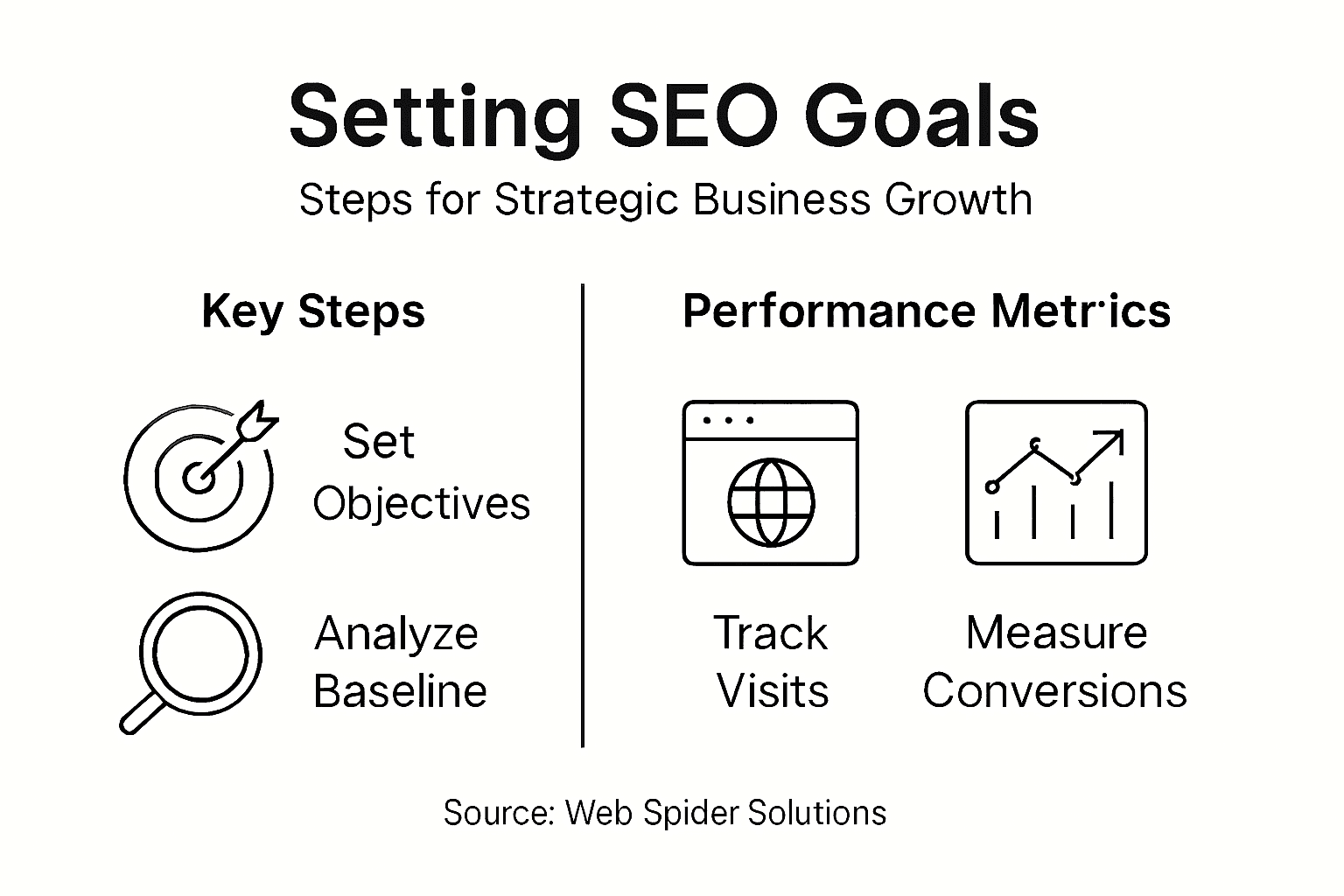
Growing an American B2B brand in SaaS or healthcare can feel daunting when over 60 percent of buyers start their searches with questions your site might not answer. Setting SEO goals that truly reflect your core business objectives and target audience means more than just chasing keywords. This guide shows how strategic alignment of SEO goals can turn digital marketing plans into measurable growth, helping you compete with established industry leaders.
Table of Contents
- Step 1: Identify Business Objectives And Target Audience
- Step 2: Conduct Baseline SEO Analysis
- Step 3: Define Measurable SEO Performance Metrics
- Step 4: Align SEO Goals With Business Priorities
- Step 5: Review And Adjust SEO Goals Regularly
Quick Summary
| Key Insight | Explanation |
|---|---|
| 1. Set SMART Business Objectives | Define specific, measurable, achievable, relevant, and time-bound goals that align with broader business outcomes. |
| 2. Perform Baseline SEO Analysis | Evaluate current SEO performance, including technical audit and competitive benchmarking, to identify improvement areas. |
| 3. Define Actionable SEO Metrics | Establish clear performance metrics that connect SEO efforts to tangible business results, like lead generation and conversion rates. |
| 4. Align SEO with Business Priorities | Map SEO initiatives to organizational goals and demonstrate how they drive business value for key stakeholders. |
| 5. Regularly Review SEO Goals | Conduct ongoing performance assessments and adjust strategies based on data trends and market changes to stay competitive. |
Step 1: Identify business objectives and target audience
Successfully setting SEO goals requires a strategic approach to understanding your business’s core mission and the specific audience you want to reach. This step involves creating a clear roadmap that aligns your digital marketing efforts with meaningful, achievable outcomes.
Begin by defining precise business objectives that connect directly to your broader organizational goals. Identifying clear business objectives involves breaking down your overall vision into specific, measurable targets. For digital marketing managers in B2B sectors like SaaS and healthcare, these objectives might include increasing qualified lead generation, improving website conversion rates, or expanding market share within a specific industry segment.
To effectively pinpoint your target audience, analyze demographic and behavioral characteristics that define your ideal customer. Target audience identification helps you focus marketing resources strategically. Consider factors like company size, industry vertical, job titles, professional challenges, and online behavior patterns. Create detailed customer personas that represent your most promising potential clients, allowing you to tailor your SEO strategy precisely.
The key is developing objectives that are specific, measurable, achievable, relevant, and time bound (SMART). This approach ensures your SEO goals directly support broader business growth strategies.
Pro tip: Create a detailed spreadsheet mapping your business objectives to specific SEO metrics for maximum tracking and accountability.
Step 2: Conduct baseline SEO analysis
In this critical stage of setting SEO goals, you will perform a comprehensive evaluation of your current digital marketing performance. Baseline SEO analysis provides a crucial snapshot of your website’s search engine positioning and potential improvement areas.
Start by examining your website’s technical infrastructure and content performance. Utilize tools like Google Search Console and analytics platforms to assess key metrics such as current search rankings, organic traffic volume, site speed, and mobile responsiveness. Technical SEO audit components should include a detailed review of meta tags, keyword usage, link profiles, and content relevance. Pay special attention to identifying potential technical barriers that might prevent search engines from effectively crawling and indexing your website.

Your baseline analysis should also involve a competitive benchmarking process. Compare your website’s performance against top competitors in your industry, noting their search rankings, content strategies, and keyword targeting approaches. This comparative assessment will help you understand your current market position and uncover strategic opportunities for improvement.
Compile your findings into a structured report that highlights strengths, weaknesses, and specific recommendations for enhancing your SEO strategy. This document will serve as a roadmap for future optimization efforts and help track your progress over time.
Below is a comparison of baseline SEO analysis elements and their measurement focus:
| Analysis Element | Primary Focus | Tools/Methods |
|---|---|---|
| Technical audit | Site speed, crawlability, mobile readiness | Google Search Console, PageSpeed Insights |
| Content performance | Relevance, quality, engagement | Google Analytics, heatmaps |
| Competitive benchmarking | Strengths and gaps vs. rivals | SEMrush, Ahrefs, manual research |
| Keyword profile | Keyword rankings, gaps, opportunities | Google Search Console, SEMrush |
Pro tip: Create a standardized SEO analysis template that allows consistent tracking and comparison of metrics across multiple reporting periods.
Step 3: Define measurable SEO performance metrics
Defining clear and actionable SEO performance metrics is crucial for tracking your digital marketing progress and demonstrating tangible business value. Strategic planning for SEO goals requires establishing precise, quantifiable objectives that directly connect to your broader business outcomes.
Begin by selecting key performance indicators that align with your specific business objectives. These metrics should provide meaningful insights into your SEO strategy’s effectiveness. Critical metrics typically include organic traffic volume, keyword ranking improvements, conversion rates, click-through rates, bounce rates, and domain authority. For B2B companies in sectors like SaaS and healthcare, focus on metrics that demonstrate genuine business impact such as qualified lead generation, content engagement rates, and revenue attribution from organic search traffic.
Business objectives measurement involves creating a comprehensive tracking system that allows for ongoing performance evaluation. Use analytics platforms like Google Analytics and specialized SEO tools to establish baseline measurements and set realistic improvement targets. Develop a dashboard that presents these metrics clearly, enabling quick performance assessments and facilitating data driven decision making.
Remember that effective SEO metrics should be specific, measurable, achievable, relevant, and time bound. This approach ensures your performance tracking remains focused and actionable.
Here’s a summary of common SEO performance metrics and their business impact:
| Metric | Description | Business Impact |
|---|---|---|
| Organic traffic | Number of visitors from search engines | Increases potential leads and customers |
| Keyword rankings | Position of target keywords in search results | Improves brand visibility and authority |
| Conversion rate | Percentage of visitors taking desired actions | Drives qualified leads and revenue growth |
| Bounce rate | Percentage leaving site after one page | Identifies engagement and content relevance |
| Domain authority | Score predicting search engine ranking ability | Boosts overall trust and ranking potential |
| Click-through rate | Percentage clicking through search results | Indicates snippet effectiveness and targeting |
Pro tip: Create a quarterly SEO performance scorecard that visualizes key metrics, making it easy to communicate progress to stakeholders and identify optimization opportunities.
Step 4: Align SEO goals with business priorities
Successfully integrating SEO strategies requires a holistic approach that connects digital marketing efforts directly to your organization’s core business objectives. Strategic planning for organizational goals demands a comprehensive understanding of how search engine optimization can drive meaningful business outcomes.
Begin by mapping your SEO initiatives to specific business priorities. This involves conducting an in depth analysis of your company’s current strategic objectives, such as market expansion, customer acquisition, revenue growth, or brand positioning. Business objectives alignment requires identifying how SEO can directly support these goals. For B2B companies in sectors like SaaS and healthcare, this might mean creating targeted content that addresses specific customer pain points, improving lead generation quality, or establishing thought leadership within your industry.
Develop a collaborative approach that involves key stakeholders from different departments. Translate technical SEO metrics into language that resonates with executive leadership by demonstrating clear connections between search performance and business value. This might include showing how improved organic search rankings translate to increased qualified leads, reduced customer acquisition costs, or enhanced market positioning.
Create a dynamic alignment framework that allows for regular reassessment and adjustment of SEO strategies as business priorities evolve. Establish quarterly review processes that examine the ongoing relationship between SEO performance and broader organizational objectives.
Pro tip: Develop a cross functional dashboard that visualizes how SEO metrics directly contribute to key business performance indicators, making the value of your digital marketing efforts immediately apparent.
Step 5: Review and adjust SEO goals regularly
Successfully managing SEO requires an adaptive approach that responds dynamically to changing digital landscapes. Strategic performance monitoring involves creating a systematic process for continuous evaluation and refinement of your SEO objectives.
Implement a quarterly review cycle that comprehensively examines your SEO performance metrics. This should include analyzing keyword rankings, organic traffic trends, conversion rates, and competitive positioning. Business objective assessment demands a holistic view that connects these digital marketing indicators to broader organizational goals. Pay special attention to emerging search engine algorithm updates, shifts in user behavior, and changes in your industry’s digital ecosystem that might impact your SEO strategy.
Develop a flexible framework that allows for rapid adaptation. Create a dashboard that tracks key performance indicators and establishes clear thresholds for when strategic adjustments become necessary. For B2B companies in sectors like SaaS and healthcare, this might mean recalibrating content strategies, refining target keywords, or reallocating resources based on performance data.
Remember that SEO is an iterative process. Your goals should be living documents that evolve with your business, market conditions, and digital marketing landscape.
Pro tip: Schedule monthly micro reviews and quarterly comprehensive assessments to maintain an agile and responsive SEO strategy.
Take Control of Your SEO Goals for Real Business Growth
Setting precise SEO goals that align with your business objectives can feel overwhelming. You want measurable progress in organic traffic, keyword rankings, and qualified lead generation but are unsure how to bridge strategy with execution. This article highlights the critical need to define SMART goals, conduct baseline SEO analysis, and continually adjust your approach to stay ahead in competitive markets.
At Web Spider Solutions, we specialize in turning these challenges into opportunities for growth. Our tailored SEO services focus on driving targeted traffic and improving your search engine visibility while aligning with your unique business priorities. Discover actionable insights and success stories in our Stories Archives to see how strategic SEO planning transforms digital presence. Ready to build an adaptive, data-driven SEO strategy that delivers lasting results Visit our website now and request your free SEO audit to get started on accelerating your business growth today.
Frequently Asked Questions
How do I identify specific business objectives for SEO?
Start by breaking down your overall organizational goals into measurable targets. For example, aim to increase website conversion rates by 15% within the next six months.
What are effective ways to analyze my target audience for SEO?
Examine demographics, industry verticals, and job titles to define your ideal customer. Create detailed customer personas that represent these factors, which can help tailor your SEO strategy effectively.
How can I conduct a baseline SEO analysis for my website?
Perform a comprehensive review of your website’s technical infrastructure and content performance. Focus on metrics like organic traffic and site speed, then document your findings in a report to highlight strengths and weaknesses.
What key performance indicators should I use to measure SEO success?
Choose metrics that align with your business objectives, such as organic traffic volume and conversion rates. Set measurable targets to track these metrics, enabling you to assess performance and make adjustments accordingly.
How often should I review and adjust my SEO goals?
Implement a quarterly review cycle to assess your SEO performance and make necessary adjustments based on evolving digital trends. For optimal results, schedule monthly micro reviews alongside your comprehensive assessments.