







Nearly nine out of ten American consumers rely on search engines to find digital solutions, raising the stakes for SaaS brands striving to stand out online. Without strong search visibility, even the most innovative offerings can remain hidden in crowded results. This guide explains how clearly defined strategies and practical metrics can help digital marketing managers at small to medium-sized SaaS companies become more discoverable and capture significant organic traffic gains.
Table of Contents
- Defining Search Visibility In Digital Marketing
- Major Types Of Search Visibility Metrics
- How Search Engines Evaluate Visibility
- Tracking And Measuring Search Performance
- Common Search Visibility Pitfalls To Avoid
Key Takeaways
| Point | Details |
|---|---|
| Search Visibility Importance | Search visibility requires a comprehensive strategy beyond keyword placement to enhance digital content discoverability and relevance. |
| Common Metrics | Key metrics like organic traffic, keyword rankings, and user engagement provide critical insights into digital performance and engagement levels. |
| Search Engine Evaluation Factors | Search engines assess content based on relevance, technical optimization, and user experience signals to determine rankings. |
| Avoiding Pitfalls | Brands must conduct regular audits and adapt content strategies to prevent common mistakes that undermine search visibility efforts. |
Defining Search Visibility in Digital Marketing
Search visibility represents the strategic process through which digital content becomes discoverable and prominent within search engine results pages (SERPs). At its core, this concept goes beyond simple keyword placement and encompasses a comprehensive approach to making online content findable, relevant, and attractive to both search algorithms and human users. Search engine optimization practices involve intricate techniques that help brands increase their digital presence and attract targeted organic traffic.
In practical terms, search visibility involves multiple interconnected strategies. These include optimizing website content with precise, relevant keywords, creating high-quality and authoritative content, ensuring technical website performance, and building credible external links. Successful search visibility means your digital content appears prominently when potential customers search for solutions related to your SaaS brand’s offerings. Effective strategies require understanding user intent, analyzing search patterns, and continuously adapting to evolving search engine algorithms.
Search engines like Google evaluate content through complex algorithms that consider factors such as relevance, user engagement, site speed, mobile compatibility, and content quality. Brands that develop strategic keyword approaches can significantly improve their chances of appearing in top search results. This involves not just selecting popular keywords, but understanding the nuanced search behaviors of your specific target audience and creating content that genuinely addresses their questions and needs.
Pro Tip: Conduct regular search intent audits to understand how your target audience’s search behaviors evolve and adjust your content strategy accordingly.
Major Types of Search Visibility Metrics
Search visibility metrics are critical diagnostic tools that help SaaS brands understand their digital performance and online discoverability. Comprehensive visibility assessments encompass multiple interconnected measurements that provide insights into how effectively a brand’s digital content reaches and engages potential customers. These metrics go far beyond simple ranking positions, offering nuanced perspectives on digital marketing effectiveness.
The primary types of search visibility metrics include organic traffic volume, keyword rankings, click-through rates, domain authority, and user engagement metrics. Organic traffic represents the number of visitors arriving through unpaid search results, while keyword rankings track a website’s position for specific search terms. Click-through rates measure how often users select a particular search result, indicating content relevance and appeal. Domain authority evaluates the overall credibility and trustworthiness of a website in search engines’ algorithmic considerations.

Content engagement metrics provide deeper insights into search performance. These include average time spent on page, bounce rates, social shares, and conversion rates. Sophisticated search visibility tracking analyzes these complex interactions to understand not just how many people find your content, but how meaningful and valuable they find it. Advanced SaaS brands use these metrics to continuously refine their content strategy, targeting precise audience segments and optimizing their digital presence.
Pro Tip: Implement a quarterly comprehensive visibility audit that cross-references multiple metrics to develop a holistic understanding of your search performance and identify strategic improvement opportunities.
Here’s a summary of key search visibility metrics and their business impact:
| Metric | What It Measures | Business Impact |
|---|---|---|
| Organic Traffic | Visitors from unpaid searches | Drives brand awareness |
| Keyword Rankings | Position for targeted keywords | Improves discoverability |
| Click-Through Rate | Percentage of clicks in SERPs | Indicates content relevance |
| Domain Authority | Website trustworthiness | Enhances search ranking potential |
| User Engagement | Interaction and retention | Boosts conversion opportunities |
How Search Engines Evaluate Visibility
Search engines employ sophisticated algorithms to evaluate digital content visibility, analyzing multiple complex factors beyond simple keyword matching. Algorithmic ranking mechanisms assess content through intricate processes that consider relevance, user engagement, and structural quality. These evaluation methods transform how digital content is discovered and ranked across online platforms, creating a nuanced ecosystem of content assessment.
The primary criteria for search engine evaluation include content relevance, technical optimization, user experience signals, and authoritative backlink profiles. Relevance is determined by how closely content matches user search intent, analyzing factors like keyword usage, semantic context, and topical depth. Technical optimization involves website performance metrics such as page loading speed, mobile responsiveness, secure connections, and clean site architecture. User experience signals track how visitors interact with content, measuring metrics like time on page, bounce rates, and click-through patterns that indicate content quality and user satisfaction.
Academic search engine optimization strategies reveal that metadata quality plays a crucial role in visibility assessment. Search engines scrutinize title tags, meta descriptions, header structures, and internal linking as key indicators of content comprehensiveness and relevance. Advanced algorithms now incorporate machine learning techniques that continuously refine understanding of content quality, moving beyond traditional keyword matching to comprehend contextual nuances and user intent with unprecedented sophistication.
Pro Tip: Conduct a monthly technical SEO audit to ensure your website meets the latest search engine optimization standards and maintains peak visibility performance.
Tracking and Measuring Search Performance
Effective search performance tracking requires a comprehensive approach that goes beyond surface-level metrics. Digital marketing performance evaluation involves analyzing multiple interconnected data points that provide insights into a brand’s online visibility and user engagement strategies. SaaS brands must develop a nuanced understanding of how different metrics interact and influence overall search performance.
SEO tracking metrics typically include key performance indicators such as organic traffic volume, keyword rankings, conversion rates, bounce rates, and page load times. Organic traffic reveals the number of visitors arriving through unpaid search results, while keyword rankings demonstrate a website’s positioning for specific search terms. Conversion rates measure the percentage of visitors who take desired actions, providing direct insight into the effectiveness of search visibility strategies.
Advanced search performance tracking involves sophisticated analysis of user behavior and interaction patterns. Brands must look beyond raw numbers to understand the qualitative aspects of search performance. This includes examining user engagement metrics like average session duration, pages per session, and the specific paths users take through a website. Machine learning and advanced analytics tools now enable more sophisticated tracking, allowing SaaS brands to develop predictive models that anticipate user behavior and optimize content strategies in real-time.
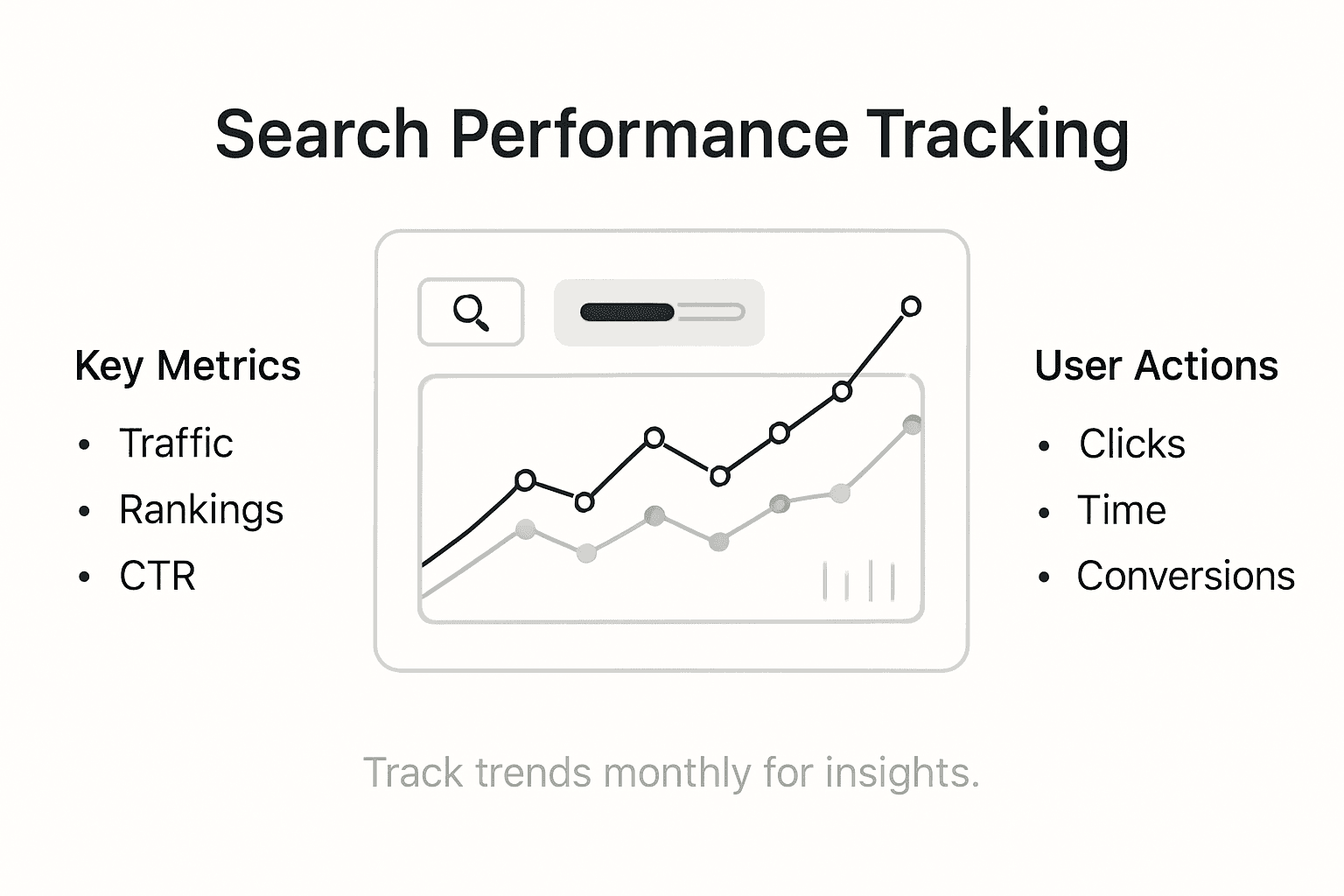
Pro Tip: Implement a monthly cross-metric analysis that compares search performance data against business objectives to identify actionable insights and optimization opportunities.
Common Search Visibility Pitfalls to Avoid
SaaS brands frequently encounter critical search visibility challenges that can significantly undermine their digital marketing efforts. Common digital marketing mistakes often stem from a lack of strategic planning and insufficient understanding of comprehensive search optimization techniques. These pitfalls can dramatically reduce online visibility and prevent potential customers from discovering your brand.
SEO optimization challenges typically include neglecting critical technical elements that search engines use to evaluate and rank content. Many brands overlook crucial on-page SEO factors like meta tag optimization, mobile responsiveness, and site structure integrity. Technical oversights such as slow page load times, poor mobile compatibility, and inconsistent schema markup can cause search engines to deprioritize your content, effectively rendering your digital assets invisible to potential customers.
The most detrimental search visibility errors often involve content strategy and audience targeting. Brands frequently make the mistake of creating generic content that fails to address specific user intent, using broad keywords without understanding their target audience’s precise search behaviors. Successful SaaS companies recognize that search visibility is not about ranking for the most keywords, but about creating highly targeted, valuable content that directly addresses user needs. This requires deep audience research, continuous keyword refinement, and a dynamic approach to content creation that adapts to evolving search algorithms and user preferences.
Pro Tip: Conduct quarterly comprehensive SEO audits that assess technical performance, content relevance, and alignment with current search engine guidelines to proactively identify and address potential visibility barriers.
This table compares common search visibility pitfalls and solutions for SaaS brands:
| Pitfall | Negative Effect | Solution |
|---|---|---|
| Ignoring technical SEO | Lower rankings, poor user experience | Regular technical audits |
| Generic or unfocused content | Missed target audience, low engagement | Deep audience research |
| Slow page load times | Reduced user retention | Optimize site speed |
| Poor mobile compatibility | Lower mobile search visibility | Responsive web design |
| Inadequate metadata and schema | Weak relevance signals | Structured data and meta optimization |
Elevate Your SaaS Brand Visibility with Expert Digital Marketing
Struggling to achieve true search visibility means missing out on valuable organic traffic and potential customers. Your SaaS brand needs more than just basic SEO—it requires a tailored approach that addresses technical SEO, content relevance, user engagement, and ongoing performance analysis. The challenges of optimizing for evolving search engine algorithms and meeting precise user intent can feel overwhelming. That is why relying on proven strategies and expert execution is critical to overcome common pitfalls like slow site speeds, poor mobile compatibility, and generic content.
At Web Spider Solutions, we specialize in helping B2B companies like yours conquer these obstacles through a comprehensive digital marketing approach. Explore our B2B Marketing Archives – Web Spider Solutions to see how we implement strategic SEO, content marketing, and technical optimizations that drive meaningful growth. Don’t wait for your competitors to outshine you in search results. Visit our homepage today and request your free SEO audit to unlock targeted traffic and sustainable online success.
Frequently Asked Questions
What is search visibility and why is it important for SaaS brands?
Search visibility refers to the ability of a brand’s digital content to be discovered and prominently featured in search engine results pages (SERPs). It’s important for SaaS brands because it helps drive organic traffic, enhance brand awareness, and ultimately convert visitors into customers.
How do search engines evaluate the visibility of my content?
Search engines use sophisticated algorithms that assess various factors, including content relevance, user engagement, technical performance, and authoritative backlinks. They analyze how well your content matches user intent and its overall quality to determine its visibility in search results.
What are some key metrics to track for improving search visibility?
Important metrics to monitor include organic traffic volume, keyword rankings, click-through rates, domain authority, and user engagement metrics like bounce rates and average time on page. These indicators help assess your brand’s online performance and identify areas for improvement.
How can I optimize my content for better search visibility?
To optimize your content, focus on using relevant keywords, creating high-quality and authoritative content, ensuring technical performance (like site speed and mobile compatibility), and building credible backlinks. Regularly analyzing user intent and adapting your strategy based on evolving search behaviors can also boost visibility.