








More than half of all American website traffic now comes from mobile devices, yet many businesses overlook critical issues that drive users away. Mobile performance and user experience have a direct impact on search rankings and revenue. When your site loads slowly or navigation feels clunky, it can cost you valuable customers. Discover how a focused strategy can help you transform mobile usability, improve your search visibility, and keep visitors coming back.
Table of Contents
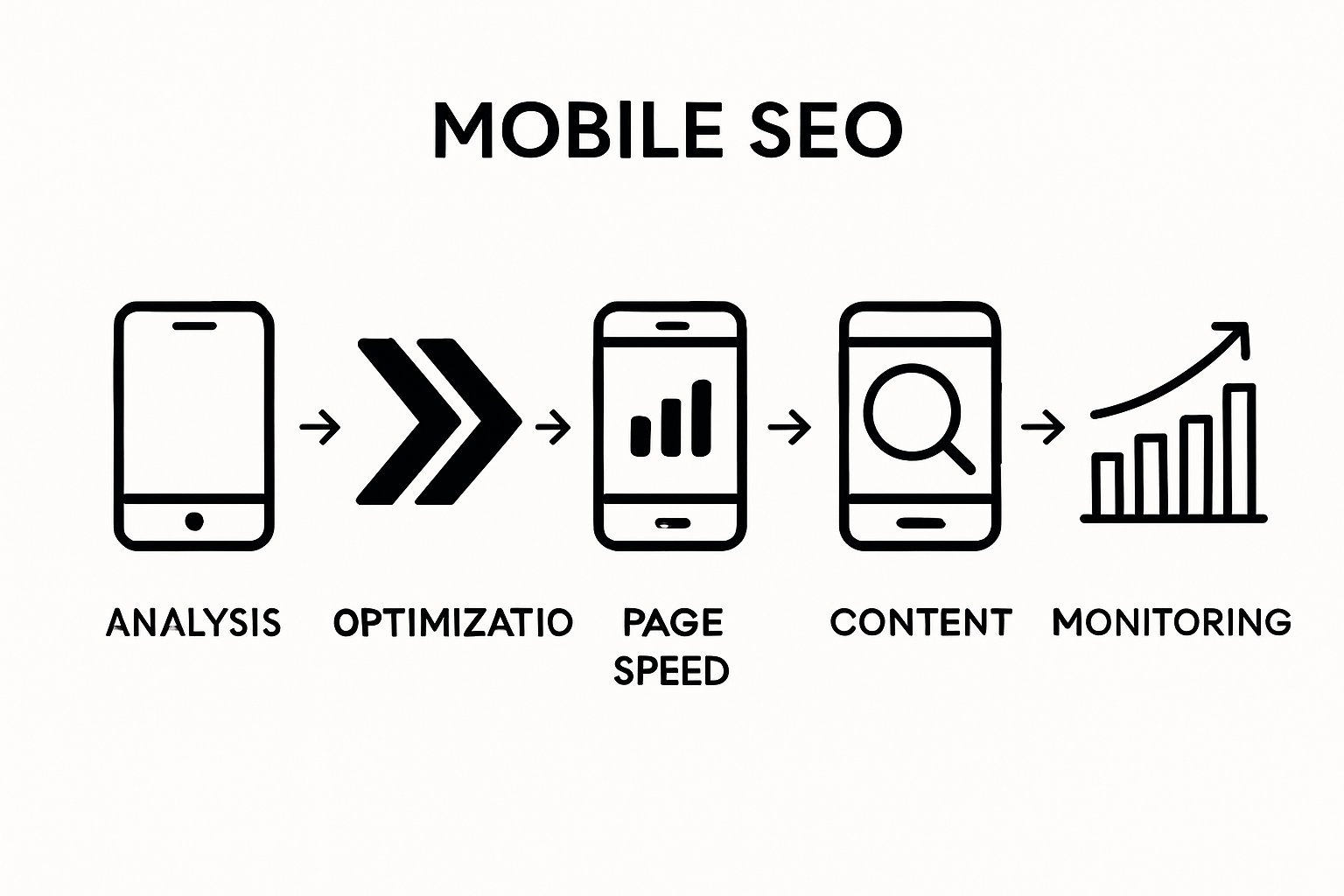
- Step 1: Evaluate Mobile Performance and User Experience
- Step 2: Optimize Website Design for Mobile Devices
- Step 3: Accelerate Page Speed and Core Web Vitals
- Step 4: Enhance Mobile Content for Search Intent
- Step 5: Test and Monitor Mobile SEO Results
Quick Summary
| Key Point | Explanation |
|---|---|
| 1. Analyze Mobile Performance Metrics | Use tools like Google PageSpeed Insights to track key performance metrics affecting user experience and search rankings. |
| 2. Implement Responsive Design | Ensure your website design adapts to different screen sizes for optimal usability and readability on mobile devices. |
| 3. Prioritize Page Speed Optimization | Focus on improving Core Web Vitals to enhance loading speeds, directly impacting user engagement and SEO rankings. |
| 4. Enhance Mobile Content for Users | Create concise, valuable content designed for mobile users, ensuring it addresses their needs and maintains visual appeal. |
| 5. Continuously Monitor Mobile SEO Performance | Regularly evaluate key performance indicators and user interactions to identify areas needing optimization and ensure competitiveness. |
Step 1: Evaluate Mobile Performance and User Experience
Evaluating mobile performance requires a strategic approach that goes beyond basic metrics. By understanding how user experience directly impacts search rankings, you can pinpoint areas for optimization and improvement.
Start by utilizing Google PageSpeed Insights and Chrome DevTools to analyze your website’s mobile performance. These tools provide comprehensive insights into loading speed, interactivity, and visual stability. Pay close attention to metrics like First Contentful Paint, Time to Interactive, and Cumulative Layout Shift. Research shows that network quality significantly influences user satisfaction, so reducing load times can dramatically improve user retention and search rankings.
To conduct a thorough mobile UX assessment, simulate user interactions across different devices and screen sizes. Use real mobile devices and emulators to test navigation, readability, and touch responsiveness. Look for potential friction points like small buttons, unclear menus, or text that requires zooming. UX design directly impacts user retention and conversion rates, making these elements critical for both user experience and search engine performance.
Pro Tip: Use free tools like Google Search Console to track mobile usability issues and get specific recommendations for improving your site’s mobile performance.
Here is a summary of essential mobile SEO metrics and their business significance:
| Metric | What It Measures | Business Impact |
|---|---|---|
| First Contentful Paint | Time to first visible content | Directly affects perceived speed |
| Time to Interactive | Time until page is usable | Influences bounce and retention |
| Cumulative Layout Shift | Visual stability during loading | Impacts user trust and conversions |
| Largest Contentful Paint | Time to largest element visible | Key for search ranking performance |
| First Input Delay | Response to first user action | Impacts engagement and usability |
Step 2: Optimize Website Design for Mobile Devices
Creating a mobile-optimized website requires strategic design thinking that prioritizes user experience and seamless interaction across different screen sizes and devices.
Start by implementing a responsive design framework that automatically adjusts layout and content based on screen dimensions. Mobile e-commerce usability research highlights critical design principles such as simplifying navigation, enlarging touch targets, and minimizing form input requirements. Focus on creating clear hierarchical structures that guide users intuitively through your content. Ensure text is legible without zooming, buttons are adequately sized for touch interactions, and critical information is prominently displayed.

Pay special attention to performance optimization alongside visual design. Compress images, minimize complex scripts, and leverage browser caching to reduce load times. User experience studies on online marketplaces emphasize that streamlined registration processes and consolidated product information significantly enhance mobile user engagement. Implement responsive web design best practices to create a fluid, adaptable website that looks and functions perfectly across smartphones, tablets, and desktop environments.
Pro Tip: Use Google Mobile Friendly Test to quickly identify and resolve mobile compatibility issues before they impact your search rankings.
Step 3: Accelerate Page Speed and Core Web Vitals
Improving your website’s page speed is critical for mobile SEO success, directly impacting user experience and search engine rankings. Understanding and optimizing Core Web Vitals will give you a competitive edge in mobile search performance.
Advanced mobile performance systems demonstrate that reducing visual loading time can dramatically improve user engagement. Start by using PageSpeed Insights, a comprehensive diagnostic tool that reveals specific performance bottlenecks. Focus on key metrics like Largest Contentful Paint (LCP), First Input Delay (FID), and Cumulative Layout Shift (CLS). Optimize images by compressing them, leverage browser caching, minimize JavaScript execution, and use content delivery networks to reduce server response times.
Implement technical optimizations that streamline your mobile site’s performance. Technical SEO best practices recommend reducing server response times, eliminating render blocking resources, and prioritizing above the fold content. Consider using lazy loading for images and videos, implementing AMP versions of your pages, and using next generation image formats like WebP to accelerate mobile page speeds.
Pro Tip: Run performance tests monthly and track your Core Web Vitals score to continuously improve your mobile site’s speed and user experience.
Step 4: Enhance Mobile Content for Search Intent
Creating mobile content that satisfies user search intent requires a strategic approach that combines data driven insights with compelling user experience design. Your goal is to deliver precisely what mobile users are searching for in a format that is both informative and visually appealing.
Mobile web analytics reveal critical patterns in user behavior that can guide content optimization. Understand your audience by examining search queries, analyzing click through rates, and mapping user journey stages. Craft concise mobile friendly content that answers questions quickly and provides immediate value. Implement structured data markup to help search engines understand your content context and optimize your content for Google Discover to increase visibility.
The aesthetic usability effect demonstrates that visual design significantly impacts user perception and engagement. Design mobile content with clean layouts, readable fonts, strategic white space, and thumb friendly interaction zones. Break complex information into digestible sections, use compelling visuals, and ensure your content loads rapidly. Prioritize information hierarchy by placing the most critical details at the top of the screen, making it easy for mobile users to quickly find what they need.
Pro Tip: Regularly audit your mobile content performance using Google Search Console to identify and address user experience gaps.
Step 5: Test and Monitor Mobile SEO Results
Effective mobile SEO requires continuous monitoring and strategic testing to ensure your website remains competitive and responsive to changing search engine algorithms and user behaviors.
Advanced machine learning frameworks offer sophisticated approaches to predicting and analyzing web page performance. Implement comprehensive testing strategies by utilizing tools like Google Search Console, Google Analytics, and Mobile Friendly Test to track critical mobile SEO metrics. Analyze key performance indicators such as mobile traffic, bounce rates, average session duration, and conversion rates. Usability evaluation methods can help you understand how users interact with your mobile site and identify potential areas for improvement. Explore important SEO ranking factors to align your testing approach with current search engine guidelines.
Develop a systematic monitoring process that includes regular performance audits, comparative analysis, and iterative improvements. Collect data across multiple devices and screen sizes to ensure consistent performance. Pay special attention to mobile specific metrics like page load speed, mobile responsiveness, touch element sizes, and content readability. Create a tracking dashboard that allows you to quickly identify trends, potential issues, and opportunities for optimization.
Pro Tip: Schedule quarterly comprehensive mobile SEO performance reviews to stay ahead of emerging trends and algorithm changes.
Compare key strategies for sustained mobile SEO improvement:
| Strategy | Focus Area | Long-Term Benefit |
|---|---|---|
| Performance Audits | Technical and speed issues | Consistent site speed, stability |
| UX Testing | Usability and interaction | Higher user satisfaction |
| Content Analysis | Search intent satisfaction | Improved ranking & engagement |
| Metrics Tracking | KPI and trend monitoring | Proactive optimization decisions |
| Device Comparisons | Multi-device consistency | Broad audience reach |
Elevate Your Mobile SEO Strategy With Expert Support
Mastering mobile SEO techniques requires more than just understanding metrics like First Contentful Paint or Core Web Vitals. It demands a tailored approach that addresses loading speed, user experience, and content optimized for mobile search intent. If you are struggling to boost your site’s mobile rankings or want to convert more mobile visitors into loyal customers, you need a partner who can bridge technical SEO with creative solutions.
At Web Spider Solutions, we specialize in helping businesses unlock their full mobile potential. Our team uses proven strategies in responsive design, page speed optimization, and content enhancement that align perfectly with detailed insights like those found in the Artificial Intelligence Archives. We focus on analytics, competitor research, and continuous monitoring to drive sustainable growth and higher rankings.
Don’t let mobile SEO challenges hold back your business growth. Visit Web Spider Solutions, explore our latest Stories that showcase actionable successes, and take the first step toward transforming your mobile presence today.
Frequently Asked Questions
How can I evaluate mobile performance for my website?
To evaluate mobile performance, use tools that analyze loading speed and user experience metrics. Start by assessing key metrics like First Contentful Paint and Time to Interactive to identify areas needing improvement.
What are Core Web Vitals, and why are they important for mobile SEO?
Core Web Vitals are user-centered metrics that assess the loading performance, interactivity, and visual stability of your web pages. Improving these metrics can lead to better user engagement and higher search rankings within 30–60 days.
What steps can I take to optimize website design for mobile devices?
To optimize website design, implement a responsive design that adjusts to various screen sizes. Focus on simplifying navigation, enlarging touch targets, and prioritizing essential information for mobile users.
How do I improve page speed for mobile SEO?
Improving page speed involves optimizing images, leveraging browser caching, and minimizing script complexity. Aim to reduce loading times by at least 20% through these techniques to enhance user satisfaction and search rankings.
What content strategies should I follow for mobile SEO?
Create concise, mobile-friendly content that addresses user search intent quickly. Use structured data markup to improve content visibility and ensure your key information is presented clearly within the first few scrolling areas on the screen.
How can I effectively monitor my mobile SEO results?
Effectively monitor mobile SEO results by using analytics tools to track key performance indicators like bounce rates and average session duration. Schedule quarterly performance reviews to assess trends and make proactive optimizations.