







Every SaaS marketer knows the frustration of investing in campaigns without seeing clear results. When objectives lack specificity, tracking return on investment feels impossible and resources often get wasted. By applying the SMART framework for marketing goals, you create purpose-driven targets that guide your team and connect digital efforts to real business outcomes. This article outlines practical steps for setting measurable objectives, building reliable tracking, and refining your ROI methods so you can make confident, data-driven decisions.
Table of Contents
- Step 1: Define Measurable Marketing Objectives
- Step 2: Set Up Reliable Tracking Systems
- Step 3: Assign Accurate Values To Conversions
- Step 4: Calculate ROI Using Campaign Data
- Step 5: Verify And Refine ROI Tracking Methods
Quick Summary
| Key Takeaway | Explanation |
|---|---|
| 1. Define SMART Objectives | Specific, measurable, achievable, relevant, and time-bound objectives are critical for successful digital marketing. |
| 2. Implement Robust Tracking Systems | Strong analytics help transform data into insights, enabling better decision-making and understanding of marketing performance. |
| 3. Assign Monetary Value to Conversions | By accurately valuing conversions, businesses can evaluate marketing effectiveness and optimize strategies for higher returns. |
| 4. Calculate Comprehensive ROI | Go beyond basic profit calculations by assessing revenue, costs, and long-term value to understand campaign impact. |
| 5. Regularly Verify Tracking Methods | Continuous review and refinement of tracking methods ensure data accuracy and alignment with evolving business goals. |
Step 1: Define measurable marketing objectives
Defining clear, actionable marketing objectives is the foundation of tracking return on investment (ROI) for your digital marketing efforts. Without specific goals, you’ll struggle to measure success and understand the real impact of your campaigns.
To create meaningful objectives, leverage the SMART framework for marketing goals. This approach ensures your objectives are:
- Specific: Clearly articulate what you want to achieve
- Measurable: Include quantifiable metrics
- Achievable: Set realistic targets based on your resources
- Relevant: Align objectives with overall business strategy
- Time-bound: Establish clear timeframes for accomplishing goals
Common digital marketing objectives might include increasing website traffic by 25% in six months, generating 100 qualified leads per quarter, or improving conversion rates by 15% within a specific campaign period. When defining these objectives, connect them directly to key business outcomes like revenue growth, customer acquisition, or brand awareness.
Here is a summary of common marketing objectives and how they connect to business outcomes:
| Objective Example | Metric Type | Potential Business Impact |
|---|---|---|
| Increase site traffic | Website visits | Greater brand awareness |
| Generate qualified leads | Number of leads | Enhanced sales pipeline |
| Boost conversion rate | Conversion percentage | Higher revenue growth |
| Improve engagement | User interaction metrics | Stronger customer loyalty |
Your marketing objectives should serve as a strategic roadmap, transforming abstract goals into concrete, trackable targets.
Pro tip: Create a tracking dashboard that visualizes your objectives and real-time progress to keep your team aligned and motivated.

Step 2: Set up reliable tracking systems
Establishing robust tracking systems is crucial for monitoring your digital marketing performance and understanding your true return on investment. By implementing comprehensive analytics, you’ll transform raw data into actionable insights that drive strategic decision making.
Start by setting up comprehensive digital marketing analytics across your primary marketing channels. This means integrating tools that can track multiple dimensions of performance:
- Website Analytics: Install Google Analytics to monitor traffic, user behavior, and conversion paths
- Social Media Metrics: Use platform-specific insights and third-party tracking tools
- Email Marketing Tracking: Implement click-through and engagement monitoring
- Advertising Performance: Connect tracking pixels for pay-per-click and display campaigns
- Conversion Tracking: Set up goals and event tracking to measure specific user actions
When configuring these systems, focus on collecting data that directly relates to your predefined marketing objectives. This means establishing key performance indicators (KPIs) that align with your business goals, such as lead generation, sales conversions, or brand engagement metrics.
Effective tracking isn’t just about collecting data – it’s about collecting the right data that tells a meaningful story about your marketing performance.
Connect your tracking systems to create a holistic view of your marketing efforts. By integrating data from multiple sources, you’ll gain deeper insights into customer journeys and campaign effectiveness.
This table compares key analytics tools for tracking digital marketing performance:
| Tool Type | Example Tool | Unique Insight Provided |
|---|---|---|
| Website Analytics | Google Analytics | User behavior patterns |
| Social Media Analytics | Facebook Insights | Platform-specific engagement |
| Email Marketing Analytics | Mailchimp Reports | Campaign open rates |
| Ad Performance Tracker | Google Ads Pixel | Ad conversion efficiency |
Pro tip: Schedule quarterly analytics audits to ensure your tracking systems remain calibrated and aligned with your evolving business objectives.
Step 3: Assign accurate values to conversions
Assigning precise monetary and strategic value to your marketing conversions is critical for understanding the true impact of your digital marketing efforts. By accurately quantifying the worth of each conversion, you’ll gain deeper insights into your marketing performance and ROI.
Start by understanding user engagement and conversion dynamics across different marketing channels. This involves establishing a comprehensive valuation framework that considers multiple factors:
- Direct Revenue Conversions: Assign exact dollar values to completed sales
- Lead Generation Value: Calculate potential lifetime customer value
- Indirect Conversion Metrics: Assign weighted values to actions like email signups or content downloads
- Customer Acquisition Cost: Factor in marketing expenses related to each conversion
- Retention Value: Include potential long-term revenue from repeat customers
When determining conversion values, consider both immediate financial impact and long-term strategic potential. Not all conversions are created equal – a high-value enterprise lead might be worth significantly more than a basic newsletter signup.
Conversion value is not just about the immediate transaction, but about understanding the full potential of each customer interaction.
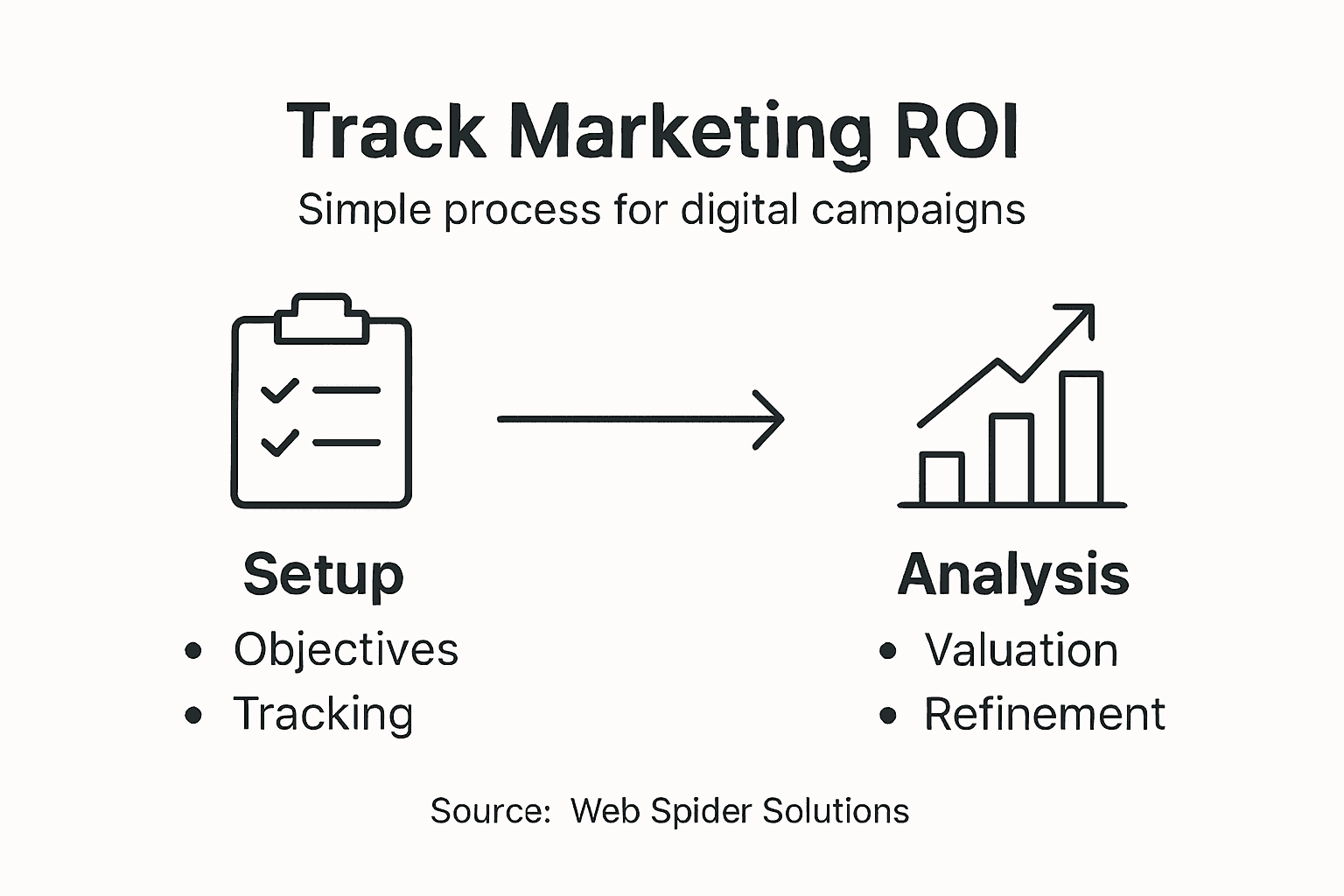
Utilize advanced analytics tools to track the complete customer journey, allowing you to assign more nuanced and accurate values to your marketing conversions. This approach helps you optimize your marketing strategies and allocate resources more effectively.
Pro tip: Regularly review and adjust your conversion values as your business model and market conditions evolve.
Step 4: Calculate ROI using campaign data
Calculating the return on investment (ROI) for digital marketing campaigns requires a strategic approach that goes beyond simple revenue tracking. Your goal is to develop a comprehensive understanding of how your marketing investments translate into tangible business results.
Start by developing a precise marketing ROI calculation method that captures the full financial picture. This involves breaking down your calculation into key components:
- Total Campaign Revenue: Sum of direct and indirect revenue generated
- Total Marketing Expenses: Include all costs associated with the campaign
- Customer Acquisition Costs: Factor in expenses related to converting leads
- Long-Term Value Projections: Estimate potential future revenue from acquired customers
- Comparative Performance Metrics: Benchmark against previous campaign results
The standard ROI formula remains straightforward: Net Profit ÷ Total Investment × 100 = ROI Percentage. However, modern marketing requires a more nuanced approach that considers multiple interaction points and incremental value creation.
ROI is not just a number – it’s a strategic insight that reveals the true effectiveness of your marketing investments.
Advanced attribution models can help you understand the complex journey from initial marketing touchpoint to final conversion. This means tracking how different marketing channels and interactions contribute to your overall business success.
Pro tip: Develop a standardized ROI tracking spreadsheet that automatically calculates performance across multiple campaigns and channels.
Step 5: Verify and refine ROI tracking methods
Verifying and refining your ROI tracking methods is crucial to ensuring the accuracy and reliability of your digital marketing performance insights. By continuously evaluating and improving your tracking systems, you’ll develop more precise and actionable marketing intelligence.
Implement robust marketing analytics techniques that go beyond surface-level data collection. This comprehensive approach involves:
- Regular Data Audits: Systematically review tracking accuracy and data integrity
- Cross-Channel Verification: Compare metrics across different marketing platforms
- Statistical Significance Testing: Ensure your data provides meaningful insights
- Anomaly Detection: Identify and investigate unexpected performance variations
- Continuous Calibration: Adjust tracking methods based on emerging trends
Your verification process should focus on three critical analytics dimensions: descriptive (what happened), predictive (what might happen), and prescriptive (what actions to take). This multi-layered approach helps you understand not just the numbers, but the strategic implications behind them.
Effective ROI tracking is a dynamic process of continuous learning and adaptation, not a static measurement.
Develop a systematic review schedule that allows you to periodically reassess your tracking methodologies, ensuring they remain aligned with your evolving business goals and market conditions.
Pro tip: Create a quarterly ROI tracking review checklist to maintain consistent and rigorous performance analysis.
Unlock True Digital Marketing ROI With Expert Support
Tracking return on investment for digital marketing can feel overwhelming. The article highlights common challenges like defining measurable objectives, assigning accurate conversion values, and refining ROI tracking methods. If you struggle with turning complex data into clear insights or want to connect your campaign outcomes directly to business growth, you are not alone. Achieving real digital marketing success requires more than just analytics tools; it demands expert strategy and execution designed to meet your unique goals.
At Web Spider Solutions, we specialize in bridging that gap. Our tailored services in Paid Advertising Archives – Web Spider Solutions and strategic digital campaigns focus on improving measurable outcomes like qualified lead generation and conversion optimization. We help you define precise marketing objectives, implement reliable tracking systems, and accurately value conversions for maximum ROI. Ready to move beyond guesswork and unlock your campaign’s true potential? Visit Web Spider Solutions today for a free consultation and discover how to turn your digital marketing efforts into real business results. Learn more about our innovative approaches through our Stories Archives – Web Spider Solutions and stay ahead in your industry.
Frequently Asked Questions
How can I define measurable marketing objectives for ROI tracking?
To define measurable marketing objectives for tracking ROI, use the SMART framework. This ensures objectives are Specific, Measurable, Achievable, Relevant, and Time-bound, such as aiming to increase website traffic by 25% in six months.
What tracking systems should I set up to measure digital marketing ROI?
Set up reliable tracking systems that include website analytics, social media metrics, email marketing tracking, advertising performance, and conversion tracking. Integrate these systems to collect data corresponding to your marketing objectives and calculate your marketing performance effectively.
How do I assign accurate values to conversions?
To assign accurate values to conversions, consider both direct revenue from sales and indirect metrics like lead generation value. Analyze customer acquisition costs and long-term value to fully understand each conversion’s worth for your marketing assessment.
What is the best way to calculate ROI for my digital marketing campaigns?
To calculate ROI, use the formula: Net Profit ÷ Total Investment × 100 = ROI Percentage. Make sure to account for total campaign revenue, all marketing expenses, and customer acquisition costs to get a complete financial picture.
How can I verify and refine my ROI tracking methods?
Verify and refine your ROI tracking methods by regularly conducting data audits and cross-channel verification of metrics. Establish a quarterly review schedule to adjust tracking methods based on emerging trends and ensure accuracy in your performance analysis.