






Nearly 80 percent of American businesses fall short of their digital advertising goals each year, missing valuable growth opportunities. In a landscape flooded with competing messages, building a high impact campaign takes more than a catchy slogan. This guide breaks down each step to help you set clear objectives, pinpoint your perfect audience, and measure real outcomes for lasting results.
Table of Contents
- Step 1: Define Campaign Goals And Target Audience
- Step 2: Develop Compelling Ad Creatives And Messaging
- Step 3: Choose Optimal Platforms And Allocate Budgets
- Step 4: Set Up Tracking, Analytics, And Conversion Metrics
- Step 5: Test, Monitor, And Optimize Campaign Performance
Quick Summary
| Key Point | Explanation |
|---|---|
| 1. Define clear goals and audience | Establish specific campaign objectives and identify your ideal target audience for effective advertising success. |
| 2. Create compelling ad creatives | Develop messaging that resonates emotionally with your audience, focusing on clarity and unique value propositions. |
| 3. Select optimal platforms for ads | Choose advertising platforms where your target audience engages most, ensuring alignment with campaign objectives. |
| 4. Implement robust tracking systems | Use multiple analytics tools to track user interactions and align conversion metrics with business goals for effective measurement. |
| 5. Continuously test and optimize campaign | Regularly analyze and adjust your ad strategies based on performance metrics to enhance campaign effectiveness. |
Step 1: Define campaign goals and target audience
Successful ad campaigns start with crystal clear objectives and a precise understanding of your ideal audience. By strategically defining campaign goals that align with your business vision, you create a powerful roadmap for advertising success.
Establishing campaign goals requires identifying specific, measurable outcomes such as increasing brand awareness, generating website traffic, boosting conversions, or driving direct sales. These objectives must connect directly with your broader business strategy. For instance, if your company aims to expand market share, your ad campaign might focus on reaching new customer segments or introducing innovative product features. A comprehensive digital campaign management approach involves breaking down these broad goals into quantifiable metrics like percentage increase in leads, conversion rate improvements, or specific revenue targets.
Targeting the right audience is equally critical. Through careful segmentation, you can personalize advertising messages to maximize campaign effectiveness. Analyze demographic data, purchasing behaviors, and psychographic characteristics to create detailed customer personas. By understanding your audience’s preferences, challenges, and motivations, you can craft ad content that resonates deeply and drives meaningful engagement. Remember that precision trumps broad reach every time.
Warning: Avoid the common mistake of casting too wide a net. Narrowly defined audience targeting consistently outperforms generic, mass market approaches.
Step 2: Develop compelling ad creatives and messaging
Crafting powerful ad creatives is the heartbeat of successful advertising campaigns. Your goal is to design messaging that captivates your target audience and drives meaningful action through strategic digital advertising techniques.

The art of developing compelling ad creatives involves deep understanding of consumer psychology and strategic message design. Effective ad development requires carefully crafting text and visual elements that resonate emotionally with your audience. Research suggests utilizing structured ideation techniques and consumer insights to generate messages that connect authentically. This means moving beyond generic statements and creating narratives that speak directly to your audience’s specific needs, challenges, and aspirations.
When constructing your ad messaging, focus on clarity, brevity, and emotional impact. Use powerful, action-oriented language that creates a sense of urgency or excitement. Highlight unique value propositions that differentiate your offering from competitors. Include specific benefits rather than generic claims. Visual elements should complement your messaging perfect alignment with your brand identity and campaign objectives.
Warning: Avoid the trap of creating generic or overly complicated ad creatives. Your messaging should be sharp, focused, and immediately understandable within seconds of viewer engagement.
Step 3: Choose optimal platforms and allocate budgets
Selecting the right advertising platforms and strategically distributing your marketing budget are critical steps in creating a successful ad campaign. Your platform selection must align precisely with where your target audience spends their time and engages most actively.
Digital marketing budget planning requires a sophisticated approach that goes beyond simple dollar allocation. Understanding your audience’s demographics, online behaviors, and preferred communication channels is essential for platform selection. Different platforms offer unique strengths research indicates that advertising media choices should be driven by specific campaign objectives and audience characteristics. For social media campaigns, platforms like Facebook, Instagram, LinkedIn, and Twitter each provide distinct targeting capabilities. Search engine marketing through Google Ads can capture high intent audiences, while display networks offer broader reach.
When allocating your budget, adopt a data driven approach that prioritizes platforms with the highest potential return on investment. Start by assigning smaller test budgets across multiple channels, carefully tracking performance metrics like click through rates, conversion rates, and cost per acquisition. This experimental approach allows you to optimize spending dynamically, shifting resources toward channels demonstrating the most promising results. Allocate approximately 60 to 70 percent of your initial budget to proven platforms, reserving 30 to 40 percent for experimental channels and emerging opportunities.
Warning: Avoid spreading your budget too thinly across numerous platforms. Concentrated, strategic investment always outperforms scattered spending.
Step 4: Set up tracking, analytics, and conversion metrics
Tracking and measuring your ad campaign performance is the key to understanding its true effectiveness and making data driven improvements. Conversion tracking transforms raw data into actionable insights that can dramatically enhance your marketing strategy.
Implementing a robust analytics framework requires strategic configuration of multiple tracking tools. Research suggests that advanced prediction techniques can significantly improve conversion accuracy. By integrating multi task learning approaches, you can create a comprehensive tracking system that goes beyond basic metrics. Set up Google Analytics, Facebook Pixel, and platform specific tracking pixels to capture detailed user interactions. Configure conversion events that align with your specific campaign goals such as form submissions, product purchases, or email sign ups.
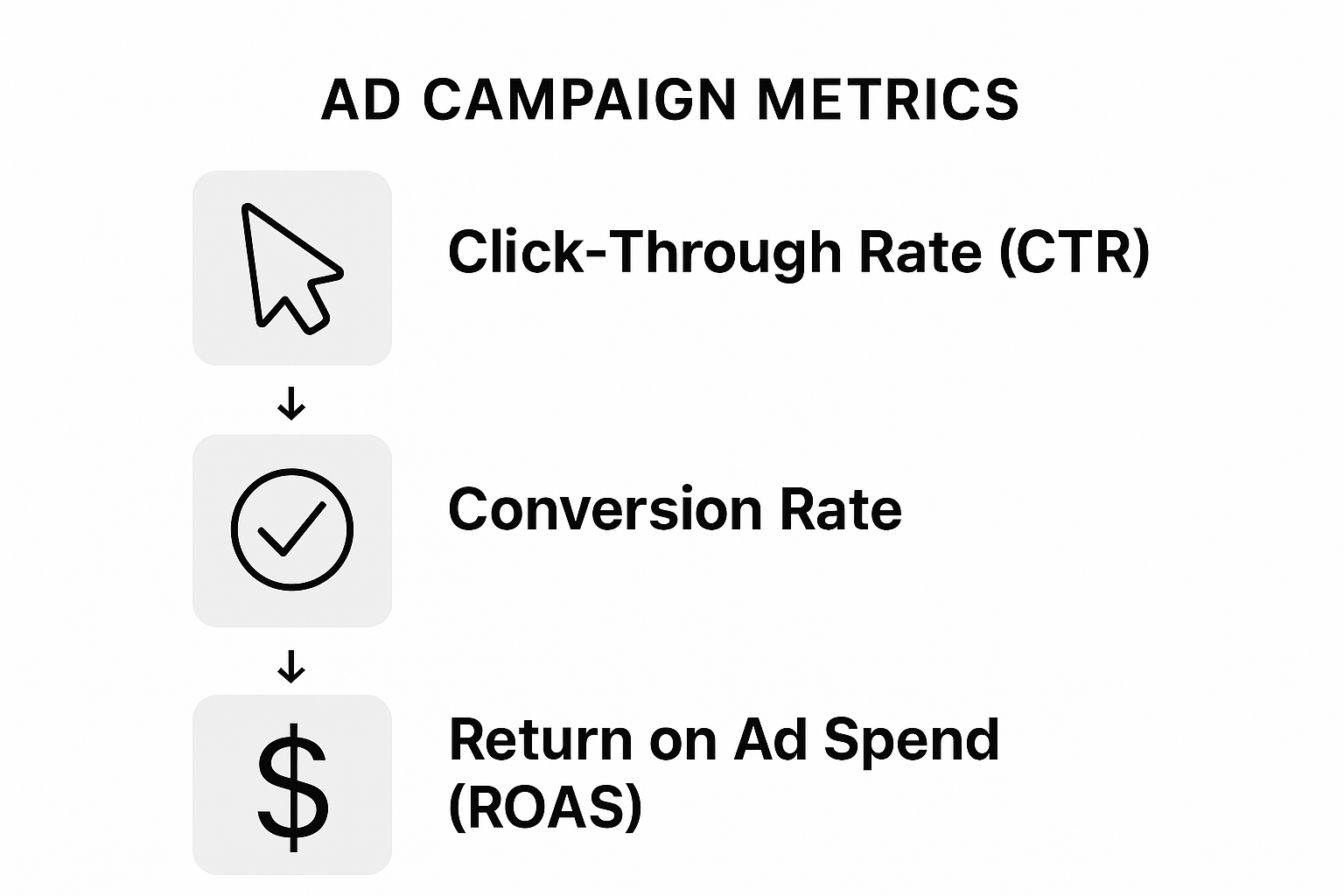
To maximize the value of your analytics, establish key performance indicators that directly reflect your business objectives. Monitor metrics like click through rates, conversion rates, cost per acquisition, and return on ad spend. Utilize website analytics tools to segment data and understand user behavior patterns. Create custom dashboards that provide real time insights, allowing you to make rapid adjustments to your campaign strategy. Regularly review these metrics weekly or biweekly to identify trends, optimize underperforming channels, and double down on high performing tactics.
Warning: Avoid analysis paralysis. Focus on actionable metrics that directly impact your bottom line rather than getting lost in excessive data points.
Step 5: Test, monitor, and optimize campaign performance
Successfully running an ad campaign requires continuous refinement and strategic analysis. Your ability to test, monitor, and quickly adapt will determine the ultimate success of your marketing efforts.
Research suggests that implementing dynamic programming techniques can dramatically improve ad creative selection and performance. By utilizing a systematic approach to testing, you can efficiently explore and identify the most effective advertising strategies. Start with A/B testing different ad variations, comparing elements like headlines, images, call to action buttons, and targeting parameters. Use platform specific analytics tools to track key performance indicators such as click through rates, conversion rates, and cost per acquisition. Landing page optimization plays a crucial role in this process, ensuring that your ads drive traffic to high converting web pages.
Create a structured optimization workflow that involves weekly performance reviews. Develop a decision matrix that helps you quickly identify underperforming ads and reallocate budget to top performing variations. Pay close attention to audience engagement metrics, demographic responses, and time of day performance. Be prepared to make rapid adjustments, pausing low performing ads and scaling up those showing promising results. Implement a continuous improvement cycle where each iteration builds upon the insights gained from previous campaign tests.
Warning: Optimization is not a one time event. Treat your ad campaign as a living strategy that requires constant nurturing and intelligent refinement.
Drive Your Business Growth with Expert Ad Campaign Management
Creating effective ad campaigns requires more than just creativity. It demands clear goal setting, precise audience targeting, and smart budget allocation to avoid wasted spend and missed opportunities. If you find yourself overwhelmed by tracking analytics or uncertain how to optimize ad performance dynamically you are not alone. Many businesses struggle with turning complex campaign data into actionable strategies that deliver real results.
At Web Spider Solutions, we specialize in tailored paid advertising strategies that directly address these challenges. From setting measurable campaign objectives to continuous performance optimization our team ensures your advertising efforts generate maximum ROI and business growth. Explore our Paid Advertising Archives to see how we craft campaigns that resonate with targeted audiences and drive conversions. Don’t let your ad budget scatter aimlessly take control now and partner with experts who understand how to transform insight into impact. Visit Web Spider Solutions today to start maximizing your ad campaign’s full potential.
Frequently Asked Questions
What are the key goals to define for an effective ad campaign?
To create an effective ad campaign, you should establish specific and measurable goals such as increasing brand awareness, generating website traffic, or boosting conversions. Start by identifying outcomes that align with your overall business strategy, and set quantifiable metrics to track your progress, like a 20% increase in leads.
How can I identify my target audience for an ad campaign?
Identifying your target audience involves analyzing demographic data, purchasing behaviors, and psychographic characteristics. Create detailed customer personas based on this information to tailor your ad messaging and improve engagement.
What are some effective strategies for developing ad creatives and messaging?
Developing effective ad creatives requires crafting clear, concise messages that resonate emotionally with your audience. Focus on articulating your unique value propositions and utilize strong visuals that enhance your messaging, aiming for immediate understanding within seconds of viewer engagement.
How should I allocate my budget across different advertising platforms?
Allocate your advertising budget based on where your target audience is most active. Start by assigning 60 to 70 percent to proven platforms while reserving 30 to 40 percent for testing new channels. This approach allows you to dynamically optimize spending based on performance metrics.
What metrics should I track to measure the success of my ad campaign?
To measure ad campaign success, track key performance indicators like click-through rates, conversion rates, and cost per acquisition. Set up tracking systems to monitor these metrics regularly, aiming for a performance review at least once a week to identify trends and make necessary adjustments.
How can I optimize my ad campaign over time?
Optimization involves continuously testing and analyzing your ad performance. Conduct A/B tests on different elements like headlines and images, and make data-driven decisions to pause low-performing ads while reallocating budget to high-performing strategies. Implement this process every few weeks for ongoing improvement.
Recommended