






More than eighty percent of american companies say content marketing plays a vital role in their growth. With endless information online, standing out has become tougher than ever. Learning how to share valuable content helps businesses earn trust and connect with the right audience. This guide breaks down content marketing in simple terms so you can understand its purpose, formats, and proven impact on american business success.
Table of Contents
- What Is Content Marketing? Core Concepts Explained
- Major Types of Content Marketing Formats
- How Content Marketing Drives Business Growth
- Steps to Effective Content Marketing Strategies
- Common Mistakes and How to Avoid Them
- Measuring ROI in Content Marketing Campaigns
Key Takeaways
| Point | Details |
|---|---|
| Content Marketing Focus | Businesses should create valuable, relevant content to attract and engage specific audiences instead of relying solely on traditional advertising methods. |
| Types of Formats | Utilize a variety of content formats such as blog posts, videos, and infographics to effectively engage and educate target audiences. |
| Strategic Steps | Implement a structured approach that includes audience research, goal setting, and performance tracking for successful content marketing. |
| Common Mistakes | Avoid creating generic content, neglecting quality, and ignoring performance metrics to enhance effectiveness in content marketing. |
What Is Content Marketing? Core Concepts Explained
Content marketing represents a strategic digital approach where businesses create and distribute valuable, relevant content to attract and engage a specific audience. Unlike traditional advertising that interrupts consumers, content marketing aims to pull potential customers toward your brand by providing meaningful information that solves their problems or answers their questions.
At its core, content marketing focuses on developing and sharing online materials designed to stimulate interest in a company’s products or services. These materials can include blog posts, videos, podcasts, infographics, social media content, and educational resources that provide genuine value. By generating targeted content that addresses specific customer needs, businesses can establish trust, demonstrate expertise, and naturally guide potential customers through their purchasing journey.
The strategic approach of content marketing goes beyond simple promotion. Research indicates that it can be considered a sophisticated communication tool within the marketing mix, functioning as a method to build long-term relationships with audiences. Key objectives include:
- Generating high-quality leads
- Increasing brand awareness
- Establishing thought leadership
- Improving search engine visibility
- Creating meaningful audience connections
Successful content marketing requires understanding your target audience’s pain points, interests, and informational needs. By consistently delivering high-quality, relevant content, businesses can transform passive viewers into engaged followers and, ultimately, loyal customers.
Major Types of Content Marketing Formats
Content marketing encompasses a diverse range of formats designed to engage, educate, and convert target audiences. Comprehensive content strategies leverage multiple formats to maximize audience reach and interaction, ensuring businesses can connect with potential customers through their preferred communication channels.

Blog Posts remain a foundational content marketing format, allowing businesses to demonstrate expertise, improve search engine rankings, and provide in-depth information about industry trends, product insights, and problem-solving strategies. Video Content has emerged as a powerful engagement tool, enabling brands to create dynamic, visually compelling narratives that capture audience attention more effectively than traditional text-based communication.
Based on research examining content marketing formats, the most impactful types include:
- Blog Posts and Articles: Long-form written content for detailed explanations
- Videos: Short-form and long-form visual storytelling
- Infographics: Visual representations of complex data and concepts
- Podcasts: Audio content for in-depth discussions and interviews
- Webinars: Interactive online presentations and training sessions
- Case Studies: Detailed narratives showcasing real-world problem solving
- Email Newsletters: Direct communication and targeted content delivery
- Social Media Content: Quick, engaging snippets across platforms
Successful content marketing requires strategic selection and integration of these formats, tailoring the approach to specific audience preferences and business objectives. Creative content examples demonstrate how innovative brands effectively mix and match these formats to create compelling, multi-channel marketing experiences that resonate with their target audience.
How Content Marketing Drives Business Growth
Content marketing strategies have transformed how businesses attract, engage, and convert potential customers by creating valuable, targeted content that addresses specific audience needs. Unlike traditional advertising, this approach focuses on building long-term relationships through informative and compelling materials that naturally draw consumers toward a brand’s solutions.
Business Growth Mechanisms emerge through strategic content marketing by establishing trust, demonstrating expertise, and creating meaningful connections with target audiences. Research indicates that comprehensive content marketing approaches can systematically drive business expansion through multiple interconnected channels:
- Lead Generation: Attracting high-quality potential customers
- Brand Awareness: Increasing visibility and recognition
- Customer Education: Providing valuable insights about products and services
- Trust Building: Establishing credibility through expert content
- Search Engine Optimization: Improving online visibility
- Customer Retention: Creating ongoing engagement
The fundamental power of content marketing lies in its ability to create sustainable brand loyalty by consistently delivering valuable information that helps consumers make informed decisions. By addressing audience pain points, sharing industry insights, and presenting solutions in an accessible manner, businesses can transform passive viewers into active, committed customers who view the brand as a trusted resource rather than just another sales pitch.
Steps to Effective Content Marketing Strategies
Successful content marketing requires a strategic, systematic approach that goes beyond random content creation. Strategic content marketing workflows provide businesses with a structured framework for developing, executing, and measuring content that drives meaningful audience engagement and business growth.
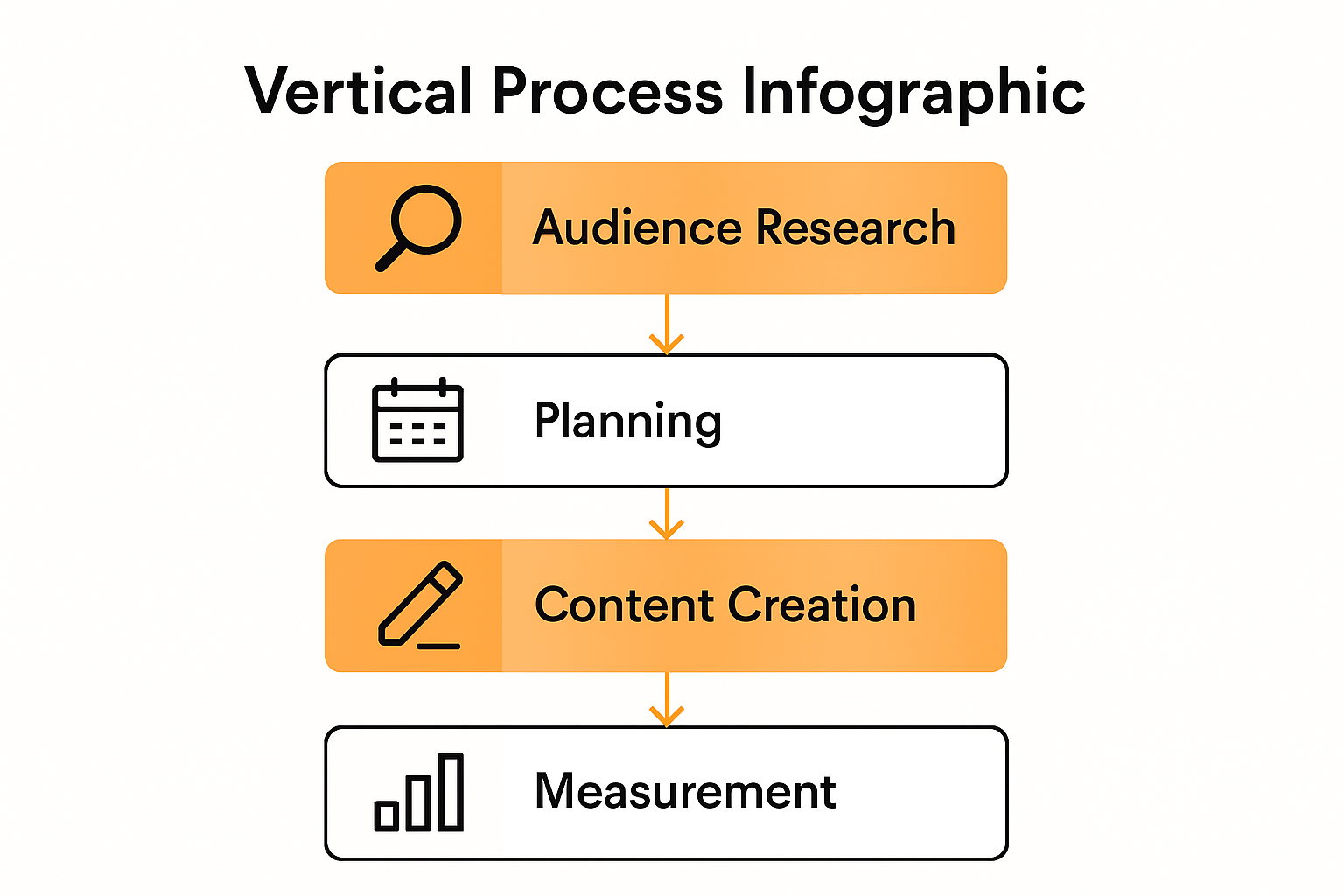
Key Strategic Steps for developing an effective content marketing approach include:
- Audience Research: Deeply understand target demographic characteristics, pain points, preferences, and communication channels
- Goal Setting: Define clear, measurable objectives for content marketing efforts
- Content Mapping: Align content types with specific buyer journey stages
- Channel Selection: Identify most effective platforms for target audience
- Content Creation: Develop high-quality, valuable, and relevant materials
- Distribution Strategy: Plan systematic content promotion
- Performance Tracking: Implement analytics and continuous optimization
Comprehensive content marketing strategies require businesses to continuously adapt their approach, leveraging emerging trends and technological innovations. By maintaining flexibility, consistently analyzing performance metrics, and remaining committed to delivering genuine value, organizations can transform their content marketing from a tactical exercise into a powerful strategic asset that drives sustainable business growth.
Common Mistakes and How to Avoid Them
Content marketing case studies reveal numerous pitfalls that businesses frequently encounter when developing their marketing strategies. Understanding these common mistakes is crucial for creating more effective, targeted content that genuinely connects with audiences and drives meaningful engagement.
Critical Mistakes to Avoid in content marketing include:
- Lack of Clear Target Audience: Creating generic content without specific audience personas
- Inconsistent Content Production: Sporadic or unpredictable publishing schedules
- Neglecting Content Quality: Prioritizing quantity over meaningful, valuable information
- Ignoring Performance Metrics: Failing to track and analyze content effectiveness
- Overlooking SEO Principles: Creating content without strategic keyword integration
- Limited Content Distribution: Relying solely on organic reach
- Insufficient Audience Research: Making assumptions about audience preferences
Strategic content marketing approaches demand continuous learning and adaptation. Businesses must develop a proactive mindset, embracing data-driven insights and maintaining flexibility in their content strategies. By recognizing these common pitfalls and implementing targeted corrective measures, organizations can transform potential weaknesses into opportunities for significant marketing growth and audience connection.
Measuring ROI in Content Marketing Campaigns
Comprehensive marketing metrics provide businesses with critical insights into the effectiveness of their content strategies, transforming raw data into actionable intelligence that drives strategic decision making. Understanding how to accurately measure return on investment requires a nuanced approach that goes beyond simple numerical calculations.
Key Performance Indicators (KPIs) for measuring content marketing ROI include:
- Lead Generation: Number of qualified leads generated
- Conversion Rate: Percentage of content consumers taking desired actions
- Website Traffic: Unique visitors, page views, and time on site
- Engagement Metrics: Social shares, comments, and interaction rates
- Customer Acquisition Cost: Total spending divided by new customers
- Revenue Attribution: Direct revenue generated from content
- Brand Awareness: Increases in brand mentions and search volume
Marketing ROI analysis demands a holistic approach that considers both quantitative and qualitative outcomes. Successful businesses recognize that content marketing’s true value extends beyond immediate financial returns, encompassing long-term brand building, customer trust, and strategic positioning in competitive markets. By implementing robust tracking systems and maintaining a flexible, data-driven mindset, organizations can continuously refine their content strategies to maximize impact and efficiency.
Unlock Your Content Marketing Potential Today
Struggling to convert content into real business growth can be frustrating. The article highlights key challenges like understanding your target audience, creating consistent high-quality content, and measuring the true return on investment. If you want to overcome these obstacles and build trust with your audience through strategic, results-driven content marketing, you are in the right place.
At Web Spider Solutions we specialize in tailored digital marketing strategies designed to amplify your content’s impact. With expertise in SEO, content creation, and targeted paid campaigns, we help businesses increase visibility, generate qualified leads, and foster long-term customer loyalty. Explore our B2B Marketing Archives to see how focused strategies transform brands and deliver measurable success.
Ready to take your content further and experience growth that lasts? Visit Web Spider Solutions now and start your journey with a free consultation that puts your unique goals first.
Frequently Asked Questions
What is content marketing?
Content marketing is a strategic digital approach where businesses create and distribute valuable, relevant content to attract and engage a specific audience. It focuses on providing meaningful information that solves problems or answers questions rather than traditional advertising methods.
What are the main objectives of content marketing?
The key objectives of content marketing include generating high-quality leads, increasing brand awareness, establishing thought leadership, improving search engine visibility, and creating meaningful connections with the audience.
How can content marketing drive business growth?
Content marketing drives business growth by establishing trust, demonstrating expertise, and creating meaningful connections with target audiences. It focuses on lead generation, brand awareness, customer education, trust building, SEO, and customer retention.
What are effective steps to create a content marketing strategy?
To develop an effective content marketing strategy, key steps include audience research, goal setting, content mapping, channel selection, content creation, distribution strategy, and performance tracking.
Recommended