







An estimated 75 percent of American professionals rate effective communication as the number one driver of team success. For digital marketing managers in fast-moving B2B tech environments, this skill gap can lead to project delays and weakened client loyalty if left unaddressed. This guide unpacks the business communication methods and traits that empower international teams to collaborate seamlessly and cultivate enduring client relationships, giving your organization a strategic advantage.
Table of Contents
- Defining Business Communication Skills
- Types of Communication in B2B Teams
- Essential Traits of Effective Communicators
- Tools and Strategies for Team Collaboration
- Common Communication Challenges and Mistakes
- Impact on Client Relationships and Project Outcomes
Key Takeaways
| Point | Details |
|---|---|
| Business Communication Skills are Essential | Professionals must master both verbal and nonverbal communication methods to thrive in diverse professional environments. |
| Types of B2B Communication | Effective B2B collaboration relies on selecting appropriate synchronous and asynchronous communication channels. |
| Traits of Effective Communicators | Successful communicators combine emotional intelligence with adaptability to foster meaningful workplace relationships. |
| Impact on Client Relationships | Strong communication is fundamental for building trust and managing client expectations, ultimately enhancing project success. |
Defining Business Communication Skills
Business communication skills represent the foundational abilities professionals use to exchange information, collaborate effectively, and build meaningful workplace relationships. Understanding these skills requires examining both verbal and nonverbal methods of sharing knowledge across multiple professional contexts.
At its core, business communication involves three critical dimensions: information transmission, interpersonal understanding, and strategic meaning generation. Professionals must master multiple communication channels including face-to-face interactions, digital platforms, written documents, and oral presentations. Different communication media possess varying levels of information richness, which means skilled communicators adapt their approach based on context, audience, and desired outcome.
Effective business communication skills typically encompass several key competencies:
- Active Listening: Fully engaging with speakers, asking clarifying questions, and demonstrating genuine understanding
- Assertive Expression: Communicating thoughts and feelings directly and respectfully
- Nonverbal Communication: Understanding body language, facial expressions, and tone
- Digital Communication Proficiency: Navigating email, instant messaging, and virtual collaboration tools
- Conflict Resolution: Using communication to address disagreements constructively
Pro tip: Practice communication skills by recording yourself in mock professional conversations and critically reviewing your verbal and nonverbal communication techniques.
Types of Communication in B2B Teams
B2B team communication involves a complex network of interaction channels that enable organizations to share information, collaborate, and drive strategic objectives. Communication channels in professional environments range from highly interactive to lean transmission methods, requiring teams to strategically select the most appropriate medium for each specific interaction.
The primary types of communication in B2B teams can be categorized across several key dimensions. Synchronous communication methods include face-to-face meetings, video conferences, and real-time digital platforms where team members interact simultaneously. Asynchronous communication encompasses email exchanges, project management tools, shared documentation platforms, and recorded video messages that allow for flexible information sharing across different time zones and work schedules. Effective team communication requires continuous information exchange and adaptation to diverse communication styles.
Here’s a comparison of synchronous and asynchronous communication methods used in B2B teams:
| Communication Type | Typical Channels | Best Use Case |
|---|---|---|
| Synchronous | Video calls, meetings | Real-time decisions, alignment |
| Asynchronous | Email, shared docs | Cross-timezone collaboration |
Professional communication flows in B2B teams typically follow multiple directional patterns:
- Downward Communication: Leadership transmitting instructions, strategic goals, and performance expectations to team members
- Upward Communication: Team members providing feedback, reporting progress, and sharing insights with management
- Horizontal Communication: Collaboration between team members at similar organizational levels
- Diagonal Communication: Cross-functional interactions that transcend traditional departmental boundaries
- External Communication: Interactions with clients, vendors, partners, and stakeholders outside the immediate organizational structure
Pro tip: Develop a communication matrix that outlines preferred communication channels, response time expectations, and communication protocols for different types of interactions to streamline team collaboration.
Essential Traits of Effective Communicators
Effective communicators possess a sophisticated set of skills that go far beyond basic information transmission. Professional communication requires a nuanced approach that combines emotional intelligence with strategic message delivery, enabling individuals to create meaningful connections and drive collaborative outcomes in complex business environments.

The core traits of exceptional communicators encompass multiple interconnected dimensions. Effective communication involves active listening, assertive speaking, and a deep understanding of nonverbal communication cues. These professionals demonstrate remarkable adaptability, quickly adjusting their communication style to match audience needs, organizational contexts, and specific interaction goals. Their approach is characterized by psychological awareness, strategic thinking, and a genuine commitment to understanding and being understood.
Key traits of top-tier communicators include:
- Emotional Intelligence: Recognizing and managing personal and others’ emotions during interactions
- Active Listening: Fully engaging with speakers, comprehending underlying messages beyond surface-level communication
- Adaptability: Modifying communication approaches based on audience, context, and feedback
- Clarity: Expressing complex ideas in straightforward, accessible language
- Empathy: Understanding different perspectives and creating psychological safety in conversations
- Nonverbal Awareness: Interpreting and utilizing body language, tone, and subtle communication signals
- Conflict Resolution: Navigating challenging conversations with professionalism and constructive intent
Pro tip: Practice self-recording during professional conversations to objectively analyze your communication patterns, identifying areas for improvement in real-world interactions.
Tools and Strategies for Team Collaboration
Team collaboration represents a dynamic process of coordinated effort that transforms individual capabilities into collective achievements. Structured problem-solving frameworks provide critical foundations for interdisciplinary teamwork, enabling organizations to address complex challenges more effectively than traditional isolated working approaches.
Successful collaboration hinges on establishing trust, maintaining open communication, and recognizing individual team member contributions. Modern collaborative strategies leverage advanced digital tools and intentional communication practices to bridge geographical distances, align diverse perspectives, and create synergistic work environments that amplify team potential.
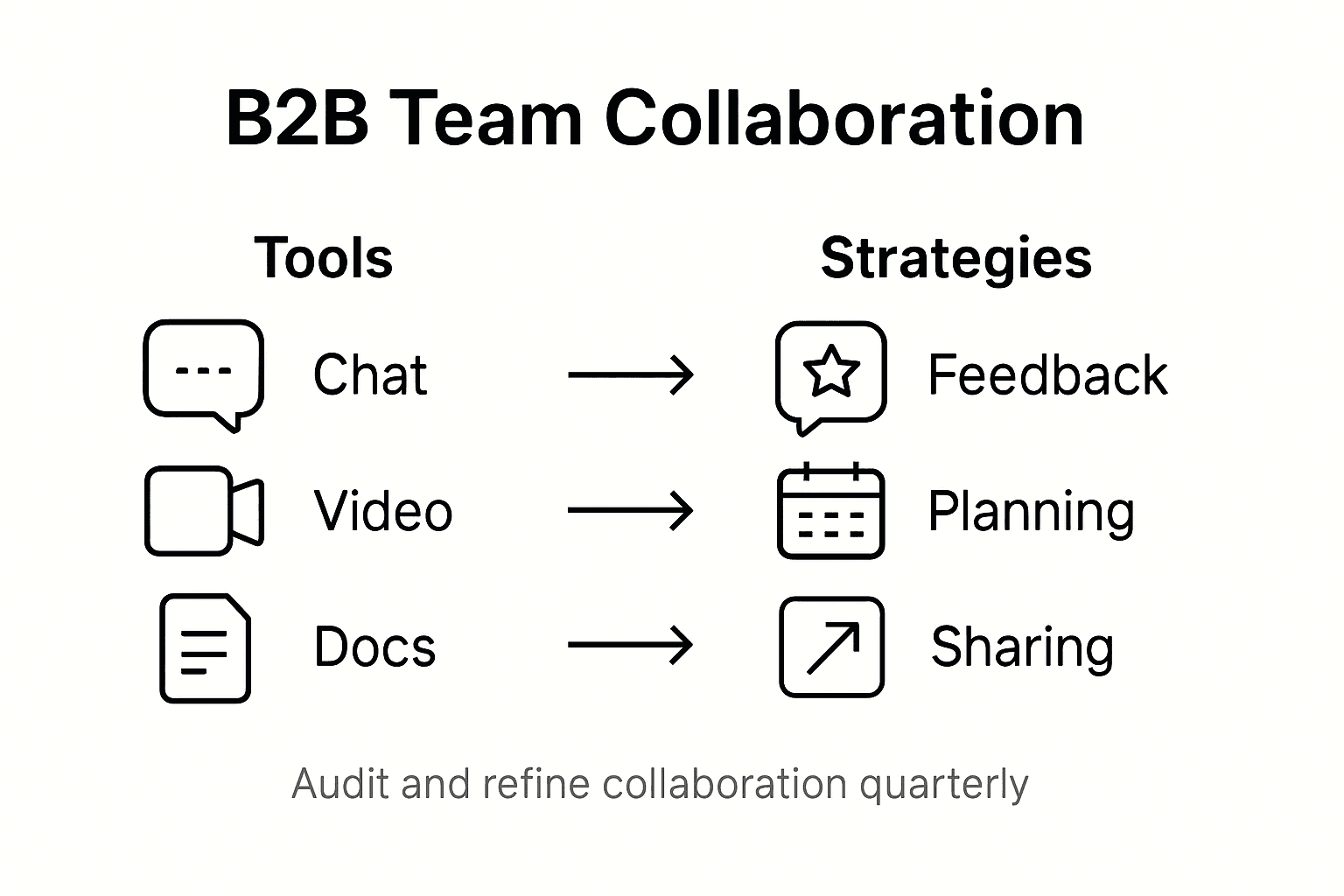
Essential tools and strategies for effective team collaboration include:
- Project Management Platforms: Digital dashboards like Asana, Trello, and Monday.com for tracking tasks, deadlines, and team progress
- Communication Technologies: Slack, Microsoft Teams, and Zoom for real-time messaging, video conferencing, and instant collaboration
- Shared Document Systems: Google Workspace and Microsoft OneDrive for concurrent document editing and version control
- Collaborative Design Tools: Figma, Miro, and Mural for visual brainstorming and design thinking processes
- Knowledge Management Systems: Confluence and Notion for centralizing institutional knowledge and creating collaborative wikis
- Performance Tracking Tools: OKR platforms for setting, monitoring, and aligning team goals
- Feedback and Recognition Systems: 360-degree feedback tools for continuous performance improvement
Pro tip: Implement a quarterly team collaboration audit to assess tool effectiveness, gather team feedback, and refine your collaborative technology stack.
Common Communication Challenges and Mistakes
Communication challenges represent complex interpersonal dynamics that can significantly undermine professional collaboration, creating barriers that prevent teams from achieving their full potential. These obstacles emerge from a combination of psychological, cultural, and structural factors that require nuanced understanding and strategic intervention.
Effective communication demands careful navigation of multiple potential pitfalls, including unclear messaging, inappropriate tone, and inadequate preparation. Professionals must develop heightened awareness of communication patterns that can inadvertently create misunderstandings, erode trust, and diminish team cohesion. The most successful communicators recognize these challenges as opportunities for growth and continuous improvement.
Common communication challenges and mistakes include:
Below is a summary of common communication challenges and strategies to overcome them:
| Challenge | Typical Outcome | Effective Strategy |
|---|---|---|
| Unclear messaging | Misunderstandings, rework | Simplify, confirm understanding |
| Emotional reactivity | Damaged trust, conflict | Pause, respond objectively |
| Cultural insensitivity | Exclusion, lost engagement | Seek diversity training, feedback |
- Emotional Reactivity: Responding defensively or emotionally rather than professionally and objectively
- Unclear Messaging: Using vague, overly complex, or ambiguous language that creates confusion
- Poor Listening Skills: Interrupting, preparing responses while others speak, or failing to comprehend underlying messages
- Nonverbal Miscommunication: Misaligning body language, tone, and verbal communication
- Cultural Insensitivity: Failing to recognize and respect diverse communication styles and cultural nuances
- Assumption-Based Communication: Making unverified assumptions about team members’ understanding or intentions
- Over-Communication: Overwhelming colleagues with excessive, unnecessary information
- Under-Communication: Withholding critical information or providing insufficient context
- Technology Misuse: Inappropriate use of digital communication channels
Pro tip: Conduct periodic communication self-assessments by recording and reviewing your interactions, identifying patterns of miscommunication and areas for personal improvement.
Impact on Client Relationships and Project Outcomes
Effective communication serves as the critical foundation for building and maintaining strong client relationships, directly influencing project success and long-term business sustainability. Professional communication transcends simple information exchange, becoming a strategic tool for managing expectations, building trust, and delivering exceptional value to clients.
Interpersonal communication skills play a pivotal role in navigating complex project dynamics, aligning diverse perspectives, and consistently meeting client expectations. Successful teams recognize that communication is not just about transmitting information, but about creating meaningful connections that transform transactional interactions into strategic partnerships.
Key impacts of sophisticated communication on client relationships include:
- Trust Building: Creating transparent, reliable communication channels that foster confidence
- Expectation Management: Clearly articulating project scope, timelines, and potential challenges
- Conflict Resolution: Addressing concerns proactively and constructively
- Collaborative Problem Solving: Engaging clients as partners in developing innovative solutions
- Performance Perception: Shaping client impressions through consistent, professional communication
- Relationship Longevity: Establishing rapport that extends beyond individual project interactions
- Value Demonstration: Showcasing expertise and commitment through high-quality communication
- Risk Mitigation: Identifying and addressing potential misunderstandings before they escalate
- Continuous Improvement: Using client feedback to refine communication and service delivery
Pro tip: Implement a structured communication debrief after each project, systematically collecting client feedback to continuously enhance your communication approach and relationship management strategies.
Boost Your B2B Success with Expert Digital Communication Solutions
Mastering business communication skills is essential for driving clear client relationships and seamless team collaboration as highlighted in this article. If your challenge lies in overcoming communication gaps that impact project outcomes or client trust, you are not alone. Key pain points like unclear messaging, cultural insensitivity, and poor digital communication proficiency can stall growth and weaken your B2B positioning.
At Web Spider Solutions, we understand the critical role strategic communication plays in enhancing your brand’s visibility and reputation in competitive markets. Our tailored digital marketing services focus on optimizing your online presence through content marketing, SEO, and dynamic social media management to amplify your messaging with clarity and reach. Explore inspiring success stories in our Stories Archives to see how businesses like yours have leveraged expert communication strategies to dominate their digital space.
Ready to transform how your business communicates and connects with clients? Visit Web Spider Solutions today for a free consultation and start building the long-term trust that powers B2B success.
Frequently Asked Questions
What are the key components of effective business communication skills?
Effective business communication skills include active listening, assertive expression, nonverbal communication, digital communication proficiency, and conflict resolution.
How does communication impact team collaboration in B2B settings?
Effective communication fosters trust, maintains open dialogue, and aligns team members’ goals, enhancing collaboration and driving project success in B2B environments.
What are common challenges in business communication?
Common challenges include unclear messaging, emotional reactivity, poor listening skills, cultural insensitivity, and the misuse of technology for communication.
How can I improve my business communication skills?
You can improve your business communication skills by practicing active listening, seeking feedback on your communication style, recording conversations for self-review, and adapting your approach based on context and audience.
Recommended