






Many small and medium-sized businesses struggle to grow an email list that truly engages customers and drives revenue. You send campaigns to hundreds or thousands of subscribers, yet open rates stay low and conversions disappoint. The problem often isn’t your messaging but the quality and relevance of your list itself. In 2026, effective email marketing depends on building an audience that wants to hear from you, not just a large database of contacts. This guide shows you how to create and maintain an email list that fuels measurable business growth through strategic collection, smart segmentation, and consistent nurturing.
Table of Contents
- Preparing To Build Your Email List: Tools And Prerequisites
- Segmenting And Nurturing Your Email List For Maximum Impact
- Maintaining List Hygiene And Compliance To Protect Deliverability
- Expected Results And SMB Case Studies Demonstrating Email List Impact
- How Web Spider Solutions Can Help You Build A High-Impact Email List
Key takeaways
| Point | Details |
|---|---|
| Lead magnets drive quality signups | High-value resources like templates and checklists attract engaged subscribers who want your content. |
| Segmentation multiplies revenue impact | Dividing your list by behavior and demographics enables personalized messaging that converts better. |
| List hygiene protects deliverability | Regular cleaning of invalid emails keeps bounce rates low and maintains your sender reputation. |
| Organic growth outperforms bought lists | Building your list naturally ensures compliance, engagement, and long-term ROI. |
| SMBs achieve impressive email ROI | Targeted campaigns deliver open rates of 26-43% and returns of $36-42 per dollar spent. |
Preparing to build your email list: tools and prerequisites
Successful list building starts before you collect a single email address. You need high-value lead magnets that solve specific problems for your target audience. Think templates, checklists, quizzes, or exclusive content that addresses real pain points your customers face daily. A accounting firm might offer a tax deduction checklist, while a marketing agency could provide a social media content calendar template.
Your signup forms should feature benefit-driven calls to action that clearly explain what subscribers will receive and how often. Place these forms strategically across multiple touchpoints: dedicated landing pages, timed popups on high-traffic pages, and checkout flows where purchase intent is highest. Each placement serves a different stage of the customer journey, so tailor your messaging accordingly.
Diversify your collection channels beyond your website. Convert social media followers by promoting lead magnets in posts and stories. Partner with complementary businesses to cross-promote to each other’s audiences. Use QR codes at events and in physical locations to capture interest in the moment. Implement referral programs that reward existing subscribers for bringing friends. Add content upgrades to popular blog posts, offering bonus material in exchange for email addresses. This multi-channel approach ensures you reach potential subscribers wherever they spend time.
| Lead Magnet Type | Primary Benefit | Creation Difficulty |
|---|---|---|
| Templates | Immediate time savings and practical application | Low to Medium |
| Checklists | Simple step-by-step guidance for complex tasks | Low |
| Quizzes | Personalized results that engage and educate | Medium to High |
| Exclusive Content | Access to premium insights not available elsewhere | Medium |
Pro Tip: Start with one or two lead magnets that directly address your core customer pain points rather than creating a dozen generic resources. Focused, high-quality offers convert better than a scattered approach and let you test what resonates before investing more time. Monitor which magnets drive the most signups and double down on those formats while phasing out underperformers.
Integrate your email marketing strategies to grow your business with optimized landing pages that convert visitors into subscribers. Your forms should load quickly, display clearly on mobile devices, and minimize required fields to reduce friction. Test different form placements and copy to identify what works best for your specific audience and industry.
Consider how you’ll generate leads online through coordinated campaigns that drive traffic to your signup opportunities. Paid advertising, SEO-optimized content, and social media all play roles in bringing potential subscribers to your forms. The key is maintaining message consistency from initial touchpoint through signup confirmation so subscribers know exactly what they signed up for.
Segmenting and nurturing your email list for maximum impact
Once you start collecting subscribers, segmentation transforms a generic list into a revenue engine. Divide your audience by demographics like location, industry, or company size. Track purchase history to identify customers versus prospects, high spenders versus bargain hunters, and recent buyers versus dormant accounts. Monitor engagement levels by noting who opens emails regularly, who clicks links, and who ignores your messages entirely. Capture interests through signup preferences, content downloads, and website behavior.

Segmentation can deliver 760% revenue increase compared to unsegmented campaigns because you send relevant messages to people actually interested in those topics. A subscriber who downloaded your beginner guide needs different content than someone who purchased your advanced service. Treating them the same wastes opportunities and risks annoying both groups.
Nurture each segment consistently with content that provides genuine value beyond sales pitches. Educational articles, industry insights, how-to guides, and exclusive tips build trust and position you as a helpful resource rather than just another company flooding inboxes. This approach keeps your brand top of mind when subscribers are ready to buy.
Use automation workflows to deliver timely, relevant messages without manual effort. Welcome series introduce new subscribers to your brand and set expectations for future emails. Cart abandonment sequences remind shoppers about items left behind and often include incentives to complete the purchase. Re-engagement campaigns target inactive subscribers with special offers or content to win them back. Post-purchase flows thank customers, request reviews, and suggest complementary products.
Implement A/B testing on subject lines, send times, email length, image usage, and call-to-action placement. Test one variable at a time so you know exactly what drove any performance changes. What works for one segment might flop with another, so run tests within specific audience groups rather than across your entire list.
Here’s how to create an effective segmentation strategy:
- Define your key segments based on business goals and available data points.
- Collect necessary information through signup forms, preference centers, and behavioral tracking.
- Assign subscribers to appropriate segments using your email platform’s automation rules.
- Personalize messaging for each segment with tailored subject lines, content, and offers.
- Monitor performance metrics by segment to identify what resonates with each group.
Pro Tip: Start with three to five segments based on the most obvious differences in your audience rather than trying to create dozens of micro-segments immediately. You might begin with prospects versus customers, engaged versus inactive, and different product interests. Expand your segmentation as you gather more data and observe behavior patterns that suggest additional meaningful divisions.
Apply email marketing best practices for maximum ROI by combining segmentation with compelling content. Your email newsletter best practices for B2B success should inform how you structure messages for business audiences, emphasizing ROI and practical applications over flashy design.
Mass email segmentation and personalization strategies work best when you have clear data to inform your divisions. Avoid creating segments based on assumptions about what subscribers might want. Instead, let their actual behavior and stated preferences guide your groupings.
Maintaining list hygiene and compliance to protect deliverability
Your sender reputation determines whether your emails reach inboxes or get filtered to spam. Regularly remove invalid email addresses that bounce and inactive subscribers who haven’t opened messages in six months or longer. Keep bounce rates below 0.7% by validating emails at signup and monitoring delivery issues closely.
Implement double opt-in processes that require subscribers to confirm their email address by clicking a link in a verification message. This extra step filters out typos, fake addresses, and people who weren’t serious about subscribing. While it slightly reduces your initial signup numbers, the subscribers who complete verification are far more engaged and valuable.
Provide clear, easy-to-find unsubscribe options in every email to comply with CAN-SPAM and GDPR regulations. Make the process simple with one-click unsubscribes rather than forcing people to log in or jump through hoops. Someone who wants to leave will find a way, and making it difficult only damages your reputation and increases spam complaints.
Bought lists create legal liability under anti-spam laws, destroy your sender reputation with high bounce and complaint rates, and deliver virtually zero ROI because recipients never asked to hear from you. The short-term temptation of thousands of instant contacts leads to long-term damage that can take months or years to repair. Every legitimate email marketing expert and platform prohibits purchased lists for good reason.
Design mobile-friendly emails since poor mobile design hurts engagement and drives unsubscribes. Most people check email on phones, so your messages must display correctly on small screens with readable text and tappable buttons. Test every campaign on multiple devices before sending.
Key hygiene tasks to perform regularly:
- Validate new email addresses at signup to catch obvious errors immediately
- Monitor bounce rates and remove hard bounces within 24 hours
- Verify subscriber engagement and remove persistently inactive contacts quarterly
- Make unsubscribe processes simple and honor requests within 48 hours
- Review spam complaint rates and investigate any sudden increases
- Update your preference center so subscribers can adjust frequency without leaving entirely
Maintain detailed records of consent, including when and how each person subscribed, to demonstrate compliance if questioned. Store this data securely and respect privacy regulations about how you use and share subscriber information. Transparency builds trust, while hidden practices or unclear terms erode it quickly.
Follow email marketing best practices for maximum ROI by treating your list as a valuable asset that requires ongoing maintenance. Just as you wouldn’t let your customer database fill with outdated information, don’t let your email list decay through neglect.
Expected results and SMB case studies demonstrating email list impact
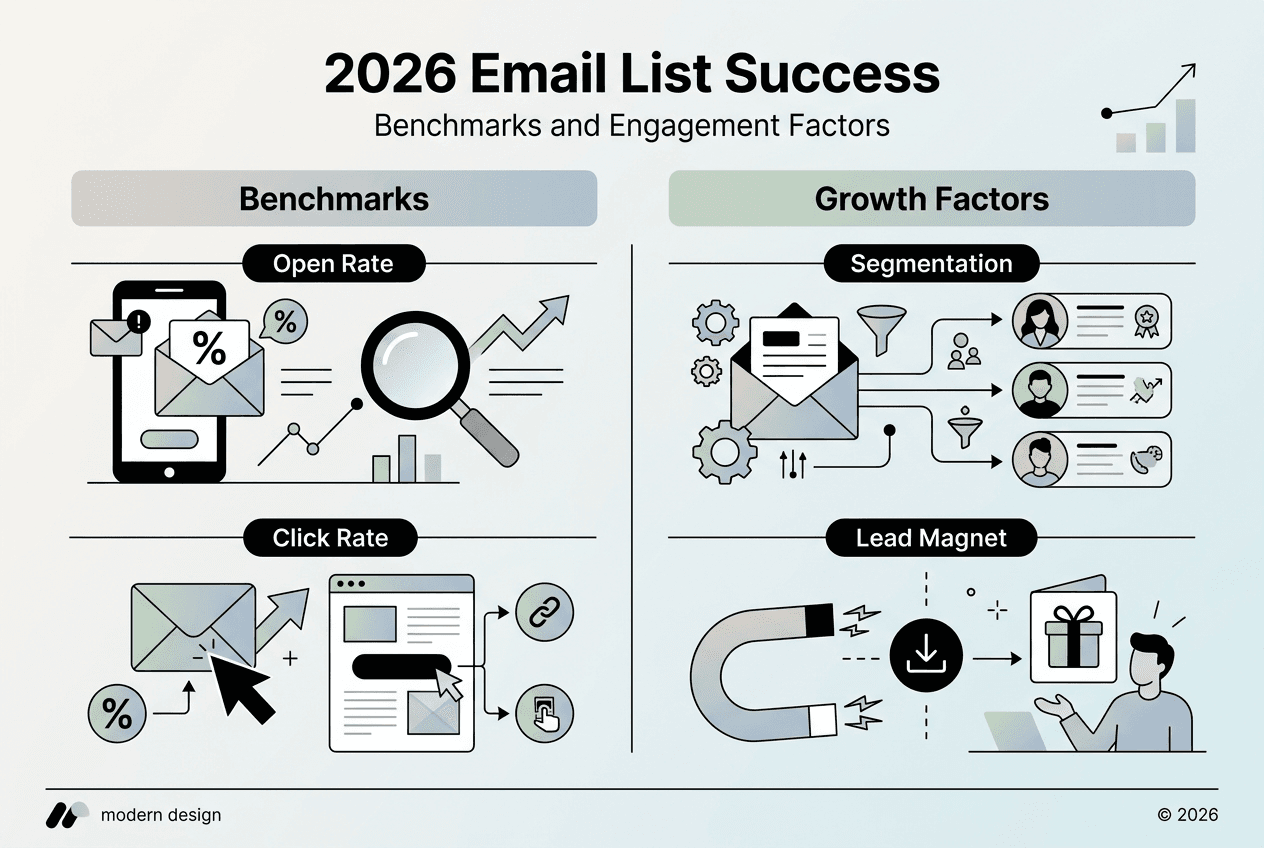
Understanding realistic benchmarks helps you set appropriate goals and measure success accurately. 2026 performance standards show what well-managed SMB email campaigns typically achieve across industries.
| Metric | SMB Benchmark Range | What It Means |
|---|---|---|
| Open Rate | 26-43% | Percentage of recipients who open your email |
| Click-Through Rate | 2-3.2% | Percentage who click links in your message |
| Conversion Rate | 2-3% | Percentage who complete desired action |
| ROI | $36-42 per $1 spent | Revenue generated for each dollar invested |
| Bounce Rate | Under 0.7% | Invalid addresses that reject your emails |
| Unsubscribe Rate | 0.1-0.2% | Subscribers who opt out after each send |
Real SMB success stories demonstrate what’s possible with focused email list strategies. One marketing agency achieved 88.7% open increase and generated $214,000 in revenue by implementing segmentation and personalized content. A social media consultancy grew their list by 117% and increased sales by 160% through strategic lead magnets and nurture sequences. An e-commerce brand generated $116,000 monthly from a previously dormant list by re-engaging subscribers with targeted offers.
Factors common to successful SMB campaigns include:
- Delivering genuinely useful content that subscribers look forward to receiving
- Segmenting audiences to send relevant messages rather than generic blasts
- Automating key touchpoints while maintaining a human, personalized tone
- Sending consistently on a predictable schedule without overwhelming inboxes
- Testing continuously to optimize subject lines, content, and calls to action
- Focusing on organic growth through valuable lead magnets instead of buying lists
These results come from businesses that treat their email list as a strategic asset requiring ongoing investment and attention. They prioritize subscriber experience over short-term gains, knowing that an engaged list delivers compounding returns over time. Your results will vary based on industry, audience, and execution quality, but these benchmarks provide realistic targets.
Apply proven email marketing strategies to grow your business by studying what works for similar companies and adapting those tactics to your unique situation. Success rarely comes from copying exactly what others do but rather from understanding principles and applying them thoughtfully to your specific context and audience needs.
How Web Spider Solutions can help you build a high-impact email list
Building an effective email list requires expertise across multiple disciplines: compelling content creation, conversion-optimized design, technical implementation, and ongoing strategy refinement. Web Spider Solutions brings all these capabilities together to help SMBs create email programs that drive measurable revenue growth.
Our team develops tailored email marketing strategies to grow your business based on your specific goals, audience, and industry. We create high-converting lead magnets that attract your ideal customers, design optimized landing pages that turn visitors into subscribers, and implement segmentation strategies that maximize engagement and ROI.
We help you build organic, compliant email lists using 2026 best practices while avoiding the pitfalls that damage sender reputation and waste marketing budgets. Our digital campaign management ensures your email program integrates seamlessly with your broader marketing efforts for consistent messaging and maximum impact.
Expert guidance accelerates your email marketing success by applying proven frameworks to your unique situation, avoiding costly mistakes that set beginners back months, and continuously optimizing based on performance data rather than guesswork.
Our client success stories demonstrate real results: increased open rates, growing subscriber bases, and six-figure revenue gains from strategic email programs. We focus on sustainable growth that compounds over time rather than quick wins that fade quickly.
FAQ
How do I attract quality subscribers without buying lists?
Create valuable lead magnets that solve specific problems your target audience faces, such as templates, checklists, or exclusive guides. Optimize signup forms with clear benefits and place them strategically across your website, social media, and other channels where your ideal customers spend time. Focus on organic growth through content marketing, partnerships, and referrals rather than shortcuts that damage your reputation.
What segmentation strategies boost email marketing revenue?
Segment your list by demographics, purchase history, engagement levels, and stated interests to deliver relevant content to each group. Use automation workflows like welcome series and cart abandonment emails to send timely messages based on subscriber behavior. Implement A/B testing on subject lines, send times, and content to continuously improve performance within each segment.
How often should I clean my email list and why?
Remove invalid email addresses and hard bounces immediately, ideally within 24 hours of detection. Review your entire list quarterly to identify and remove persistently inactive subscribers who haven’t engaged in six months or longer. Regular cleaning keeps your bounce rate under 0.7%, protects your sender reputation, and ensures you’re measuring performance based on truly engaged subscribers rather than inflated numbers.
What email marketing results can SMBs realistically expect in 2026?
Well-executed SMB email campaigns typically achieve open rates between 26% and 43%, with click-through rates of 2-3.2% and conversion rates of 2-3%. Return on investment averages $36 to $42 for every dollar spent on email marketing. Top-performing SMBs report double-digit list growth rates and generate five- to six-figure revenue directly attributable to their email programs through strategic segmentation and consistent nurturing.
Recommended