







Most American SaaS brands outperform rivals by experimenting with growth hacking, yet only a small percentage actually master its methodology. For digital marketing managers in fast-moving SaaS companies, the pressure to find scalable user acquisition solutions is relentless. This article breaks down how data-driven growth hacking sets you apart from traditional marketing, exposes common misconceptions, and reveals tactics that quickly drive measurable business results.
Table of Contents
- Growth Hacking Defined And Key Misconceptions
- Types Of Growth Hacking Strategies Used Today
- Essential Features Of Growth Hacking For SaaS
- Growth Hacking In Practice: SaaS Real-World Examples
- Challenges, Pitfalls, And Common Missteps
Key Takeaways
| Point | Details |
|---|---|
| Data-Driven Approach | Growth hacking relies on data and experimentation to drive user acquisition and business scaling. |
| Myth vs. Reality | It is not just for startups; growth hacking can be applied across various industries and organizational sizes. |
| Continuous Iteration | Successful growth hacking emphasizes ongoing optimization based on performance data rather than one-off campaigns. |
| Team Collaboration | A multidisciplinary team is essential for integrating technical, analytical, and marketing insights to maximize growth potential. |
Growth Hacking Defined and Key Misconceptions
Growth hacking represents a strategic approach to business expansion that transcends traditional marketing methodologies. Unlike conventional marketing strategies, growth hacking is a data-driven, experimental process focused on rapid user acquisition and sustainable scaling. Multidisciplinary research reveals that this approach combines skills from marketing, product development, and analytics to drive accelerated business growth.
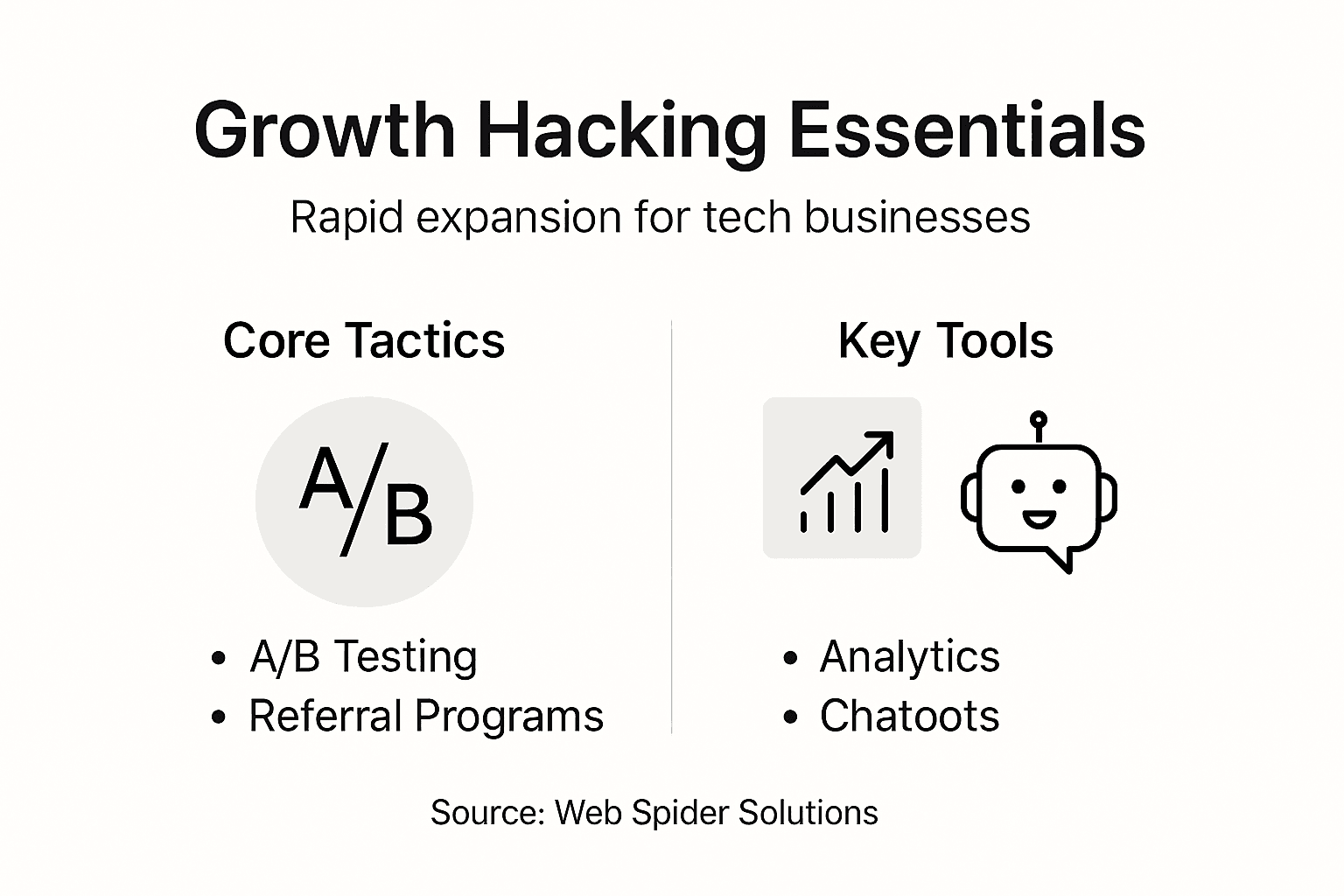
At its core, growth hacking is not a collection of quick tricks or shortcuts, but a systematic methodology requiring rigorous experimentation. Successful practitioners employ techniques like A/B testing, user behavior analysis, and iterative product improvements to identify and replicate scalable growth strategies. The fundamental difference between growth hacking and traditional marketing lies in its laser focus on measurable outcomes and continuous optimization, rather than broad brand awareness campaigns.
Common misconceptions about growth hacking often limit its perceived applicability. Many believe it is exclusively for startups or technology companies, but cross-disciplinary research demonstrates its potential across various industries and organizational sizes. Growth hacking is not a one-size-fits-all solution, but a flexible framework adaptable to different business contexts. Key principles include:
Here’s a structured comparison of growth hacking and traditional marketing approaches:
| Aspect | Growth Hacking | Traditional Marketing |
|---|---|---|
| Focus | Rapid measurable user growth | Broad brand awareness |
| Methodology | Experimental, data-driven | Campaign-based, creative |
| Adaptability | Highly iterative, flexible | Less frequent optimization |
| Required Expertise | Multidisciplinary (tech, analytics) | Primarily creative and strategic |
| Typical Channels | Digital, viral, referral | TV, print, digital, events |
- Prioritizing data over assumptions
- Conducting rapid, low-cost experiments
- Focusing on user acquisition and retention metrics
- Continuously iterating based on performance insights
Pro tip: Start your growth hacking journey by establishing clear, measurable objectives and creating a structured experimentation process that allows for quick learning and adaptation.
Types of Growth Hacking Strategies Used Today
Growth hacking strategies have evolved into sophisticated, data-driven approaches that enable businesses to achieve rapid expansion across multiple channels. Effective growth hacking strategies encompass a diverse range of techniques designed to accelerate user acquisition, engagement, and sustainable business growth. Modern practitioners leverage innovative methods that go far beyond traditional marketing tactics, focusing on scalable, measurable interventions that can transform a company’s trajectory.
Key growth hacking strategies include viral marketing techniques, conversion optimization, and strategic channel expansion. Digital enterprises are increasingly employing methods such as referral programs, interactive content creation, and community building to drive organic growth. Cross-functional research highlights the importance of combining multiple approaches for maximum impact. These strategies typically involve:
- Developing compelling referral mechanisms
- Creating highly shareable content
- Implementing targeted SEO strategies
- Utilizing data analytics for continuous optimization
- Experimenting with pricing and positioning models
Technology plays a crucial role in modern growth hacking, with tools like chatbots, social media platforms, and advanced analytics enabling more sophisticated user acquisition strategies. Businesses can now track, measure, and optimize their growth efforts with unprecedented precision, allowing for rapid iteration and scalable expansion across digital channels.

Pro tip: Develop a systematic approach to growth hacking by establishing clear metrics, creating a culture of continuous experimentation, and maintaining flexibility in your strategic implementation.
Essential Features of Growth Hacking for SaaS
Growth hacking in the Software as a Service (SaaS) ecosystem represents a unique strategic approach that blends technical innovation with marketing intelligence. SaaS-specific growth strategies focus on creating sustainable user acquisition models that drive continuous revenue and product engagement. Unlike traditional marketing approaches, growth hacking for SaaS demands a holistic perspective that integrates product development, user experience, and data-driven experimentation.
The core features of SaaS growth hacking revolve around rapid testing, customer-centric optimization, and scalable acquisition channels. Successful practitioners leverage techniques such as freemium model implementations, sophisticated user onboarding processes, and advanced analytics to understand and predict user behavior. Deep analytics and customer lifecycle management become critical tools for identifying opportunities, reducing churn, and maximizing customer lifetime value. Key strategic elements include:
- Implementing data-driven user acquisition strategies
- Creating frictionless onboarding experiences
- Developing personalized conversion pathways
- Utilizing advanced segmentation techniques
- Establishing continuous feedback loops
Technology plays a transformative role in SaaS growth hacking, enabling companies to track granular metrics, experiment rapidly, and adapt strategies in real-time. Cross-functional teams combining product, marketing, and engineering perspectives can create innovative approaches that drive exponential user growth and retention. The ability to quickly iterate, measure, and optimize becomes a competitive advantage in the fast-evolving digital marketplace.
The table below summarizes common SaaS growth hacking techniques and their business impact:
| Technique | Description | Impact on SaaS Business |
|---|---|---|
| Freemium Model | Free tier with paid upgrades | Increases trial users, conversion |
| Personalized Onboarding | Tailored user walk-throughs | Boosts user retention, satisfaction |
| Advanced Analytics | Tracking user behavior in detail | Improves product, reduces churn |
| Referral Incentives | Rewards for bringing new users | Drives viral, cost-effective growth |
| Lifecycle Email Automation | Automated messages at key user stages | Enhances engagement, reduces churn |
Pro tip: Implement a systematic approach to growth hacking by establishing clear performance metrics, creating robust experimental frameworks, and maintaining a culture of continuous learning and adaptation.
Growth Hacking in Practice: SaaS Real-World Examples
Growth hacking transforms theoretical strategies into powerful, measurable business outcomes through innovative real-world implementations. SaaS companies have demonstrated remarkable growth by leveraging creative, data-driven approaches that challenge traditional marketing paradigms. These strategic implementations often involve unconventional tactics that maximize user acquisition while minimizing resource expenditure.
One of the most compelling examples of growth hacking success is Dropbox’s referral program, which generated extraordinary results by incentivizing user sharing. By offering additional storage space for each successful referral, Dropbox achieved an astonishing 3,900% growth in just 15 months. Other notable strategies from successful SaaS companies include:
- Implementing viral signup processes
- Creating referral programs with tangible user benefits
- Developing frictionless onboarding experiences
- Utilizing social proof and targeted incentives
- Generating targeted press and influencer coverage
Innovative growth hacking strategies go beyond traditional marketing by combining technical creativity, deep user understanding, and rapid experimentation. Successful SaaS companies continuously test and optimize their acquisition channels, focusing on metrics that directly impact user engagement and retention. This approach requires a cross-functional mindset that breaks down traditional departmental silos and encourages collaborative innovation.
Pro tip: Design growth hacking experiments with clear, measurable objectives and build a systematic process for capturing, analyzing, and implementing insights from each iteration.
Challenges, Pitfalls, and Common Missteps
Growth hacking is not a guaranteed path to success, and many organizations encounter significant obstacles when attempting to implement these strategies. Organizational challenges in growth hacking reveal complex barriers that can derail even the most well-intentioned initiatives. These challenges extend beyond mere technical implementation and often involve deep-rooted organizational and cultural constraints.
The most prevalent pitfalls in growth hacking stem from fundamental misunderstandings about its nature and requirements. Common missteps include:
- Expecting immediate, dramatic results
- Lacking a robust data-driven culture
- Underestimating resource requirements
- Failing to establish clear experimental frameworks
- Ignoring long-term sustainability for short-term gains
Successful growth hacking demands high risk tolerance, patience, and a structured approach to experimentation. Organizations frequently stumble by treating growth hacking as a magical solution rather than a systematic, iterative process. The key lies in developing a nuanced understanding of data analysis, maintaining organizational flexibility, and creating an environment that supports continuous learning and adaptation.
Pro tip: Establish a dedicated cross-functional team with clear metrics, experimental protocols, and a culture that views failures as learning opportunities rather than setbacks.
Unlock Explosive Business Growth with Proven Digital Strategies
The article highlights how growth hacking is a powerful, data-driven process focused on rapid user acquisition and continuous optimization. If you struggle with turning experimental tactics into measurable growth or feel overwhelmed by the need for cross-functional expertise and structured testing, you are not alone. Growth hacking demands clear performance metrics, agile strategy adjustments, and seamless integration of marketing with product development. At Web Spider Solutions, we understand these challenges and specialize in delivering tailored digital marketing solutions that align perfectly with growth hacking principles.
Our expertise in B2B Marketing Archives – Web Spider Solutions and Paid Advertising Archives – Web Spider Solutions ensures your campaigns are not only creative but analytically driven for maximum user engagement and lead generation. Don’t settle for broad, unfocused marketing efforts. Take control of your growth trajectory by partnering with a dedicated team that uses data and continuous experimentation to help businesses like yours dominate competitive markets.
Ready to ignite your growth hacking potential today? Visit Web Spider Solutions now for a free SEO audit or consultation and start transforming your digital marketing into a high-impact growth engine.
Frequently Asked Questions
What is growth hacking?
Growth hacking is a strategic, data-driven approach to business expansion that focuses on rapid user acquisition and sustainable scaling, often utilizing techniques like A/B testing and user behavior analysis.
How does growth hacking differ from traditional marketing?
Unlike traditional marketing, which emphasizes broad brand awareness, growth hacking prioritizes rapid measurable user growth through experimental and data-driven methodologies.
What are some common strategies used in growth hacking?
Common growth hacking strategies include viral marketing, conversion optimization, referral programs, interactive content creation, and utilizing advanced analytics for continuous optimization.
Why is growth hacking particularly effective for SaaS businesses?
Growth hacking is effective for SaaS businesses because it combines technical innovation with marketing intelligence, focusing on creating sustainable user acquisition models and optimizing user experiences through rapid experimentation.