







A single missed detail could mean losing an american prospect in seconds. With bounce rates on B2B websites often ranging from 25 percent to 55 percent, understanding why visitors vanish after just one page has become a crucial priority. For digital marketing managers at small and medium-sized tech firms, demystifying this metric unlocks new ways to engage users and capture valuable leads where it matters most.
Table of Contents
- Bounce Rate Defined For B2B Websites
- Common Bounce Rate Myths And Misunderstandings
- Types Of Bounce Rate And Measurement Methods
- Key Factors Influencing Bounce Rate Metrics
- Implications For Conversion And User Engagement
- Proven Strategies To Reduce High Bounce Rates
Key Takeaways
| Point | Details |
|---|---|
| Understanding Bounce Rate | Bounce rate measures the percentage of visitors leaving after one page, revealing insights about user engagement and content effectiveness. |
| Content and Design Impact | Higher bounce rates often indicate issues with content relevance, site design, or navigation, affecting lead generation opportunities. |
| Holistic Analysis Required | Bounce rate analysis should consider additional metrics like conversion rates and time on site for a comprehensive performance understanding. |
| Strategic Improvement Methods | To reduce bounce rates, focus on improving page load speed, enhancing mobile responsiveness, and providing high-quality targeted content. |
Bounce Rate Defined for B2B Websites
In the world of B2B digital marketing, bounce rate represents a critical performance metric measuring the percentage of website visitors who navigate away after viewing only a single page. B2B websites specifically track this metric to understand user engagement and content effectiveness.
Typically, a bounce rate between 25% and 55% is considered standard for B2B digital platforms. This range indicates how many potential business customers arrive at a website and immediately leave without exploring additional content or taking desired actions. Higher bounce rates suggest potential issues with website design, content relevance, or user experience that could be hindering lead generation and conversion opportunities.
The significance of bounce rate extends beyond simple traffic analysis. For B2B websites, this metric provides insights into several key performance indicators, including:
- Content quality and relevance
- Website navigation effectiveness
- User experience and site design
- Alignment of landing pages with visitor expectations
Understanding bounce rates requires analyzing multiple factors that influence visitor behavior. Organic search traffic plays a substantial role in determining these metrics, with elements like page load speed, visual design, and strategic call-to-action placements critically impacting user retention.
Pro tip: Regularly monitor your website’s bounce rate and segment the data by traffic source to identify specific areas for improvement and optimize user engagement strategies.
Common Bounce Rate Myths and Misunderstandings
Many B2B digital marketers misinterpret bounce rates as a straightforward indicator of website performance, which can lead to misguided strategies. Bounce rate analysis requires nuanced understanding beyond simple numerical interpretation.
One prevalent myth suggests that all high bounce rates are inherently negative. In reality, bounce rates can be contextually acceptable or even expected. For single-page websites providing immediate information or specific technical resources, a high bounce rate might actually indicate successful user interaction. B2B websites often serve visitors seeking quick contact details, product specifications, or downloadable resources that can be accessed without navigating multiple pages.
Key misconceptions about bounce rates include:
- Assuming all bounces represent failed engagement
- Believing lower bounce rates always indicate better performance
- Ignoring the specific context of website purpose
- Overlooking the quality of single-page interactions
Website performance metrics demand comprehensive analysis that goes beyond isolated bounce rate measurements. Effective evaluation requires considering multiple factors such as conversion rates, time on site, and specific user actions. A bounce is not necessarily a negative outcome if the visitor completes their intended task during that single interaction.
Pro tip: Develop a holistic analytics approach that examines bounce rates alongside other engagement metrics to gain a more accurate understanding of your website’s true performance.
Types of Bounce Rate and Measurement Methods
Bounce rate encompasses multiple measurement approaches that go beyond simple page view tracking. Quantitative measurement techniques provide nuanced insights into user engagement across digital platforms.

Traditional bounce rate calculations focus on single-page sessions, but modern analytics offer more sophisticated interpretations. Three primary types of bounce rate measurement emerge in B2B digital marketing:
Here’s a summary of key bounce rate measurement approaches and their distinctive features:
| Measurement Type | Primary Focus | Key Benefit |
|---|---|---|
| Standard Bounce Rate | Single-page sessions | Simple engagement assessment |
| Adjusted Bounce Rate | User interactions (events) | More accurate user intent analysis |
| Segmented Bounce Rate | Traffic sources/demographics | Identifies problem areas by segment |
- Standard Bounce Rate: Tracking visitors who leave after viewing a single page
- Adjusted Bounce Rate: Incorporating user interactions without additional page loads
- Segmented Bounce Rate: Analyzing bounce rates across different traffic sources and user demographics
Statistical measurement approaches reveal complex user interaction patterns. Advanced tracking methods now consider factors like time on page, scroll depth, interactive element engagement, and specific event triggers. These nuanced measurements provide a more comprehensive understanding of user behavior beyond traditional single-page view metrics.
Modern analytics platforms enable B2B marketers to customize bounce rate definitions, allowing for more precise performance evaluation. By integrating multiple interaction signals, businesses can develop a more accurate representation of website engagement and user experience.
Pro tip: Configure custom event tracking in your analytics platform to capture meaningful user interactions that extend beyond simple page view measurements.
Key Factors Influencing Bounce Rate Metrics
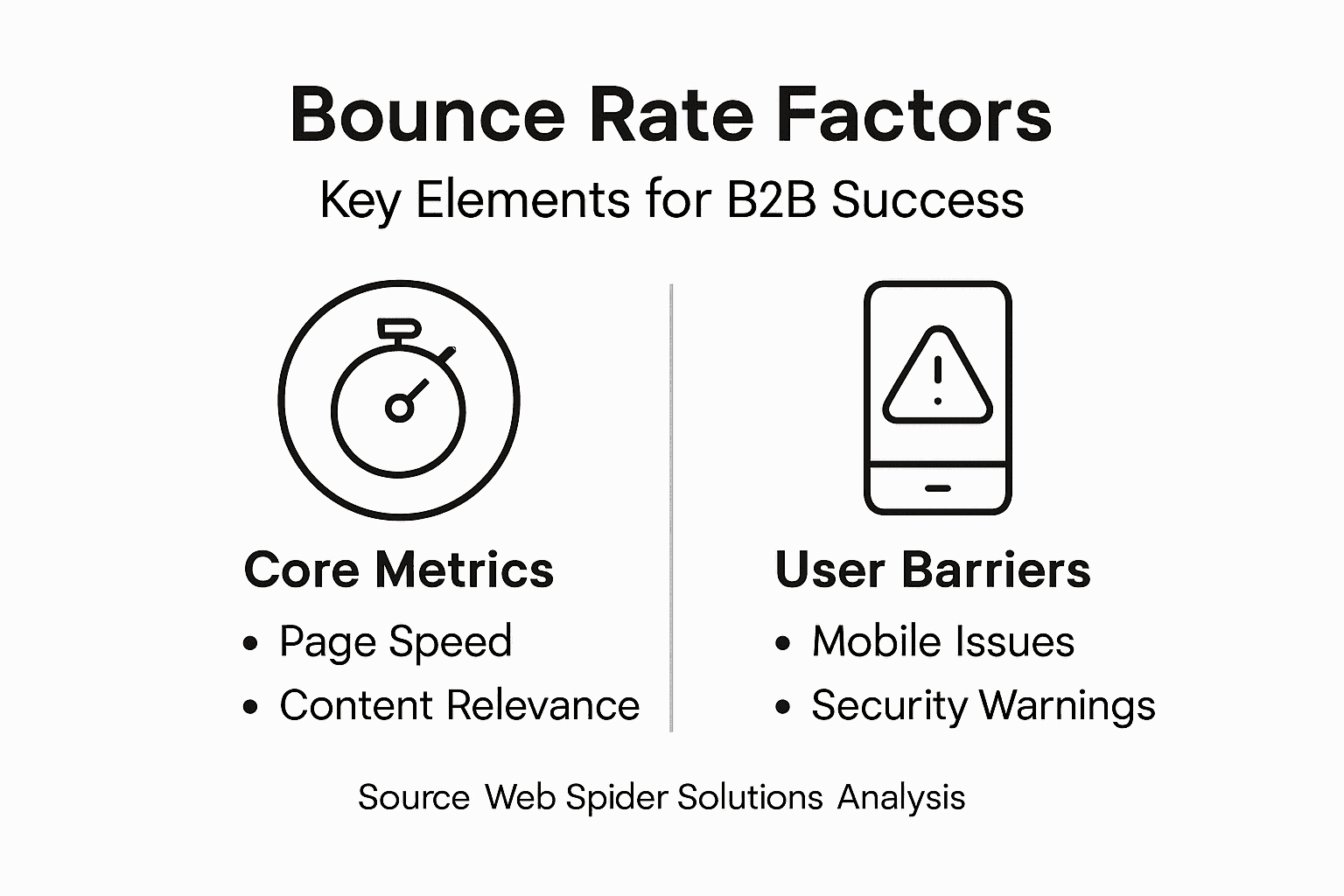
Bounce rate performance depends on a complex interplay of technical and content-related factors that significantly impact user engagement. Website reliability and technical performance play a critical role in determining whether visitors continue exploring or quickly exit a site.
Multiple key factors contribute to bounce rate variations in B2B digital environments:
- Content Relevance: Alignment of page content with user expectations
- Page Load Speed: Technical performance and rapid content rendering
- Mobile Compatibility: Responsive design across different devices
- User Interface Design: Intuitive navigation and visual appeal
- Traffic Source Quality: Targeted vs. random website visitors
Cybersecurity considerations also emerge as crucial elements influencing user trust and engagement. Technical impediments like slow server responses, broken links, or perceived security risks can dramatically increase bounce rates. B2B websites must therefore focus on creating seamless, trustworthy digital experiences that immediately communicate value and professionalism.
Understanding these interconnected factors allows marketers to develop strategic approaches for reducing bounce rates and improving overall website performance. Continuous monitoring and iterative improvements based on comprehensive analytics provide the most effective path to enhanced user engagement.
Pro tip: Implement regular technical audits and user experience testing to identify and proactively address potential bounce rate triggers.
Implications for Conversion and User Engagement
Bounce rates directly impact B2B marketing performance by revealing critical insights about user interaction and potential conversion barriers. Conversion rate optimization strategies demonstrate how reducing bounce rates can significantly improve marketing ROI and lead generation effectiveness.
Key implications of high bounce rates for B2B websites include:
- Decreased potential for lead generation
- Reduced marketing campaign effectiveness
- Lower return on advertising investments
- Diminished user trust and credibility
- Potential negative impact on search engine rankings
User engagement frameworks highlight the interconnected nature of bounce rates and conversion potential. Websites that fail to engage visitors quickly risk losing valuable business opportunities. Factors such as page design, content relevance, and intuitive navigation play crucial roles in transforming casual visitors into potential leads.
Successful B2B digital strategies recognize that bounce rate is not just a metric, but a comprehensive indicator of website performance. By understanding and addressing the underlying reasons for user disengagement, businesses can create more compelling digital experiences that drive meaningful interactions and support growth objectives.
Pro tip: Develop a systematic approach to analyzing bounce rates, focusing on segmenting data by traffic source and user behavior to uncover specific improvement opportunities.
Proven Strategies to Reduce High Bounce Rates
Reducing bounce rates requires a strategic, multifaceted approach that addresses technical performance and user experience simultaneously. Optimized tracking methods can provide critical insights into user behavior and engagement patterns.
Effective strategies for minimizing bounce rates in B2B websites include:
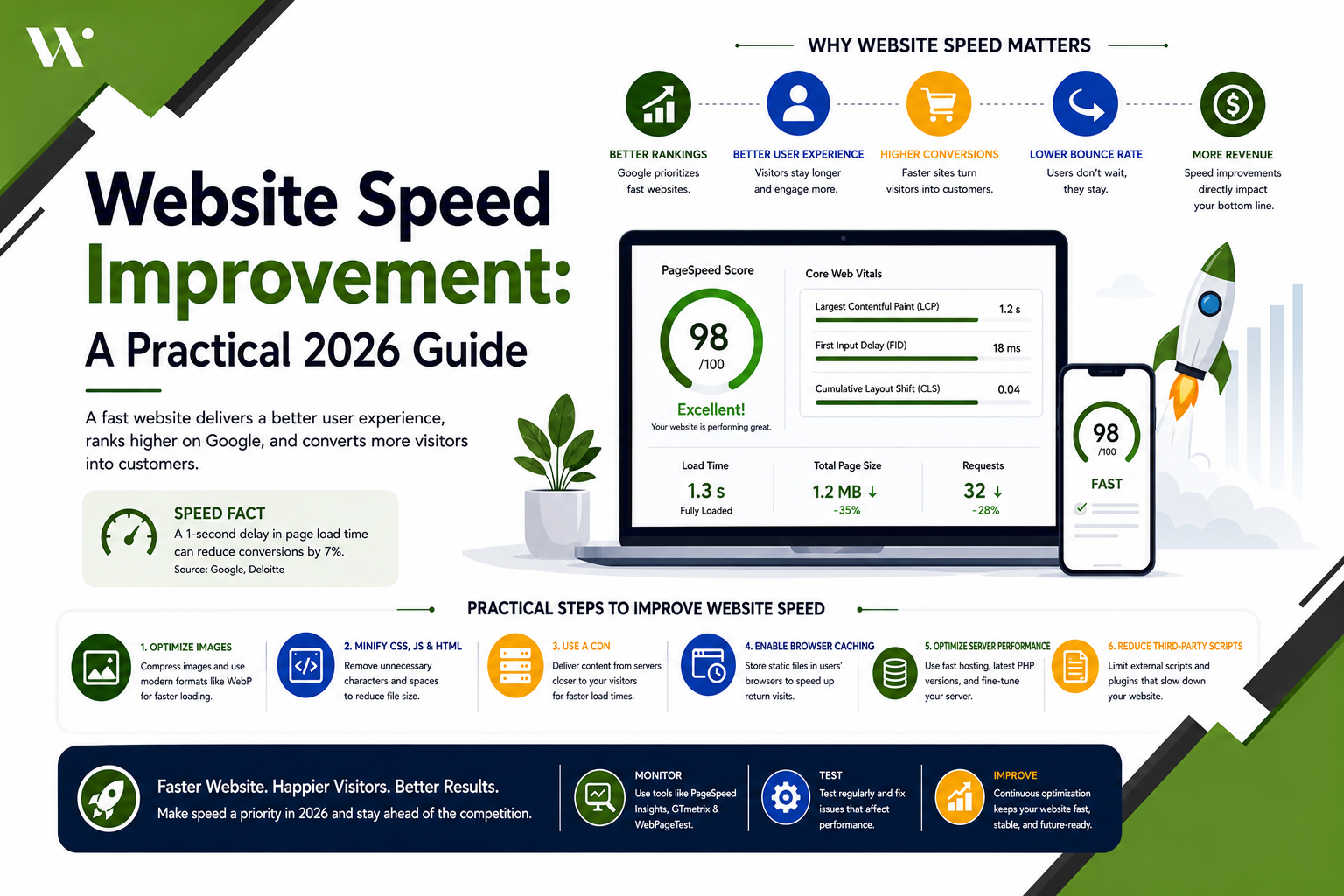
- Improve Page Load Speed: Optimize images, leverage browser caching, and minimize complex scripts
- Create Compelling Above-the-Fold Content: Immediately communicate value and relevance
- Enhance Mobile Responsiveness: Ensure seamless experience across all devices
- Implement Clear Call-to-Action Elements: Guide users toward desired interactions
- Develop Targeted, High-Quality Content: Address specific user needs and pain points
Evidence-based strategic approaches demonstrate that systematic evaluation and targeted improvements can significantly reduce bounce rates. Technical optimization must be combined with thoughtful content design to create a compelling user experience that encourages deeper engagement and exploration.
Successful B2B websites understand that reducing bounce rates is not about tricks or manipulation, but about genuinely meeting user expectations and providing immediate value. By focusing on user-centric design and performance, businesses can transform casual visitors into potential leads and long-term customers.
Below is a comparison of effective strategies for reducing high bounce rates:
| Strategy | Main Benefit | Business Impact |
|---|---|---|
| Faster Page Load | Reduces visitor frustration | More leads and conversions |
| Compelling Above-the-Fold | Immediate user engagement | Higher trust and credibility |
| Targeted, High-Quality Content | Meets user needs precisely | Better marketing campaign ROI |
Pro tip: Conduct regular user experience audits and implement A/B testing to continuously refine your website’s ability to capture and retain visitor attention.
Take Control of Your Bounce Rate to Drive B2B Growth
High bounce rates can silently sabotage your digital marketing efforts by limiting lead generation and reducing user engagement. This creates a frustrating cycle where potential customers leave before experiencing your value. If your website struggles with visitor retention or you want to sharpen your online presence, understanding and addressing bounce rate issues is essential. Key challenges include creating relevant content, improving page load speed, and optimizing user experience to align with visitor expectations.
At Web Spider Solutions, we specialize in turning these challenges into opportunities. Our targeted SEO, paid advertising, and user experience optimization services help B2B companies reduce bounce rates and increase conversion potential. By combining technical SEO with creative content marketing and precise analytics, we ensure your website not only attracts the right visitors but keeps them engaged longer to maximize your marketing ROI. Ready to transform your bounce rate into a growth asset? Explore our comprehensive digital solutions at Web Spider Solutions and request your free SEO audit today. Your pathway to higher quality leads and sustainable business growth starts here.
Frequently Asked Questions
What is the bounce rate and why is it important for B2B websites?
Bounce rate measures the percentage of visitors who leave a website after viewing only one page. It’s crucial for B2B websites as it indicates user engagement and content effectiveness, directly impacting lead generation and conversion opportunities.
What bounce rate is considered acceptable for B2B websites?
An acceptable bounce rate for B2B websites typically ranges between 25% and 55%. Rates within this range indicate that visitors are engaging with the content rather than leaving immediately.
How can I analyze the reasons behind a high bounce rate on my B2B website?
To analyze a high bounce rate, consider examining factors such as content relevance, page load speed, mobile compatibility, and overall user experience. Utilizing segmented bounce rates can help pinpoint specific issues related to traffic sources and user demographics.
What strategies can help reduce high bounce rates on B2B websites?
Effective strategies to reduce high bounce rates include improving page load speed, creating compelling above-the-fold content, enhancing mobile responsiveness, implementing clear call-to-action elements, and developing targeted, high-quality content that meets user needs.
Recommended